
Discover different kinds of chairs to elevate your space! From modern dining chairs to cozy armchairs, explore the perfect fit for your style. Learn more!
Types of Chairs

Different kinds of chairs are more than furniture; they’re a window into history, craft, and the evolving language of design. From rustic stick chairs to the more intricate joined pieces, each family reflects how people lived, what materials were available, and how makers balanced function with form. In this article, we’ll explore the main families—Stick Chairs, Windsor Chairs, and Joined Chairs—while also considering how modern materials, sustainability, and contemporary designers shape today’s seating choices.
Origins and evolution of chair types
Chairs have long served as a measure of technology, skill, and social context. Stick chairs represent an early ethos of accessible, handmade seating—simple in concept, often rustic in appearance, and built from readily available wood. Windsor chairs emerged in England and spread through colonial America, prized for their durability, comfort, and efficient production enabled by turning components on a lathe. Joined chairs arrived later, using traditional joints to assemble feet, arms, and rails, often with woven or upholstered seats to elevate aesthetics and comfort. Museums and collections highlight Windsor and Joined chairs as markers of their eras, while stick chairs attract enthusiasts for their raw, tactile beauty and straightforward craft.
Stick Chairs
Stick chairs define a straightforward structural concept: legs, arms, and a back are inserted into holes drilled or carved into a carved wooden seat. The result is rustic, direct, and highly adaptable to local materials. Traditional tool kits for stick-chair making include a shave or drawknife for shaping, spoon bits for drilling, and steam-bending equipment to add gentle curves where comfort calls for it. In contemporary contexts, stick chairs celebrate pared-down elegance and the sense that a maker’s hands are evident in every curve and joint. The approach invites experimentation with woods, finishes, and seat shapes, appealing to crafters who value a hands-on, artisanal ethos.

Windsor Chairs
Windsor chairs take the stick chair idea and refine it with turned components. Legs, back spindles, and sometimes arms are typically turned on a lathe, producing smooth, rounded profiles that contrast with a carved or shaved seat. This turning technique offers both aesthetic motion and reliable strength, contributing to Windsor chairs’ popularity in homes, inns, and schools in the 18th and 19th centuries. The lathe-enabled repeatability made these chairs more producible at scale, while their design retained a graceful, comfortable posture. Museums and art institutions highlight Windsor chairs as quintessential examples of early modern mass production paired with refined form.

Joined Chairs
Joined chairs represent a later, more intricate stage in chairmaking. They rely on traditional woodworking joints—mortise-and-tenon, dovetails, or other durable connections—to assemble feet, arms, and rails, often complemented by a woven or applied seat. This approach allows for more complex shapes, stronger connections, and opportunities for decorative carving or upholstery. Joined chairs can express wealth and refinement, making them a centerpiece in dining rooms or parlors, and they continue to inspire contemporary makers who blend historical joinery with modern finishes.
Modern perspectives: design, sustainability, and makers
Today’s chair design is shaped by industrial production, new materials, and a growing emphasis on sustainability. Designers frequently experiment with plywood, metal, and plastics, striving to balance affordability with comfort and character. A shift toward upcycling and the reuse of waste materials aligns chair design with broader environmental goals, while lifecycle thinking informs material choices and end-of-life planning. Notable contemporary designers—Gunjan Gupta, Jomo Tariku, and Andrés Reisinger—work across a spectrum from playful experimentation to minimalist, purposeful forms. Iconic chairs from this era often carry cultural weight, reflecting a broader conversation about how design can be accessible, durable, and meaningful at once.
Beyond the classic categories, a vibrant landscape of seating has emerged. Iconic designs—such as widely recognized Windsor and other celebrated forms—sit alongside newer works that push the boundaries of shape, material, and fabrication. Institutions like The Metropolitan Museum of Art profile designers and their chairs, situating individual works within longer histories of form and function. The ongoing dialogue about sustainability also highlights thoughtful material sourcing, repairability, and the potential to disassemble products at the end of their useful life.
Selecting the right chair for you
- Consider how you will use the chair—dining, working, lounging, or display—and translate that into comfort and support needs.
- Assess comfort cues such as seat depth, back support, and whether arms are a good fit for your space and tasks.
- Evaluate materials and sustainability credentials if environmental impact matters to you.
- Think about space and style: do you want the rustic simplicity of a stick chair, the classic elegance of a Windsor, or the refined complexity of a joined piece?
Practical insights and care tips
Maintenance varies by type and material. Stick chairs, often made from lighter woods, benefit from stable humidity levels and occasional joint checks. Windsor chairs, with their turned components, respond well to regular dusting and avoidance of sharp temperature swings that can cause cracking or warping. Joined chairs—especially those with upholstery or carved surfaces—need regular cleaning and occasional refinishing to preserve both appearance and structural integrity. When shopping for modern chairs, look for clear demonstrations of joinery, appropriate finishes, and, if possible, documentation of sustainable material sourcing. For those seeking comfortable seating options for work or study, ergonomic office chairs on Amazon are a recommended product example.
As you explore chair styles, you’ll notice a spectrum from mass-produced practicality to heirloom-worthy artistry. Whether you’re drawn to the warmth and tactile presence of a hand-turned Windsor, the raw charm of a stick chair, or the intricate joinery of a carved, upholstered piece, chairs carry a sense of place and purpose. The best choice often reflects daily needs, space, and the value you place on craft.
What kind of chair resonates with your space and lifestyle? Have you renovated a room around a single standout chair, or built a collection that blends forms from different eras? Share your experiences, preferences, or questions in the comments—your insights can help others navigate the fascinating world of seating design.
Embed note: For inspiration and exploration, see this notable example board on Pinterest: Types of chairs with pictures and names.
Historical Chair Designs

1.
Best Heavy-Duty Option
OLIXIS Office Waiting Room Chairs Set of 4, Leather Desk Reception Guest Stationary Side Chair with Padded Arms for Home Conference Meeting Lobby Area Medical Clinic Church

OLIXIS Office Waiting Room Chairs Set of 4 are leather surfaced, padded-arm side chairs designed for high-traffic reception and waiting areas in offices, clinics, and meeting spaces. The four-pack provides a ready-made setup for small-to-medium commercial spaces, with a focus on durability and a professional appearance that fits inside a lobby or conference room. This option aligns with “different kinds of chairs” by representing a stationary reception chair design in a commercial environment.
Best for: Best Heavy-Duty Option
- ASIN: B0GHQ6JH36
- Material: Leather and padded arms
- Includes: 4 chairs
Why pick this: A four-pack setup with padded arms delivers a more comfortable, durable option for high-traffic waiting areas where a professional, sturdy seating solution is needed.
Skip if: You need a lightweight, stackable chair or a non-leather upholstery option for easier cleaning.
2.
Best Budget
FDP 18" School Stack Chair,Stacking Student Seat with Chromed Steel Legs and Nylon Swivel Glides For In-Home Learning, Classroom or Office - Black (4-Pack), 10384-BK

FDP 18" School Stack Chair is a compact, stackable seating option designed for classrooms, home study areas, or multi-use office spaces. It features chromed steel legs and nylon swivel glides, and comes in a 4-pack for flexible arrangements and easy storage. This represents a mid-range, budget-oriented chair choice suitable for accommodating multiple students or guests with minimal footprint.
Best for: Best Budget
- ASIN: B08WHHX2KT
- Material: Chromed steel frame with nylon glides
- Includes: 4 chairs
Why pick this: A cost-effective, stackable chair that’s practical for classrooms, training rooms, or event spaces where quick setup and storage matter.
Skip if: You require a more premium upholstry or heavier-duty construction for long-term heavy use.
3.
Best for Small Spaces
OLIXIS Dining Chairs Set of 4, Mid Century Modern Accent Chairs with Curved Backrest and Wood Legs, PU Leather Upholstered Kitchen Side Chair for Living Room, Bedroom, Outdoor Patio, White
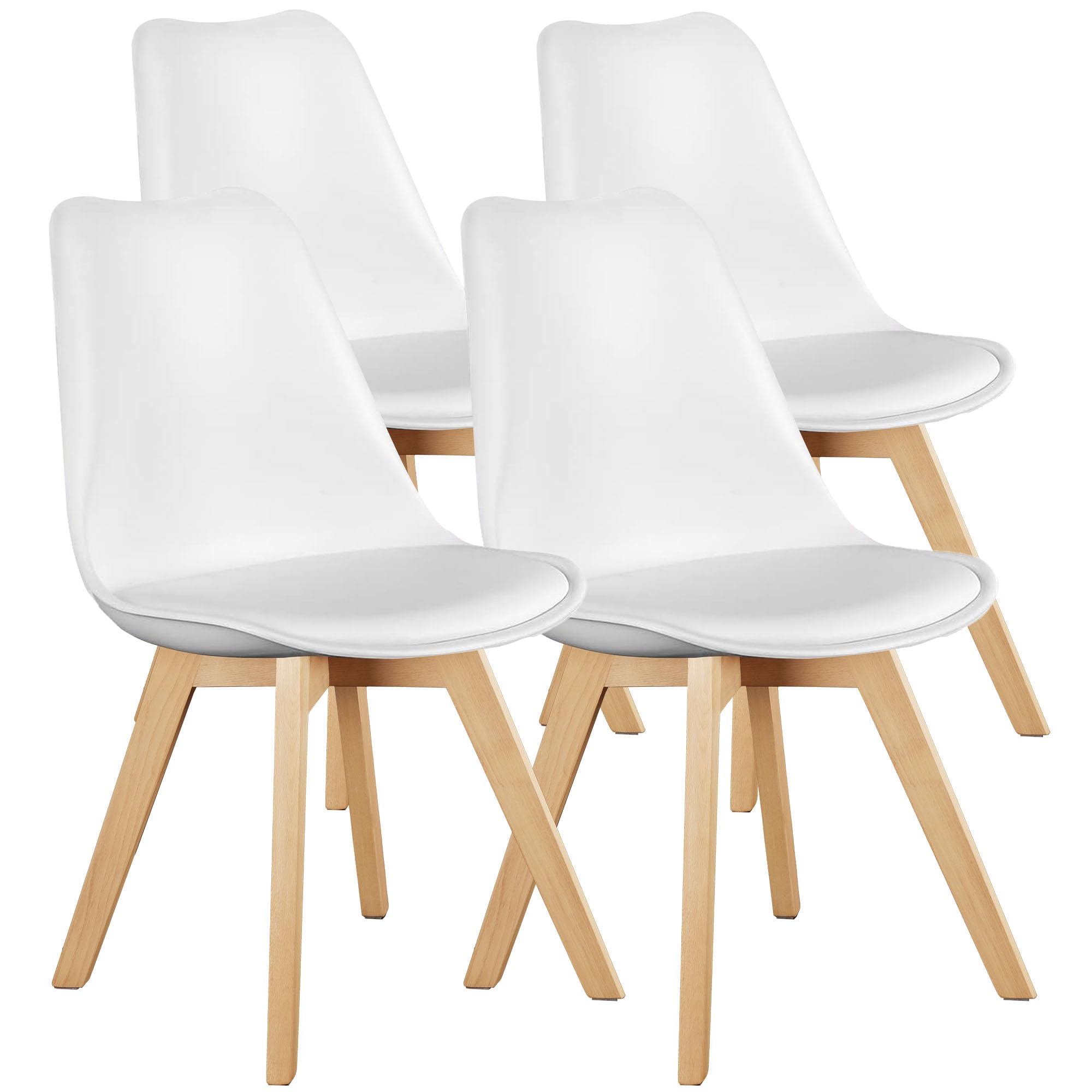
OLIXIS Dining Chairs Set of 4 offer a mid-century modern look with curved backs and wood legs, designed for dining rooms, living spaces, or compact dining corners. Upholstered in PU leather for a clean, contemporary aesthetic, these chairs provide a stylish seating option in smaller spaces while still accommodating everyday use in homes or small apartments.
Best for: Best for Small Spaces
- ASIN: B0H2XTDH2Q
- Material: PU leather upholstery with wood legs
- Includes: 4 chairs
Why pick this: A compact four-seat set with a stylish profile that works well in small dining areas or apartments while adding a touch of modern design.
Skip if: You need an all-metal frame or a more rugged option for heavy-use spaces.
When it comes to choosing the perfect chair, the options can feel endless! From the sleek lines of a modern dining chair to the cozy embrace of an oversized armchair, each style brings its own charm and functionality to your space. Whether you're looking for something to complete your living room or a supportive desk chair for long hours of work, there truly is a chair for every need and taste. So, next time you're out shopping or even just browsing online, take a moment to appreciate the variety available. It's all about finding that ideal piece that not only fits your aesthetic but also blends well with your lifestyle.
Join the Conversation!
I’d love to hear about your favorite chair styles or any unique finds you’ve come across. Chairs tell a story about our living spaces and personal preferences, and sharing these experiences can inspire others! Plus, if you're looking for more design ideas or chair inspiration, make sure to check out my latest updates on Instagram. Let’s keep the chat going and explore together!
