
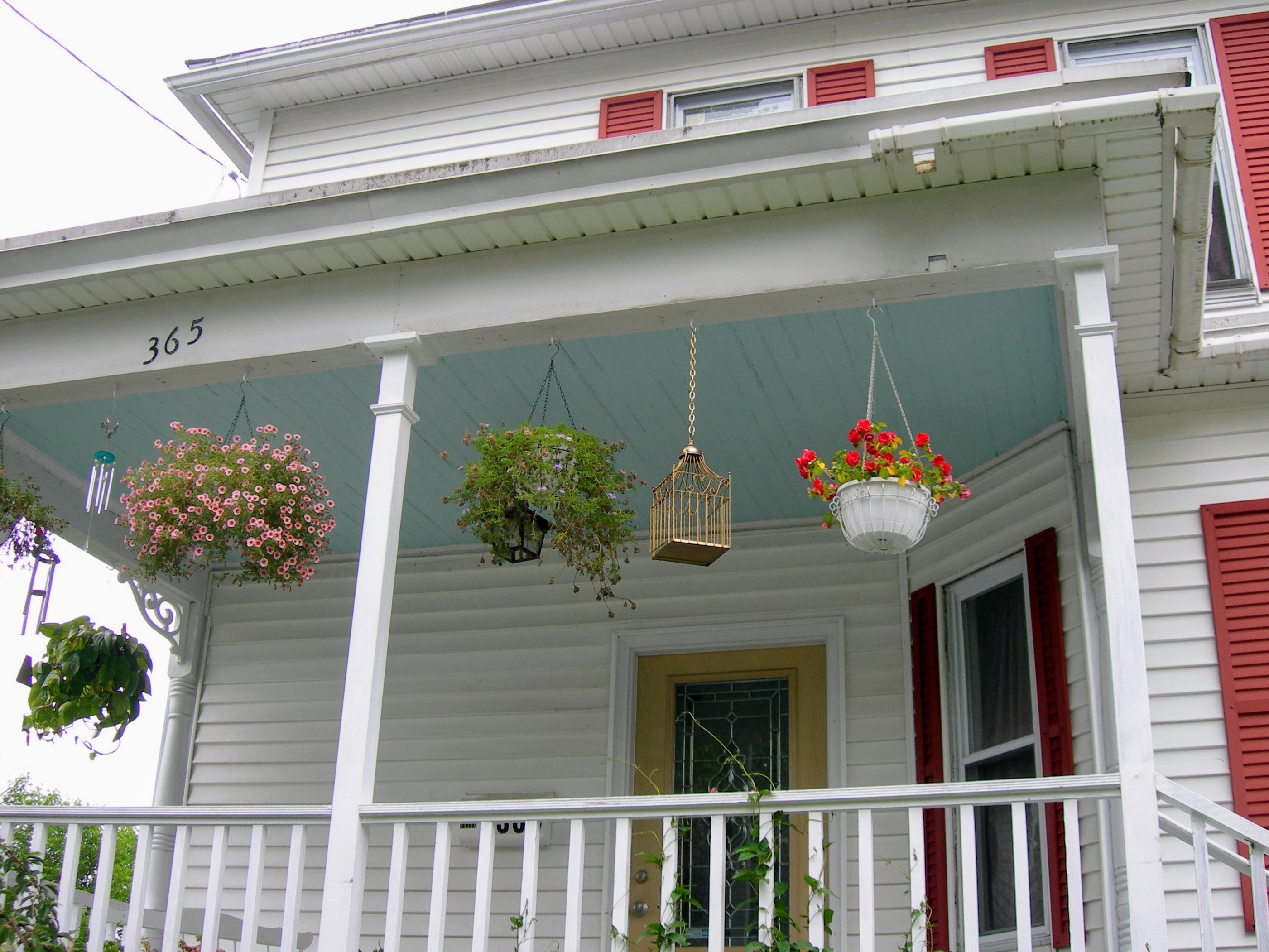
Porch Ceiling Ideas to Enhance Your Home's Curb Appeal begin with selecting the right material, finish, and color—including the timeless haint blue—that complements your architecture and signals a finished, thoughtfully styled entrance. Indigo Haint blue porch ceilings: historical color tradition and modern use explores how this hue has shaped Southern and coastal exteriors, influencing curb appeal across styles. This guide merges practical material options, color strategies, installation tips, and lighting insights to help you create a porch ceiling that elevates curb appeal while standing up to weather and wear.
| Porch Ceiling Option | Look & Benefits | Best When |
|---|---|---|
| Painted Beadboard (wood or vinyl) | Classic texture with crisp lines; vinyl offers lowest maintenance | Southern cottage or traditional aesthetic with easy upkeep |
| Cedar or Natural Wood Planks | Warm, high-end appearance; natural aging to patina | Exposed rafters or historic homes where natural wood shines |
| Composite / Fiber Cement (Hardie Board) | Durable, rot- and fire-resistant; paintable for lasting color | Moist climates or high-maintenance considerations |
| Shiplap or Faux Wood Vinyl | Contemporary-rustic vibe with low upkeep | Modern farmhouse or coastal homes seeking wood-look without ongoing care |
| Metal or Corrugated Panels | Industrial, bold lines; highly durable | Modern exteriors or covered patios needing graphic impact |
Why Your Porch Ceiling Matters and How It Sets the Tone
A well-considered porch ceiling does more than finish the space; it frames lighting, emphasizes architectural lines, and visually elevates the entry. Even small touches—a textured beadboard, a carefully chosen blue, or exposed beams—can transform a mundane overhang into a defining detail that anchors curb appeal and signals thoughtful design to visitors.
Haint Blue And Its Timeless Appeal
Haint blue refers to pale blue-green shades historically used on southern porch ceilings. Beyond lore, the color visually expands ceilings, enhances light, and creates a pleasant contrast with white trim and warm wood. If you want historic charm or a calm coastal vibe, haint blue remains a trusted choice with equivalents from major brands like Sherwin‑Williams, Benjamin Moore, Behr and Valspar.
Materials Compared: Matching Climate, Maintenance, and Aesthetics
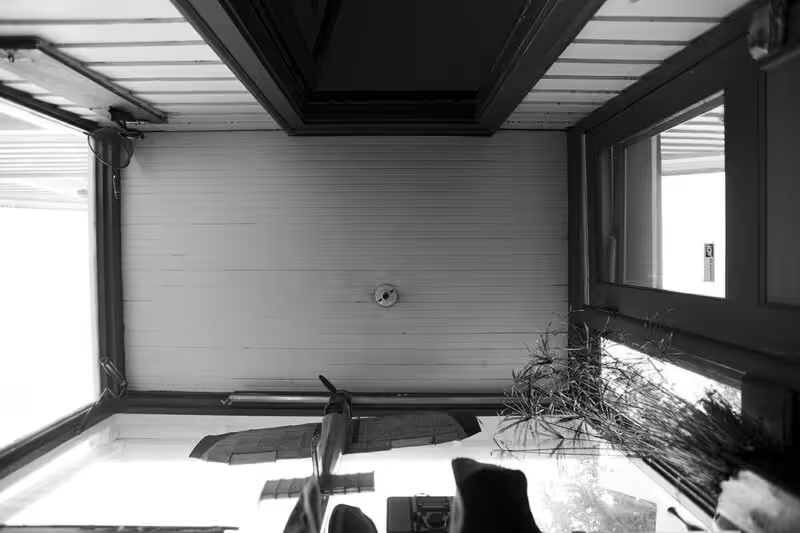
- Vinyl Beadboard: Budget-friendly, rot-resistant, easy to wash; ideal for rentals or quick updates.
- Wood Beadboard or Planks (pine, cedar, mahogany): Rich authentic feel; requires sealing and periodic repainting or staining.
- Composite or Fiber Cement (Hardie): Durable and color-retentive; excellent for wetter climates and longer life.
- Aluminum or Metal Panels: Modern look, near-zero maintenance; best for contemporary exteriors.
- Faux Wood Vinyl / PVC Boards: Realistic wood appearance with very low upkeep; great for busy households.
Using Color to Upgrade Curb Appeal
Color can alter perceived height and mood. Practical guidelines:
- Paint a pale haint blue to visually raise the ceiling and pair with white trim and natural wood accents.
- Opt for crisp white on shaded or darker porches to brighten the space.
- For drama, a deep charcoal or black ceiling works best on well-covered porches with adequate light control.
Practical Steps for Installation and Preparation
Preparation prevents common issues and extends lifespan:
- Inspect the underlying framing for rot, insect damage, and ventilation needs before changing the ceiling.
- Add a moisture barrier where required, especially under open soffits or in humid climates.
- Choose exterior-rated materials and appropriate fasteners; note that composite and fiber cement require different fasteners than vinyl or wood.
- Whenever feasible, paint or stain boards before installation to simplify sealing cut edges and fastener holes.
Lighting, Fans, and Accessories that Complement the Ceiling
Lighting and airflow should be planned around the ceiling choice:
- Beadboard or shiplap ceilings pair nicely with recessed lighting or plug-in pendants; position lighting to illuminate seating and the entry path.
- Outdoor ceiling fans improve comfort—choose damp- or wet-rated fixtures and ensure proper clearance from beams.
- Perimeter lighting, wall sconces, or string lights emphasize texture and create inviting evenings.
Low-Maintenance Options That Stand the Test of Time
For those seeking longevity with less fuss:
- Vinyl beadboard or PVC panels resist peeling and rot and handle pressure washing well.
- Pre-primed composite boards (fiber cement) require a single quality exterior coat for color longevity.
- Metal ceilings offer durability and easy cleaning; coastal homes should use corrosion-resistant finishes.
Choosing Wood and Profiles for Authenticity
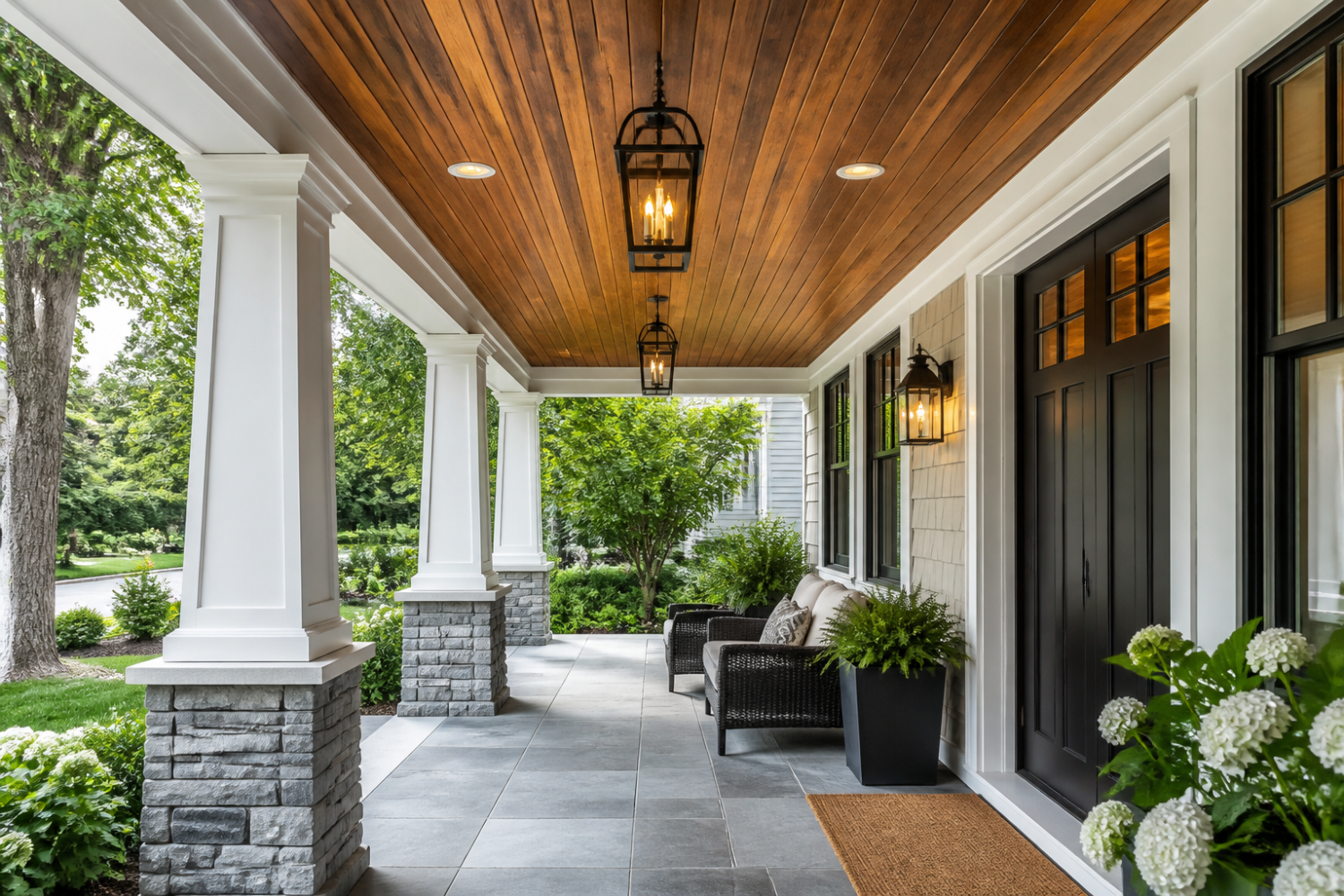
If real wood is your preference, prioritize decay-resistant species and stable boards:
- Cedar: naturally rot-resistant and aromatic; attractive grain.
- Mahogany or tropical hardwoods: exquisite but pricier and sometimes constrained by sourcing.
- Pine beadboard: economical and classic; requires solid exterior paint and maintenance.

Profiles and Styles: Beadboard, Shiplap, Planks, and Panels
Different profiles convey distinct design languages:
- Beadboard: Southern charm or cottage vibes; pairs well with haint blue.
- Shiplap: Modern farmhouse or coastal; wider planks read more contemporary.
- Plank Ceilings / Exposed Beams: Rustic or craftsman aesthetics; highlight natural wood.
- Panel or Smooth Ceilings: Minimalist or when recessed lighting should stand out.
Budgeting and Practical Planning
Costs depend on material, finish, and labor. Keep these planning notes in mind rather than exact numbers:
- Vinyl beadboard is typically the most economical.
- Real wood elevates material and maintenance costs; expect sealing and refinishing expenses.
- Fiber cement or Hardie board increases material costs but pays off with longevity and low upkeep.
Common Pitfalls to Avoid
To achieve a polished outcome, steer clear of:
- Painting without addressing ventilation and moisture, which shortens paint life and invites mildew.
- Skipping primer or exterior-grade paint on wood or fiber cement—peeling and frequent repainting follow.
- Overly dark ceilings on shallow porches; use lighter tones or haint blue to avoid a cramped feel.
Maintenance Routine for Longevity
Simple annual checks keep ceilings looking fresh:
- Wash with mild detergent or gentle pressure wash to remove cobwebs and dirt.
- Look for peeling paint, loose boards, or moisture stains; address moisture sources first.
- Touch up paint and reseal wood per exposure and finish recommendations.
Integrating Porch Ceiling Design with Landscaping and Entry Details
A cohesive curb-appeal plan ties ceiling choices to landscaping and entry hardware:
- Pair haint blue ceilings with white trim and planters to balance cool and warm tones.
- Use lighting that highlights texture and repeats finishes in fixtures and house numbers.
- Layer outdoor textiles—rugs and cushions—that echo ceiling color or provide depth via contrast.
Quick Roadmap for Updating Your Porch Ceiling
- Set a priority: repaint, replace panels, or upgrade materials.
- Inspect for rot and ventilation issues; fix before installation.
- Choose material and finish; test colors in site conditions and compare haint blue shades.
- Prep and install; paint or stain ahead of final installation where feasible.
- Install outdoor-rated lighting and fans; finalize styling.
Frequently Asked Questions
Is haint blue still recommended for modern homes?
Yes. Haint blue remains popular for visually opening porches and complementing many exterior palettes. Test samples to find the tone that works best with your light and siding.
Which material requires the least upkeep?
Vinyl beadboard and metal ceilings are among the lowest-maintenance options; composites and fiber cement also offer long-term benefits with a higher upfront cost.
Can I install recessed lighting in a beadboard ceiling?
Yes. Plan for clearance and use exterior-rated cans or surface-mounted fixtures if space is tight. Always follow code and consult an electrician for damp/wet locations.
Next Steps: Making Your Porch Ceiling a Curb-Appeal Win
Start by photographing your porch from the curb, gather paint and material samples, and choose one focal change—color, texture, or lighting—to anchor the project. Whether you favor a haint blue beadboard ceiling for vintage charm or warm cedar planks for timeless warmth, a finished porch ceiling consistently boosts curb appeal and perceived value.
For budget-conscious inspiration and practical ideas, see 10 creative and inexpensive porch ceiling ideas.
Some readers may also want a direct shopping path for related porch ceiling decor and improvement items to complement the article’s guidance. Explore Porch ceiling ideas products on Amazon.
Share your porch ceiling ideas, questions, or photos in the comments—what finish or color has transformed your entry, and how did you decide between wood, vinyl, and fiber cement?


50 Fantastic Porch Ceiling Ideas That Will Add More Style To Your Outdoor Space:
As you consider the various ways to enhance your porch ceiling, remember that every detail counts in building a welcoming atmosphere that reflects your personal style. Whether you're leaning towards a classic wood finish or something modern and bold, your porch ceiling has the power to transform not just the space itself, but your home's entire curb appeal. Take the plunge to make it truly yours, and don’t forget to let your personality shine through those design choices!
Join the Conversation
I’d love to see how your porch ceiling ideas come to life! Don't hesitate to share your projects or inspirations with me. For more home enhancement tips and creative ideas, make sure to follow us on social media. Check out our latest inspirations on Instagram. Happy decorating!
