
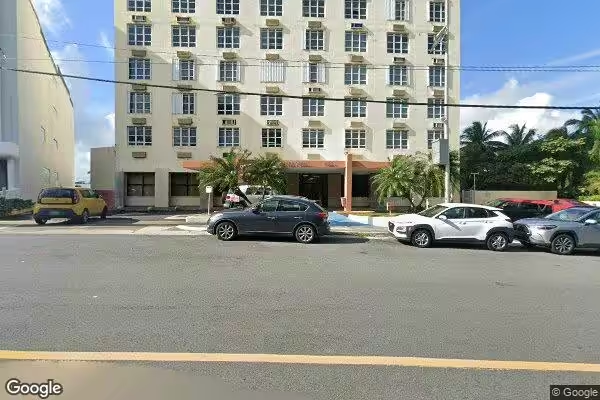
The tallest completed structure in Puerto Rico stands at 78.9 meters (259 feet), making Coliseum Tower Residences the island’s current apex among finished high-rises.
The current tallest completed structure and its peers
In Puerto Rico, the tallest completed high‑rise is documented as just under 80 meters, placing it far from major world‑city megatalls. This height is recorded for Coliseum Tower Residences at 78.9 meters (259 feet) with 27 floors, reflecting architectural height conventions that include spires but exclude antennas and signage. It appears on authoritative tall-building registries as the top completed entry for the territory, including San Juan’s metropolitan context. Coliseum Tower Residences remains the definitive completed benchmark, and broader San Juan tall-building data corroborate its status. San Juan tall-building listings provide additional context on how the island compares regionally.
Mangrove Tower: the proposed game‑changer
Among Caribbean project archives, Mangrove Tower appears as a striking concept: a 206.5‑meter, 55‑story design envisioned for San Juan. If realized, it would have redefined the island’s skyline and, by extension, Caribbean height benchmarks. As of now, it remains unbuilt, so it does not alter the standings of completed structures. The proposal exemplifies how regional ambition sometimes outpaces permitting and financing cycles, offering a useful point of comparison for readers tracking architectural scale in the Caribbean.
How heights are defined and why rankings differ
Height comparisons hinge on measurement conventions. Architectural height includes spires and architectural elements but excludes antennae, while roof height captures the finished rooftop level. Some registries cite highest occupied floor to emphasize usable space. Because sources vary in conventions and in whether projects are proposed or completed, it’s essential to specify whether a claim refers to completed buildings, topped‑out projects, or proposals.
Where Puerto Rico’s tall buildings cluster and why
Most of the island’s higher towers cluster in coastal districts around San Juan’s metro area, with a skyline dominated by mid‑rise residential and hotel towers rather than megatall office towers. This pattern reflects market dynamics, seismic and wind considerations, and land‑use regulations that influence height decisions in a hurricane‑prone, island setting. Strategic mid‑rise design often balances ocean views with construction practicality and resilience.
The Mangrove Tower in context: regional significance
Even as a proposal, Mangrove Tower matters for regional comparisons. Had it been realized, it would have ranked among the Caribbean’s notable tall structures, underscoring how Caribbean metropolitan ambitions sometimes outpace local financing or permitting cycles. The aspirational height of 206.5 meters would have set a regional benchmark, clarifying why many observers treat proposals as valuable reference points even when not built.
Practical takeaways for homeowners, developers, and designers
Height decisions influence durability, code compliance, and long‑term maintenance in Puerto Rico’s climate. Key considerations include:
- Wind and hurricane resilience: taller designs require robust façades, protective glazing, and redundancy in life-safety systems.
- Coastal exposure and corrosion: salt‑air environments demand durable materials and protective coatings to preserve longevity.
- Egress and utilities: taller layouts require resilient power, water supply, and evacuation planning to maintain reliability during storms.
For readers seeking tangible ways to visualize these ideas, a physical model can help compare scale and massing. Consider skyscraper building model kits to grasp how different heights translate to footprint, structure, and spatial impact.
How to verify claims about the island’s tallest structures
When encountering a claim about a new record, verify three aspects to avoid misinterpretation:
- Is the project completed, topped‑out, or only proposed/approved?
- Which height definition is used (architectural, roof, or occupied floor)?
- Is the source a recognized registry or a reputable database?
The architectural perspective: why height matters in design
Raising a building’s height influences structural systems, façade engineering, and occupancy planning. Even in a market like Puerto Rico, moving from around 80 meters to more ambitious prototypes requires balancing aesthetics, practicality, and climate resilience. Practical strategies often favor mid‑rise approaches that preserve coastal views while remaining easier to construct and maintain over the long term.
| Category | Height (approx.) | Notes |
|---|---|---|
| Current tallest completed | ~78.9 m (259 ft) | Coliseum Tower Residences; architectural height standard |
| Tallest proposed | 206.5 m (677 ft) | Mangrove Tower; 55 floors; not built |
| Common context | 100–150 m range | Coastal, residential/hotel skyline; no megatalls |
It’s not just height: reflecting on Puerto Rico’s built legacy
Mid‑century modern and Case Study House influences shape Puerto Rico’s architectural dialogue, with lived experiences offering a human lens on tall buildings. The landscape reveals how fearless design can coexist with prudent financing, permitting, and regulatory realities—producing spaces that balance ocean views, social spaces, and resilience.
Would you share your perspective on how height, skyline, and architectural ambition intersect with local culture and climate? If you’ve visited Puerto Rico’s coastal districts or followed Caribbean tall‑building news, tell us what you think about which direction the island’s skyline should take. Have you seen a project proposal like Mangrove Tower and imagined how it might reshape the urban fabric? Join the conversation below and drop a comment with your experience or questions.
Map and Satellite View
Street View
Puerto Rico’s Tallest Tower Soars Above San Juan 🇵🇷🏙️:
The tallest building in Puerto Rico, the infamous "La Torre" (the Tower), stands as a proud symbol of the island's architectural prowess and resilience. Not only does it dominate the skyline, but it also tells the story of the vibrant culture, rich history, and the determination of the Puerto Rican people to rise above challenges. Whether you're an architecture enthusiast or simply someone who enjoys breathtaking views, visiting this landmark is a remarkable experience that encapsulates the spirit of Puerto Rico.
Explore More about Puerto Rico's Skyline
If you're as fascinated by impressive buildings and stunning designs as I am, there's so much more to discover about Puerto Rico's architectural wonders! I invite you to connect with me on Instagram at architectureadrenaline, where I share insights, photos, and updates on everything architecture-related. So keep exploring, stay curious, and let’s celebrate the beauty of Puerto Rico together!
