
What Does a Yellow Sky Mean? Atmospheric Conditions Explained A yellow sky typically signals elevated aerosol content in the air—often smoke, dust, or pollution—caused by particles that alter light scattering and shift color toward yellow or amber as the sun moves across the sky. This color cue matters because it points to air quality and safety considerations beyond aesthetics.
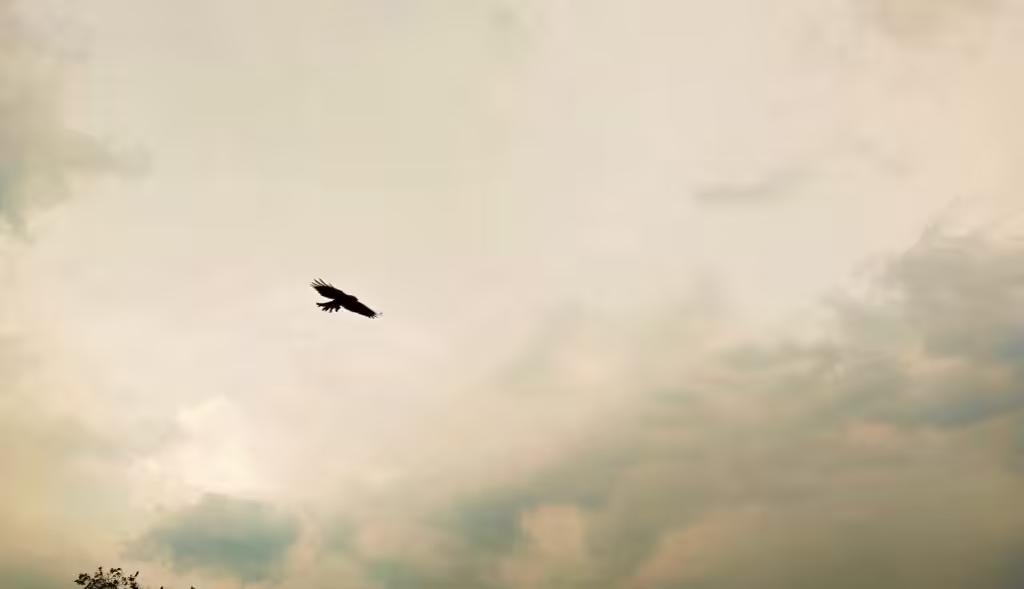
In clear daylight, the sky appears blue due to Rayleigh scattering, where small gas molecules scatter shorter wavelengths of light more effectively than longer ones. When larger particles—smoke, dust, pollen, ash, or droplets—populate the atmosphere, Mie scattering becomes dominant, reducing the blue in the direct path and nudging the color balance toward yellows, oranges, or browns. The exact hue depends on particle size, concentration, and composition, which is why a yellow sky can range from pale to intense, and why the color can shift with weather and time of day (sun angle). For a baseline explanation of how colors shift under different atmospheric conditions, see Why the sky is blue (and how colors shift with atmospheric conditions).
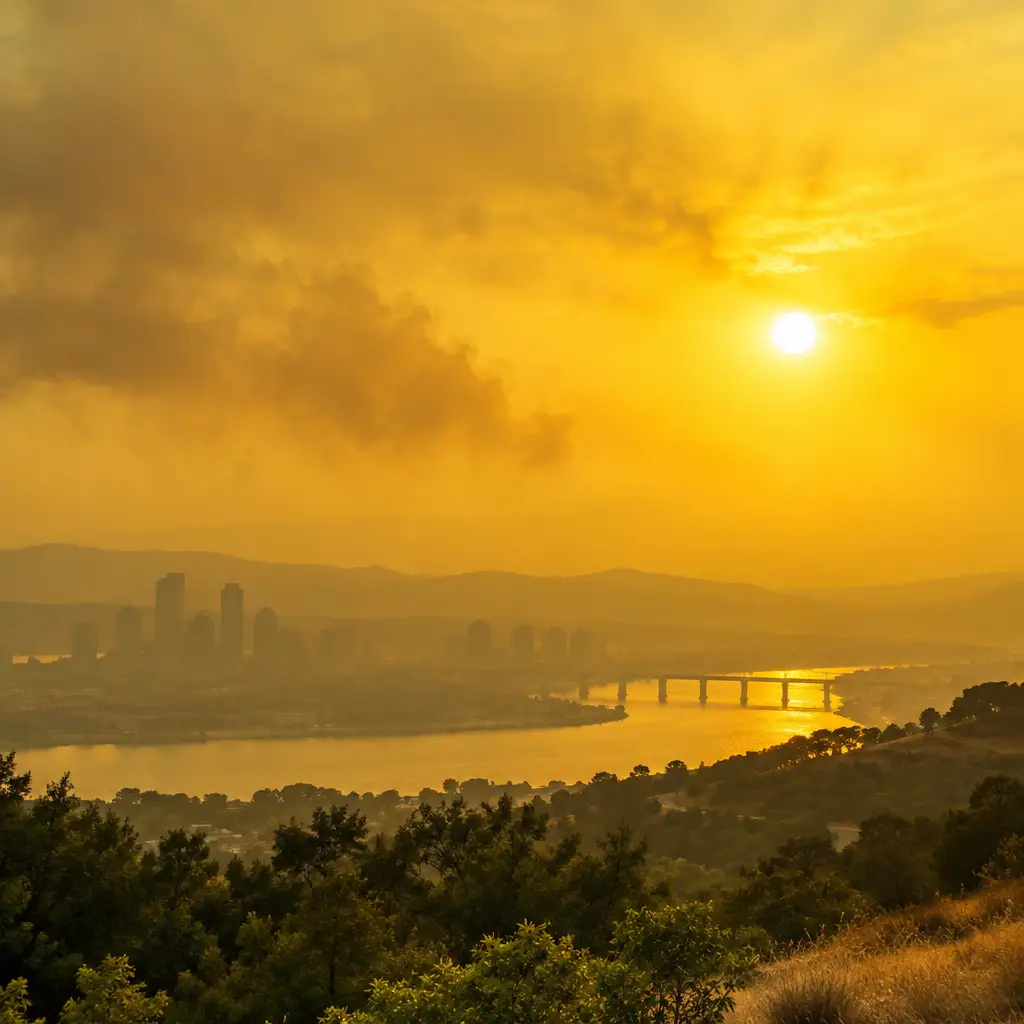
Sun angle amplifies color effects. At sunrise and sunset, light traverses more atmosphere, compounding scattering and often producing pronounced yellow or gold tones when aerosols are present. In smoky mornings or evenings, the combination of low sun and aerosol content can yield a warmer palette than midday conditions would suggest.

The yellow hue from smoke differs from desert dust plumes. Fine aerosols from wildfires tend to mute blue wavelengths and create amber to orange tones, while dense plumes can push toward yellow. Monitoring local air quality readings (PM2.5/PM10) helps quantify both color shifts and health risks. For a concise, science-based explanation of how wildfire smoke alters light scattering and the resulting sky color, refer to Why wildfire smoke turns the sky yellow.
Yellow Sky from Smoke, Dust, and Haze
Bright, fine aerosols from wildfires scatter and absorb blue wavelengths, often yielding a yellow to amber tint. The exact color depends on particle size and density: finer smoke tends toward amber or orange, while denser plumes can skew toward yellow. Observers can quantify exposure risk by checking air-quality maps (PM2.5, PM10) and fire reports in real time. For additional context on color interpretation, see the Architecture Adrenaline explainer What Does a Yellow Sky Mean? Atmospheric Conditions Explained and the internal reference Where Is Wildfire Filmed: The Real-Life Locations Unveiled.

Dust and Desert Dust Plumes
Coarse mineral dust—whether from local dust storms or long-range transport like Saharan dust—raises atmospheric turbidity and shifts color toward ochre-yellow. Visible signs include reduced visibility and dusty deposits on surfaces. Regional advisories and dust plume maps provide the broader context for observed color shifts.
Storm-Associated Colors: Yellow vs. Green and What It Means
Yellow tints near storms often indicate substantial precipitation and aerosol or cloud-light interactions, whereas greenish hues are more typical near severe weather with large droplets or hail. Color can hint at storm intensity but is not a standalone predictor of tornadoes; rely on radar, warnings, and official guidance for safety decisions.
Volcanic and Sulfur Aerosols: The Yellow Sulfur Sky
Volcanic eruptions release sulfur compounds that form sulfuric acid aerosols, which can mute skies or shift them toward yellow or greenish hues and intensify dramatic sunsets. The mechanism—particles altering wavelengths reaching the eye—parallels other aerosol-driven effects, but the source is volcanic or industrial sulfur emissions.
Urban Pollution and Long-Term Yellowing
Chronic urban pollution—soot, sulfates, nitrates—raises the aerosol load and can produce persistent gray-yellow skies, especially when humidity is high. In cities, track local air quality (AQI) to understand ongoing color shifts and their health implications, not just for a photo opportunity.
Diagnosing a Yellow Sky in Real Time
- Time of day: near sunrise or sunset, expect color shifts even without aerosols.
- Smell or residue: smoke or ash points to wildfire or dust; gritty deposits point to dust.
- Official sources: consult local NWS/NOAA updates, air-quality maps, and fire/dust advisories.
- Satellite and radar: use imagery to identify smoke plumes, dust transport, or convective storms.
Color Clues and Weather Risk: Is a Yellow Sky a Tornado Warning?
Color alone does not reliably indicate a tornado. A yellow or yellow-green sky can accompany severe thunderstorms with large raindrops or hail, but it can also occur with smoke or dust. If you see additional warning signs—wall clouds, funnel shapes, loud roars, or official tornado warnings—seek shelter. For aerosol-driven yellow skies, indoors with filtered air is the priority.
Historical Notes and Cultural References
Yellow skies appear in historical observations and art as indicators of aerosol-rich conditions or dramatic lighting. The term also crops up in cultural references, such as the 1948 Western film Yellow Sky, highlighting how people have long noticed dramatic skies while meteorology evolved with science.
Practical Advice for Homeowners and Travelers
If smoke or pollution causes the yellow sky: keep windows shut, run higher-efficiency filters, and minimize outdoor exertion when the air quality index is poor. If dust is the cause: protect plants and equipment, and wipe surfaces to reduce buildup. In potential severe weather: monitor reliable weather sources and follow shelter guidance. Tailor actions to the cause—air-quality measures for aerosols, storm-safety protocols for convective activity.
Common Misinterpretations to Avoid
A common mistake is assuming a yellow sky always portends imminent danger or is purely aesthetic. Color is a cue about the atmosphere’s composition and lighting, but it must be interpreted with context—time of day, smells, visibility, radar data, and official advisories—to assess risk accurately.
Quick Field Checklist
- Note sun position and time of day.
- Check local air quality (PM2.5/PM10) and look for smoke or ash.
- Review regional news for wildfires or dust events.
- Consult weather radar for storm development.
- Observe surface conditions: haze, crusty dust, or soot deposition.
Why the Cause Matters for Action
Understanding the underlying cause of a yellow sky guides practical responses. Smoke or pollution calls for indoor air protection and exposure reduction; dust requires surface and equipment care and possible respiratory considerations; storm-related coloring calls for situational awareness and sheltering. While the sky’s color remains striking, safety and health decisions hinge on identifying the real source.
Have you ever noticed a yellow sky in your area? Share your experience and what you did in the comments—your observations can help others interpret what they see in the sky.
Further reading and practical tools:
- Real-time air-quality monitoring and practical home-use devices: air quality monitor
- Background on Rayleigh scattering and baseline sky color: Why the sky is blue (and how colors shift with atmospheric conditions)
- Contextual explanation of yellow skies during wildfire events: Why wildfire smoke turns the sky yellow
For deeper internal coverage, explore Architecture Adrenaline’s related analyses on internal discussions of color, atmosphere, and landscape impacts, including What Does a Yellow Sky Mean? Atmospheric Conditions Explained and Where Is Wildfire Filmed: The Real-Life Locations Unveiled.
If You See the Sky Turning Yellow, RUN IMMEDIATELY! 😨 #viral:
As we’ve explored the fascinating phenomenon of a yellow sky, it becomes clear that this atmospheric occurrence often signals something significant—whether it’s the golden glow of a sunset or the telltale signs of an impending storm. Embracing the beauty and intricacies of our weather can deepen our appreciation for nature’s artistry. Next time you find yourself gazing up and noticing that unusual hue, you’ll have a better understanding of the meteorological dance at play.
Stay Curious About Nature's Wonders
I hope this journey through the science of a yellow sky has sparked your curiosity about the world around you! If you're keen to learn more about atmospheric conditions or just want to delight in the beauty of architecture and nature, be sure to follow my adventures on social media—check out my posts on Instagram for daily inspiration. Let’s continue to explore and appreciate the wonders that our skies have to offer!
