
The Salk Institute sits on the Torrey Pines mesa in La Jolla, California, a campus defined by its ocean-facing geometry and purposeful daylighting. The primary public identity and location can be confirmed on the Institute’s official site: Salk Institute for Biological Studies — official site. This article blends campus details, architecture, tours, and practical tips to help you plan a thoughtful visit or a deeper understanding of the institute.
| Fact | Quick Details |
|---|---|
| Official Name | Salk Institute for Biological Studies |
| Address | 10010 North Torrey Pines Rd, La Jolla, CA 92037 |
| Main Contact | (858) 453-4100 — salk.edu |
Campus Location And Setting
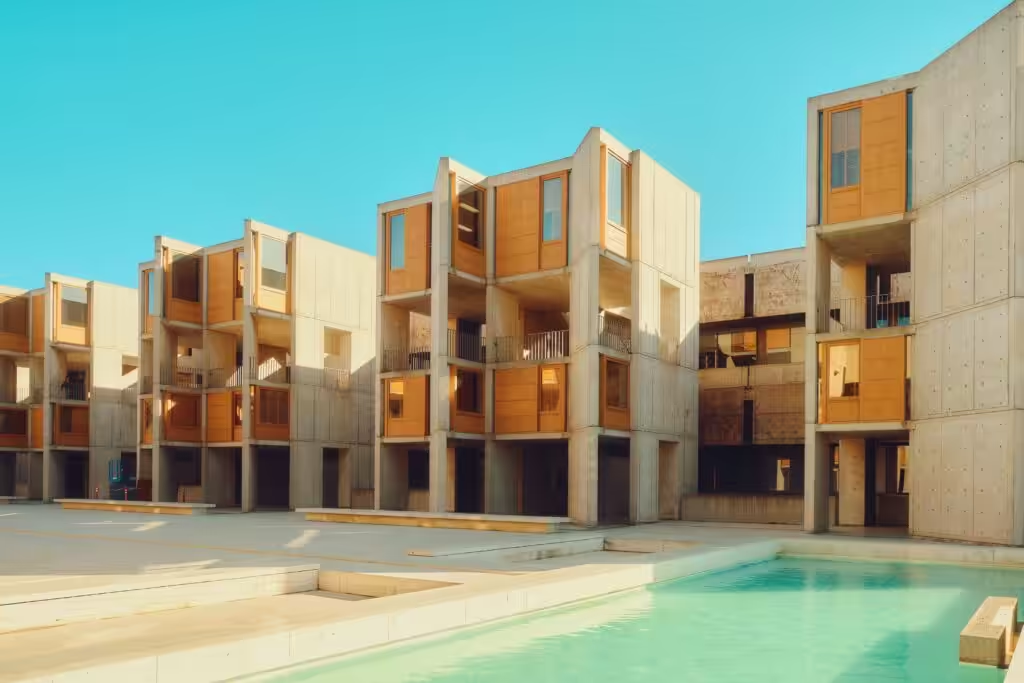
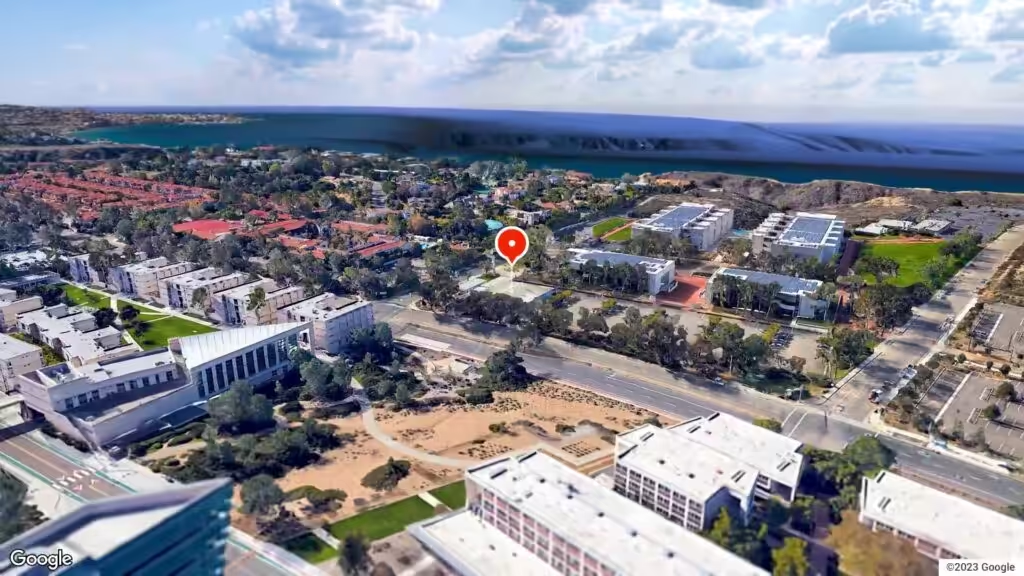
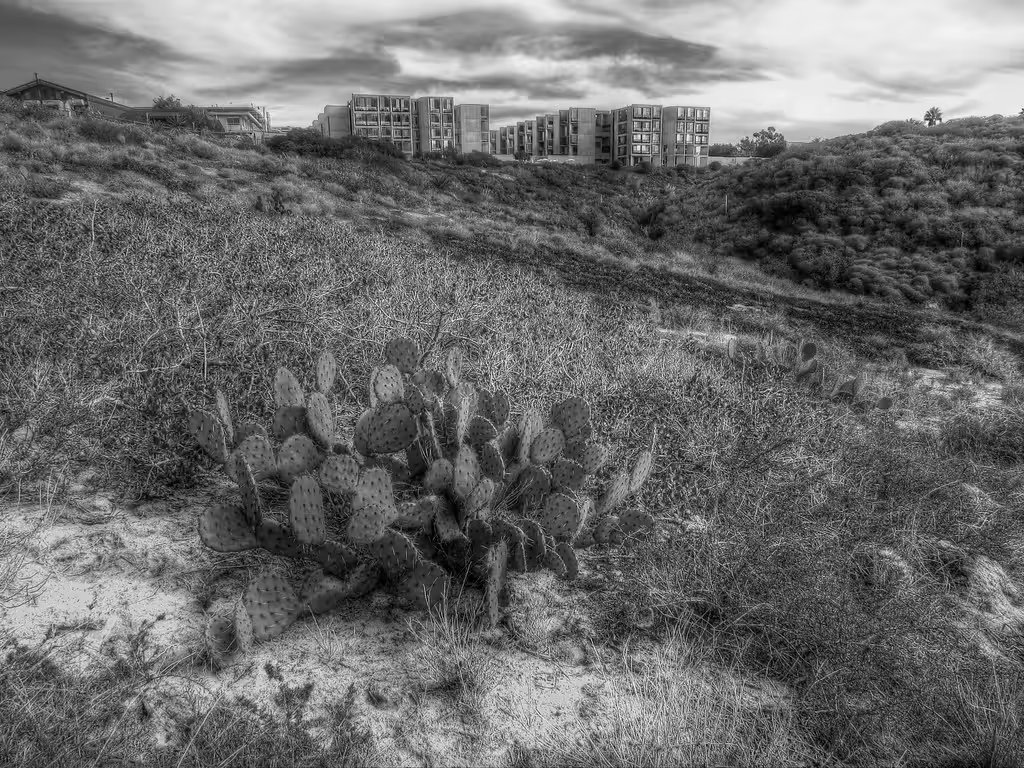
The Salk Institute occupies a prominent ocean-facing parcel on the Torrey Pines mesa, perched above La Jolla. It sits within a corridor of research institutions, with the Pacific to the west providing dramatic light and expansive views. The west-facing orientation shapes how daylight pours into the central courtyard and labs, reinforcing a sense of clarity and focus that mirrors the science conducted inside.
Address, Phone And Official Web Presence
For planning and public information, use the official address: 10010 North Torrey Pines Road, La Jolla, CA 92037. The main switchboard is (858) 453-4100, and the primary public site for information, tours, and visit planning is salk.edu. For ongoing news and program updates, you can explore the institute’s online channels linked from the official site.
How To Get There
Driving or ridesharing is the most convenient option; there is no general public on-site parking for visitors. If you’re coming from central San Diego, take I-5 north to La Jolla and follow Torrey Pines Road toward the Torrey Pines State Reserve. The campus sits near the western end of the road on the bluff. Public transit options exist but may require a walk from the nearest stop or a drop-off at Security, so plan ahead.
Architectural Context: Louis Kahn And The Design Intent
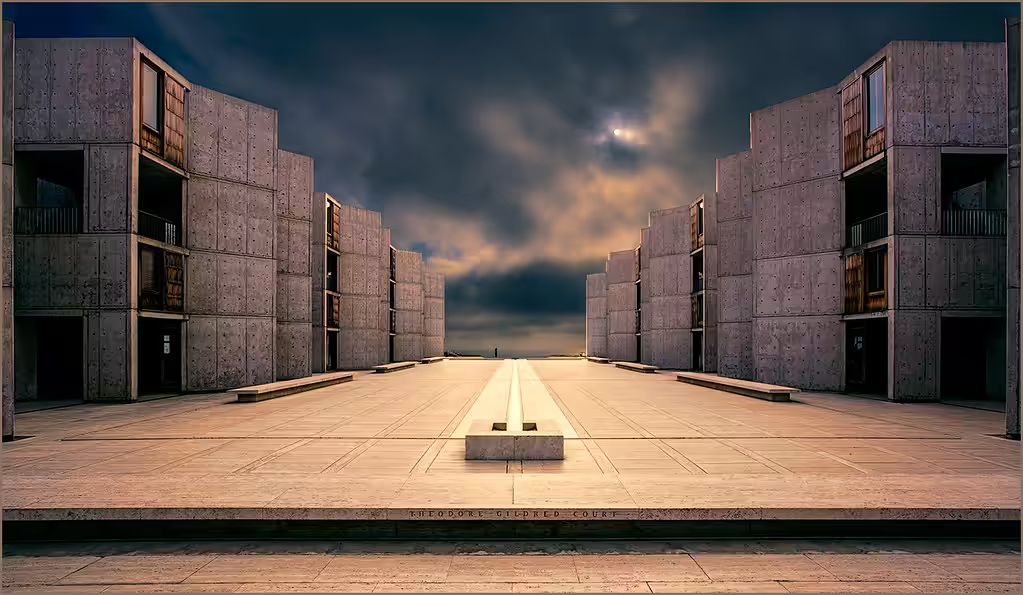
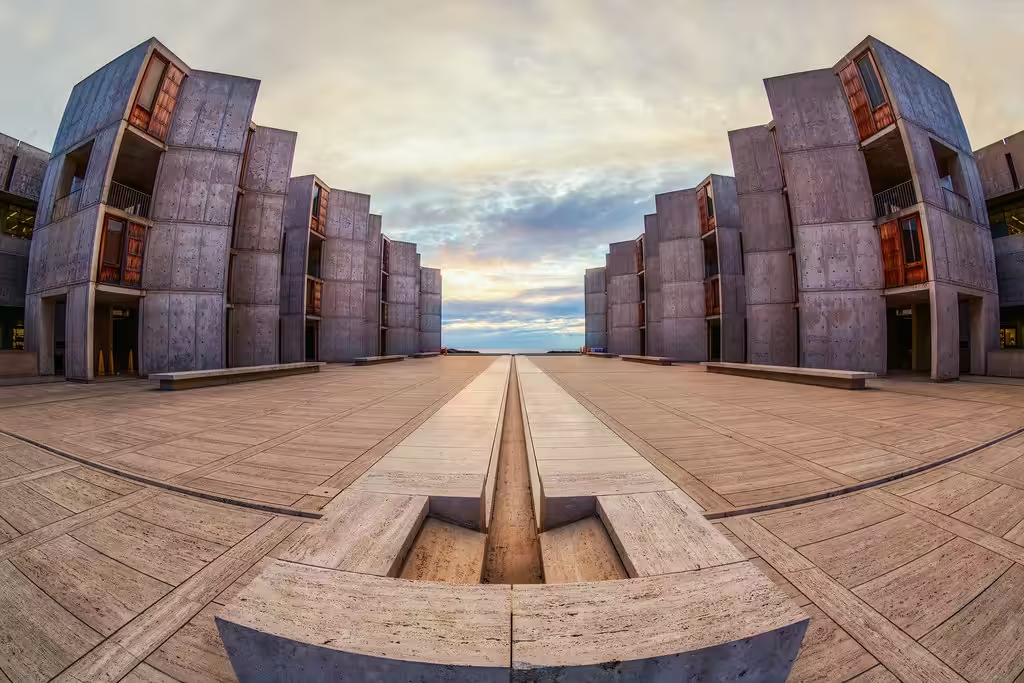
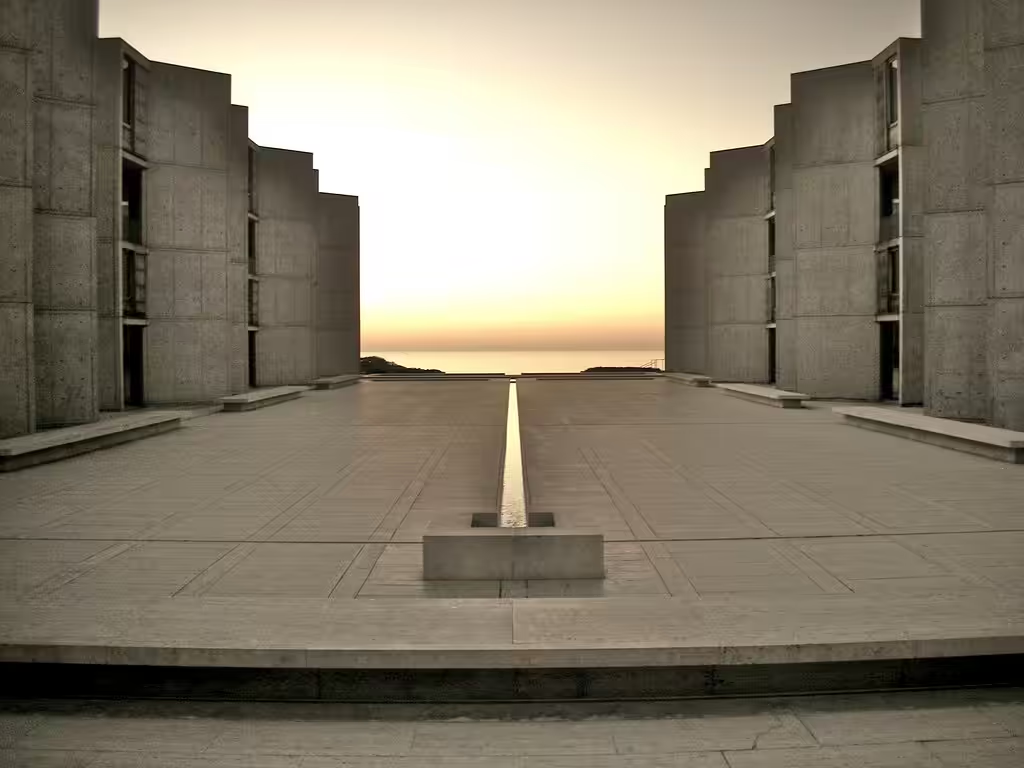
Louis I. Kahn designed the Salk Institute in the early 1960s for Jonas Salk’s scientific enterprise. The layout centers on a pair of lab blocks flanking a travertine-lined central courtyard and a long reflecting pool. Kahn’s design emphasizes order, material honesty, daylight, and flexible lab planning over ornamental form, creating a space that feels both monumental and intimately human at the lab scale.
Site Influence: Orientation, Views, And Climate
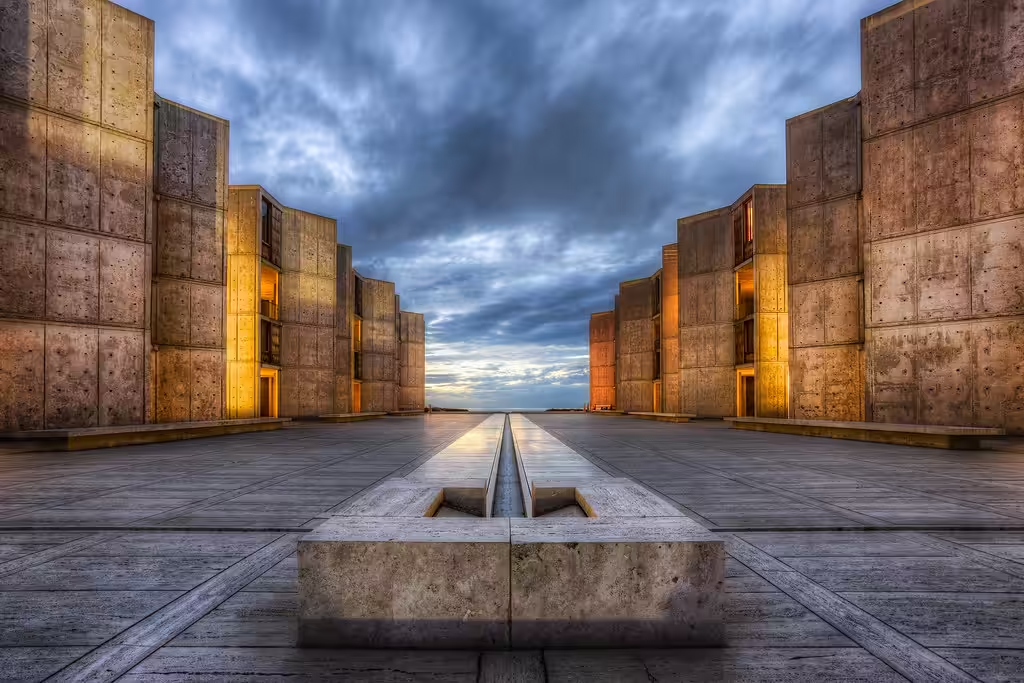
The site’s topography and coastal climate dictated key decisions: the plaza’s travertine, the simple material palette (concrete, teak, travertine, glass), and the long axial sightline to the Pacific. Deep overhangs and precise detailing respond to seaside conditions, while the courtyard and viewing channels reinforce measurable light and views that organize movement and perception across the campus.
Visiting Salk: Tours, Access, And Practical Tips
Public tours are offered with docent guidance, and advance registration is required. Because campus access can be restricted for research activities or events, it’s wise to book ahead and confirm current schedules on the official visiting pages. Plan to arrive early, expect a security check, and note that on-site parking is limited; rideshare or drop-offs are often the simplest option.
What The Salk Institute Does: Research Focus And Public Mission
Beyond its architectural stature, the Salk Institute is a working nonprofit research organization. Its science spans aging and regenerative medicine, cancer biology, neuroscience, immune biology, metabolism, plant biology, and beyond. The institute emphasizes foundational research with translational potential, and it hosts several centers and programs that foster collaboration and public engagement in science.
Practical Considerations For Photographers And Architects
The campus is a frequent photography subject, but it remains an active research environment. Follow official photography guidelines and tour etiquette to protect researchers’ privacy and ongoing work. As a study in architecture, take note of removable lab windows, detailing in teak and travertine, and how outdoor paths and stair towers modulate light, shadow, and circulation throughout the site.
Conservation, Maintenance, And Evolution
Since its opening in the 1960s, the Salk Institute has undergone careful restorations and modernization of systems while preserving Kahn’s architectural intent. Elements like teak panels have been refreshed, and laboratory layouts updated to meet current codes and research needs, ensuring the campus remains both respectful of its origins and capable of supporting contemporary science.
Architectural Details To Look For On Site
- The central travertine courtyard and its narrow water channel directing attention toward the ocean.
- Exposed concrete, teak joinery, and glass that articulate material texture at human scale.
- Removable lab windows to facilitate equipment movement without structural modification.
- Freestanding stair towers defining the campus silhouette and controlling daylight and ventilation.
Nearby Context And Complementary Places To Visit
The La Jolla coastline offers more than architecture. Pair a Salk visit with natural beauty at Torrey Pines State Natural Reserve and the broader La Jolla research and cultural landscape to gain a richer understanding of how landscape, science, and design interact in this region.
Frequently Asked Practical Questions
- Is the Salk open to the public? Public access is limited to scheduled tours; the campus remains an active research facility with restricted wandering.
- Do I need tickets? Yes — most public tours require advance registration through salk.edu.
- Is photography allowed? Limited in general; follow docent directions and posted restrictions to respect privacy and research.
- Phone and further contact? Main line: (858) 453-4100; visit salk.edu for the latest visitor and contact information.
| Topic | Key Facts | Where To Learn More |
|---|---|---|
| Tours | Docent-led; advance registration required; public tours frequently scheduled midweek | |
| Research Focus | Aging, Cancer, Neuroscience, Immunobiology, Plant Biology, Metabolism | |
| Contact | Main line (858) 453-4100; general inquiries via salk.edu | Contact Us |
What To Look For In the Institute’s Public Narrative
In addition to the architecture, Salk’s public programs and collaborations highlight a mission to translate foundational science into real-world impact. Initiatives like the Harnessing Plants Initiative and collaborations with national cancer centers illustrate how Salk positions itself at the intersection of fundamental discovery and practical application. For readers curious about current science and partnerships, the institute’s program pages and press updates offer concrete examples of ongoing work.
Engaging With Salk: How Visitors Connect With The Mission
Public engagement at Salk centers on tours, publications, and community initiatives. The Institute’s publications and newsletters provide insight into research breakthroughs and institutional history, while events and collaborations invite broader audiences to participate in science discussions and discovery.
Readers seeking a concise, book-length context can explore background reading such as the Salk Institute book, available on Salk Institute book on Amazon.
3D Aerial Flyover
Map and Satellite View
Street View
Fox 5 Step Inside the Salk Institute The LOCAList SD:
If you’re wondering where the Salk Institute is, it's nestled in the stunning La Jolla neighborhood of San Diego, California. This architectural gem is not just a place for groundbreaking scientific research but also a visual delight, designed by the celebrated architect Louis Kahn. The breathtaking views of the Pacific Ocean and the serene environment make it an ideal setting for innovation and contemplation. Whether you're an architecture buff, a science enthusiast, or just looking for a peaceful retreat, the Salk Institute has something for everyone.
Stay Connected with Us
So, as you plan your visit or simply want to learn more about this iconic institution, be sure to keep in touch with us! We love sharing updates and inspiring content on architecture and design. Follow us on Instagram for a dose of daily inspiration and behind-the-scenes looks at iconic structures, including the Salk Institute. Check us out here! We can't wait to hear your thoughts and experiences as you explore the world of architecture together with us!
