
An 8x7 wood garage door weighs roughly 130 to 350 pounds; the most likely range for common constructions is 180 to 250 lb, and the exact figure matters because spring selection, opener capacity, balance, and safety depend on it. This piece explains what increases weight, how to confirm the number, how weight changes spring and opener choices, and what to expect during service and installation.
Why Weight Dictates Component Choices and Safety
Door weight sets the required spring torque, cable tension, track loading, and the opener’s effective duty cycle. A mis-sized torsion spring shortens component life and creates a safety hazard because an unbalanced door stores and releases large amounts of kinetic energy. Confirmed weight is the single most important input when ordering springs, selecting an opener, or specifying header reinforcement.
Practical Weight Bands for Planning
Use the bands below for planning only; always verify actual weight before purchasing springs or an opener.
- Lightwood construction: about 130-180 lb. Typical for cedar shiplap or thin-paneled carriage doors without glazing.
- Veneer or insulated wood-look: about 180-250 lb. Applies to wood-veneer faces over engineered cores or insulated panels.
- Solid hardwood: about 250-350+ lb. Thick oak or mahogany panels with glass and iron hardware reach the top end.
How To Measure an 8x7 Wood Garage Door Accurately
Manufacturer weight data is preferable. If that is unavailable, weigh the door before changing springs or upgrading the opener. A reliable method places a calibrated floor scale under the center while two people lift the lower corners to transfer the full load; add estimated weight for hardware or future finishes.
- If you need an off-the-shelf tool to verify weight, consider buying a garage door weight scale on Amazon to measure the whole door or to confirm an installer’s reading.
- For low-capacity scales, lift partially and use a known counterweight method or call a pro; improper lifting during measurement risks injury and damage.
Estimators and Calculators to Cross-Check Measured Weight
Estimators help form an expectation before measurement. Use the Garage Door Weight Estimator to approximate an 8x7 wood door weight from panel thickness, glazing, and insulation choices; treat the result as an engineering check, not a replacement for an actual measured value. For general guidance about how door weight varies with construction see the Advanced Door discussion of door weight, which highlights differences in wood, steel, and insulated doors and explains why exact weight matters for spring selection in doors such as an 8x7 wood model (How Much Does a Garage Door Weigh? (weight guidance)).
How Weight Changes Spring and Opener Specifications
Torsion springs are chosen by measured door weight, drum diameter, spring wire size, and spring inside diameter. Heavier 8x7 wood doors require either larger wire, a longer spring, or multiple springs to achieve necessary torque and a safe cycle life. Openers are rated by lifting capacity and duty cycle; doors under about 150 lb often operate acceptably with a 1/2 HP unit, doors between roughly 150 and 350 lb commonly call for 3/4 HP, and doors heavier than 350 lb or in high-cycle applications may need 1 HP or a commercial-rated opener. These are practical thresholds; use measured weight to finalize the specification.
Installation and Service Actions Specific to Heavy Wood Doors
Heavy wooden doors increase loads on cables, drums, and header anchors. If measured weight exceeds planning bands, expect recommendations for heavier torsion springs, reinforced spring anchors, upgraded cables, and a higher-capacity opener. Never attempt spring replacement without proper tools and training. A professional installer will often perform an on-site weighing and then size springs and the opener to the actual measured mass.
How Additions and Finishes Shift Door Balance
Additions such as foam insulation, steel reinforcement, glass inserts, decorative iron straps, and multiple finish coats can add significant pounds; individual glass inserts and hardware commonly shift balance upward and concentrate mass in the upper panels. Decorative iron can add 10-30 lb, and foam plus veneering can move a door from the light band into the veneer band. Re-measure after any of these changes and factor a 10 to 20 percent contingency into spring and opener selection to accommodate future finish or hardware additions.
Design Tradeoffs When Specifying Wood Doors
When aesthetics demand solid wood, accept higher maintenance and stronger mechanicals. If energy performance is a priority, insulated veneer constructions achieve better R-values with lower added mass than full solid panels. For high-cycle applications choose lighter assemblies or engineered cores with wood faces to reduce spring fatigue and opener strain. Always request weight by size and finish option from the manufacturer before final selection.
Maintenance Actions That Respond to Weight-Related Wear
- Inspect springs, cables, and track anchors every six months for heavy doors; look for elongation, corrosion, or anchor movement.
- Lubricate bearings, rollers, and hinges and check travel balance; an out-of-balance heavy door accelerates wear and may cause early opener failure.
- Replace springs proactively when cycle life is near its limit; sag, jerky movement, or premature breakage are indicators to act before a safety issue occurs.
Common Specification and Installation Mistakes
Frequent errors include assuming nominal door size implies a standard weight, ordering springs by height only, or compensating for weak springs with an oversized opener. Each mistake raises the cost of ownership and increases safety risk. Use measured weight to size springs, and use manufacturer or installer guidance for drum diameter and cable length to ensure correct balance.
Additional Technical Resources and Related Topics
For step-by-step procedures on related service tasks consult the site’s practical how-to guides: a horizontal-track overview covering track loads and header implications appears in Horizontal Garage Door Track: What You Need to Know, a cable-replacement procedure that shows safe handling and tension checks is in Replace Garage Door Cable in 7 Easy Steps, and a set of homeowner-facing weighing and replacement-cost considerations appears alongside regional replacement-cost coverage at Garage Door Replacement Cost San Diego. For historical weight context on wooden-panel doors consult the Timberlane vintage specification PDF (Timberlane vintage garage door specifications) which helps contrast older solid-panel weights with modern insulated, multi-ply assemblies.
If a measured weight falls outside typical bands, if the door is hard to lift manually, or springs fail prematurely, have a qualified technician perform on-site weighing and match springs and opener to that measured weight. Professional weighing and correct spring sizing reduce repair frequency and eliminate avoidable safety risks.

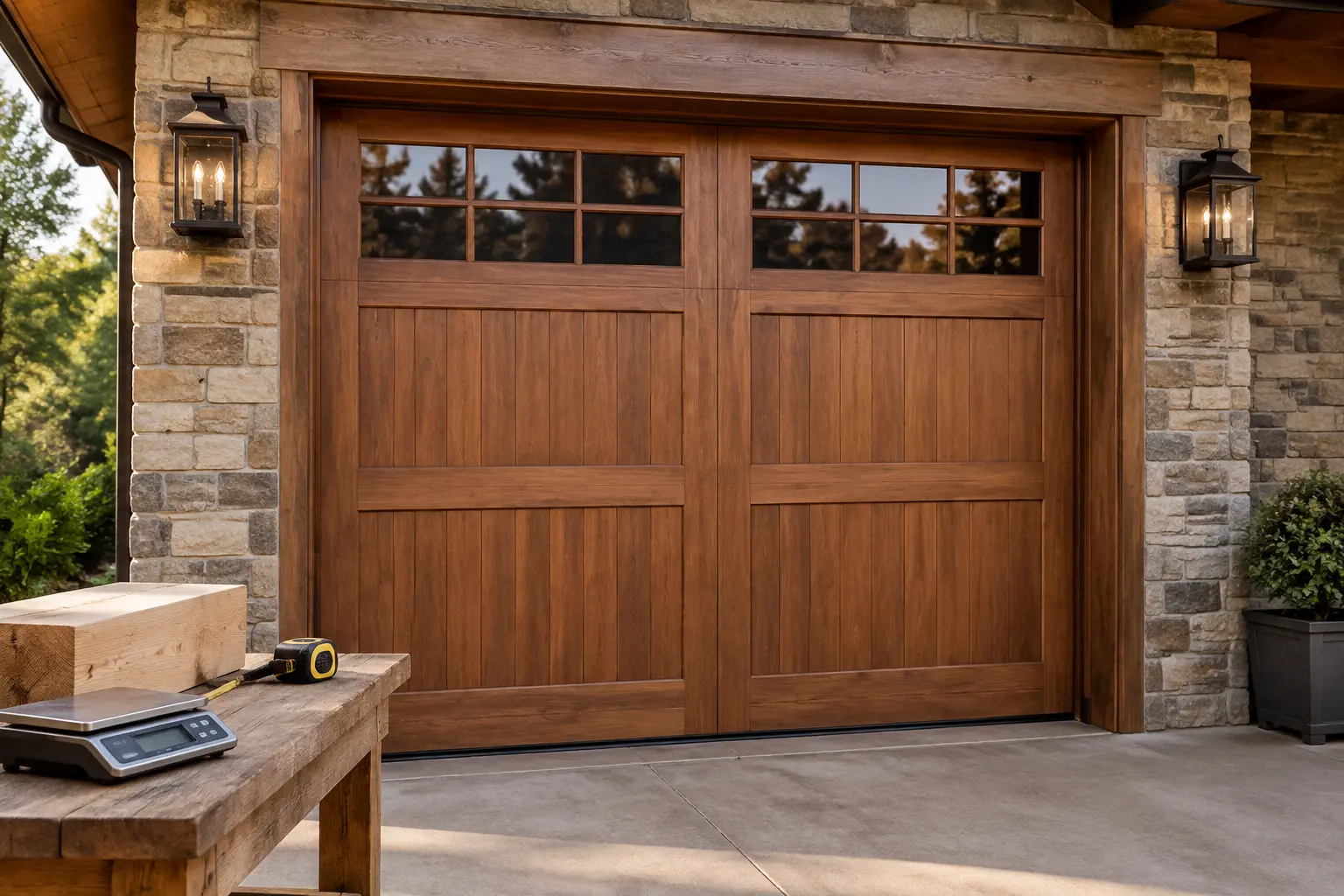
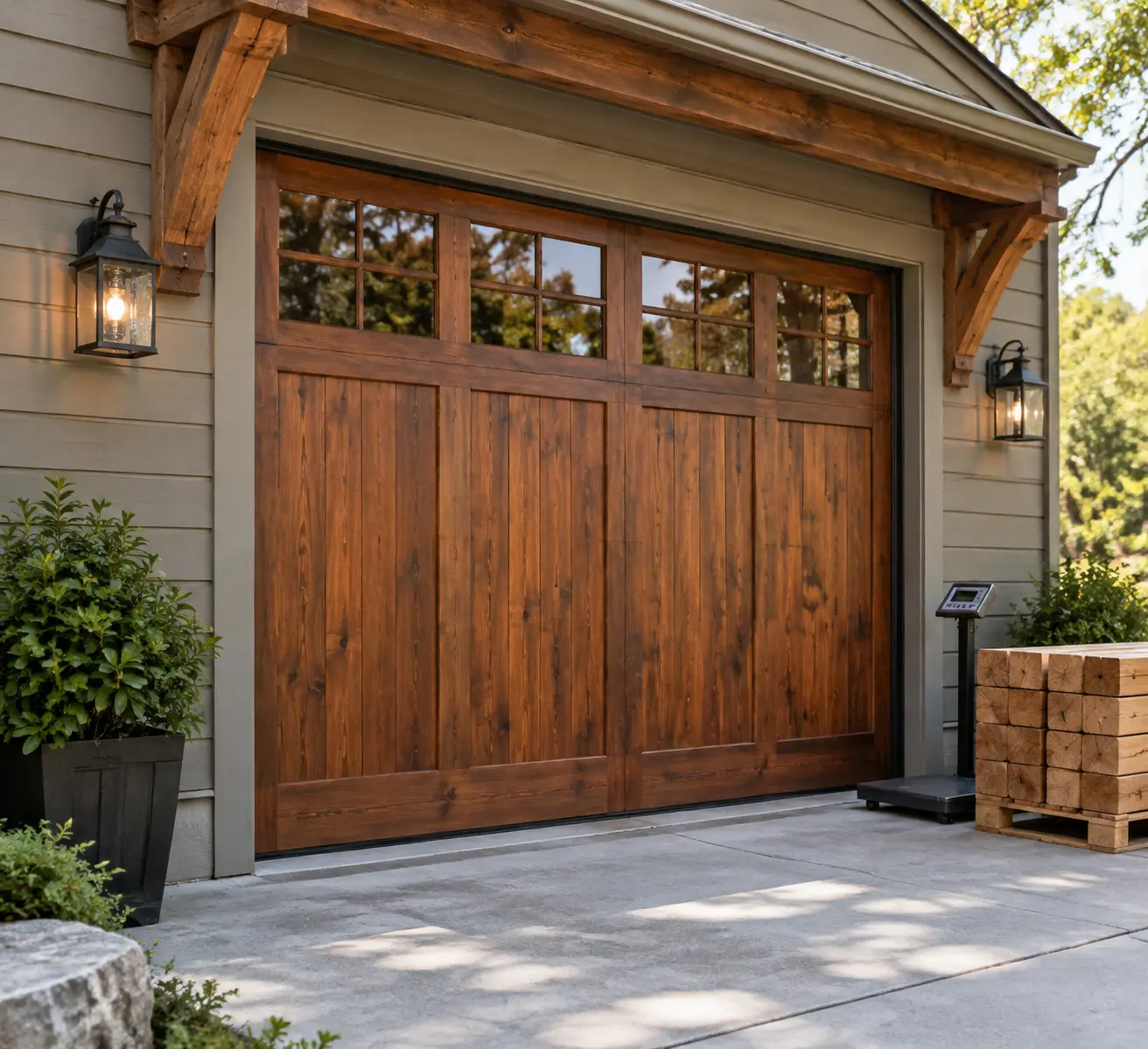
How to Weigh your Garage Door:
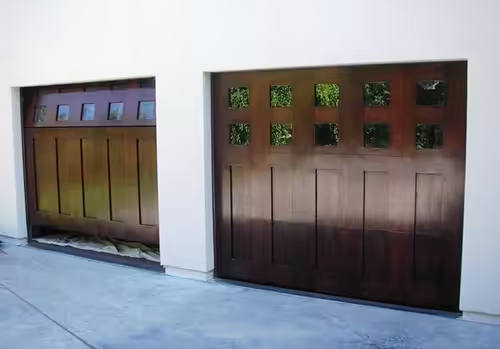
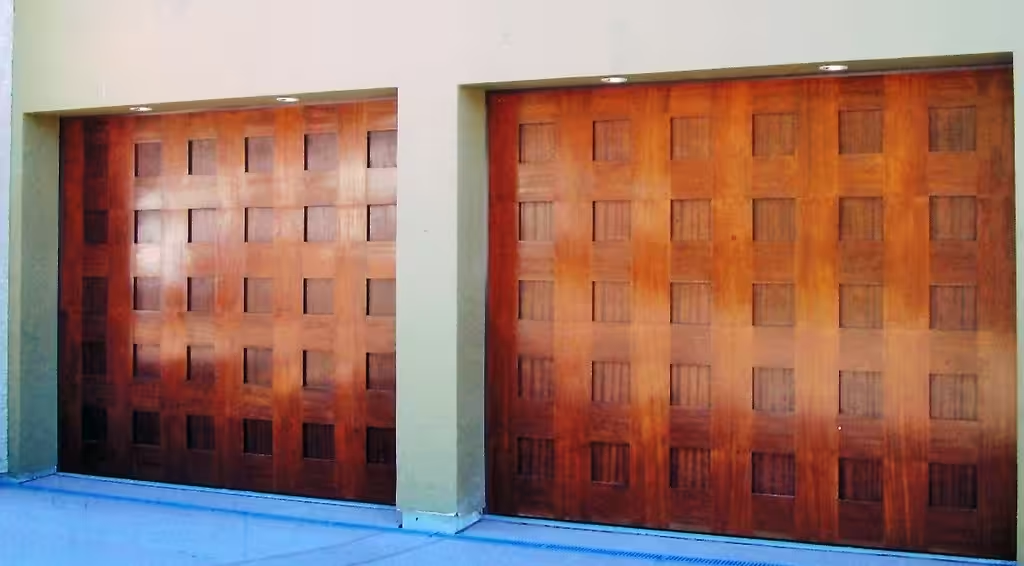
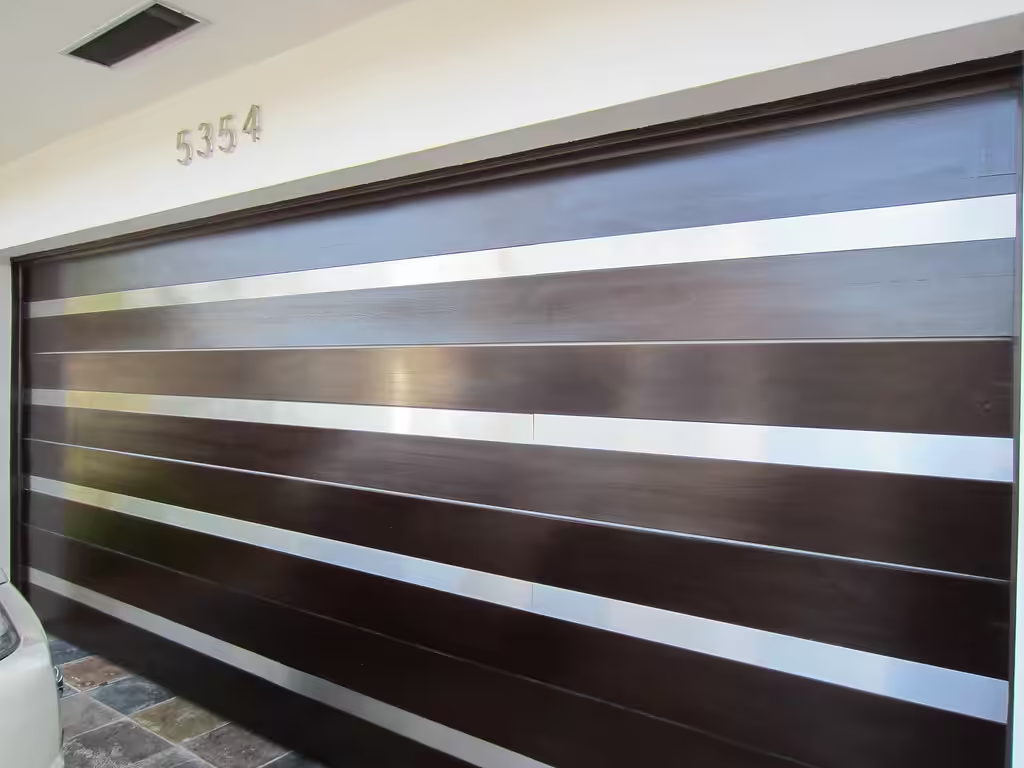
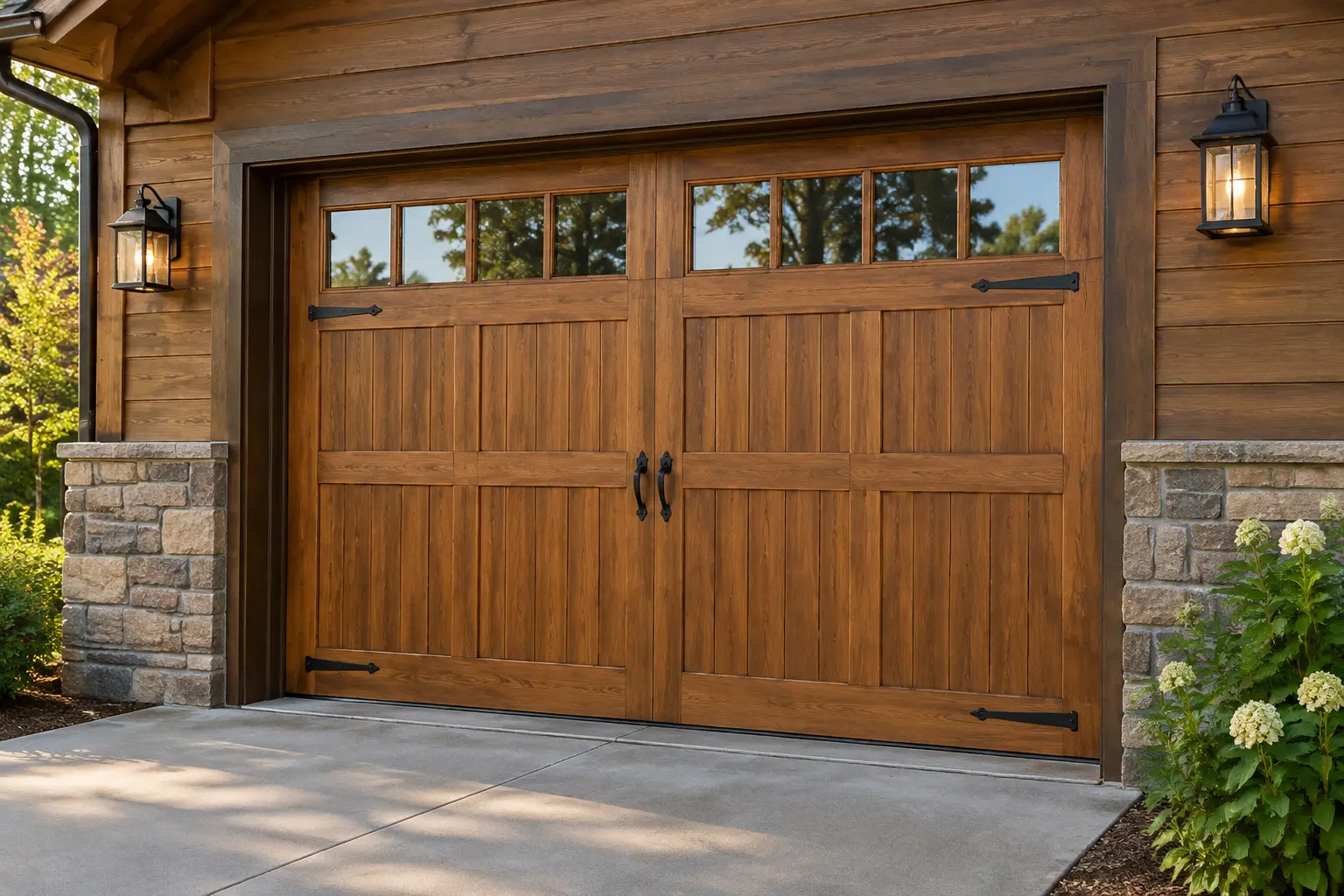
Understanding the weight of an 8x7 wood garage door is crucial, as it impacts the selection of appropriate springs and openers needed for smooth and safe operation. Wood garage doors, valued for their classic appeal, often weigh significantly more than their steel counterparts, with single doors tipping the scales above 300 pounds. The weight can be further influenced by various factors, including decorative finishes and panels. To make an informed decision and ensure the longevity and safety of your garage door system, use the table below to explore the factors affecting the weight of wood garage doors.

| Factor | Effect on Weight |
|---|---|
| Material | Wood doors are generally heavier than steel doors. |
| Insulation | Adding insulation increases the door's weight. |
| Decorative Features | Finishes and panels further add to the weight. |
Why Garage Door Weight Matters
Picture this: you've invested in a beautifully handcrafted 8x7 wood garage door that effortlessly adds charm and elegance to your home's exterior. But, what if I told you the weight of this architectural marvel could dramatically affect its performance and longevity? Indeed, understanding your garage door's heft goes beyond mere curiosity—it directly influences the hardware you need to keep it functioning smoothly and safely.

Wood garage doors, with their classic appeal, are known for being significantly heavier than their steel or aluminum counterparts. An 8x7 wood door can weigh upwards of 300 pounds, especially when adorned with decorative finishes and panels. Such a weight demands attention to detail when selecting openers and springs, as the wrong choice can lead to increased wear and tear or even hazardous malfunctions.
How Weight Influences Your Garage Door System
The weight of your garage door is not just about numbers on a scale; it's about ensuring every component of your system aligns perfectly to maintain seamless operations. Here’s how weight comes into play:
- Springs: These are the unsung heroes that counterbalance the garage door’s weight. Incorrectly sized springs will either struggle to lift the door or make it impossible to close smoothly.
- Openers: While the opener handles the door's movement, it works in harmony with the springs. If the weight exceeds what the opener can manage, you risk burning out the motor. For detailed information on handling heavy garage doors, refer to the Ivy St. LHD Report.
- Cost Efficiency: Understanding the weight helps in selecting high-quality components from the get-go, saving you money on repairs and replacements in the long run. The APRB report is a great resource on selecting cost-efficient materials.

Tools and Tips for Weight Estimation
So, how do you determine your door's weight without unpacking every box of your toolbox? Fortunately, there are easier methods. Most garage door manufacturers or service providers offer weight calculators online. These handy tools help you estimate the weight based on material, size, and additional features such as insulation and decorative elements. Catching the precise weight early on helps avoid costly mistakes with other parts of your garage system. The Miami-Dade County Building Code provides detailed examples of weight estimation.

You can also engage professionals to measure the weight, especially if your door springs need replacing soon after installation. For insights on historical door measurements, consider insights from the University of Washington's Facilities Report. Remember, weighing your door is more than lifting it and reading a scale; it involves accurate measurements and sometimes a bit of disassembly.
Beyond Weight: Comprehensive Maintenance Tips
Knowing your door's heft is just the beginning. To truly make the most of your garage door system, regular maintenance checks are key. Consider these additional tips for optimal performance:
- Inspect Regularly: Check for signs of wear on springs and joints to prevent surprises. The Lortondale Intensive Survey highlights the importance of routine inspections.
- Balance Checks: Periodically test if the door remains partially open without falling or rising unprompted. This indicates proper spring tension.
- Lubricate: Keep the moving parts well-lubricated to reduce friction and wear. For details on garage door maintenance, visit UGA’s Sapelo Island Report.
Have you recently tackled weighing and selecting components for your heavy wood garage door? Share your experiences or ask questions below! Let’s continue the conversation to ensure every garage door reaches its full potential.
Watch this Video: Easy Garage Extension Spring Install!
Understanding the weight of an 8x7 wood garage door is crucial, as it impacts the selection of appropriate springs and openers needed for smooth and safe operation. This video from Little About A Lot demonstrates an easy process for installing extension springs, helping ensure your garage door handles its weight effectively.
How Heavy Is an 8×7 Garage Door?
The weight of an 8×7 garage door can vary based on the door’s construction materials, steel gauge, and any added insulation. For example, an 8×7 steel-back 2-inch door typically weighs around 114 pounds. Larger 8×8 steel doors may weigh between 90 and 100 pounds, depending on whether they feature classic or insulated designs. If you’re considering an 8×7 wood garage door, be aware that it may weigh substantially more due to the density of the wood and additional hardware.
How Much Does a Wood Garage Door Weigh?
Wooden garage doors, particularly those made from solid hardwoods, are often heavier than steel or aluminum models. A single-car wood door can weigh up to 300 pounds, while a double wood door can easily exceed 500 pounds. Factors like wood type, door thickness, and decorative elements can all influence the overall weight.
How Much Does a Clopay 9×7 Garage Door Weigh?
A Clopay 9×7 steel garage door often weighs about 118 pounds, although factors like insulation, decorative hardware, and specific product lines can affect the final number. Most Clopay steel doors are designed with durability in mind and come in a neutral white finish, making them a popular choice for many homeowners. They also include straightforward installation instructions and typically meet standard wind-load requirements, though specifics can vary by model.
As we've explored, a typical 8x7 wood garage door can surprisingly weigh between 200 to 350 pounds, depending on the type of wood and additional features like insulation or decorative hardware. This weight is a pivotal factor when selecting the right garage door springs and opener, which ensures that the door operates seamlessly and safely. While the weight may seem daunting, the natural beauty and durability of wood make it a worthwhile choice for many homeowners. Plus, the satisfaction of seeing that classic aesthetic greet you every day is truly unmatched.
Join Our Community
If you're inspired to dive deeper into the world of garage doors or home design, I'd love for you to be a part of our community! We share a ton of tips, tricks, and design inspiration across our social media platforms, so consider following along for more insights. Connect with us on Instagram for a daily dose of architecture and design beauty: Architecture Adrenaline on Instagram. It's a fantastic way to stay updated with the latest trends and share your own project stories. We can't wait to see you there!
More from Architecture Adrenaline
For more information on similar topics and other helpful insights, you can follow the site's social channels. Visit our Instagram for updates and posts that expand on this subject and more.
