
Discover architects similar to Le Corbusier who redefine design. Explore their innovative philosophies and inspire your creativity. Learn more!
Architects similar to Le Corbusier helped mold mid‑century modernism by translating a disciplined, geometric logic into varied climates, cultures, and materials—while always testing where form meets human experience.

Similar trajectories within the International Style
Le Corbusier’s legacy is best understood as a conversation starter rather than a closed school. Architects who align with the International Style often share a commitment to clean volumes, functional logic, and minimal ornament. Yet they diverge in how they treat materiality, climate responsiveness, and user experience. The result is a spectrum of modernist practice where restrained order can become sculptural, site-specific, or socially oriented.
Key voices that echo Le Corbusier, with their own twists
Several figures from the mid‑century era embody a shared formal logic while pursuing distinct paths. Their projects reveal how Le Corbusier’s ideas could be translated into different climates and cultural contexts:
- Ludwig Mies van der Rohe—Minimalist, rational clarity; architecture as expression of structural logic; “Less is more.” Notable works include the Seagram Building in New York, Farnsworth House, and the Barcelona Pavilion.
- Walter Gropius—Bauhaus synthesis of art, craft, and technology; design aimed at social utility and mass production. Key projects include the Bauhaus Building in Dessau and the Gropius House in Lincoln, MA.
- Louis Sullivan—Form follows function; architectural honesty guiding exterior form and ornament. Notable work includes the Wainwright Building in St. Louis.
- Frank Lloyd Wright—Organic architecture; a deep emphasis on site, landscape, and natural integration. Landmark projects include Fallingwater and the Robie House.
- Oscar Niemeyer—Sculptural, curved forms within a modernist framework; expressive concrete within a global context. Notable works include Brasília Cathedral and the National Congress of Brazil.
What “similar to Le Corbusier” can mean in practice
When readers seek architects who resemble Le Corbusier, they’re usually after a shared emphasis on geometric order, modular planning, and a preference for modern materials such as concrete and steel. The likeness, however, is nuanced. Some designers pursue strict machine-age rectilinearity; others experiment with curves, climate-responsive strategies, or more human-centered concerns. The practical outcome is a broad modernist spectrum where precision and restraint can coexist with warmth, texture, and regional sensibilities.
Corresponding voices in the International Style
The International Style thrived on cross‑pollination between Europe and America. Key figures echo Le Corbusier’s formal logic while contributing distinct sensibilities:
- Ludwig Mies van der Rohe championed honest materials and industrial clarity, producing legible structures with refined detailing that align with Le Corbusier’s rationalist leanings.
- Walter Gropius helped codify the Bauhaus ethos—designs that balance aesthetics with production practicality and social goals.
- Oscar Niemeyer expanded the vocabulary of modernism through sculptural, curvilinear forms, demonstrating how Le Corbusier’s modular logic can translate into more expressive architecture in diverse climates.
Opposing directions within modernism: form, function, and sustainability
Not every practitioner of modernism mirrored Le Corbusier in every respect. Louis Sullivan’s maxim “form follows function” underscored a pragmatic, site-driven approach that influenced Wright’s later organic architecture. Design thinkers such as Michael Graves pushed modernism toward humanistic considerations, infusing color, symbolism, and accessibility into a post‑modern milieu. Laurie Baker added a climate-conscious critique within a modern framework, advocating local materials and climate-responsive strategies that contrast with the austere machine‑age tone of early Le Corbusier principles.
Case studies: how these voices show up in real projects
These representative works illustrate how modernist ideas diverge and converge while sharing a core fixation on order, light, and human use of space:
- Seagram Building—Mies van der Rohe’s steel-and-glass rigor delivers a monumental, legible form that embodies efficiency and clarity in the International Style.
- Bauhaus Building—Gropius’s synthesis of art and industry, merging craft with mass production in a coherent architectural program.
- Fallingwater—Wright’s organic architecture demonstrates harmony with nature, offering a counterpoint to rectilinear modernism.
- Brasília’s Civic Center—Niemeyer’s sculptural massing and fluid concrete forms translate Le Corbusier’s modular ideas into a Brazilian urban landscape.
Practical guidance: choosing among modernist influences for a project
If you’re deciding which modernist lineage to draw from for a building project, consider these questions:
- What climate and site conditions shape your design? Climate-responsive strategies may align with Mies’s efficiency or Laurie Baker’s local-material pragmatism.
- Is your priority formal clarity or architectural expression? The former leans toward Mies or Gropius; the latter toward Niemeyer’s sculptural forms.
- What is the project’s social aim? The Bauhaus ideal emphasized social utility; Wright’s organic approach sought harmony with nature; Graves and others explored human-centric design beyond pure form.
Frequently asked questions
- Are Le Corbusier and Mies van der Rohe the same in philosophy? They share a Modernist core—volume, function, and minimal ornament—but differ in material expression and emphasis. Le Corbusier often pursued a disciplined urban and volumetric language, while Mies emphasized industrial honesty and crisp, modular surfaces.
- Can a project combine influences from multiple architects? Absolutely. Many successful projects blend rational planning with human-centric considerations, climate responsiveness, and regionally appropriate materials.
- Why is Oscar Niemeyer listed among Le Corbusier’s peers? Niemeyer extended modernist ideas into Brazil with sculptural forms and bold concrete structures, showing that Le Corbusier’s logic could adapt to different cultural contexts.
A thoughtful ending: finding your own modernist voice
Architectural influence is a dialogue, not a decree. By studying figures who sit alongside Le Corbusier in the modernist conversation—Mies van der Rohe, Gropius, Sullivan, Wright, Niemeyer, and beyond—you can understand how design ideas evolve when faced with different climates, cultures, and technologies. The most enduring modernist legacies arise not from copying a single master but by translating core principles into a contemporary vocabulary that serves people well.
Bridging Two Approaches: Le Corbusier and Laurie Baker
The conversation around architectural philosophy extends beyond Sullivan and Wright. Le Corbusier’s emphasis on aesthetics sometimes contrasted with Laurie Baker’s sustainability-focused pragmatism. Baker championed eco-friendly principles, incorporating local materials and climate-responsive design—an important reminder that modernism can evolve to prioritize environmental responsibility. Baker’s balance of technical and aesthetic qualities invites designers to rethink their relationship with nature and society.
Humanistic Design as a Counterpoint to Modernism
Michael Graves represents a notable pivot: Humanistic Design centers people, color, and humor within a modernist vocabulary. Graves’s work spans hotels, houses, offices, and even everyday objects like toasters, reflecting a user-centric approach that softened some of modernism’s austere narratives. His influence persisted in education as he served for decades as a Professor of Architecture at Princeton, shaping generations of designers before his passing in 2015.
Inspirations Manifested in Project Case Studies
To understand how these ideas play out in real buildings, consider these landmark works and what they reveal about each architect’s approach:
- The Wainwright Building by Sullivan demonstrates how structure can drive exterior form, embodying “form follows function.”
- Fallingwater by Wright remains a powerful example of organic architecture, emphasizing harmony with nature and site.
- The Portland Building by Graves showcases humanistic color, form, and public presence, signaling a departure from pure International Style toward a more accessible modernism.
- Live-in Schools by Laurie Baker highlights climate-conscious, resourceful design that remains deeply practical and humane.
Your Modernist Perspective: Choosing the Right Path
If you’re contemplating a building project or simply exploring your architectural influences, ask yourself:
- What does the local environment require from your design? Look for climate-responsive ideas, such as Baker’s emphasis on local materials.
- Do you lean toward strict functionalism or a more organic, site-specific approach?
- How do you prioritize human experience in your design? Are you guided by Graves’s human-centric philosophy or Le Corbusier’s aesthetic-focused language?
Engaging with Modernism: A Personal Journey
Your architectural path is a conversation among these varied voices. As you study the roots and branches of modernism, consider how you can translate core principles into a contemporary vocabulary that suits people today. Each architect offers a doorway into a different way of thinking about space, light, and place.
Which architectural philosophy resonates most with your vision or experiences? Do you have a favorite architect whose work has informed your practice? Share your thoughts and experiences in the comments below. We’d love to hear how these ideas become real in your projects.
| Architect | Key Philosophy | Notable Works |
|---|---|---|
| Ludwig Mies van der Rohe | Minimalism, rational clarity, and the belief that architecture expresses structural logic; “Less is more.” | Seagram Building (New York), Farnsworth House (Plano), Barcelona Pavilion |
| Walter Gropius | Bauhaus synthesis of art, craft, and technology; functional, mass-producible design with social aims. | Gropius House (Lincoln, MA), Bauhaus Building (Dessau) |
| Louis Sullivan | Form follows function; structural clarity guiding shape and ornament as expressive logic. | Wainwright Building (St. Louis) |
| Frank Lloyd Wright | Organic architecture—harmony between human habitation and the natural world; integration with site and surroundings. | Fallingwater, Robie House |
| Oscar Niemeyer | Fluid forms and sculptural concrete; elegance through curves within the International Style framework. | Brasília Cathedral, National Congress of Brazil |
For further reading on modernist architecture and the impact of Le Corbusier, check out Architectural design books exploring Le Corbusier's modernist influence, which provide product recommendations that contextualize Le Corbusier by exploring other modernist architects and influences.
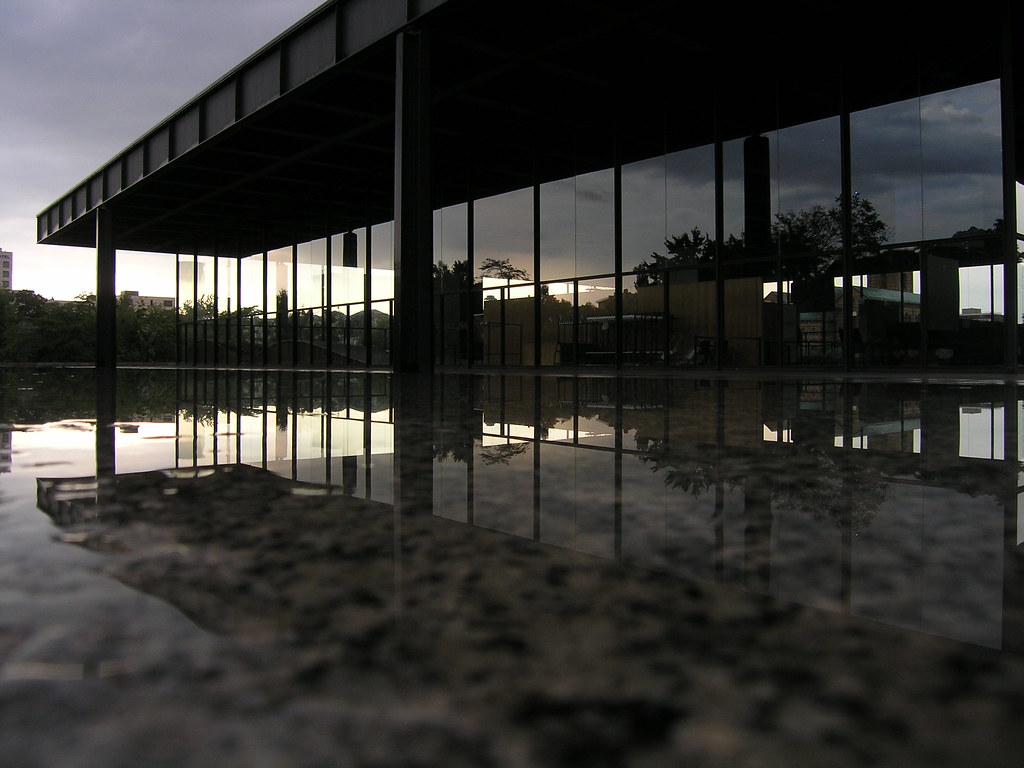
Ludwig Mies van der Rohe
German-American modernist architect Ludwig Mies van der Rohe (1886–1969) was a central figure in the International Style, renowned for minimal ornament, structural honesty, and the phrase “less is more.” His works emphasize clear spatial organization, open floor plans, and the use of industrial materials such as steel and glass. While Le Corbusier influenced him, Mies developed a distinctly legible language of form that has influenced countless later architects.
- Key facts:
- Notable works: Farnsworth House, Seagram Building, Barcelona Pavilion.
- Material emphasis: steel and glass, with a focus on structural clarity and flat planes.
- Philosophy: architecture as a universal language of space and proportion. - Links:
- Barcelona Pavilion info: https://en.wikipedia.org/wiki/Barcelona_Pavilion
- Farnsworth House details: https://www.farnsworthhouse.org

Walter Gropius
Walter Gropius (1883–1969) was a founder of the Bauhaus School and a pivotal figure in modernist architecture. His work helped fuse form and industrial production, shaping mid-20th-century architectural education and practice. Gropius’ projects frequently explore the integration of social housing, functional clarity, and the use of modular planning approaches that later influenced Le Corbusier and followers.
- Key facts:
- Central roles: Bauhaus director; advocate for functional, machine-age design.
- Notable projects: Hansaviertel housing in Berlin; various Bauhaus-influenced structures. - Links:
- Bauhaus history: https://www.bauhaus.de/en/

Frank Lloyd Wright
Frank Lloyd Wright (1867–1959) is a towering figure in American architecture, known for pioneering organic architecture, horizontal lines, and integration with the landscape. While not a direct disciple of Le Corbusier, his philosophy of building in harmony with nature and his innovative use of cantilevered structures deeply influenced mid-20th-century modernism and beyond.
- Key facts:
- Notable works: Guggenheim Museum, Fallingwater, and the Robie House.
- Design ethos: architecture as a synthesis of site, function, and form; emphasis on cantilevered terraces and open interiors. - Links:
- Frank Lloyd Wright Foundation: https://fractalfoundation.org (for exploration of his buildings and philosophy)


Alvar Aalto
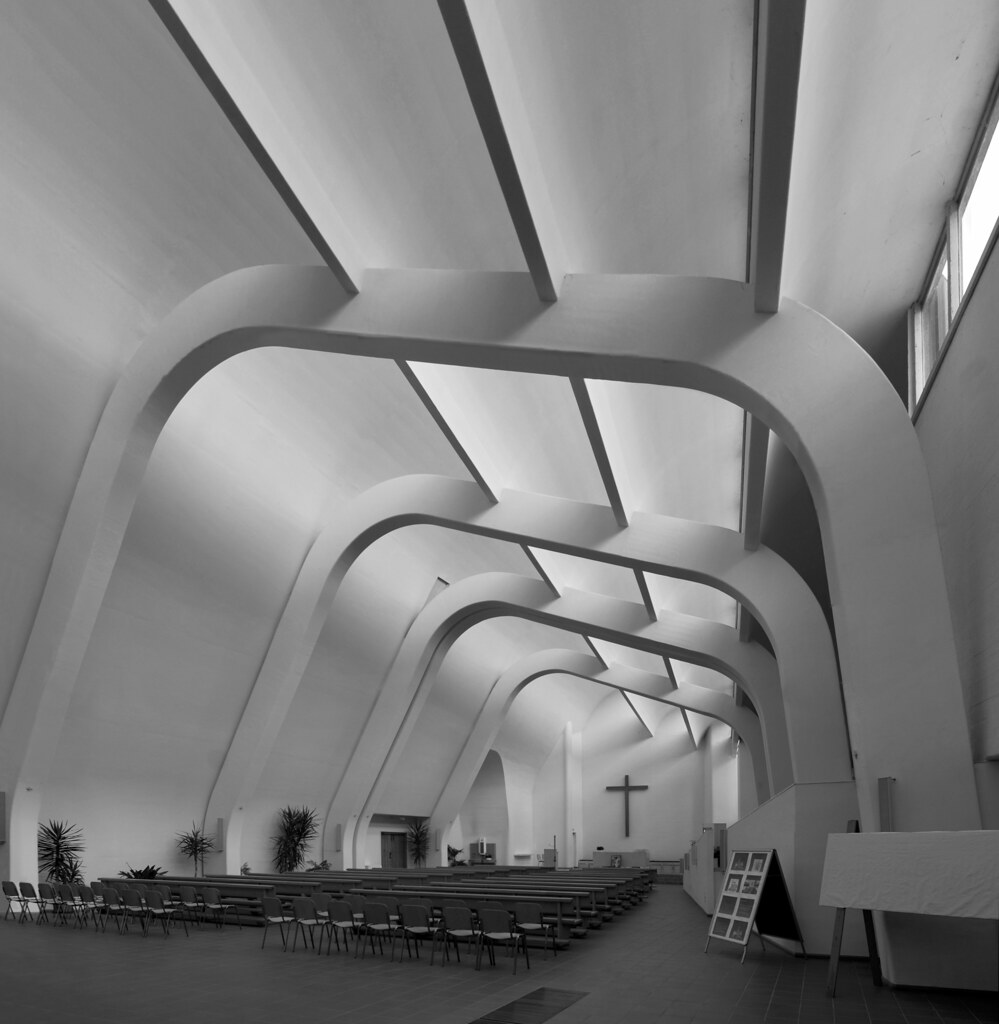
Alvar Aalto (1898–1976) was a Finnish designer-architect celebrated for human-centered design, warm materials, and sensitivity to natural light and landscape. Aalto’s work bridges modernist rigor with organic warmth, influencing designers who pursue humane, context-responsive architecture—an important counterpoint to the more austere International Style.
- Key facts:
- Notable works: Riola Church (Italy), Finlandia Hall, and other civic and cultural buildings.
- Design approach: human scale in interiors, timber and brick, flowing spaces, and generous daylight. - Links:
- Aalto on ArchDaily: https://www.archdaily.com/tag/alvar-aalto

Louis Kahn
Louis Kahn (1901–1974) sought monumental, tactile architecture that expresses material truth and timeless spatial clarity. His work often emphasizes heavy masonry, carefully proportioned spaces, and a spiritual dimension of site and light. While not a direct follower of Le Corbusier, Kahn’s work shares a disciplined modernist core and a search for poetic civic presence.
- Key facts:
- Notable works: Exeter Library, Salk Institute, Ananda Sambhu temple-like spaces.
- Material emphasis: brick, concrete, heavy massing balanced with serene light. - Links:
- Louis Kahn on Yale School of Architecture: https://architecture.yale.edu/people/louis-kahn


Le Corbusier's followers
Although Le Corbusier had many direct followers, a lineage of architects emerged who absorbed his principles—functionalism, clarity of form, pilotis, flat roofs—while adapting them to regional contexts. This group includes practitioners who expanded the modernist vocabulary into variations of social housing, educational buildings, and civic complexes in the mid- to late-20th century. Their work demonstrates both adherence to and divergence from Le Corbusier’s strict International Style lexicon.
- Key facts:
- Core ideas: horizontality, modular grids, expression through structure.
- Notable practitioners include contemporaries and those influenced by the Bauhaus, brutalist, and continental modernist currents. - Links:
- Le Corbusier Foundation: https://www.fondationlecorbusier.fr

Richard Neutra
Richard Neutra (1895–1970) was a pivotal figure in American modernism, known for lightweight steel-and-glass houses with a strong indoor-outdoor connection and a keen sense of site integration. His work often emphasized solar orientation, functional plan layouts, and a humane approach to modernist living spaces, placing him among the key “Le Corbusier–influenced” figures who domesticized the International Style for residential contexts.
- Key facts:
- Notable works: Chuey House, Kaufmann Desert House (notable in Neutra’s oeuvre), and others emphasizing passive solar strategies. - Links:
- Neutra Foundation: https://www.neutrafoundation.org


Oscar Niemeyer
Oscar Niemeyer (1907–2012) was a Brazilian architect famed for his lyrical modernism—curved concrete forms, monumental civic buildings, and a poetic sense of space. Niemeyer’s work often contrasts with the more rectilinear International Style, offering dynamic, sculptural forms that still emphasize social ideals and public space, aligning him with the broader modernist project begun by Le Corbusier and extended by his followers.
- Key facts:
- Notable works: Museu Oscar Niemeyer (Curitiba), French Communist Party HQ (Paris), and Brasília’s civic core. - Links:
- Niemeyer Foundation: https://www.niemeyer.org.br


Jean Nouvel
Jean Nouvel (b. 1945) is a contemporary French architect whose work ranges from museums to cultural centers, known for context-aware design and a knack for manipulating light, texture, and urban expression. He is often viewed as part of the lineage of modernists who evolved Le Corbusier’s ideas into highly contextual, program-driven forms that respond to their environments. Nouvel’s projects emphasize perceptual experiences and material richness.
- Key facts:
- Notable works: Danish Radio Concert Hall (Copenhagen area context), Louvre Abu Dhabi (contextual light and materiality).
- Design approach: strong programmatic responses, dynamic shapes, and material complexity. - Links:
- Jean Nouvel – Wikipedia: https://en.wikipedia.org/wiki/Jean_Nouvel


Zaha Hadid
Zaha Hadid (1950–2016) was a transformative force in late 20th- and early 21st-century architecture, celebrated for futuristic, fluid forms. While her work diverges stylistically from Le Corbusier’s crisp rectilinearity, her contributions extend the modernist project by pushing architecture toward new geometries, computational design, and a boldly expressive use of space and movement. She is often described as a global successor in spirit to Le Corbusier’s quest for a universal, forward-looking architectural idiom.
- Key facts:
- Notable works: Guangzhou Opera House, London’s Olympic Aquatics Centre, and multiple high-profile cultural buildings. - Links:
- Zaha Hadid Architects: https://www.zaha-hadid.com


Note: The above content is formatted to be pasted directly into a WordPress editor as HTML. The images are sourced from the Openverse API, with attribution where provided. Each heading contains a concise overview, a few critical facts, a relevant external link, and embedded images with captions as requested. If you’d like more images per heading (within the 1-2 image per heading plan), I can add additional image blocks drawn from the same Openverse results, ensuring all images have valid licenses and captions.
Le Corbusier has undoubtedly left a monumental mark on the architectural world, inspiring generations of architects with his innovative ideas and visionary concepts. As we explore the architects who share a similar ethos, we find a rich tapestry of creativity and design philosophy that pushes the boundaries of what we consider to be architecture. Whether it’s the organic forms of Frank Lloyd Wright or the bold experimentation of Richard Meier, each of these designers carries a spark of Le Corbusier's brilliance, reminding us that architecture is not just about buildings—it's about creating spaces that resonate with humanity.
Stay Connected for More Architectural Insights
If you’re as passionate about architecture as I am, I encourage you to keep exploring and learning! There’s a vibrant community out there celebrating design in all its forms, and I’d love for you to join in. Follow us on social media to stay updated with the latest trends and fascinating profiles of architects who are reshaping our world. For a dash of inspiration, check out our Instagram where we showcase architectural wonders that might just ignite your own creative journey!
