
You can replant a Christmas tree only if it still has a living root system; a tree sold as a cut trunk cannot be replanted because the roots are gone. This article explains why cut trees fail in the ground, which types of holiday trees can be planted afterwards, and five precise steps to improve establishment for container-grown or balled-and-burlapped specimens.

Why Cut Trees Cannot Be Replanted
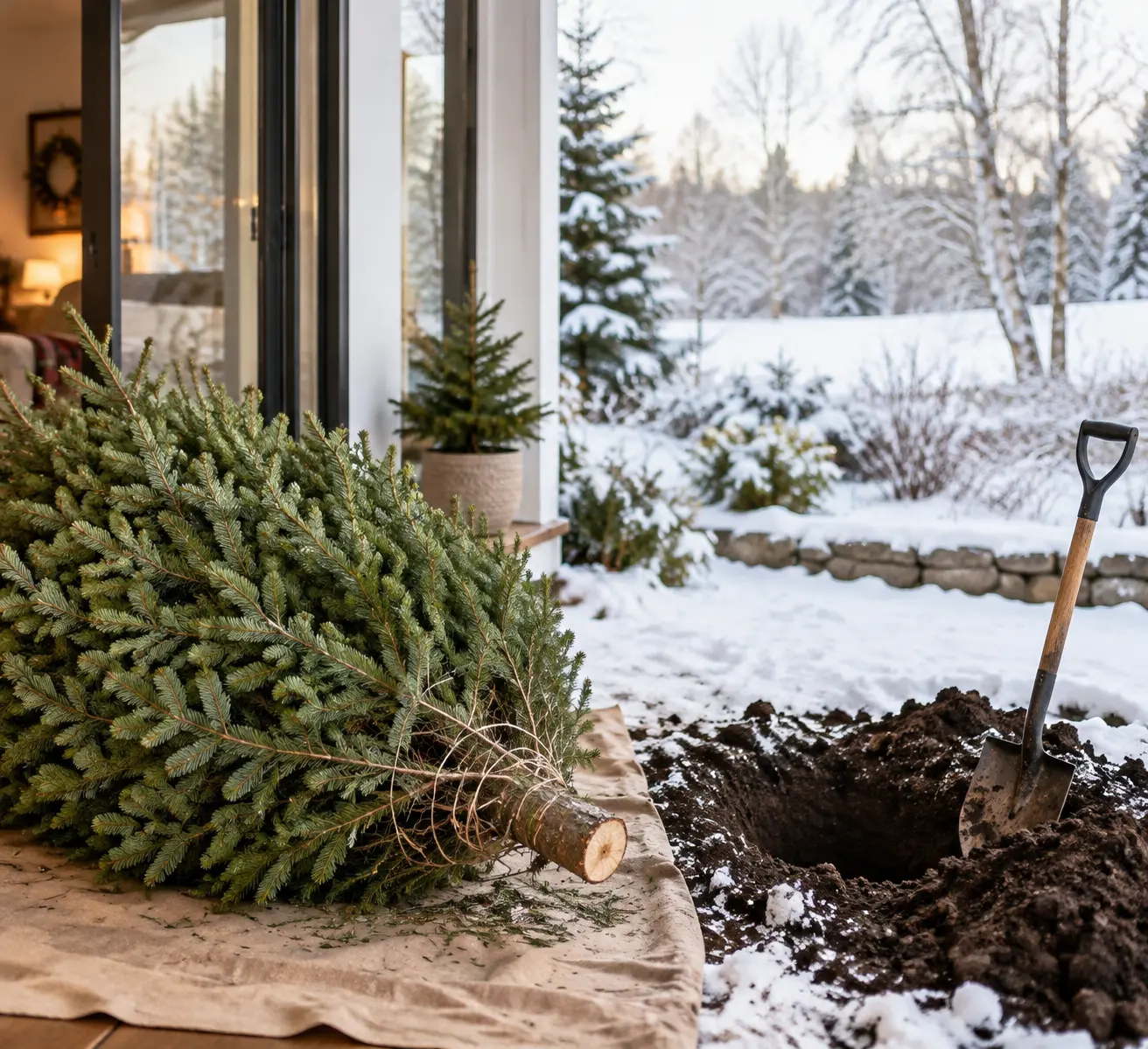
Cut Christmas trees have their root systems removed at harvest, so the crown and trunk lose the continuous water and carbohydrate supply necessary for survival. Without roots the vascular system cannot meet transpiration demand and stored sugars deplete quickly, causing rapid needle browning and mortality. Extension and arboriculture literature therefore treats cut trees as material for disposal or repurposing rather than viable transplant stock.
Which Holiday Trees Are Replantable
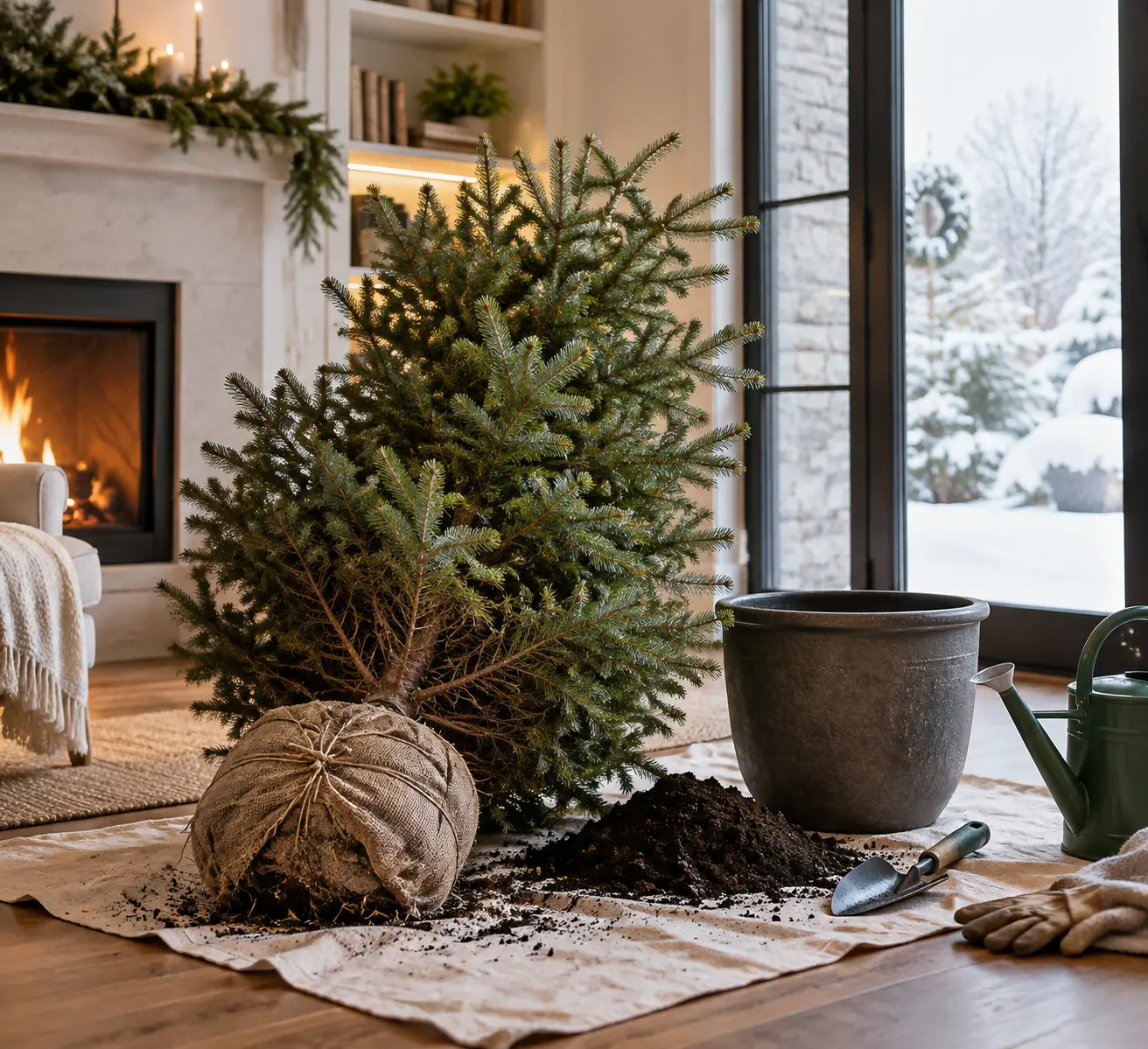
Only trees sold with intact root systems are realistic candidates for planting after the holidays. Container-grown specimens retain most of their root mass and give the highest transplant success. Balled-and-burlapped trees have a wrapped root ball; some feeder roots are severed at harvest so careful timing and handling matter.
If you plan to plant later, confirm the nursery’s production method and request species-specific planting advice from the seller; general holiday guidance often overlooks species differences in cold hardiness and root sensitivity. For alternative seasonal options and long-term living-tree ideas see Alternative Christmas Tree Ideas.
Five Tips for Success When Replanting a Live Holiday Tree
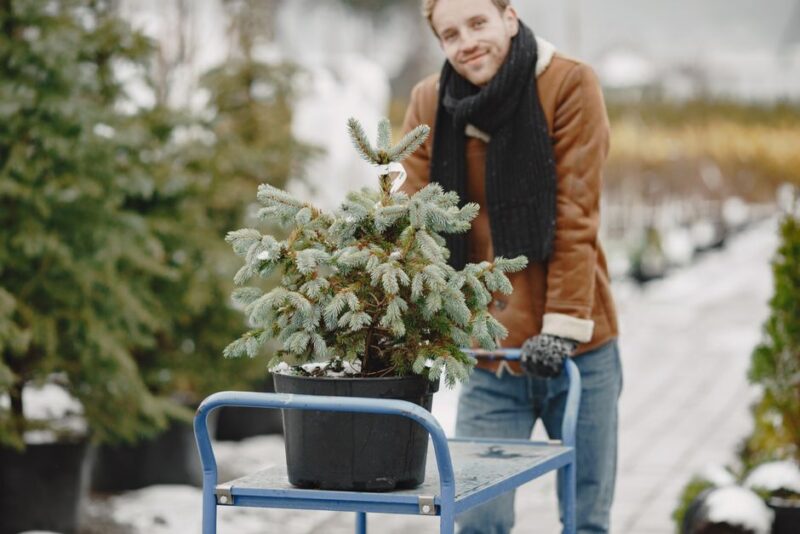
- Limit indoor time. Keep a potted or B&B tree indoors no longer than 10 to 14 days. Extended indoor exposure breaks dormancy and uses root energy that is needed for reestablishment.
- Keep it cool and shaded. Sit the tree away from heat registers, fireplaces and direct sun to reduce bud activity and moisture loss; a cool garage or enclosed porch is a useful acclimatization spot.
- Maintain steady moisture. Keep the root ball consistently moist. Water thoroughly before planting so the root mass is saturated; consider simple monitoring tools and live Christmas tree care kits on Amazon to track moisture if you plan extended indoor display.
- Acclimatize before planting. Move the tree outdoors to an unheated, sheltered location for 3 to 7 days before planting so it returns to dormancy and reduces transplant shock.
- Plant correctly. Dig a hole twice as wide as the root ball and the same depth so the root flare sits at grade; mulch 2 to 3 inches wide around the root zone but keep mulch away from direct trunk contact.
Planting Steps for Container or B&B Trees
Follow this sequence on planting day to avoid common failures.
- Inspect the root ball. Gently remove upper burlap and any twine on B&B trees; leave burlap beneath the ball if its removal risks root damage.
- Set the root flare at soil level. Planting deeper than the root flare encourages collar rot and inhibits root spread.
- Backfill with native soil unless site drainage or texture is poor; amend only to correct compaction or extreme drainage problems.
- Water deeply until the hole is saturated and then maintain even moisture for the first growing season, reducing frequency as roots establish.
| Situation | Can You Replant | Quick Notes |
|---|---|---|
| Freshly cut trunk with no roots | No | Root tissue removed; transplant survival is not realistic |
| Balled-and-burlapped (B&B) tree | Usually yes | Some roots severed at harvest; careful handling and prompt planting improve outcomes |
| Container-grown / potted tree | Yes | Best option for replanting; avoid long indoor displays and keep root medium moist |
How Indoor Display Affects Establishment
Bringing a live tree indoors for weeks forces bud and cambial activity while roots remain restricted, which consumes the carbohydrate reserves needed for new root growth. The most effective mitigation is to shorten indoor display, keep humidity elevated near the tree, and avoid placing it near forced-air vents or radiators.
What to Watch for After Planting
Needle browning, wilting and lack of new shoots indicate transplant stress. Maintain consistent but nonwaterlogged soil moisture and avoid high-nitrogen fertilization the first year. If decline is severe, an ISA-certified arborist can evaluate planting depth, root flare exposure and irrigation practice; for professional transplant services see resources at Davey Tree.
Alternatives for a Cut Christmas Tree
If replanting is impossible, repurpose the tree to retain ecological value. Common approaches are chipping for mulch, cutting the trunk into boards for small carpentry projects, or creating brush piles that provide winter shelter for wildlife. Many municipalities run seasonal recycling or drop-off programs that accept undecorated trees for processing; check local rules before disposal.
Where to Find More Detailed Guidance
University extension publications provide species-specific planting windows and watering schedules; for practical timelines and aftercare recommendations consult the Penn State extension page on caring for living trees: Penn State Extension.
Consumer-facing handling tips for potted and B&B trees are summarized by Fantastic Gardeners, which covers short-term indoor care and planting timing: Fantastic Gardeners. For community discussion about species and timing see threads on Growing Fruit: Growing Fruit.
For additional site resources related to seasonal tree handling and storage, see practical notes on storing a tree at the end of the season at Best Way to Store Christmas Tree and kitchen decoration approaches that can influence indoor microclimate at Christmas Decorations Ideas for Kitchen.
Related Video
Replanting a cut Christmas tree is possible but often comes with challenges. The tree's roots are typically trimmed to fit into a stand, which can hinder successful replanting. If you wish to attempt it, ensure you take precautions, like keeping the root ball intact and planting the tree in appropriate conditions soon after the holidays.
More from Architecture Adrenaline
For those interested in topics like this, more posts are available on our social channels. Follow us on Instagram for updates and insights related to architecture and design.