
Choosing a Land Clearing Contractor: Key Factors to Consider is essential for ensuring your site is prepared efficiently, safely, and in compliance with regulations. This guide blends practical insights from multiple sources, preserves valuable details, and adds a cohesive, field-tested approach to picking the right partner for vegetation management, grading, drainage, and debris handling.

| What To Check | Why It Matters |
|---|---|
| Experience with similar sites | Reduces surprises from terrain, wetlands, rock, or heavy timber |
| Method: mulching vs. dozer/removal | Affects cost, erosion risk, and future grading needs |
| Licenses, insurance, permits | Protects you from liability and local-code violations |
Understanding Your Search Intent
People searching for land clearing contractors are typically seeking more than the lowest price. A solid contractor understands local permitting, owns the right equipment (forestry mulcher, skid steer, excavator, or dozer), and can explain how the chosen method affects grading, erosion control, and future construction. Local knowledge combined with the right machinery often proves most valuable, whether you search for “land clearing contractors near me” or “lot clearing companies near me.”
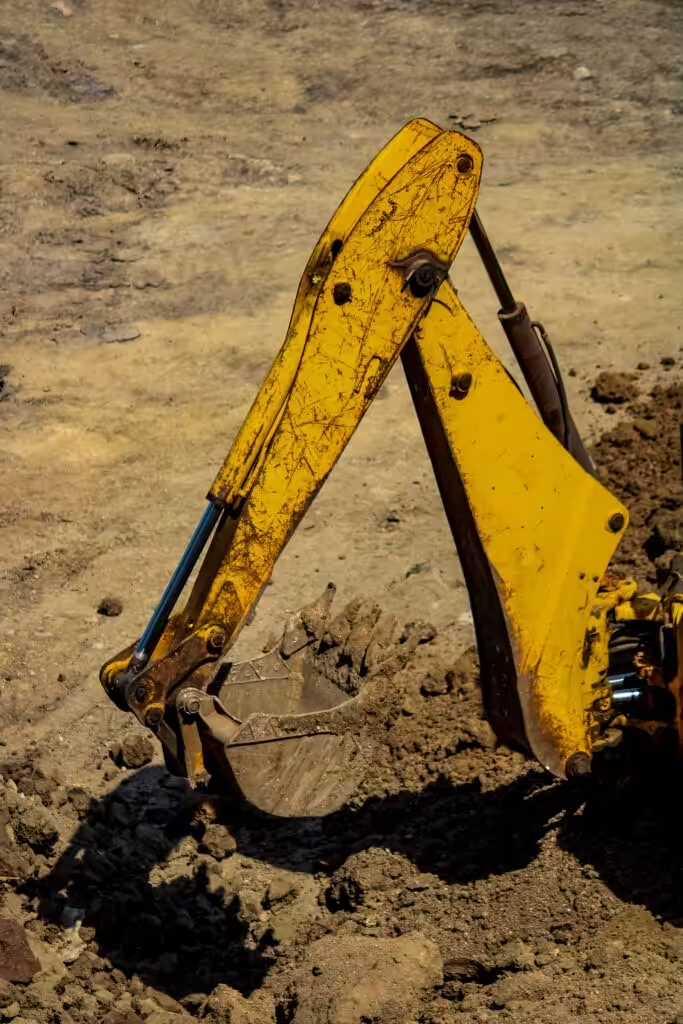
Key Site Factors That Drive Choice And Cost
Price per acre is a helpful shorthand, but site-specific factors should drive the decision:
- Vegetation type and density (grass, saplings, or mature trees)
- Topography and access (steep slopes, narrow gates, soft soils)
- Stump condition and rock content (stump grinding and rock removal add cost)
- Presence of wetlands or protected species and any tree-protection ordinances
- End-use of the site (building pad, pasture, fire break, habitat restoration)
Why The Clearing Method Matters: Mulching vs. Removal
Forestry mulching and complete removal yield different outcomes. Forestry mulching grinds vegetation on-site, often speeds up work and reduces hauling, while leaving organic mulch that can stabilize soil. Dozer/removal clears the site completely but may require more subsequent grading and erosion control. Ask potential contractors which method they recommend and how they plan to manage residual mulch or cleared material for your intended use.

Questions To Ask Every Candidate Contractor
Use a concise checklist during calls and site visits. Useful questions include:
- Have you completed similar projects in size, vegetation, and slope?
- What exact equipment will you use and why (forestry mulcher, skid steer, tracked mulcher, dozer)?
- Are you licensed, insured, and in compliance with local erosion-control rules?
- Who pulls permits and ensures compliance with tree-protection and erosion-control requirements?
- How will stumps be ground, removed, or left, and how will debris be disposed of?
- What erosion-control measures and sequencing do you propose (silt fence, mulch, reseeding)?
- Can you provide references from similar projects and recent photos or site plans?
- Is pricing provided as a written, itemized estimate with a clear contract describing scope and timeline?
How Pricing Works and What Typical Ranges Mean
Costs vary widely by site. A practical frame of reference: forestry mulching often runs in the low-to-mid thousands per acre, while full clearing with haul-away, stump removal, and rough grading can be higher. Always request itemized pricing for clearing, stump work, hauling, grading, erosion control, and permit fees, and compare apples-to-apples bids.
Permitting, Environmental Rules, And Local Codes You Should Confirm
Permit requirements differ by state and municipality. Common considerations include:
- Stormwater/erosion-control permits for disturbed land
- Tree-removal permits and protections for heritage or endangered trees
- Burn permits or local bans on open burning of debris
- Wetland or riparian protections that may limit machine access
Clarify whether the contractor pulls permits or if the property owner handles them. Contractors with local code familiarity can often streamline approvals and inspections. For preliminary guidance on local permitting practices, see the City of New Orleans Land Clearing Permit resource.
Insurance, Liability, And Contract Essentials
Don’t hire without verifying coverage. At a minimum, require:
- General liability insurance with adequate limits
- Workers’ compensation for crew coverage
- Automobile/motor equipment coverage
Obtain certificates of insurance and confirm coverage dates. A solid contract should specify scope, start/completion dates, payment schedule, change-order process, site-access responsibilities, and how unknown subsurface conditions are handled.
Evaluating Equipment And Crew Capacity
Equipment choices signal the contractor’s approach. Look for:
- A dedicated forestry mulcher or tracked mulcher for selective clearing
- Excavators, stump grinders, or dozers for heavier removal and grading
- Support equipment such as skid steers, dump trucks, and rigging gear for large trees
For those seeking “forestry mulching service near me,” verify mulching head size and operator experience with density and species. For large projects, confirm crew size and whether subcontracting is used, with clear management in the contract.
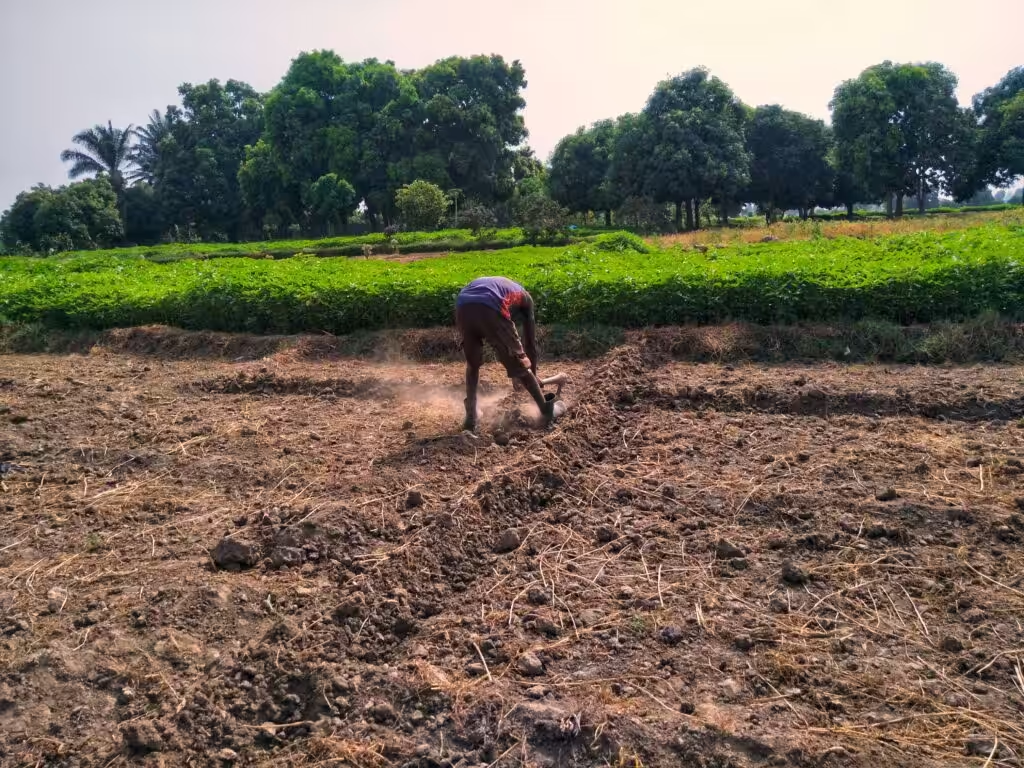
Red Flags And Common Pitfalls To Avoid
Watch for these warning signs:
- Verbal-only estimates or pressure to sign without a written scope
- No proof of insurance or evasive about permits
- Very low bids that omit stump grinding, hauling, or erosion control
- Refusal to provide references or recent project photos
- Poor sequencing communication that ignores erosion-control timing
What To Expect During The Work And How To Prepare Your Site
Proper preparation reduces delays and cost overruns:
- Mark property lines, utilities, and trees to preserve
- Plan access routes and staging areas for equipment; ensure stable ground
- Remove valuables and relocate pets and vehicles; ensure neighbors are informed
- Anticipate weather-related scheduling; wet conditions can affect mobilization and costs
Comparing Multiple Bids And Making The Final Choice
When evaluating bids, ensure you are comparing like-for-like items. Consider:
- Line-item clarity: clearing, stump work, hauling, grading, erosion control, permits
- Contractor responsiveness and clarity on sequencing and contingencies
- References on schedule adherence, cleanup quality, and change-order handling
- Tradeoffs explained in terms relevant to your site and future use (mulch retention vs. hauling, etc.)
Special Considerations For Residential Lots And Small Parcels
Residential projects demand precision and neighbor awareness. For small lots, confirm the contractor’s ability to operate with smaller machines to minimize disturbance. Per-acre costs can be higher on compact parcels due to mobilization and protection requirements.
When Forestry Mulching Is Worth It—and When It Isn’t
Forestry mulching is advantageous for vegetation reduction, invasive-species control, and creating stable soil with on-site mulch. It may not suit circumstances requiring complete root removal, paving, or when a clean building pad is mandated. If your goal is a foundation-ready site, explicitly verify mulching meets geotechnical and permit requirements. For reference on equipment and approaches, readers can explore the broader range of land clearing equipment in product-category listings such as Land clearing equipment.
How Choosing a Land Clearing Contractor Affects Long-Term Site Performance
Good clearing anticipates post-clearing needs: proper drainage grading, erosion control during the first rainy season, and a state that simplifies future foundation, landscaping, and reseeding. A contractor who coordinates with your builder or surveyor on elevation stakes reduces rework and surprises.
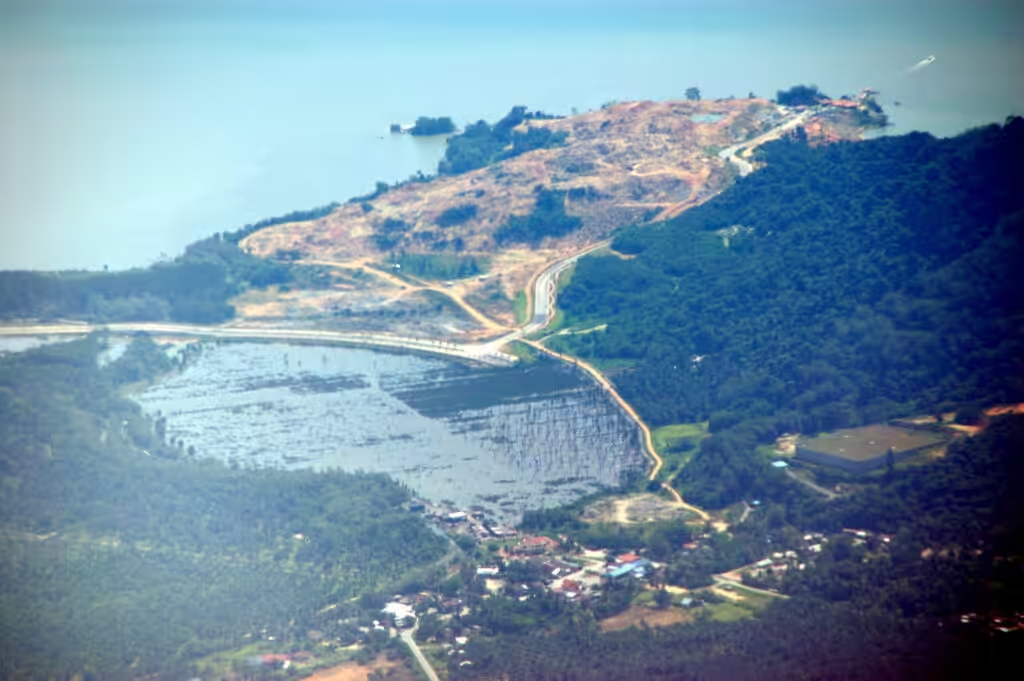
Local Search Tips: Finding Reputable Options Near You
Begin with local searches like site clearing contractors near me or clearing and grading companies near me, then apply the checks above. Read detailed reviews for notes on permits, timeliness, and cleanup. Contact your local building department to identify contractors familiar with jurisdiction-specific permitting—local knowledge is often decisive.
Final Practical Checklist Before You Sign
- Obtain at least three itemized written estimates
- Verify insurance, licenses, and references from similar projects
- Confirm permit responsibilities and erosion-control plans
- Agree on milestone-based payments with a clear change-order process
Preserving Valuable Content From Shared Sources
During consolidation, we preserved: concrete service descriptions (tree removal, stump grinding, brush clearing, debris removal), multiple media elements illustrating site conditions and equipment, practical guidance on bid evaluation, and explicit cautions about permits and insurance. We merged overlapping sections to avoid redundancy, while keeping the strongest details from each source, and added a cohesive structure to help readers apply these insights directly to their projects.
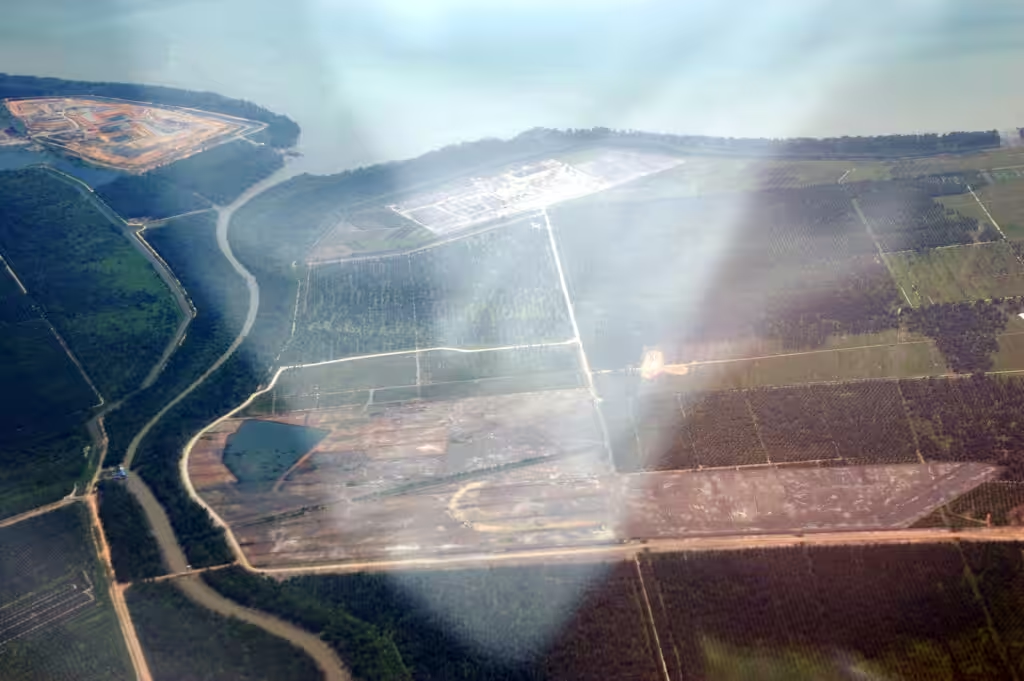
Practical Example: How To Use This Guide On A Real Project
Suppose you’re clearing a residential lot with mixed woodland and a moderate slope. Start by assessing vegetation density and access, then request itemized bids that separate forestry mulching from removal. Verify permits with your local authority and confirm who will pull them. Check each contractor’s equipment mix, insurance certificates, and references. Use the final checklist to sign a contract that clearly defines scope, schedule, and contingencies, ensuring the project stays on budget and on time while protecting environmental and neighbor considerations.
Have you recently hired a land clearing contractor? Share your experiences, questions, or tips in the comments to help others navigate this process with confidence.
Factors to Consider when Choosing Land Clearing Services in Mabank, TX:
Choosing the right land clearing contractor can feel a bit overwhelming, but by considering the factors we’ve discussed—such as experience, reviews, and safety measures—you’ll be well on your way to making an informed decision. Remember to trust your instincts and take your time to find someone who resonates with your project goals. After all, this is a significant step in getting your land ready for its next chapter, and you deserve to work with someone who feels right for you!
Stay Connected for More Tips
As you embark on this journey, don’t hesitate to explore more helpful tips and insights. Keeping your eyes peeled for similar content can make all the difference. If you want to stay updated or connect with us on social media, check out our Instagram for the latest in land development and more! We’re here to support you every step of the way, so let’s tackle this project together!
