
You can remove most mold on gutters without climbing a ladder by using telescoping poles, hose-end applicators and no-scrub products; ground-based cleaning reduces fall risk and lets you treat gutters on typical one- and one-and-a-half-story houses safely.
Why Gutters Grow Mold
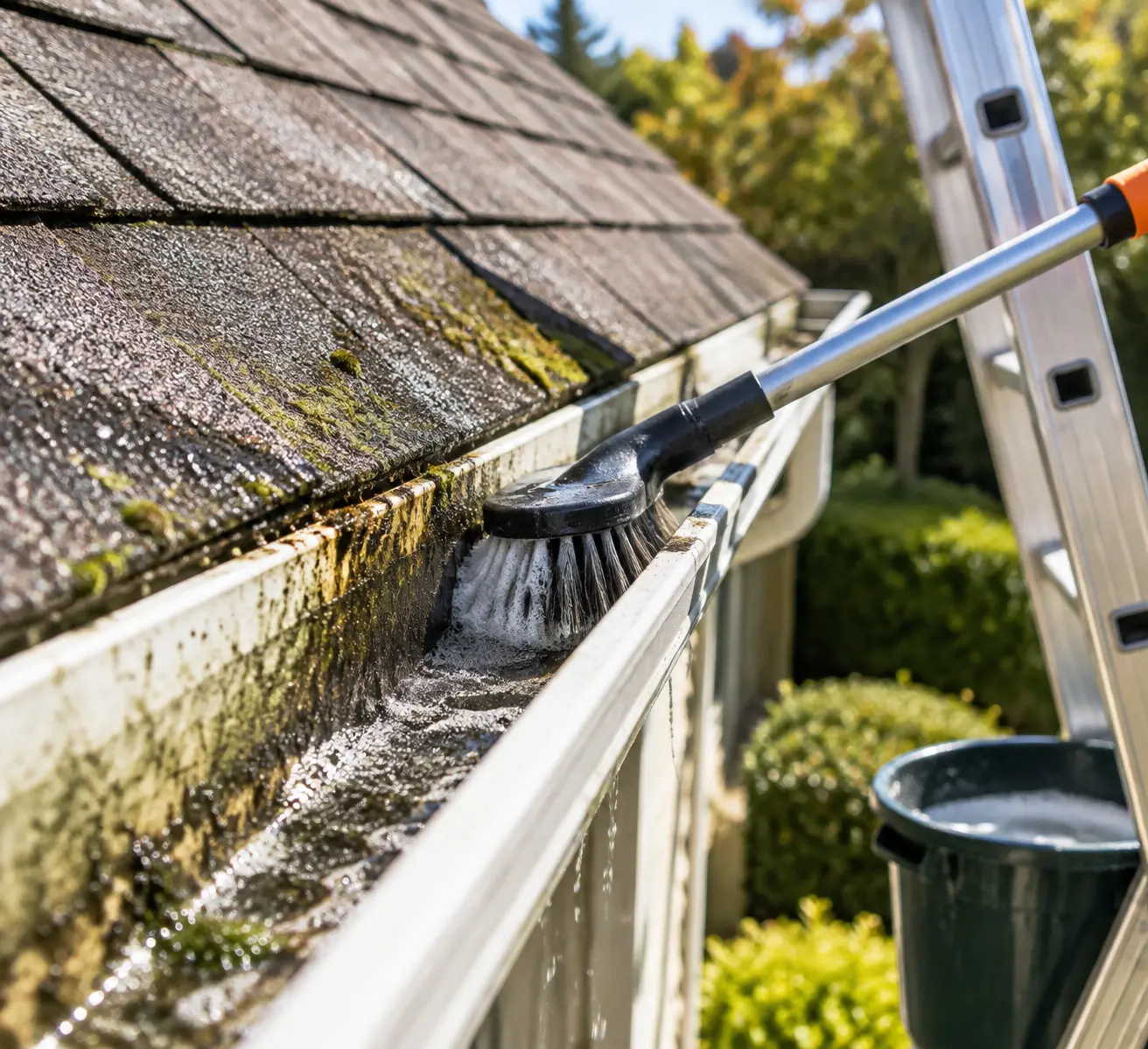
Mold and algae colonize gutters where persistent moisture meets organic matter and shade. Leaves, seed heads and compacted grit trap water against the metal or paint, and slow drainage from sagging runs or clogged downspouts produces the damp surface conditions mold needs to reproduce. The EPA’s brief guide on mold, moisture, and your home explains how sustained moisture supports biological growth and why eliminating standing water is essential to stop recurrence.
When You Should Treat Gutters
Inspect gutters at least twice a year: after autumn leaf drop and after any large storm that could flush debris into the trough. Treat visible black or green streaks promptly to limit paint staining and corrosion. For preventive maintenance, schedule cleaning in late spring and early fall and add a follow-up application of a no-scrub product for heavily shaded elevations.
Ground-Based Methods That Avoid Ladders
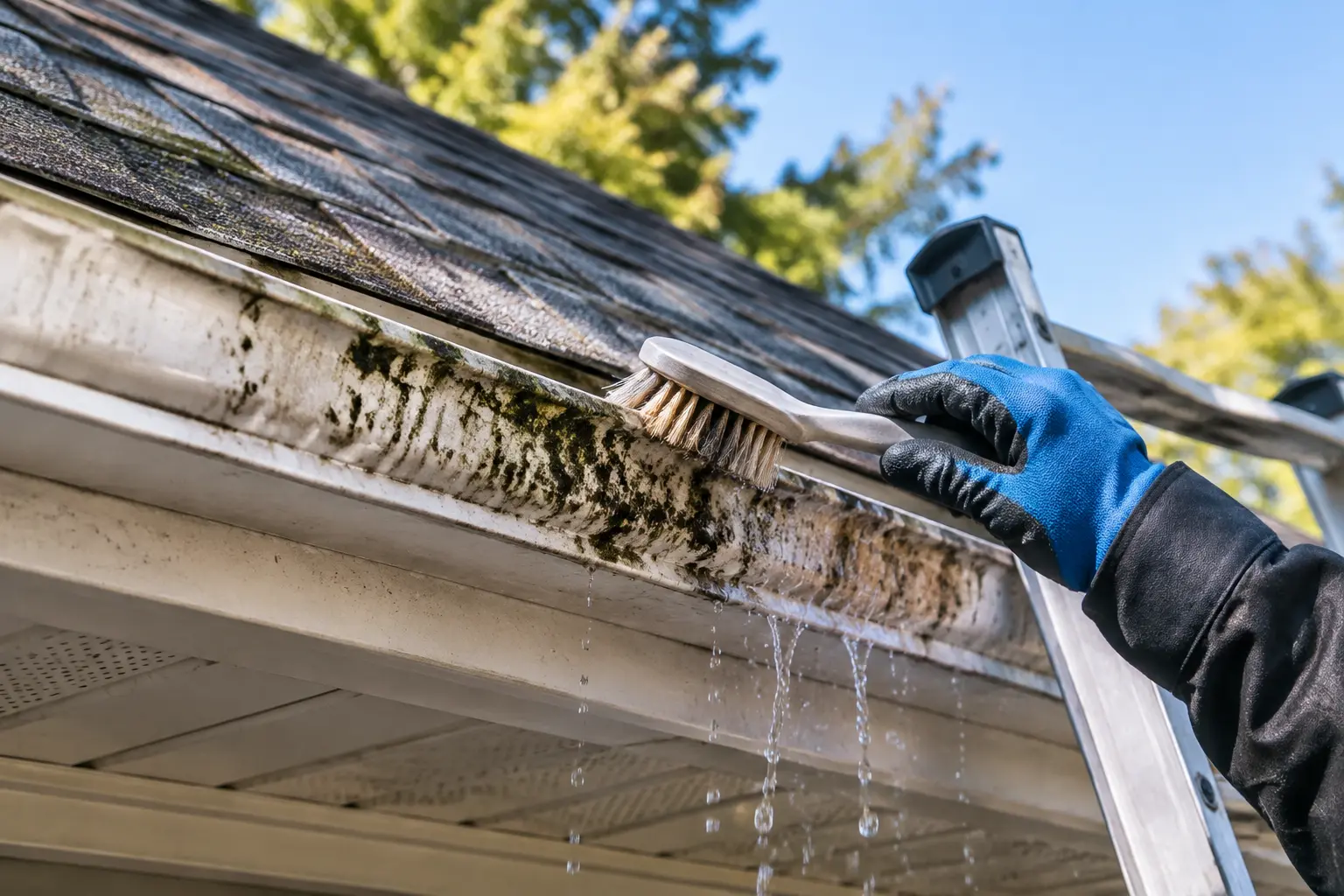
Choose ground-based methods when gutters are reachable from firm ground or with a telescoping tool. Recommended options include:
- Gutter cleaning tools such as telescoping scoops and brushes to dislodge compacted debris before applying cleaners.
- Hose-end sprayers and extension-wand sprayers to apply cleaners and rinse from the ground without climbing.
- High-reach leaf blowers or gutter vacuums to remove dry debris before chemical treatment.
For a step-by-step, ladder-free sequence and additional equipment options see How to Clean Gutters Without a Ladder.
Products That Let You Skip Scrubbing
No-scrub formulations break down biological growth over days so you avoid aggressive brushing. Wet & Forget offers a hose-end Xtreme Reach option intended to spray eaves and gutters from the ground; follow the manufacturer guidance on dilution, application distance and weather windows. Expect visible improvement over days to weeks and repeat treatments for persistent shade and debris.
Stronger Commercial Cleaners and How to Use Them Safely
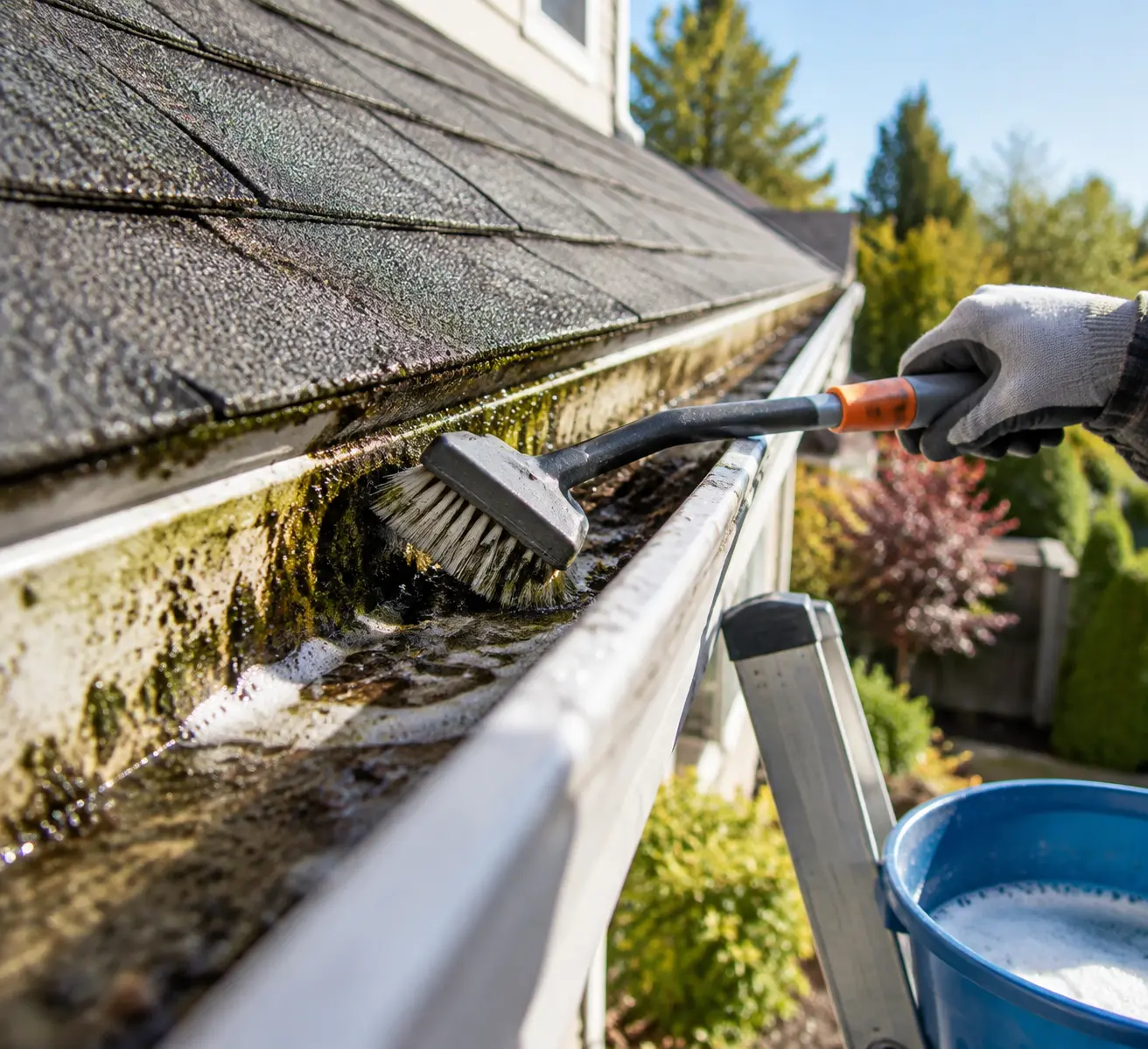
For heavy staining or oxidation, contractor-strength cleaners such as Purple Power, Krud Kutter and Simple Green are commonly used. Apply carefully: test a hidden area first, start at a weak dilution and increase only if needed. Protect plants with polyethylene sheeting and rinse landscaping after treatment. Agitate with a soft-bristle brush on accessible sections, then rinse from the ground using an extension wand.
Practical No-Ladder Workflow
This workflow emphasizes contact between the cleaner and the gutter surface while remaining on the ground.
- Clear. Remove large debris with a telescoping scoop, gutter vacuum or blower so cleaners reach metal or paint directly.
- Protect. Cover shrubs with plastic or wet them thoroughly before applying chemicals; keep people and pets away until rinsed.
- Apply. For light mildew use a 1:1 white vinegar and water mix or warm water with a few drops of biodegradable dish soap in a hose-end sprayer. For heavier growth use a commercial cleaner at the manufacturer dilution through an extension wand.
- Dwell and Rinse. Let the product dwell the recommended time, then rinse from the ground. Repeat spot-cleaning where streaks remain.
Table: Cleaning Methods at a Glance
| Method | Typical Cost |
|---|---|
| Vinegar or mild dish soap via hose-end | Minimal (household supplies) |
| Wet & Forget hose-end or concentrate | $20-$60 product |
| Commercial cleaners (Purple Power, Krud Kutter, Simple Green, F-13) | $30-$100 (materials) |
How to Tackle White Gutters and Painted Finishes
White or light-colored gutters show discoloration quickly, so preserve finish by testing cleaners on an out-of-sight patch for 24 hours. Avoid abrasives and close-range pressure washing, which can dull paint or dent aluminum. Use mild detergent or diluted vinegar first; escalate to commercial cleaners only after testing for colorfastness.
How to Avoid Common Mistakes
- Do not use a pressure washer at close range on aluminum or painted gutters; high-pressure spray can dent or strip finishes.
- Never apply concentrated harsh chemicals without testing and protecting nearby plants; rinse promptly after the dwell period.
- Fix the sources of standing water, sagging runs, poor slope or blocked downspouts, so mold does not return quickly. For downspout diagnosis see Leaky gutters and downspouts (UGA Extension).
- Avoid working from unstable positions; use ground-based tools or hire a professional for high or steep roofs.
When Hiring a Professional Makes Sense
Hire a contractor when gutters are out of safe reach, when cleaning must be paired with repairs, or when deep staining occurs near delicate finishes. Typical professional cleaning rates run about $1 to $2 per linear foot for straightforward work; expect higher prices for tall or complex systems and for stain-removal that requires both chemicals and mechanical action. For service-cost context see the site’s Gutter Cleaning Cost Estimate.
Quick FAQ About How to Clean Mold Off Gutters
- Will vinegar kill gutter mold? Vinegar reduces light mildew and algae but is less effective on heavy staining than purpose-made cleaners.
- How long will Wet & Forget take? Visible results appear over days to weeks; repeat applications and sunlight accelerate breakdown.
- Is bleach recommended? Bleach kills mold but can damage paint, corrode metals and harm plants; dilute well, test first and rinse immediately.
- How often should I inspect gutters? Inspect at minimum twice per year and after major storms or heavy leaf fall.
Practical Prep Before You Start
Plan for a calm, dry day with several hours of no rain so no-rinse products can dwell. Lay out equipment, remove large debris first, and test any cleaner on an out-of-sight area for 24 hours. Keep a bucket, soft-bristle brush and extension wand available for focused spot work. For long-term prevention tactics and routine tips see 7 Tips to Keep Your Gutters Clean.
Preventing Mold From Returning
Mold returns when moisture sources remain. Address gutter slope and blockage, extend downspouts away from the foundation, and reduce shade over the gutter line. The NC State Extension resource on mold prevention provides evidence-based household measures for reducing indoor and building-envelope moisture that apply to exterior gutters as well. For guidance that ties gutter function to foundation drainage see How To Stop Water From Pooling Next To Foundation.
Practical experience from readers helps refine technique and tool choices. If you tested a ground-based method, a hose-end product, or a particular tool, share the results and photos to help others choose the safest, most effective approach for their roofline.
```
Our Product Pick
Gutter Guard Kit, Durable Steel Leaf is one option to look at if you want a ready-made tool for this job. As an Amazon Associate we earn from qualifying purchases.
Related Video
Cleaning mold off gutters can help maintain their functionality and extend their lifespan. Regular maintenance reduces buildup and prevents potential water damage to your property. Always prioritize safety by using proper equipment and taking precautions when working at heights.
More from Architecture Adrenaline
For more practical tips and guidance, consider following our social channels. Check out our latest updates on Instagram for insights and ideas on home maintenance and improvement.