
Driveway edging ideas help turn a loose gravel verge into a defined, low‑maintenance border that resists washout and elevates curb appeal. The most effective setups combine a stable edge with a containment system that matches the driveway material and site conditions, while keeping maintenance practical and predictable. This approach matters because a well‑defined edge reduces material loss, directs drainage, and simplifies mowing and edging tasks over time. Below, we compare common edging options, provide actionable installation guidance, and highlight practical considerations for safety, permitting, and maintenance.
For readers weighing installation decisions near utilities, reference safety guidance before any excavation. See Virginia State Corporation Commission: Dig with CARE safety guidance for digging, which outlines ways to reduce the risk of striking underground lines during driveway work.
When driveway plans intersect public right‑of‑way considerations, consult jurisdictional design and permitting guidelines. For example, official guidance such as Alaska DOT Driveway Standards (design and placement guidance) helps ensure sight distance, drainage, and grade compliance for drive approaches adjacent to public ROWs. In many regions, edging and border work should be coordinated with site design and permits; see Travis County Commercial Driveway Permit guidelines for typical permitting expectations.
Edging projects also benefit from landscape maintenance context. For example, soil margins next to pavement can be weed‑prone, so consider maintenance strategies discussed in Purdue weed management near sidewalks and driveways, which informs border plantings and edging choices that resist weed encroachment. Incorporating low‑maintenance border materials and appropriate soil management reduces long‑term upkeep. See also Illinois Extension: bed edges and border design for baseline border material concepts and installation ideas that can be adapted for driveway edging.
Driveway Edging Idea Overview
The following table summarizes edging types and where they excel, informing a practical selection for readers’ properties. For context, consider how your site slope, soil, and vehicle load will shape performance and maintenance needs.
| Edging Type | Best For | Key Benefit |
|---|---|---|
| Gravel Grid (stabilisation) | Gravel driveways, high‑traffic areas | Prevents migration and rutting; low maintenance |
| Belgian Block / Cobblestone | Traditional or upscale driveways | Very durable curb; elegant, permanent border |
| Steel / Aluminum Edging | Modern driveways, tight visual lines | Low‑profile, strong containment; neat aesthetic |
Which Driveway Edging Idea Works Best?
For a gravel driveway that keeps stone from washing away, pair a gravel grid underlayment with a fixed edge restraint. Steel edging delivers a crisp, modern line, while Belgian block or concrete curbs provide heavy‑duty containment. When choosing, assess soil stability, anticipated vehicle loads, and how much future flexibility you want for plantings or reconfiguration. For a direct link to a concise architecture‑driven comparison of edging ideas, see Driveway Edging Ideas on Architecture Adrenaline.
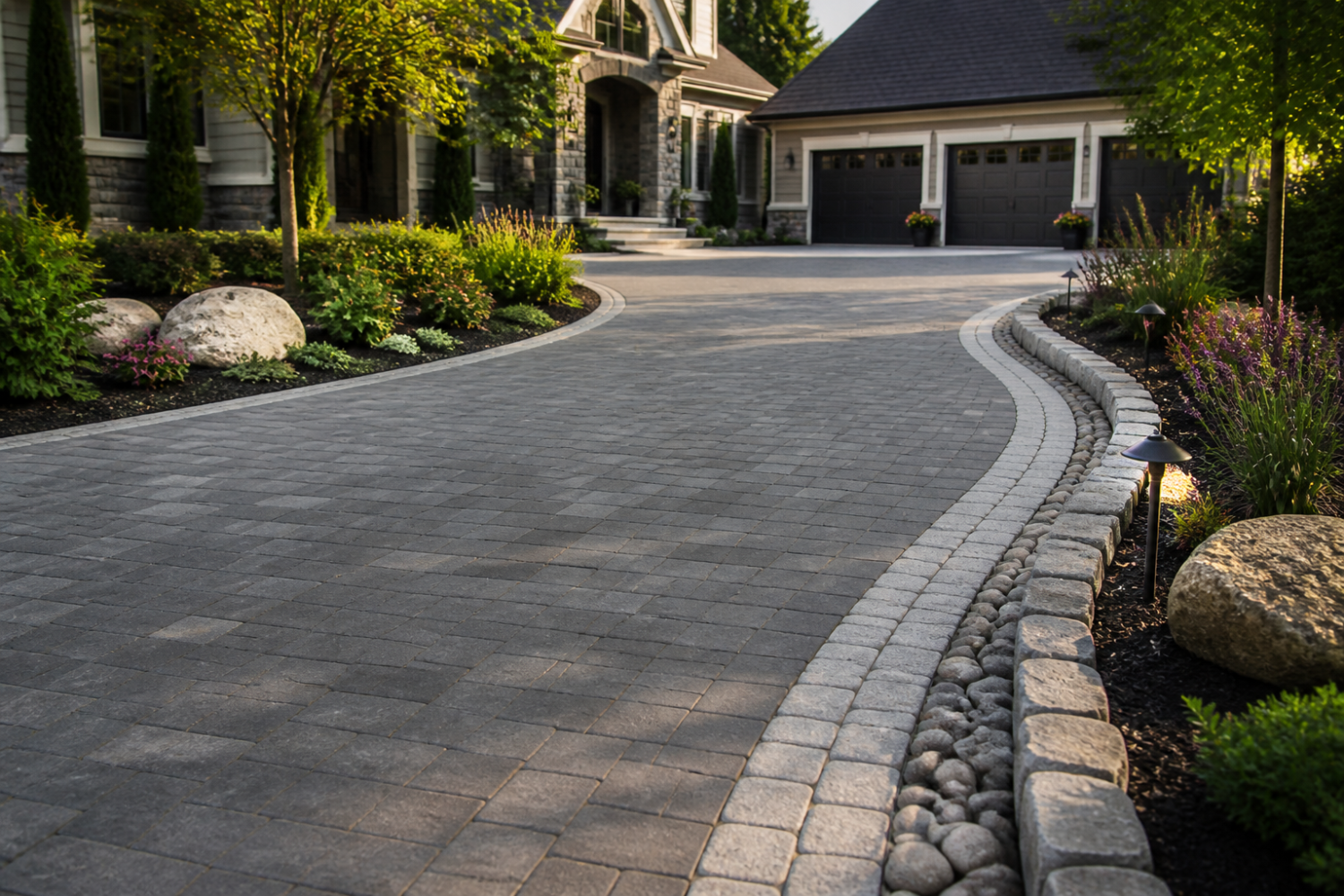
For readers seeking integrated border strategy with landscape, consider the broader border concepts highlighted in Driveway Border Landscaping Ideas to Enhance Your Home, which discusses materials and plant pairings that harmonize with edging and curb lines. If you’re curious about how edging interacts with driveway geometry and entry articulation, explore Side Driveway Landscaping Ideas for design strategies that extend along long approaches.
Why Driveway Edging Matters For Gravel
Proper edging confines material, protects adjacent planting, and supports the paved edge to minimize loss and maintenance. A well‑defined border also frames the approach and can visually reduce the impression of washout on uneven terrain. In practice, the border should be sized to resist wheel‑track pressure and manage drainage without creating a tripping hazard or compromising accessibility.
Gravel Grid Edging: How It Works And When To Use It
Gravel grid systems rest on a compacted sub‑base and are filled with clean aggregate. The grid structure locks stones in place and distributes loads to reduce rutting, yielding a nearly flush gravel surface that remains clearly defined. Installation should include a compacted base, geotextile to prevent soil migration, and proper panel anchoring. See the Architecture Adrenaline guide for practical visuals and installation notes: Driveway Edging Ideas.
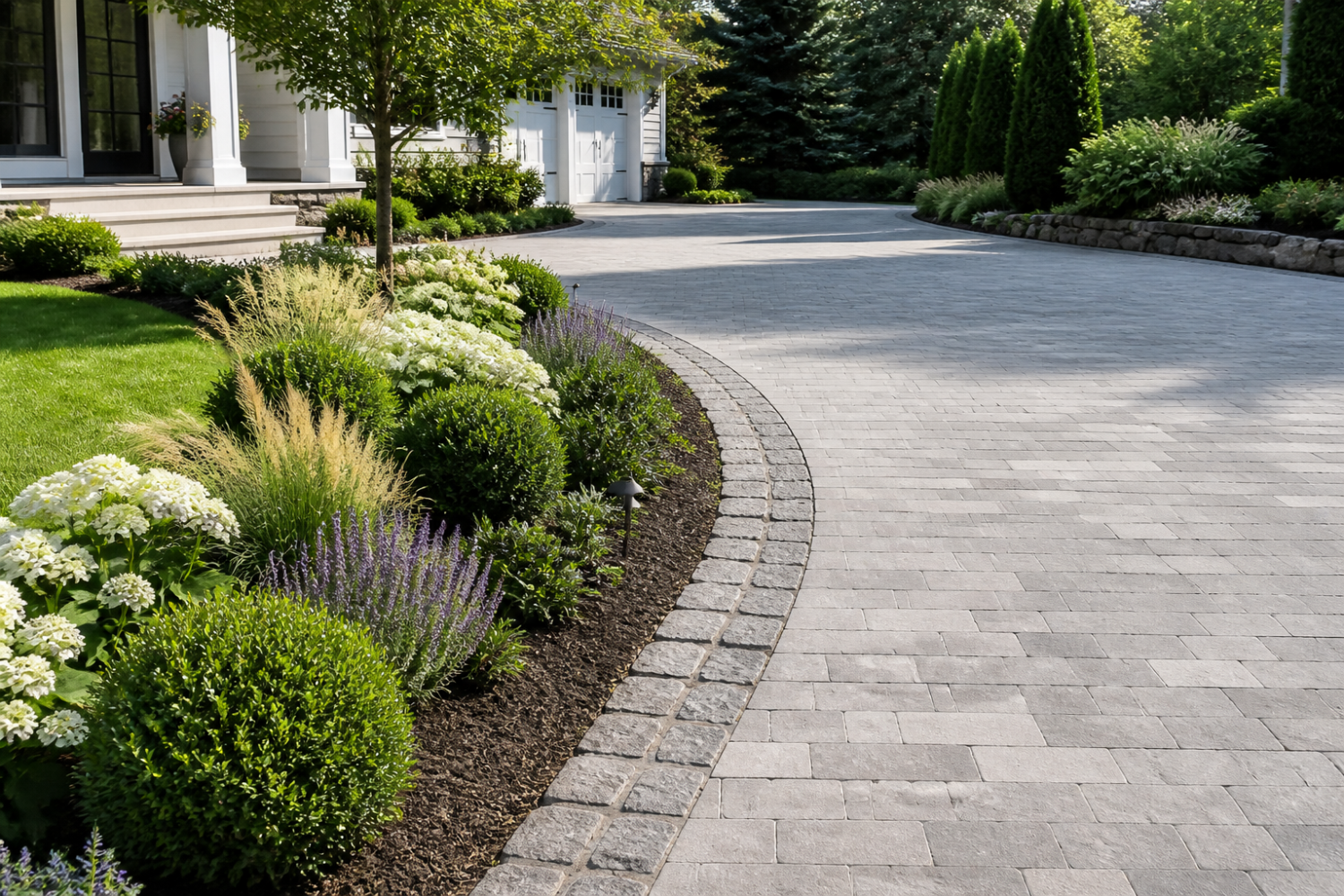
- Install tips: compact a sub‑base, lay geotextile to prevent soil mixing, secure grid panels, then fill with 10–20 mm aggregate and compact gently.
- Best for: long drives, sloped sites, and heavier vehicle use.
Belgian Block And Stone Driveway Edging Options
Belgian block, setts, or cobblestones provide a durable, timeless border. They are bedded in concrete or laid on a compacted mortar bed to form a rigid edge that channels water away and resists washout. Integration with adjacent paving can be reinforced by a concrete backing for longevity. See Architecture Adrenaline’s related coverage for context: Driveway Border Landscaping Ideas.
- Design notes: blocks can be flush with the surface or slightly raised to form a defined curb.
- Maintenance: occasional mortar repointing and resetting unsettled blocks.
Steel And Aluminium Driveway Edging Ideas For A Modern Border
Metal edging provides a slim, crisp line that complements contemporary landscaping. Hemmed steel or aluminum profiles resist deformation and can be anchored with spikes into compacted base material. They work best when you want a neat separation between gravel and lawn or planting beds. For further context on how modern edges can integrate with driveways, see Architecture Adrenaline’s contemporary driveway articles, such as Modern Driveway.
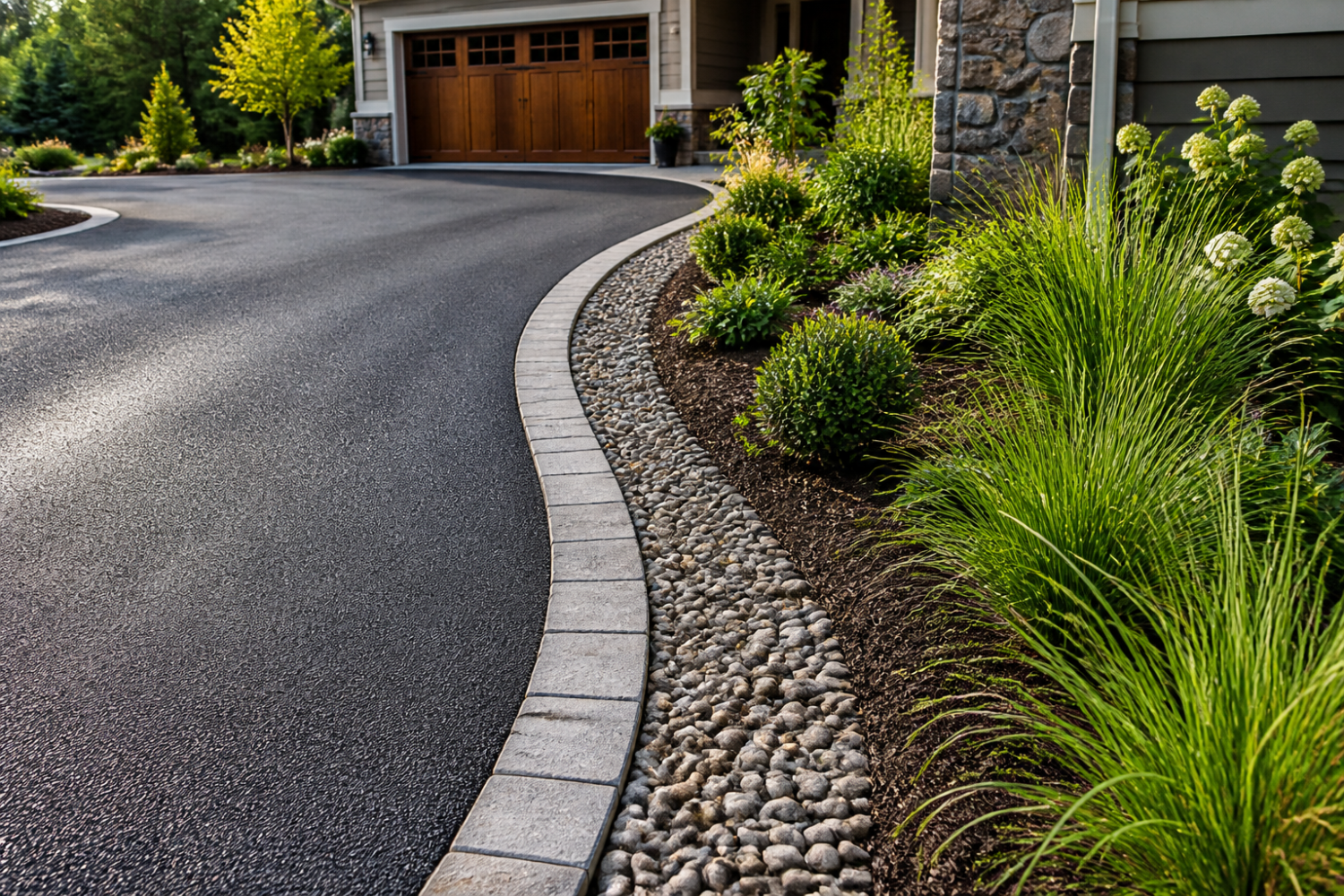
- Practical tip: choose galvanized or powder‑coated steel to resist corrosion; include expansion gaps at joints.
- When not to use: avoid very thin steel where heavy vehicle impacts are common.
Concrete Curbs And Poured Edging For Long‑Term Stability
Poured concrete curbs or precast edging form a robust barrier that stops erosion and supports the edges of asphalt, concrete, or gravel driveways. They can be bullnose, straight, or colored to match surrounding hardscape. Excavation, reinforcement, and a controlled pour are essential for durability. See relevant edging discussions in the Architecture Adrenaline series on driveways that provide practical context for curb integration: Driveway Pillars: Enhancing Your Home's Curb Appeal.

- Excavate and compact the trench; add reinforcement for long spans.
- Pour concrete to the required profile and finish as desired.
Budget And DIY Driveway Edging Ideas
Low‑cost approaches can be effective when paired with a solid base. Options include plastic or rubber strip edging, treated timber sleepers, or a simple brick/paver row on a sand trench. Each option has tradeoffs in durability, appearance, and maintenance needs. For broader context on border materials and border strategies, you can review practical edging discussions in Architecture Adrenaline’s border and edging content, including Driveway Border Landscaping Ideas and Side Driveway Landscaping Ideas.
These ideas work best with a solid base: dig a shallow trench, compact, add a sand bedding, install edging, and backfill carefully.
Landscaped Driveway Border Ideas That Also Control Erosion
A softer edge can be achieved by pairing hard edging with plantings: low hedges, ornamental grasses, or groundcovers outside a slim border. The hard edge contains material, while plantings soften transitions and reduce splash. Incorporate drought‑tolerant species where possible for year‑round low maintenance. For inspiration on how borders can harmonize with planting designs, see Architecture Adrenaline’s driveway border coverage.
- Choose plantings that tolerate both sun exposure and how water drains along the edge.
- Use mulch or decorative pebbles between plantings and edging to reduce soil splash.
How To Install Edging For Gravel Driveways—Step‑By‑Step (General)
A reliable process, adaptable to various edging materials, is outlined here with practical checks. Always confirm material‑specific steps before proceeding. Groundwork and drainage considerations should reflect local conditions and codes. For a practical visual reference to installation logic, see Driveway Edging Ideas.
- Mark the edge line with spray paint or string.
- Excavate a trench deep enough for the edging plus base (typically 4–8 inches; deeper for concrete or Belgian block).
- Compact a crushed‑stone base; lay geotextile if needed.
- Install edging: anchor metal profiles with spikes, set blocks on mortar or compacted sand, pour concrete, or snap in plastic edging.
- Backfill behind the edge with compacted granular material and sweep a clean line at the edge.
Maintenance Tips To Prevent Gravel Washout And Edge Failure
Maintenance is easier when the border is sized to the expected loads and drainage is directed away from edges. After heavy rain, rake displaced gravel back inside the border. Periodically inspect for loosened backfill or undermining and re‑compact as needed. If asphalt or concrete edges exist, seal cracks promptly to prevent water infiltration that can destabilize borders. For broader contextual guidance on site drainage and border longevity, refer to the safety and design resources cited earlier.
- After heavy rain, rake displaced gravel back inside the border.
- Seasonally inspect for loosened or undermined edges and re‑compact backfill as needed.
- Design for drainage: direct runoff away from edges with shallow swales or permeable details to prevent undermining.
- Seal and maintain asphalt or concrete edges; fill cracks to minimize water infiltration.
Comparing Driveway Edging Options: Pros, Cons, And Costs
At a glance, consider the following practicalities as you evaluate options. For a deeper exploration of material performance and lifecycle, consult local suppliers and, where possible, manufacturer guides on installation tolerances and load ratings.
- Gravel grids — Pros: surface stabilization; Cons: cost and installation time. Value accrues with high‑use drives over time.
- Belgian block / stone — Pros: durability and classic look; Cons: higher upfront cost and installation effort.
- Steel edging — Pros: slim profile; Cons: potential bending under heavy impact; requires corrosion‑resistant finish.
- Concrete curbs — Pros: permanent, supports edges; Cons: cost and limited flexibility for future changes.
- Plastic/wood — Pros: affordable and DIY‑friendly; Cons: less durable; wood may rot or warp.
Costs vary with local conditions and labor. Obtain multiple quotes to compare material and installation fees for your project.
Common Mistakes When Installing Driveway Edge Pavers And How To Avoid Them
Prevent common missteps with a few targeted checks. Use a properly prepared base, avoid loamy soils without geotextile, address drainage to prevent undermining, and select edging rated for the expected load. For practical context on how edging decisions translate into real performance, review the related Architecture Adrenaline articles linked earlier.
- Skipping proper base compaction—causes settling and edge failure.
- Skipping geotextile on loamy soils—soil can migrate into gravel and undermine edges.
- Ignoring drainage—unmanaged runoff undermines borders.
- Choosing edging that isn’t rated for expected vehicle loads—thin edging deforms under use.
Driveway Edging Ideas For Special Cases: Slopes, Long Drives, And Asphalt Edges
On slopes, stepped edging or continuous concrete curbs can hold materials without creating sharp drops. For long drives, consider a composite approach: gravel grids paired with reinforced curbing to lower maintenance. When edging an asphalt edge, connect a concrete or paver border with a clean joint and edge sealer to protect against deterioration. For design context, see Architecture Adrenaline’s related edging coverage.
How To Choose The Best Driveway Edging For Your Property
Make decisions based on use, look, and budget. Prioritize low maintenance with a combined grid and solid edge for gravel drives. For a timeless, long‑lasting look, Belgian block or natural stone with a concrete backing is recommended. If cost and DIY ease matter, a plastic strip edging or a single row of pavers on sand can suffice, recognizing shorter service life and higher replacement frequency. Measure linear feet, evaluate vehicle types and slopes, and solicit multiple quotes to refine cost expectations.
Readers seeking practical shopping paths can explore edging materials broadly via product listings such as Driveway edging materials on Amazon, which offers a range of pavers, stones, metal edging, and border systems referenced in this guide.
Quick Material Checklist For Installing Driveway Edge Pavers Or Grids
- Marking paint or string line
- Trenching tool and compactor
- Geotextile fabric (where needed)
- Crushed stone base (Type 1 or 3/4" angular)
- Selected edging (grids, steel profiles, pavers, Belgian block, or concrete mix)
- Anchors, spikes, mortar or concrete as required
- Topcoat gravel and compactor plate
We’d love to hear which edging ideas you’re considering. Have you used gravel grids, Belgian blocks, or steel edging on a gravel driveway? Share your experiences in the comments, or tell us about a border design that transformed your curb appeal.

```
22 Best Driveway Edging Ideas On A Budget:
When it comes to enhancing your driveway, the right edging can truly make all the difference. It's not just about functionality; it's about creating an inviting entrance to your home that reflects your personal style. Whether you choose classic brick, sleek concrete, or something more whimsical like wooden logs, the options are as diverse as your tastes. Remember to think about your overall landscape and how your driveway edges can complement or contrast with your existing features. It's like putting the finishing touches on a beautiful painting!
Stay Inspired with Driveway Edging Ideas!
I hope these driveway edging ideas have sparked your creativity and helped you visualize what’s possible for your space. Don’t forget to stay connected for more tips and inspiration! You can follow me on Instagram for daily doses of architectural charm and design ideas. Let's keep the conversation going and explore together as you embark on your driveway enhancement journey!
