
“Dry concrete or cement dust is not as hazardous as new wet cement because it has cured” is a common shorthand on job sites, but it oversimplifies the real risks. This article explains when that comparison is accurate, when it is misleading, and what to do about each hazard so painters, finishers, remodelers and homeowners can make task-specific safety choices.
Quick Answer and Article Scope
Intact, cured concrete is far less chemically caustic at the surface than fresh, wet cement, so it presents lower immediate burn risk. However, dry cement dust still creates respirable silica and alkaline particle hazards when generated, and those hazards may be worse over time than a brief wet-cement contact. This article covers the chemistry change during curing, the separate injury profiles for wet and dry material, task-based risk assessment, specific controls, first-aid steps and simple design choices that reduce exposure on site. For the regulatory context on concrete product hazards, consult the OSHA Concrete Products safety overview.
How Curing Changes Cement Chemistry
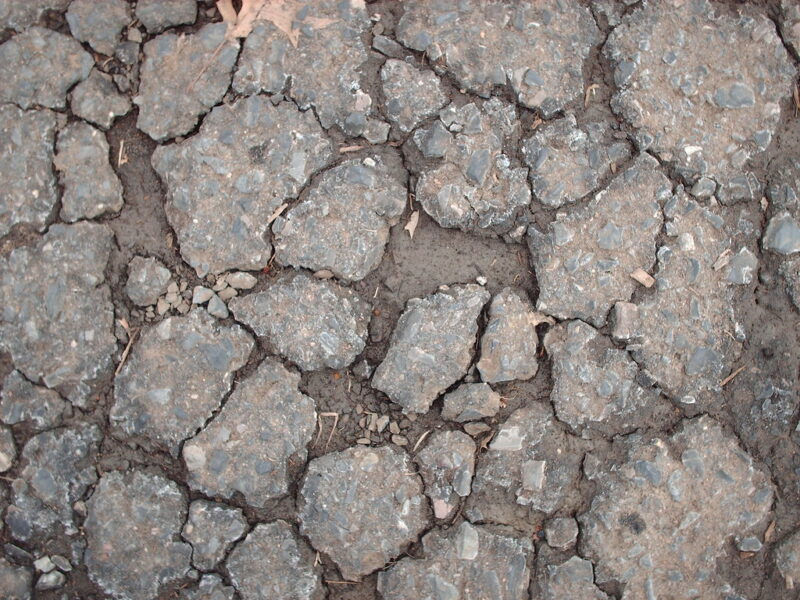
Curing converts soluble alkaline reaction products into a hardened mineral matrix through hydration, which reduces surface alkalinity and the acute caustic-burn potential of fresh cement. Cured concrete still contains crystalline silica and residual alkalis bound in the matrix; those substances become hazardous again if cutting, grinding or demolition creates fresh dust. When specifying finishes or repairs, minimize on-site abrasive disturbance of existing concrete to avoid reactivating those hazards.
Health Hazards of Dry Cement Dust
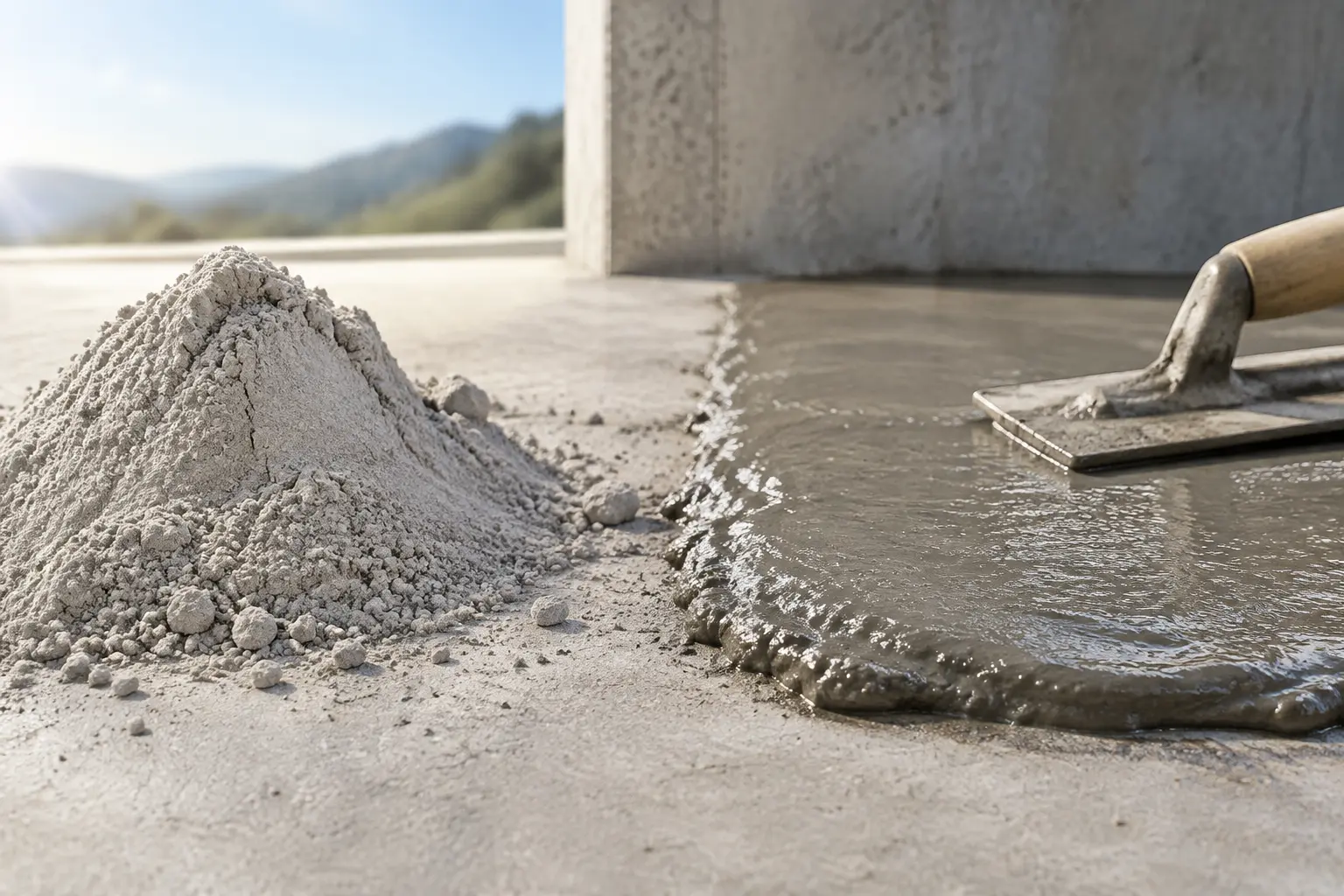
Dry cement dust causes eye and upper-airway irritation immediately and contributes to chronic lung disease with repeated exposure. Respirable crystalline silica in dust can cause silicosis and increase lung cancer risk; the rule for controlling that risk in construction work is described in the OSHA respirable crystalline silica standard for construction. Cutting or grinding cured concrete releases the respirable fraction; field studies show wet-cutting can reduce dust by around 85 percent compared with dry cutting for the same operation.
Regulatory and guidance sources treat silica exposure as a chronic, actionable hazard and set exposure limits, monitoring, and engineering-control expectations. See the NIOSH/CDC survey data for exposure examples and recommended controls.
Hazards of Fresh Wet Cement
Freshly mixed cement is strongly alkaline, commonly with surface pH around 12 to 13. Short periods of contact can cause irritant dermatitis; prolonged or trapped contact causes deep chemical burns and ulcers that require medical care. Hexavalent chromium in some mixes can sensitize skin and trigger allergic contact dermatitis or occupational asthma in susceptible people. Specify mixes and admixtures with known low-chromium formulations when skin contact risk is likely during finishing.
Task-Based Risk Assessment
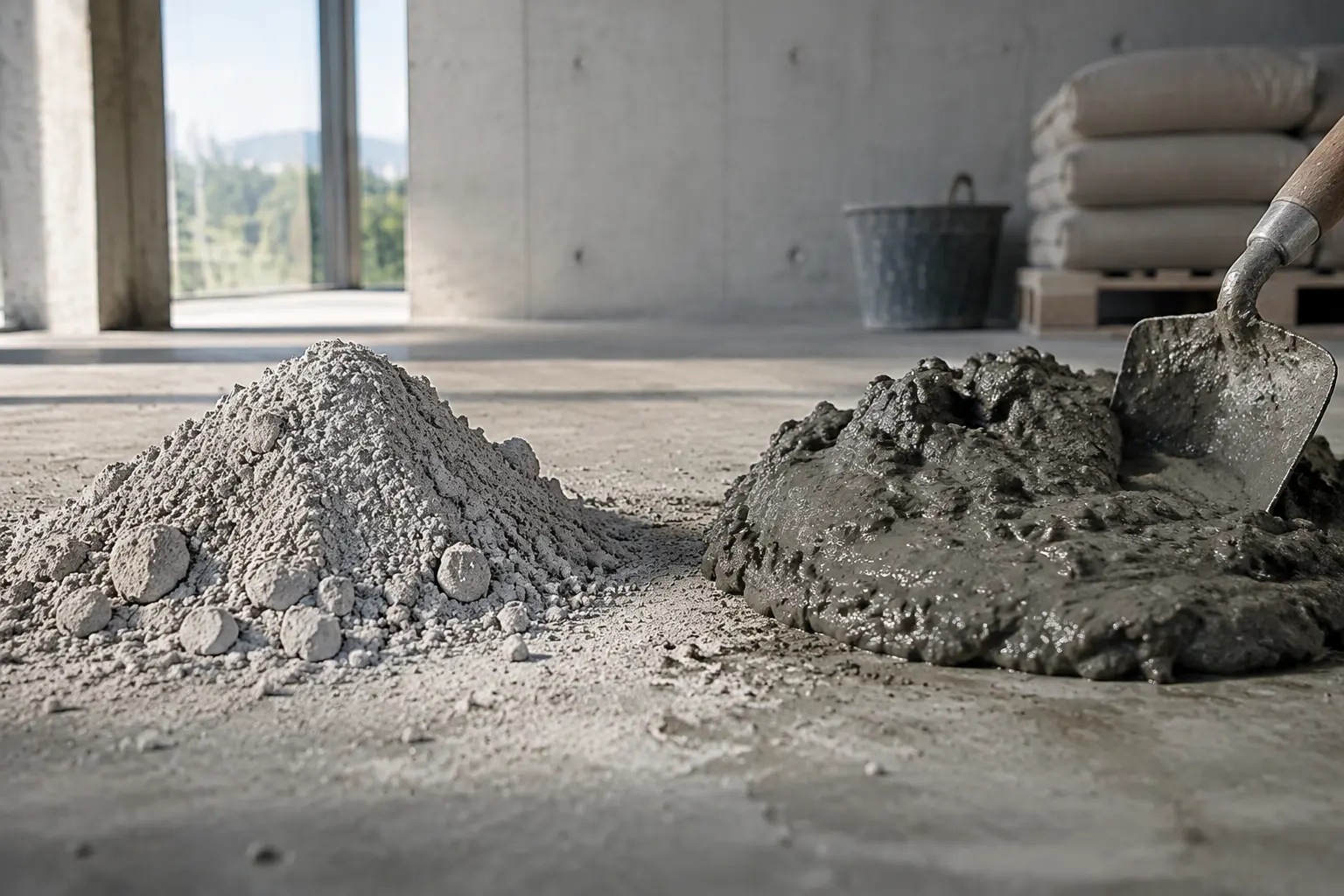
Decide which hazard matters by asking task-specific questions: will the material contact skin for minutes or hours? Will the work disturb cured concrete? Is airborne dust likely to reach breathing zones? For finishing and placement, wet-cement hazards dominate. For cutting, grinding, chipping or demolition, silica and dust control dominate. Tailor controls to the dominant exposure route rather than applying a one-size-fits-all approach.
Practical Controls and PPE
- Suppress dust at the source: use wet cutting or local exhaust with HEPA filtration for saws and grinders. Where water is impractical, use shrouds and vacuum systems rated for silica.
- Choose respirators by exposure. For many concrete tasks, a properly fitted NIOSH-certified P100 respirator or higher is appropriate; N95 is inadequate when silica levels are high or when monitoring shows PEL exceedance.
- Protect skin and eyes: alkali-resistant gloves, sealed goggles, long sleeves and waterproof boots with sealed tops for wet work; remove and decontaminate PPE before breaks and at shift end.
- Housekeeping: avoid dry sweeping. Use HEPA vacuums or wet cleanup and change clothes before leaving the site to limit take-home contamination.
First Aid and Emergency Steps
First aid differs by exposure. For wet-cement skin contact, remove contaminated clothing and flush with running water for at least 20 minutes, then seek medical care for burns. For eye exposure to dust or wet cement, flush continuously and get urgent evaluation. For heavy dust inhalation, move to fresh air; seek medical attention if breathing problems or persistent symptoms develop. Maintain a site safety folder with up-to-date SDS sheets and a tested decontamination plan.
Practical Tools and Methods That Reduce Dust
On-site controls that cut airborne silica are cost-effective compared with worker illness and downtime. Use wet-cutting saws or integrate a water feed to blades, fit tools with local exhaust shrouds and HEPA vacuums, and schedule dusty operations when fewer people are present. Field data show wet methods reduce respirable dust by roughly 85 percent in paired tests of identical cuts, a performance figure to require in equipment specifications or subcontract tenders.
Design and Specification Choices That Lower Exposure
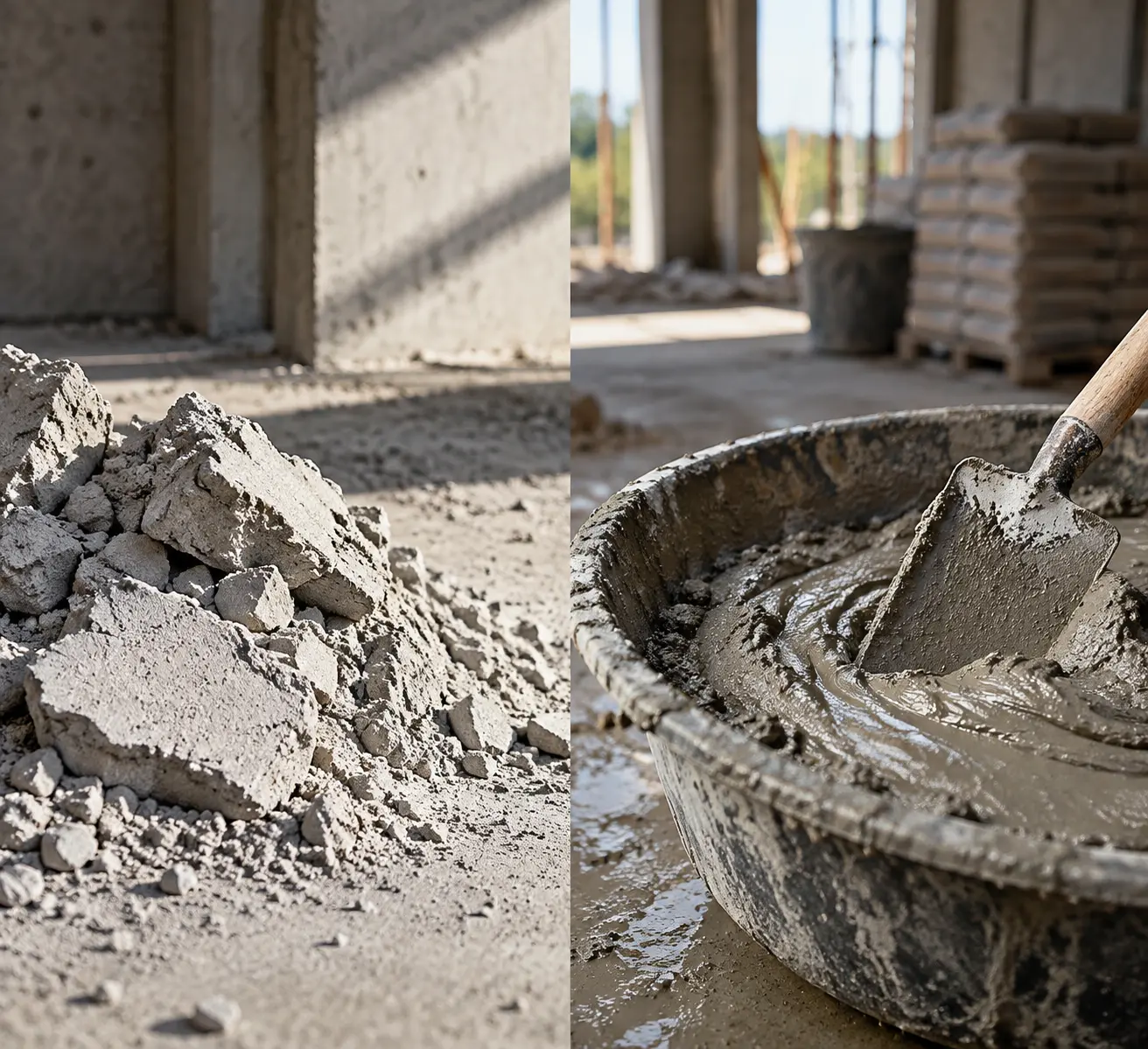
Reduce on-site cutting by specifying prefabricated elements and select tools with built-in dust extraction. Design access so crews can position local extraction close to the work. Plan wash stations and PPE storage near the work area and include decontamination sinks in the work sequence to make compliance practical and reduce take-home exposure.
| Material State | Primary Hazard |
|---|---|
| New Wet Cement | Caustic chemical burns to skin and eyes; irritant dermatitis and chromium sensitization |
| Dry Cement Dust | Respirable crystalline silica, chronic lung disease risk, eye irritation and dermatitis |
| Cured Concrete (When Disturbed) | Generates silica-containing dust when cut or ground; dust controls and respirators required |
Regulatory Guidance and Where to Read More
OSHA publications on concrete outline employer duties for preventing both caustic burns and silica exposure, including exposure monitoring, medical surveillance and required engineering controls. For practical, project-level discussion of concrete-related health risks and mitigation, see Architecture Adrenaline’s coverage of concrete floor health risks, and consult the shop- and DIY-focused precautions in the DIY concrete countertops guide. For safe methods to reduce drilling and mounting dust on site, review practical mounting advice in the how to hang things on concrete piece. The OSHA guidance linked in the earlier PDF remains a concise field reference for employers.
Related Video
Dry concrete or cement dust is relatively less hazardous compared to freshly mixed wet cement due to the curing process that reduces chemical reactivity. Cured concrete is stable and not prone to releasing harmful dust particles when handled properly. This distinction is crucial for those working in construction and handling materials.
More from Architecture Adrenaline
For further insights and updates on this topic, be sure to check our social channels for more posts like this. You can find us on Instagram for the latest information.