
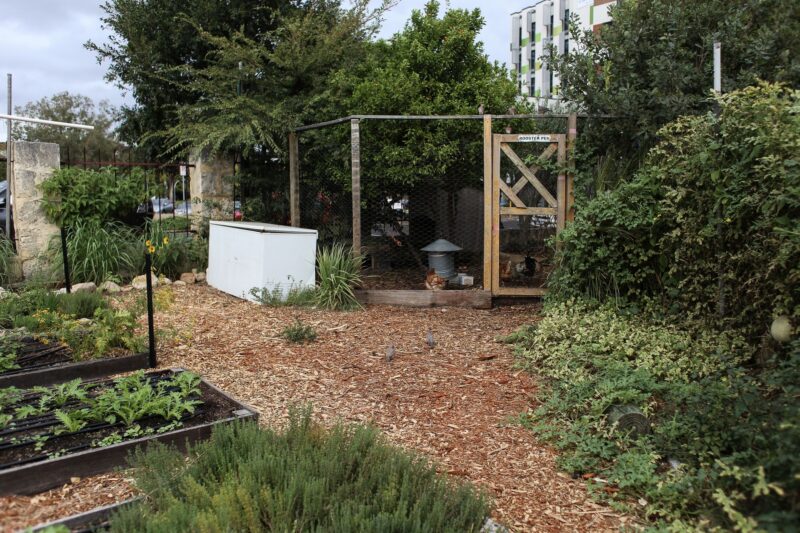
Chickens can destroy new plantings in an afternoon. Use a mix of temporary covers, managed confinement, sensory deterrents, and deliberate garden design to protect seedlings and fruit without building permanent fencing; the plan below lists six practical, low-fence options, when to use each one, and how to combine methods so a flock and beds both function on the same property.
Why Fence-Free Strategies Succeed
Fence-free approaches work by removing the triggers that make beds attractive, adding short-term physical barriers, or creating a more compelling alternative space for birds. These tactics reduce daily damage while avoiding the labor and sightlines of permanent perimeter fencing.
Designing for both plant survival and flock behavior short-circuits common failure modes: unsecured covers, feed near edges, and static deterrents that chickens quickly ignore. For a practical primer that complements the tactics below, see the site’s detailed guide on keeping chickens out of the garden: How to Keep Chickens Out of Garden.
Row Covers, Hoop Tunnels, and Lightweight Barriers
Floating row covers and hoop tunnels are the fastest, lowest-cost way to stop scratching and pecking on seedlings and young transplants. Use UV-stable fabric supported by hoops so covers do not crush foliage.
- Choose 30 to 50 percent shade/UV-stable fabric for early season use so light and water pass through while still reducing heat buildup.
- Anchor edges with landscape staples, boards, or soil to prevent chickens from slipping beneath; inspect anchors after heavy wind or rain.
- Remove or vent covers during warm afternoons and open for pollination windows on flowering crops.
For fence-free netting tactics and quick-install ideas, the DayGardening walk-through provides practical examples that work without permanent fencing: DayGardening: How to keep chickens out of your garden without fencing.
Moveable Chicken Tractors and Short-Term Confinement
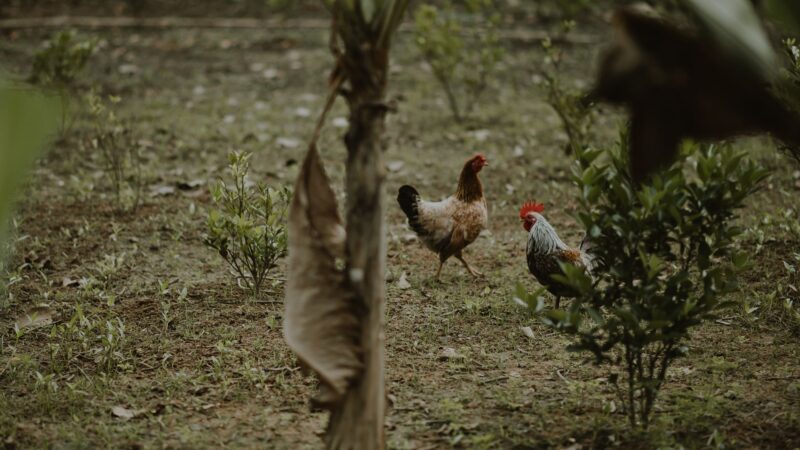
A chicken tractor confines birds to a controlled patch and lets you schedule when and where they forage. Use tractors to clean finished beds after harvest or to relieve lawn that needs de-thatching.
- Build a lightweight frame with welded or stapled hardware cloth and a hinged top for access and ventilation; wheels or skids speed repositioning.
- Move the tractor daily or every few days to avoid overgrazing a single spot and to distribute manure across the yard.
- Secure the unit at night and pair it with basic predator resistance; for broader site planning see the related guidance on birds and garden strategies: How to Keep Birds Out of Garden.
Motion Deterrents and Sensory Repellents
Motion-activated sprinklers and rotating visual decoys interrupt habitual entry paths. They work best when concentrated at known access points rather than scattered across beds.
- Place a motion sprinkler at the primary entry route and dial sensitivity so it triggers reliably on chickens but ignores wind-driven debris.
- Move reflective tape, pinwheels, or decoys every one to two weeks to slow habituation; combine these with a physical cover for seedling protection.
- Use a short-duration water pulse rather than continuous spray to conserve water and avoid saturating root zones.
If you want a quick visual demo of fence-free deterrents and setup approaches, see the video demonstration on deterring chickens from gardens: YouTube demonstration on deterring chickens from gardens.
Distraction Zones and Dedicated Forage Areas
Providing an attractive, separate area for scratching and dust-bathing reduces pressure on beds. Place the distraction zone well away from high-value plantings so chicken activity does not spill over.
- Create a scratch patch using loose soil, compost, or leaf litter and scatter small amounts of scratch grain away from the garden to reinforce the location.
- Install a sun-warmed dust-bath area of sand or sifted soil; chickens will use it repeatedly if it stays dry and accessible.
- Keep feeders, water, and compost bins at least 20 to 30 feet from bed edges to avoid constant attraction at the margins.
For practical, farm-scale adaptations of distraction-area ideas and non-fence options such as netting and temporary barriers, Farmsimple’s field guide offers adaptable techniques: Farmsimple: Keeping chickens and your vegetable garden.
Planting Strategy, Raised Options, and Border Buffers
Garden layout influences vulnerability. Use height and access difficulty to protect the most fragile crops.
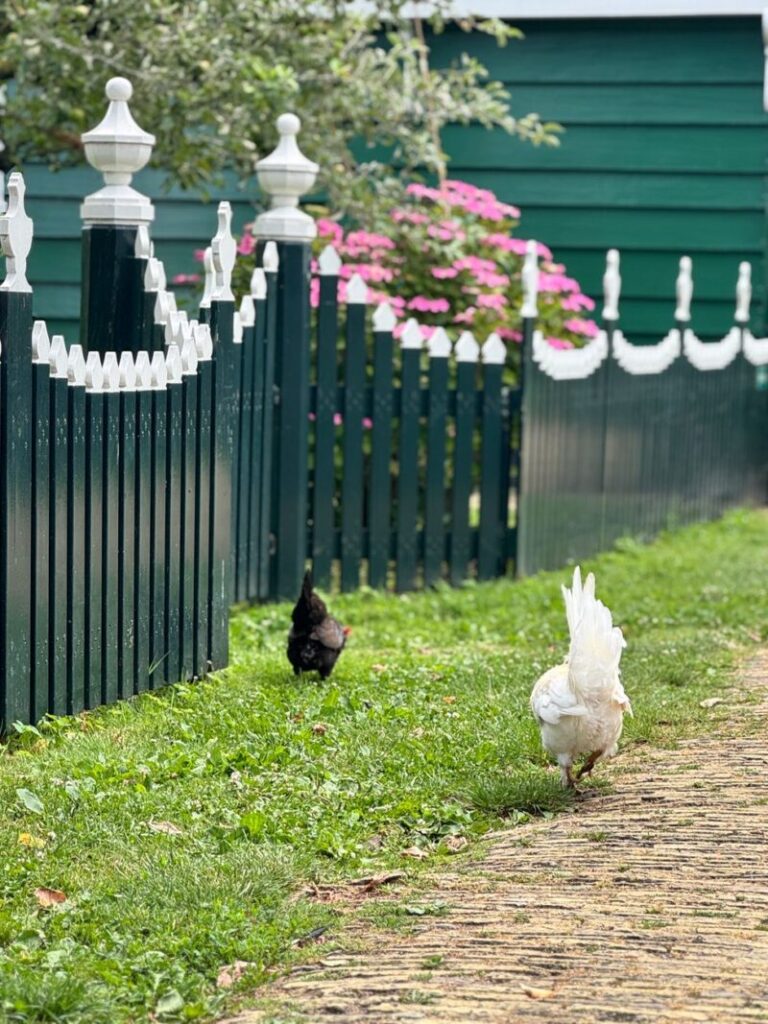
- Put seedlings in raised beds or on benches so chickens must climb to reach them; a 12-inch berm or raised bed edge already reduces casual scratching.
- Train vining crops on trellises so fruit is above pecking level; place dense ornamental grasses or thick groundcovers at bed edges as a physical deterrent.
- Use less-palatable aromatic herbs as a supplementary edge planting but do not rely on them as a sole barrier.
For plant-centered tactics and lists of less-favored species, see the site’s plant guide for species that tend to resist chicken browsing: Plants Chickens Won't Eat.
Timing, Rotation, and Seasonal Access
Timing when chickens enter an area controls risk. Delay bird access until seedlings have 3 to 4 true leaves or are rooted well enough to withstand superficial scratching.
- Allow chickens to clean beds after the final harvest in autumn when plants are finished and soil can benefit from manure incorporation.
- Use tractors and distraction zones on a schedule that aligns with crop maturity rather than continuous free-range access.
- Rotate areas open to birds so no single patch is overworked and to reduce disease or parasite hotspot formation.
Maintenance, Common Mistakes, and Predator Considerations
Failing to inspect fasteners, leaving food near beds, and relying on a single deterrent are frequent mistakes. Regular maintenance keeps temporary systems effective and the flock safe.
- Check netting and covers after storms and replace or repair tears immediately.
- Move sprinklers and decoys periodically and reseed distraction patches to keep them attractive.
- Balance exclusion with safety: ensure portable pens are predator resistant overnight and avoid locating coops adjacent to heavy cover where predators can stage ambushes.
Extension-based design considerations and non-perimeter deterrents are useful background when planning protective and safety measures: University of Vermont Extension: Chickens in the Garden.
Combining Methods for Reliable Results
Layering physical protection, managed confinement, deterrents, and a distraction area is the most reliable low-fence strategy. A starter plan for a small garden:
- Install row covers over seedlings, place a motion sprinkler at the primary entry point, and use a small chicken tractor for scheduled foraging.
- Create a distraction patch 20 to 30 feet from beds and refresh it weekly so it remains attractive.
- Audit and move feeders, water, and shade structures that currently draw birds toward plantings.
Biology Insights provides a concise, step-by-step overview of ground-level barriers, netting, and diversion tactics that align with a layered approach: Biology Insights: How to keep chickens out of the garden without fencing.
| Method | Best Use |
|---|---|
| Row covers or hoop tunnels | Protect seedlings, soft fruit, and early-season crops |
| Chicken tractor | Controlled foraging and staged cleanup after harvest |
| Motion-activated sprinkler | Block habitual access points and entry paths |
Practical Checklist Before You Start
- Map where chickens enter and note where feeders, compost, or shade currently draw them.
- Decide which beds require constant protection and which can tolerate occasional scratching.
- Assemble supplies: row cover fabric, landscape staples, a small tractor or portable run, and one deterrent device to test placement.
- Schedule a weekly inspection to resecure covers, move the tractor, and refresh distraction areas.
For sourcing netting, row covers, and light fencing options that support the methods above, search commercial retailers for garden netting and barrier products: Garden netting and barrier products for deterring chickens.
Limitations, Tradeoffs, and When to Fence
Fence-free methods reduce visual impact and cost but require more active management and frequent maintenance. If birds must be excluded permanently from large areas, a well-designed perimeter fence remains the most durable solution.
For additional fence-free tactics and user-tested approaches, including netting patterns and temporary barrier details, see this UK practical guide and a concise multi-method outline: Farmsimple: Keeping chickens and your vegetable garden and Biology Insights.
Final Assessment
For small to medium vegetable plots, a layered approach of row covers for seedlings, a mobile tractor for scheduled cleanup, and one well-placed motion deterrent will protect high-value crops with minimal permanent infrastructure. Expect weekly maintenance and periodic replacement of netting; if low labor or larger exclusion zones are required, plan for a permanent fence instead.
Our Product Pick
Dog Urine Neutralizer for Lawn 120 Soft Chews is one option to look at if you want a ready-made tool for this job. As an Amazon Associate we earn from qualifying purchases.
Related Video
Chickens can be persistent when it comes to foraging in gardens. While fencing may seem like a straightforward solution, there are other strategies to explore. Using physical barriers like row covers or plant cloches can deter chickens while still allowing your plants to grow. Planting chicken-repellent herbs like lavender or mint can also make your garden less appealing to them. Understanding chicken behavior can help you develop effective methods that protect your garden without the need for fencing.
More from Architecture Adrenaline
For more tips and ideas like these, check out our social channels. You can find us on Instagram for the latest updates and posts.