
Interior Design Programs at Top Texas Schools: Your 2024 Guide offers a clear view of the best Texas undergraduate and certificate paths for aspiring interior designers, detailing accreditation, curriculum distinctions, and practical considerations like cost, licensure, software training, and career readiness. This consolidated guide blends program strengths, accreditation realities, and the realities of online options to help you compare options across major Texas institutions. For a concrete example of a community college offering foundational coursework and transfer pathways, see Portland Community College Interior Design program details.

| School | Program Type & Accreditation | Quick Notes |
|---|---|---|
| University of Texas at Austin | Bachelor of Science in Interior Design — CIDA-accredited | Robust studio culture, licensure guidance, and strong ties to Austin design firms |
| Texas Tech University | Bachelor (Interior Design) — CIDA-accredited | Studio-heavy with emphasis on construction detailing and regional industry partnerships |
| Texas State University | B.S. in Interior Design (Family & Consumer Sciences) — CIDA-accredited | Balanced residential/commercial coursework; materials and sustainability focus |
| Sam Houston State University | Bachelor in Interior Design — CIDA-accredited | Practical portfolio-focused program with clear NCIDQ-path course sequences |
| University of Houston | B.S. in Interior Architecture (Gerald D. Hines College) — CIDA-recognized | Architectural alignment for students seeking structural or technical crossover |
| University of Texas at Arlington (UTA) | B.S. in Interior Design — CIDA-accredited | Metro palate and strong design studios with flexible electives |
Why accreditation matters in Texas
The Council for Interior Design Accreditation (CIDA) signals that a program teaches core competencies required for safe, code-compliant design. CIDA-accredited programs typically cover building systems, construction documents, codes, materials, lighting, and professional practice. If NCIDQ eligibility or state licensure is a goal, graduating from a CIDA-accredited program generally streamlines the academic component of that pathway. A useful comparative overview of Texas offerings can be found in Architecture Adrenaline's coverage of interior-design curricula and accreditation considerations, including program distinctions across major state institutions.
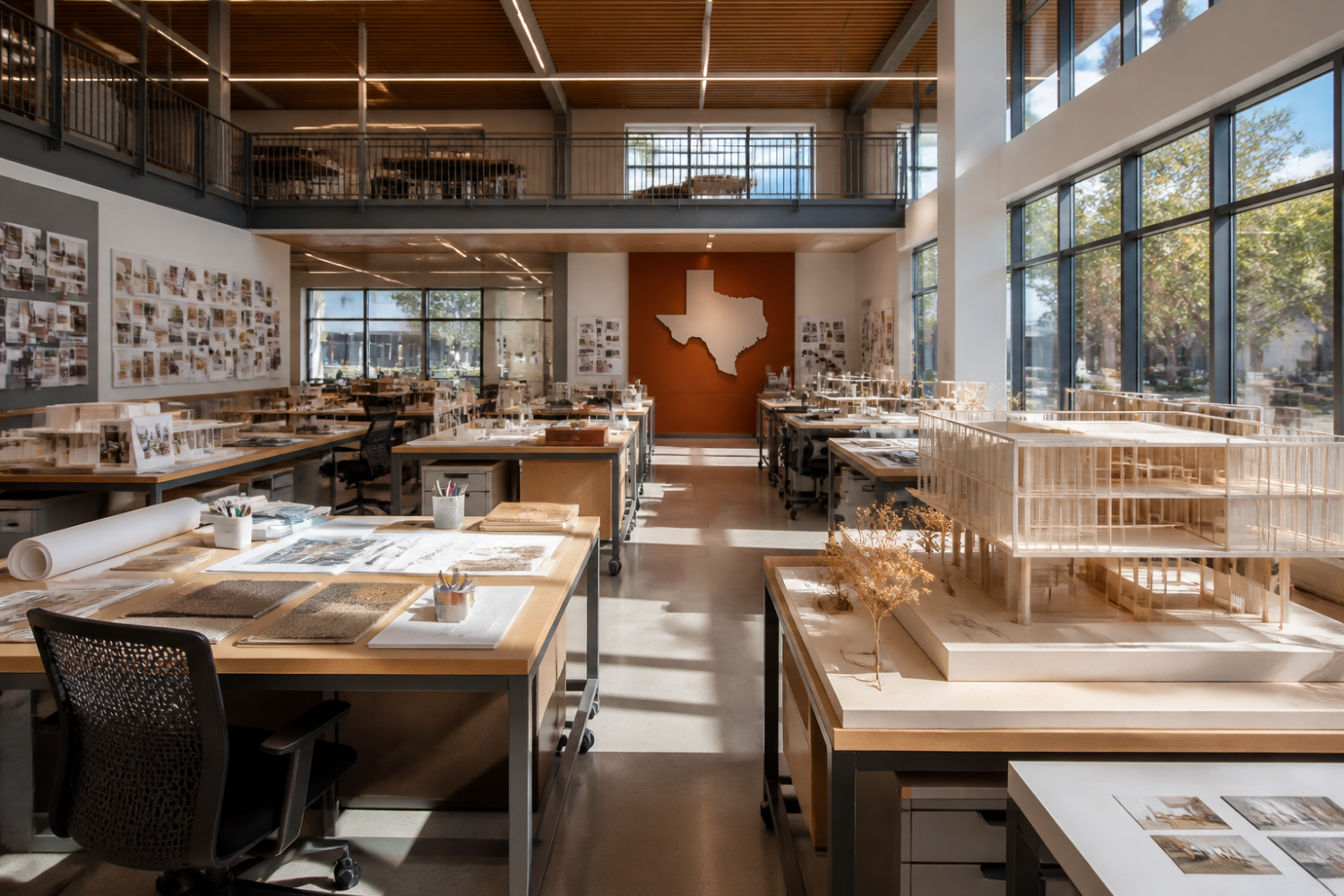
Which Texas schools offer CIDA-accredited interior design programs?
Notable examples include UT Austin, Texas Tech, Texas State, Sam Houston State University, and UT Arlington. The University of Houston offers a CIDA-recognized interior architecture program. Always verify current accreditation via CIDA’s official list before applying, as accreditation status can change between review cycles.
Curriculum differences: what’s taught across programs
Core topics typically include:
- Design studios focused on space planning, circulation, and concept-to-construction workflows
- Construction documents and technical drawing for collaboration with architects and contractors
- Materials, finishes, specifications, and durability
- Lighting design and electrical basics
- History and theory for contextual design decisions
- Professional practice, contracts, ethics, and accessibility standards (ADA)
UH’s interior architecture emphasis introduces more structural and building-systems content, while Texas State’s program tends to emphasize human-centered design and sustainability.
Studio structure and program sequencing
Strong programs guide students from early furniture-layout challenges to semester-long capstones that simulate real-world briefs, including site analysis, budgets, and construction coordination. When evaluating programs, ask how studios integrate lighting, MEP coordination, and detailing—early integration tends to produce graduates fluent in construction language sooner.
Software training: what you’ll learn and why it matters
Expect a foundation in AutoCAD for drafting, SketchUp for modeling, and Revit for interior BIM. Complementary tools often include Adobe Creative Suite for presentations and 3D rendering packages (V-Ray, Enscape, Lumion) for visualization. Some programs also offer specialized scheduling and room-design software. If you plan to work with cross-disciplinary teams, look for BIM-centric coursework and industry-standard workflows.

Costs, aid, and practical budgeting
Budgeting for interior design programs includes tuition, supplies, software licenses, portfolio presentations, field trips, and internship-related costs. Public Texas universities often offer in-state tuition advantages; compare aid packages, scholarships, and work-study opportunities within design labs to reduce out-of-pocket costs while gaining experience.
Career outcomes: licensure and industry pathways
Graduates from CIDA-accredited programs typically pursue NCIDQ certification, a common route toward licensure in many jurisdictions. Texas regulatory variants exist, so check the Texas Board of Architectural Examiners (TBAE) requirements if you intend to use protected titles or seek licensure. Typical paths include residential, commercial/workplace, hospitality, healthcare, and interior-architecture roles that intersect with architectural firms.
Online interior design options in Texas: what to know
Online degree programs and certificates are expanding, but accredited, licensure-oriented online options are less common than on-campus, CIDA-accredited programs. If considering online study, verify:
- Accreditation and a pathway to NCIDQ eligibility
- Live critiques or synchronous studio reviews for meaningful design feedback
- Access to labs or local studios for hands-on fabrication if required
Conceptual coursework and portfolio-building can translate well online, but expect varying efficacy for construction documentation and in-person collaboration.
What employers look for in graduates
Hiring managers value a portfolio that demonstrates process from concept to construction, real or simulated internships, proficiency in AutoCAD and Revit, and the ability to manage specifications, costs, and codes. Programs that emphasize client-based studios and practical documentation provide a competitive edge.
Practical questions to ask during campus visits
- How many internships does a typical student complete before graduation?
- Which software does the program introduce in early coursework, and when is Revit introduced?
- Can I review senior capstone projects and their construction documents?
- What licensure or NCIDQ preparation support is available?
- Which local firms hire graduates, and how does the school facilitate those connections?
Choosing between programs: strengths by institution
- UT Austin: Strong professional identity, licensure guidance, and a city-networked practicum environment.
- Texas Tech: Technical rigor with a focus on construction detailing and studio-based problem solving.
- Texas State: Balanced residential/commercial focus with sustainability and materials emphasis.
- Sam Houston State: Clear sequencing and robust portfolio outcomes with regional internship channels.
- University of Houston: Interior architecture angle provides a bridge to more architectural content.
- UTA: Metropolitan connections in the Dallas–Fort Worth area and flexible electives.
Associate degrees and certificates: flexible routes worth knowing
Two-year options and certificates can launch careers in staging, showroom sales, or entry-level residential design. They may not fulfill NCIDQ eligibility, so plan to bridge to a CIDA-accredited bachelor’s program or accumulate substantial supervised work experience if licensure is the goal.
Program accreditation and where to verify details
Always cross-check:
- The school’s interior design program page for curriculum and faculty details
- CIDA’s official list of accredited programs
- Texas licensing boards (for state licensure and NCIDQ routes)
CIDA updates accreditation status after each commission meeting, so confirm status close to your application window.
Practical recommendations: what to prioritize
When evaluating interior design programs, prioritize these five areas in order:
- Accreditation (CIDA) and clear NCIDQ/licensure guidance
- Studio structure that integrates documentation with design concept
- Software training: AutoCAD and Revit, plus a rendering tool
- Internships and faculty with active industry connections
- Facilities: material libraries, model shops, and digital fabrication labs
Frequently asked questions
Q: Do I need a CIDA-accredited degree to become an interior designer in Texas?
A: A CIDA-accredited degree simplifies NCIDQ eligibility and aligns coursework with industry standards, though some paths combine non-accredited degrees with substantial supervised experience. Check NCIDQ and TBAE rules for exact routes.
Q: Are online interior design degrees worth it?
A: They can be if the program is accredited and provides synchronous critiques, portfolio development, and internships. For hands-on construction documentation and fabrication, on-campus studios still have advantages.
Q: Which software should I learn first?
A: Start with AutoCAD and SketchUp; add Revit when ready. Familiarity with Adobe Creative Suite is also valuable for presentations.
We’d love to hear about your experiences with Texas interior design programs. Have you attended a campus tour, completed a degree, or found a standout online option? Share your insights in the comments or mention specific programs you’re researching.
Suggested additional resources for readers seeking deeper foundational materials include Interior design textbooks and resources, and for program structure examples, a practical look at community college foundations can be contrasted with a university path via Architecture Adrenaline’s coverage of design education and career pathways.
For readers considering how credentialing intertwines with licensure, see authoritative coverage on interior design pathways and accreditation as part of a broader professional context.
How to decorate your dorm room ✨:
As you embark on your journey through the vibrant world of interior design, Texas offers some of the most dynamic and enriching programs to help you hone your skills and unleash your creativity. Each school brings its unique flavor and approach to design, ensuring that whether you're drawn to contemporary styles or historic restorations, you'll find a place that resonates with your passion. The future is bright for aspiring designers, and I truly believe that immersing yourself in one of these top-notch programs will set you on the path to success.
Stay Connected and Keep Exploring
I hope you found this guide to interior design programs in Texas helpful and inspiring! Remember, staying connected with the design community is a great way to keep your creative juices flowing. If you're looking for more inspiration or want to see the latest design trends, be sure to check out our Pinterest page for a treasure trove of ideas: Architecture Adrenaline on Pinterest. Happy designing, and best of luck on your exciting journey ahead!
