
Architecture Books: Inspiring Young Minds invites children to explore how buildings, streets, and landscapes shape our lives while offering age-appropriate titles and practical guidance that go beyond pretty pictures. This consolidated guide blends the strongest insights from two thoughtful posts, pairing concrete book recommendations with actionable ways to use them at home or in the classroom. For a concise primer, see the Architecture Adrenaline collection on Architecture Books: Inspiring Young Minds.

| Title | Best For | Why It Matters |
|---|---|---|
| What Adults Don’t Know About Architecture (The School of Life) | Age 9–14, curious kids and teens | Introduces design ideas, ethics, and mood in plain language with images and prompts. |
| Architecture: Form, Space, and Order (Francis D.K. Ching) | Teens, beginners, early architecture students | Clear diagrams of spatial vocabulary—proportion, circulation, and form explained visually. |
| The Architecture Book / Architecture: A Visual History (DK) | Visual learners, teens, general readers | Wide survey with strong imagery—great for building architectural literacy and reference. |
| Iggy Peck, Architect (Andrea Beaty) | Children 4–9 | A picture book that turns creative problem-solving and curiosity into a narrative kids enjoy. |
| Atlas of Brutalist Architecture (Phaidon) | Teens and adults with an interest in architectural history/style | Contextualizes a polarizing style—good for discussing materials, scale, and preservation. |
Why Architecture Books Matter for Young Minds
Architecture books build vocabulary and provide a fresh lens on everyday places. Young readers learn to notice scale, how daylight moves through spaces, how materials age, and how buildings guide movement. The School of Life guidance, for example, encourages questions and small experiments that help kids form opinions rather than merely memorize facts. For families seeking a broader reading ecosystem, local resources such as CHC Books on Cambridge History offer institutional perspectives that pair well with kid-friendly titles.
How to Choose Architecture Books for Different Ages
Match the book’s complexity to the reader’s age and interests. Consider pairing image-rich introductions with occasional hands-on prompts to anchor concepts in practice.
- Preschool (4–7): Picture books that celebrate curiosity and simple design ideas, such as Iggy Peck.
- Middle Grades (8–12): Illustrated primers and activity books with drawing prompts and explanations of why spaces feel a certain way.
- Teens and Beginners (13+): Introductory textbooks and visual histories that cover proportion, plan, section, and typology.
Top Architecture Books to Start With
Begin with a balanced starter set that covers narrative, theory, and visual reference:
- What Adults Don’t Know About Architecture — Accessible ideas and questions for curious readers.
- Iggy Peck, Architect — A narrative that champions playful making.
- Architecture: Form, Space, and Order — A visual primer on spatial principles and proportion.
- The Architecture Book or Architecture: A Visual History — Broad surveys useful for recognizing styles and iconic buildings.
Visual Primers and Coffee-Table Options
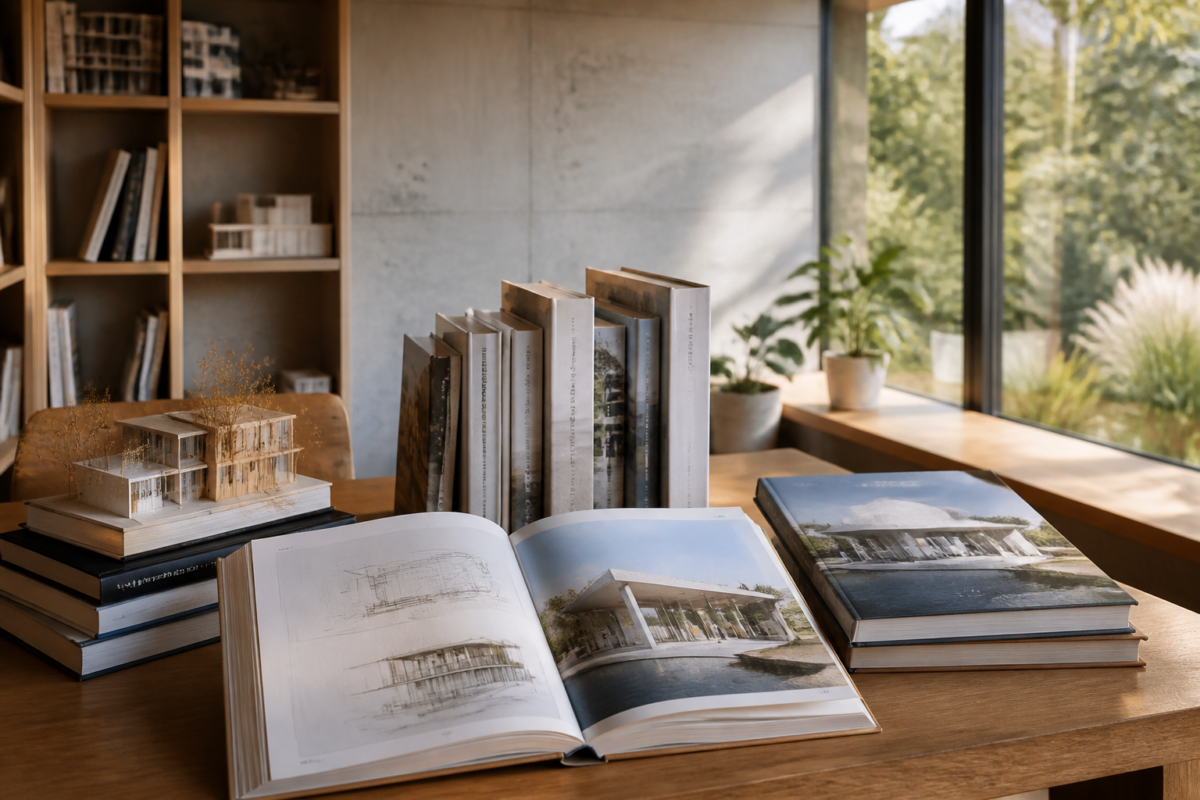
Large-format, image-rich volumes from DK or Taschen work well for older kids and teens. Use them with guided questions to build visual literacy: Which material looks heaviest? How does a facade control light? Pair the book with short prompts to stimulate discussion and observation.
Architecture Books That Teach How Buildings Work
For aspirants who want more than inspiration, blend narrative titles with practical references. Ching’s Form, Space, and Order clarifies spatial organization and proportion. Resources like Time-Saver Standards or Architects’ Pocket Book introduce measurements, construction concepts, and detailing—bridging ideas and buildable reality. If a reader shows particular interest in hands-on making, explore activity-driven titles and project prompts that translate theory into tangible outcomes. You can also discover hands-on ideas in related pages like Playroom Design Ideas and Home-Building Books.
Biographies, Monographs, and Style-Focused Books
Readable monographs on Frank Lloyd Wright, Zaha Hadid, or Tadao Ando (often from Taschen) and focused surveys like Atlas of Brutalist Architecture help readers understand design intent, constraints, materials, and reception over time. For a concise narrative of a designer’s influence, see curated pages that profile individual figures and movements on Architecture Adrenaline.
Hands-On and Activity Architecture Books
Making is central to learning. Activity books with scale exercises, model-making, and observation tasks help children connect plan, section, and lived experience. Practical projects—sketching a room, measuring spaces, or building cardboard models—cultivate architectural literacy beyond images alone. Consider pairing with related practical activities such as a simple cardboard model exercise you can guide together at home.
Where to Buy, Editions to Prefer, and Pricing Notes
Choose from reliable publishers (DK, Phaidon, Taschen, The School of Life) for consistent image quality and editorial context. Value often comes from pull-out posters, foldouts, or activity inserts. Typical price ranges:
- Picture Books: $10–20
- Visual Surveys: $20–50
- Monographs and Atlases: $40–100+
Libraries and used-book sellers are great for accessing pricier titles without the full purchase cost. Always verify current availability, as editions and stock change over time. For broader institutional perspectives, consult Statewide and Regional Architectural Survey Publications as an example of formal architectural literature produced by a state program that can inspire classroom or library programs.
What to Look for in a Good Kids’ Architecture Book
A strong kids’ architecture book should excel in at least two areas: presenting clear design ideas and inviting making or observation while connecting buildings to daily life and community. Avoid books that rely solely on images without captions or that reduce architecture to mere spectacle. The best selections encourage critical thinking about proportion, circulation, materials, and how people use space. For local context, consider regional histories published by city or university preservation offices, such as Cambridge History resources.
As you curate titles, you can also discover local institutional resources like CHC Books on Cambridge History - Cambridge Historical Commission, which provide access to architecture-and-history publications that deepen understanding beyond illustrated pages.
How to Use Architecture Books as an Educational Tool
Transform a title into a focused project: choose a room, have the child sketch a plan or elevation, and compare it to an illustrated example. Try prompts like “Find a window that controls daylight” or “Which building uses the fewest materials to create the largest interior space?” These guided activities deepen observation and architectural vocabulary without requiring formal training. For a compact shopping path, readers can explore age-appropriate picks via Amazon: Architecture Books for Kids.
Recommended Reading Paths by Interest and Level
Curate a compact path that mixes story, theory, and reference:
- Story-driven or curious minds: Iggy Peck, Architect; Rosie Revere, Engineer.
- Big ideas presented in an approachable form: What Adults Don’t Know About Architecture (The School of Life).
- Visual surveys and references: The Architecture Book (DK); Architecture: A Visual History.
- Fundamentals of design: Architecture: Form, Space, and Order (Ching).
- Style, history, and debate: Atlas of Brutalist Architecture; The Architecture of Happiness (for older teens).
Practical Notes for Parents, Teachers, and Young Readers
Set clear goals for each book: inspiration, vocabulary, or hands-on skills. Pair image-heavy titles with brief, guided conversations. Complement technical primers with small, tangible projects. If a reader shows particular interest in a certain architect or movement, select a focused monograph or atlas to avoid cognitive overload from multiple broad surveys.
What adults don’t know about architecture, The School of Life’s interactive guide, invites young readers to discuss buildings as living ideas rather than static objects. Its global approach uses questions, prompts, and imagery to help kids articulate what beauty in architecture might mean for communities and everyday life.
We’d love to hear which titles have sparked curiosity in your young readers. Share your favorite architecture books for children in the comments, or tell us about a project you’ve done together to explore space, light, and place. For additional internal resources, explore Architecture Adrenaline’s articles on related topics, such as Architecture Books: Inspiring Young Minds, Architecture Toys for 10-Year-Olds, and Playroom Design Ideas.
Baby 101- Architecture for Babies Written by Jonathan Litton: A Read-Aloud Book for Children
As we wrap up this exploration of architecture books that can inspire the next generation, it's clear that these carefully curated pages are more than just blueprints or theory. They hold the potential to shape young minds, sparking interest and igniting creativity. Whether through stunning visuals or compelling narratives, these books lay a foundation upon which aspiring architects can build their dreams. The journey into architecture is as much about imagining possibilities as it is about understanding structures, and it all starts with the right resources.
Stay Inspired and Connected
I'd love to hear your thoughts on which architecture books have inspired you or the young minds around you. Don't forget to explore more of our favorite picks and join our community over on Instagram. Together, we can continue to celebrate the art of architecture and its powerful influence on future generations!
