
Portuguese natural stone is seeking a larger role in the next generation of high-end American buildings, with an international campaign drawing on an established portfolio that includes New York’s Perelman Performing Arts Center, Brooklyn’s Atlantic Terminal and Miami’s Espírito Santo Plaza.

The United States is a target market for “Portuguese Stone – The Natural Path,” an initiative led by ANIET, Portugal’s National Association of the Extractive and Processing Industry (www.aniet.pt). The project aims to bring Portuguese materials and suppliers to the attention of architects, interior designers and developers specifying premium architecture and interiors.
The commercial relationship provides a foundation: Portugal exported 21,616 metric tons of natural stone to the United States in 2025. But the clearest evidence of the material’s potential lies in the buildings already using it.
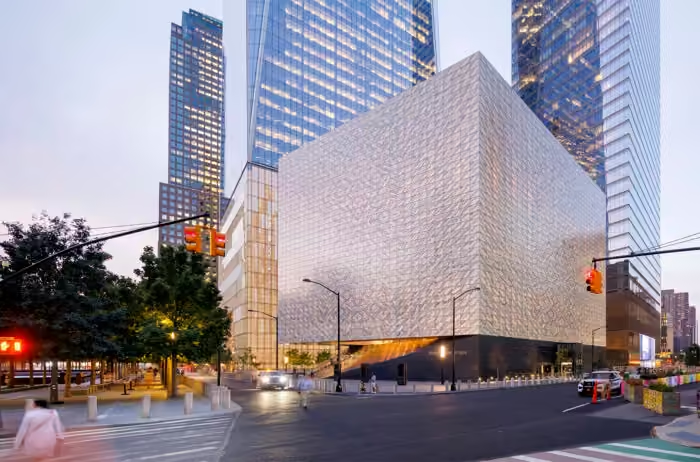
At the World Trade Center site in Lower Manhattan, the Perelman Performing Arts Center demonstrates how Portuguese marble can shape a building’s identity. Nearly 5,000 richly veined panels, approximately half an inch thick and sealed between layers of insulating glass, form its distinctive envelope.
By day, the marble gives the cultural venue a restrained, almost opaque presence. After dark, light passing through the stone transforms it into a glowing amber lantern. Achieving that effect required careful material selection, coordinated veining and precise fabrication, bringing geological character into a highly engineered facade.

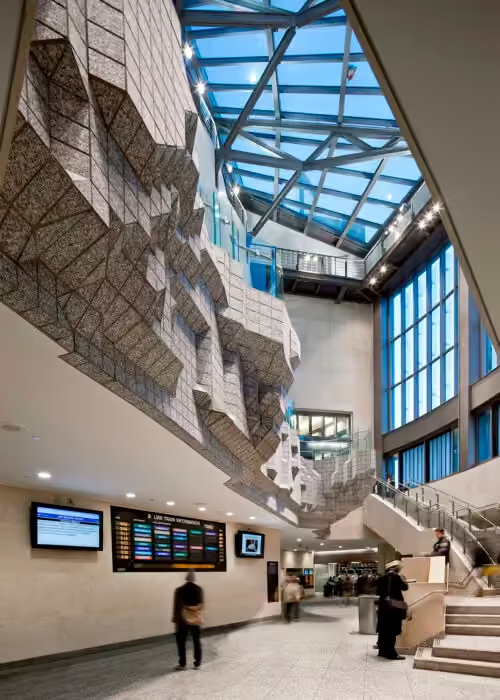
Brooklyn’s Atlantic Terminal offers a different test of performance. Around 21,500 square feet of Portuguese Mirabelle limestone were supplied for honed wall cladding, including curved sections and specially fabricated components. The project illustrates the material’s ability to combine a refined finish with the practical demands of busy transportation infrastructure.
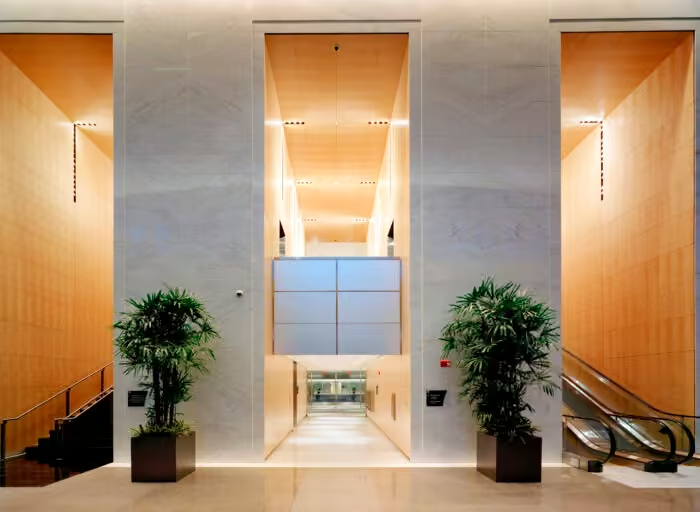
In Virginia, the Richmond Virginia Temple features exterior cladding in Portuguese Moleanos MG limestone, complemented by yellow granite. In Miami, Espírito Santo Plaza, also known as Brickell Arch, incorporates Portuguese natural stone across extensive interiors within a major corporate, hospitality and residential development.
Together, these projects demonstrate a range extending from expressive cultural architecture to prestigious interiors and carefully detailed exterior surfaces.
“Portuguese Natural Stone responds to these expectations through its diversity, durability, precision and industrial know-how,” says Francelina Pinto, Director-General of ANIET, referring to the American market’s architectural and technical demands.
For designers, Portugal’s limestones, marbles, granites and slates offer varied colors, textures and finishes, supported by skilled craftsmanship and advanced processing capabilities. Their value also rests on suppliers’ ability to select consistent material, execute complex details and develop components tailored to individual projects.
Through “Portuguese Stone – The Natural Path,” ANIET aims to translate that established expertise into new specifications across the United States, connecting architectural ambition with the material knowledge and technical rigor needed to realize it.