
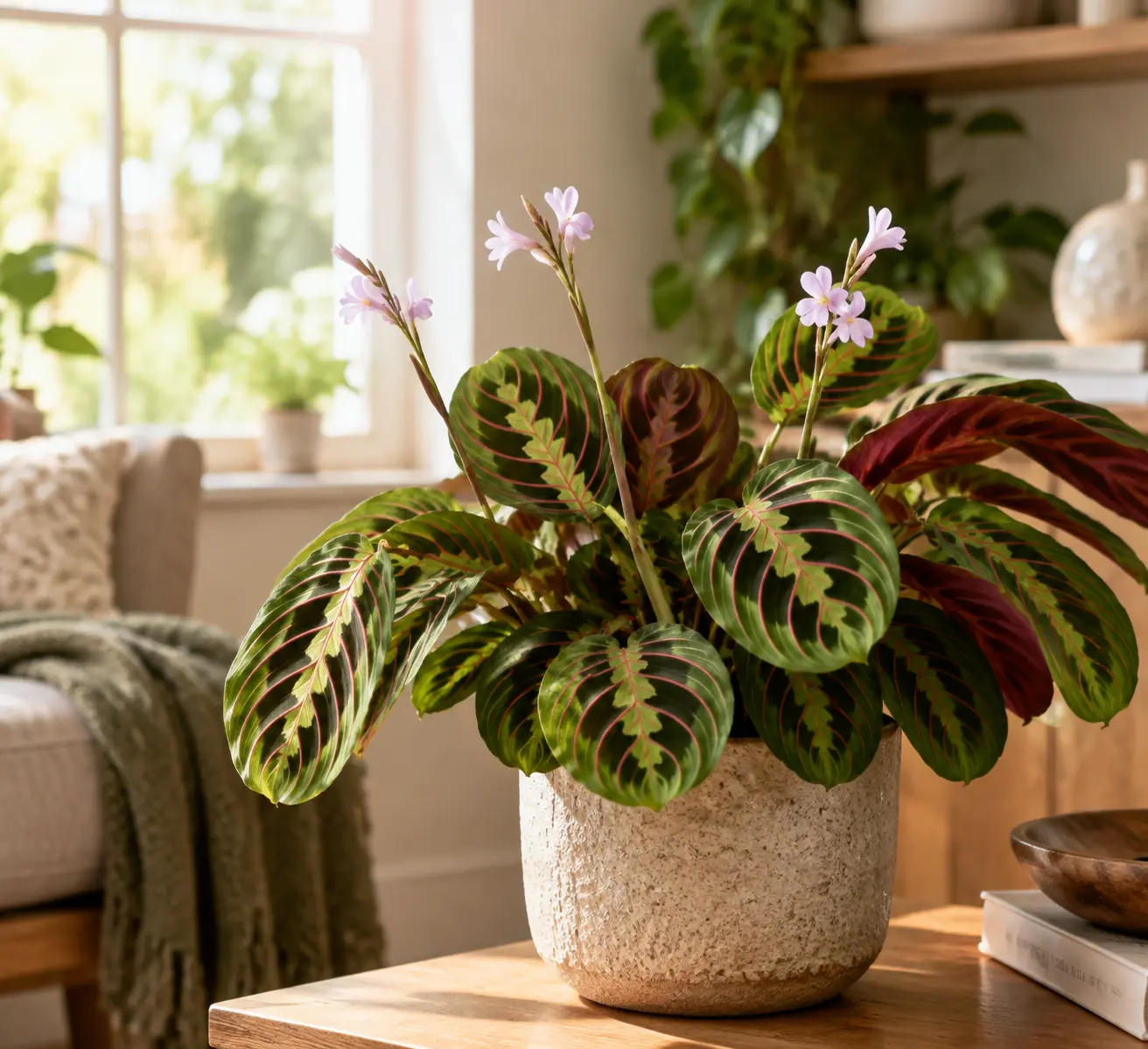
A sudden stalk of tiny white blooms on a prayer plant means the specimen has reached maturity and is receiving steady care; it is not a sign the plant is failing. This article answers “prayer plant flowering good or bad” by explaining what those blooms mean, how flowering changes leaf production, when to remove flower spikes, and the precise care adjustments to favor foliage or allow reproduction.
How Flowering Presents and What It Indicates
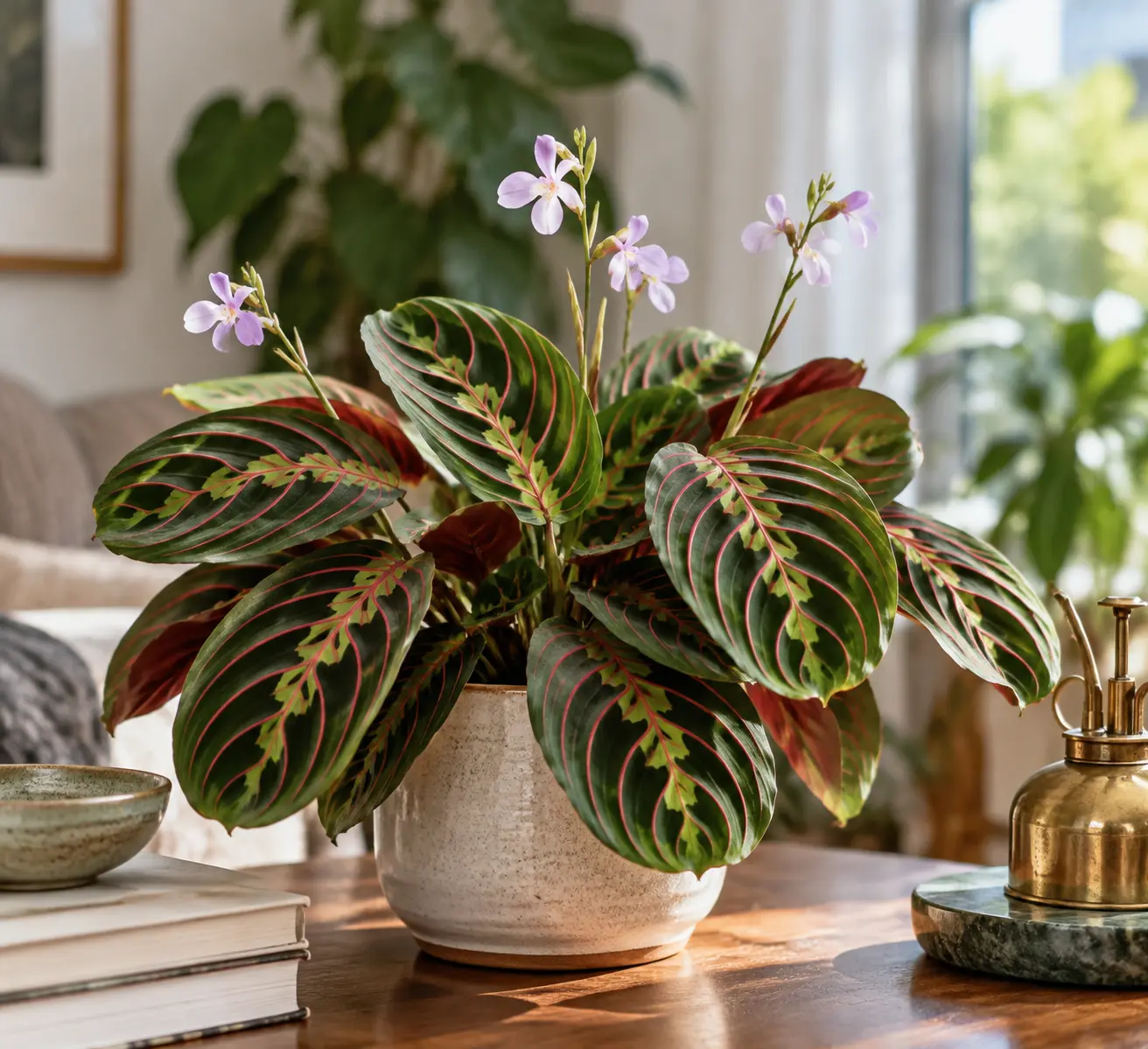
Flowering in Maranta leuconeura appears as small tubular flowers or a slender spike emerging from the crown; blooms are far less conspicuous than the patterned leaves. Indoor flowering is uncommon, and when it happens it should be read as a maturity signal and evidence of adequate cultural conditions rather than a stress symptom. For a concise botanical profile and indoor flowering note see the Maranta leuconeura (prayer plant), NC State Extension profile.
| What to Expect | Practical Implication |
|---|---|
| Small, tubular or spike flowers on thin stalks | Inconspicuous; shows plant maturity |
| More likely on older, well-cared-for specimens | Light, humidity, and nutrient regime are adequate |
| Energy shifted from vegetative growth to blooms | Expect a temporary slowdown in new leaf production |
How Flowering Alters Leaf Production and Resource Allocation
Producing flowers and seeds requires carbohydrates and nitrogen that the plant could otherwise allocate to new leaves and root growth. Expect a measurable but usually temporary slowdown in fresh leaf emergence during active flowering; removing a spent or unwanted flower stalk at its base typically restores the prior leafing rate within a few weeks.
When Allowing Flowers Makes Sense
Let the plant flower when your goal is to observe its reproductive cycle or to confirm your cultural routine is genuinely supporting maturity. Cut the stalk after blooms fade if your primary aim is vigorous, patterned foliage for display. Remove a stalk earlier only when flowering coincides with progressive leaf decline and you need the plant to redirect reserves to recovery.
Care Steps That Encourage Or Discourage Flowering
Stable, near-ideal conditions favor flowering: bright indirect light, consistently moist but well-draining soil, warm temperatures, and high humidity. For closely related genera such as Stromanthe the tendency to bloom indoors is similar; see the University of Wisconsin extension notes on Stromanthe sanguinea 'Tricolor' care and flowering - UW Extension for how flowering frequency and care interact in that group.
- Light: Bright indirect light near an east- or north-facing window; avoid direct midday sun that will bleach leaves.
- Humidity: Aim for 50 to 70 percent during the active growing season; localized humidity increases often matter more than whole-room humidity.
- Water: Keep the top 1 inch of the potting mix lightly damp; allow the next 10-20 percent of the rootball to dry before watering again.
- Feeding: Use a balanced liquid feed at half strength every 4-6 weeks in spring and summer; reduce or stop in autumn and winter.
- Humidity aids: Use humidity trays and related moisture-management tools for tropical houseplants under the pot or grouped pebble trays to increase local humidity without risk of constant leaf wetness.
Diagnosing Flowers That Coincide With Leaf Problems
If flowering appears alongside yellowing leaves, brown tips, or sudden leaf drop, treat those foliar symptoms as independent care issues rather than blaming flowers alone. Check the pot for poor drainage and a sour root smell that indicate rot, inspect for spider mites and mealybugs under leaf sheaths, and confirm the plant is not exposed to cold drafts or frequent hard-water salts.
Quick Practical Checklist When Your Prayer Plant Starts Flowering
Follow these steps to manage flowering without harming vigor.
- Inspect foliage and roots before deciding whether to remove the stalk.
- To prioritize leaves, snip the flower stalk at its base after the last petals fall.
- Avoid repotting solely because the plant is flowering; repot only when roots are circling the pot or the soil is degraded.
- Keep a short log of light, watering, and feeding changes so you can reproduce conditions that yield blooms or prevent them.
Evidence from Grower Guides and Regional Horticulture
Horticulture guides concur that Maranta indoor flowering is possible but uncommon and that flowers indicate adequate cultural conditions rather than disease. For practical household humidity and air-quality context see Architecture Adrenaline’s article on Indoor Air Purifying Plants: Top Picks for Clean Air at Home. For guidance on diagnosing brown or stressed leaves consult the site’s piece on Brown Plants, and for propagation and general houseplant troubleshooting see the care notes in How to Care for String of Turtles.
What To Expect After You Cut Or Keep A Flower
Cutting a spent stalk returns the plant to vegetative allocation within weeks; new leaves and finer roots will resume production if light, moisture, and nutrients remain steady. If you keep the flower and it sets seed, expect an extended period of resource use and a corresponding delay in new leaf emergence. Decide based on display goals and the plant’s current health.
Final Practical Judgment
Allow a prayer plant to flower as proof your cultural routine supports maturity; remove the stalk when you prefer foliage growth or if flowering coincides with declining leaf health. Maintain steady light, moisture, and humidity, use local humidity aids when needed, and treat foliar symptoms as separate care problems rather than attributing them to the act of flowering.
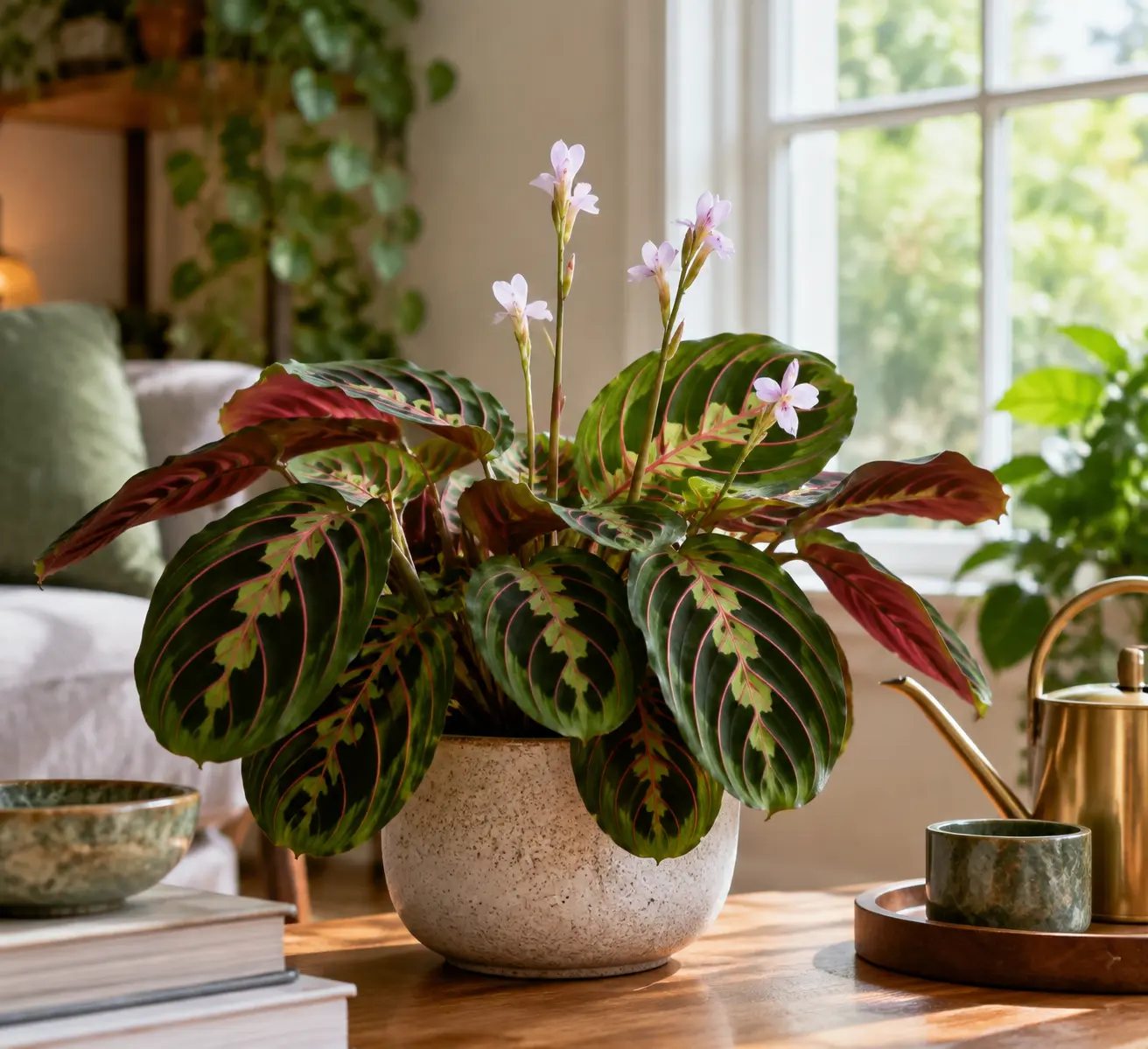
HOUSEPLANT CHORES | my red maranta prayer plant is blooming!! 🌸:
A prayer plant blooming can signal a healthy plant, but it can also mean the plant is stressed or out of its comfort zone. Some growers appreciate the flowers for their beauty, while others may prefer the foliage. Understanding the context behind your plant’s flowering can help you maintain its health and vibrancy.
More from Architecture Adrenaline
For further insights and discussions about plant care and related topics, you can find more posts on our social channels. Follow us on Instagram for regular updates and tips.
