
Use one of four practical methods: flexible fillers, polymeric joint sand, mortar repointing, or resetting stones on a repaired base, and match the repair to the crack type to prevent a small split from becoming a structural failure.
Diagnose the Crack Type First
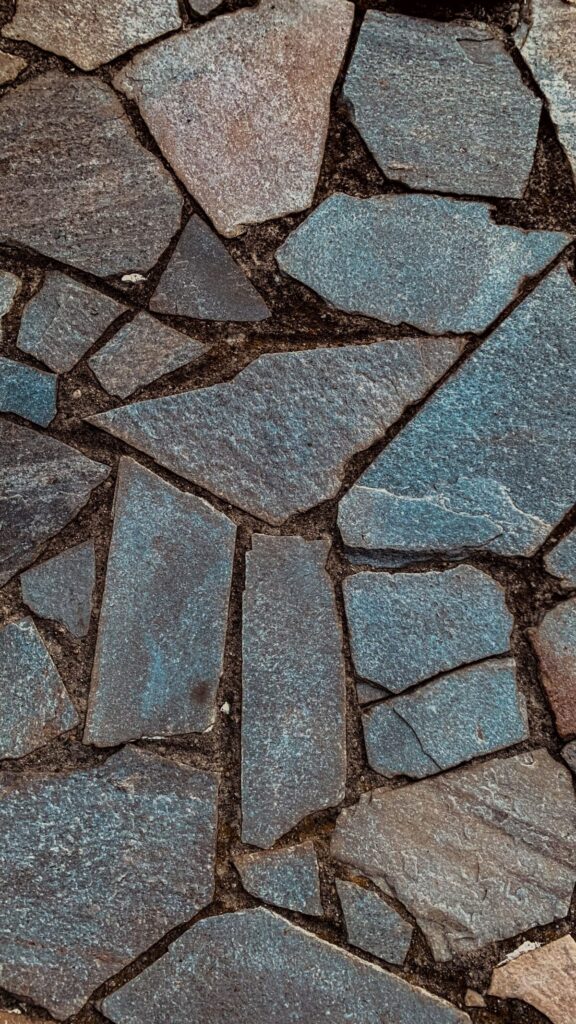
Catalog visible signs: hairline surface cracks, open or missing joints, individual loose stones, or contiguous sinking across multiple pieces. Record whether the patio is dry-laid on compacted aggregate or wet-laid on mortar and test stability by pressing adjacent stones; a crack that appears after rain or that continues beneath several stones usually indicates base or drainage failure rather than a surface-only issue.
Flexible Fillers for Hairline Cracks
Reserve flexible stone caulk or a two-part stone epoxy for hairline or shallow face cracks where the stone is otherwise stable. Widen very thin fissures slightly so a filler can key in, then tool the material flush or slightly recessed to encourage runoff. In climates with freeze-thaw cycles, choose a polyurethane or epoxy product explicitly rated for exterior masonry to retain elasticity during thermal cycling.
Polymeric Sand for Dry-Laid Joints
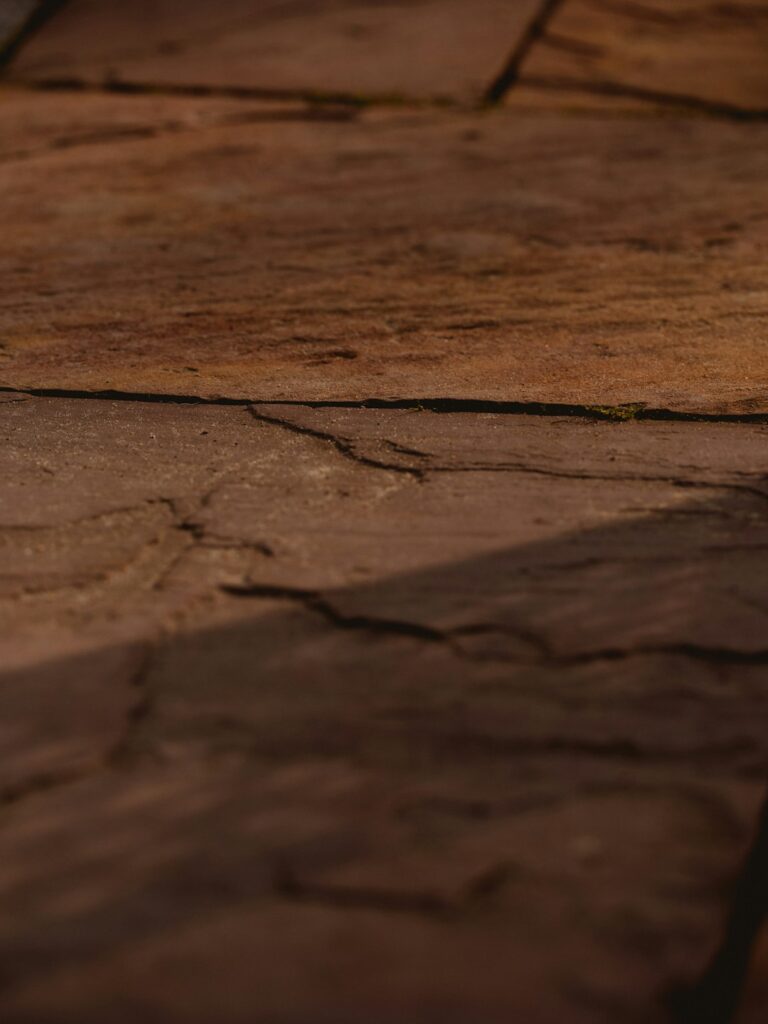
Use polymeric joint sand when stones remain seated and the aggregate base is sound. Remove vegetation and loose joint material, sweep dry sand into joints, compact, then mist to activate the binder section by section. Avoid activating on damp stone and do not pressure-wash joints after curing; for cleaning polymeric sand residue on stone see the recommended cleaning approach in this polymeric sand haze guide.
Repointing Mortared Joints
When mortar joints have failed but the bedding is stable, repointing restores water resistance and joint strength. Remove old mortar to at least 1/2 inch depth, clear dust with a blower, then use Type N mortar for exposed patios or Type S where lateral loads or retaining conditions demand it. Use a softer ratio when slight movement is expected; overly rigid mortar bonds to stone edges and will spall off under movement.
Resetting Loose or Sunken Stones
Lift and re-set any loose, rocking, or sunken stones when voids, erosion, or frost heave have compromised the base. Clean the stone underside, excavate and recompact the base using 3/4-inch crushed stone placed in 1-inch lifts for dry-laid patios, or lay a fresh mortar bed for wet-set installations. If multiple stones moved, correct edge drainage and regrade the surrounding surface before relaying to prevent repeat settling.
How to Choose Between Methods
Select based on observed movement and cause: flexible filler for hairline cracks with no instability, polymeric sand for open joints on a firm base, repointing for failed mortar with sound bedding, and resetting when multiple stones move or sink. If a surface repair re-opens within a season, treat that as evidence of subgrade or drainage failure rather than a materials problem.
Tools, Materials, and Where to Buy
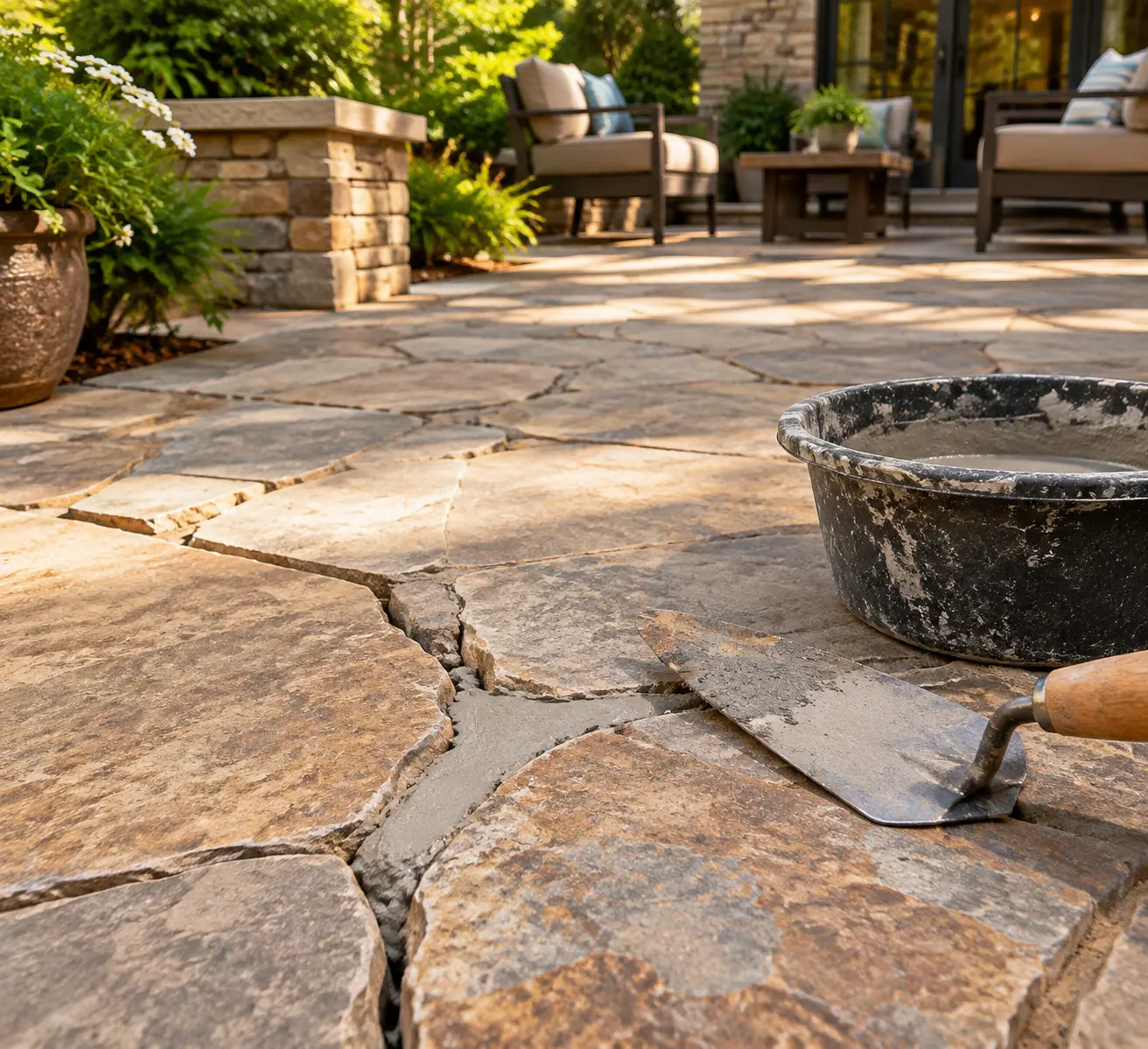
- Tools: stiff-bristle broom, narrow chisel, angle grinder with diamond wheel, rubber mallet, trowels, leaf blower, small plate compactor or hand tamper.
- Materials: polymeric sand formulated for natural stone, Type N or Type S masonry mortar, two-part stone epoxy and/or polyurethane stone caulk, 3/4-inch crushed stone aggregate for base repair.
- Procurement: for cosmetic or structural face repairs consider flagstone crack repair epoxy products as a practical sourcing option; choose a product rated for exterior masonry when freeze-thaw resistance is required.
- Safety: eye and ear protection, respirator for grinding and dust, gloves for mortar and epoxy, and team lifting for heavy stones.
Short Repair Timeline Table
| Problem | Recommended Method | Typical Cure or Return-to-Use |
|---|---|---|
| Hairline surface cracks | Flexible stone caulk or two-part epoxy | 24 to 48 hours |
| Open joints on dry-laid patio | Polymeric joint sand | 24 to 72 hours |
| Degraded mortar joints | Remove and repoint with Type N or S mortar | 3 to 28 days depending on traffic |
Freeze-Thaw, Drainage, and Adjacent Rock Features
Water causes most recurring patio failures. Maintain positive surface slope and clear subgrade drainage so water leaves the patio footprint instead of ponding at edges or under stones. When rock features or gravel beds border a flagstone patio, they can change infiltration and heat retention; poorly graded or impermeable rock layers concentrate runoff and impede the subgrade from drying. See the municipal guidance on how rock landscaping affects drainage and soil health for cautionary design notes: Balanced Landscaping: Using Rocks Wisely (Round Rock Water Spot).
Common Mistakes and How to Avoid Them
Do not apply polymeric sand to damp joints. Avoid rigid cement mixes where stones visibly move. Do not repeat repointing without testing base compaction and correcting water flow. When correcting drainage, extend fixes beyond the patio edge so downspouts, adjacent grades, and impermeable rock beds do not continue to feed water into the repaired area.
When to Hire a Professional
Call a mason or hardscape contractor when you see pattern cracking across large areas, extensive settlement, or when the cause of movement is unclear. For project-level guidance on patio cracking and step-by-step repairs that complement these methods, reference this detailed site repair primer on repairing flagstone patio cracks. If drainage near a foundation or building is part of the problem, consult the drainage and grading recommendations in this foundation-focused piece: how to stop water from pooling next to foundation.
Monitoring and Maintenance After Repair
Inspect repaired joints and repointed sections after the first wet season and after the first freeze-thaw cycle. Keep joints full, remove vegetation promptly, and address any haze or residue from polymeric sand following best-practice cleaning; for cleaning tactics that preserve stone finish consult the polymeric-sand haze cleaning guide remove polymeric sand haze. If any repaired areas show renewed movement, treat the result as a symptom and re-evaluate base compaction and drainage rather than repeating a cosmetic patch.
Related Video
Repairing cracks in your flagstone patio can restore its functionality and appearance. By choosing the right materials and following proper techniques, you can ensure the longevity of your outdoor space. Regular maintenance will also help prevent future damage.
More from Architecture Adrenaline
For additional tips and resources on home improvement projects, check out our social media channels. You can find us on Instagram for more posts like this, offering insights and inspiration for all your outdoor renovation needs.