
AI generated architecture concept: This project is presented as a speculative architecture proposal and futuristic rendering study, using AI architecture renderings to explore form, site, atmosphere, and public space before anything is built.

Tokyo Rubber Chapel for Bad Decisions: An AI-Generated Architectural Concept
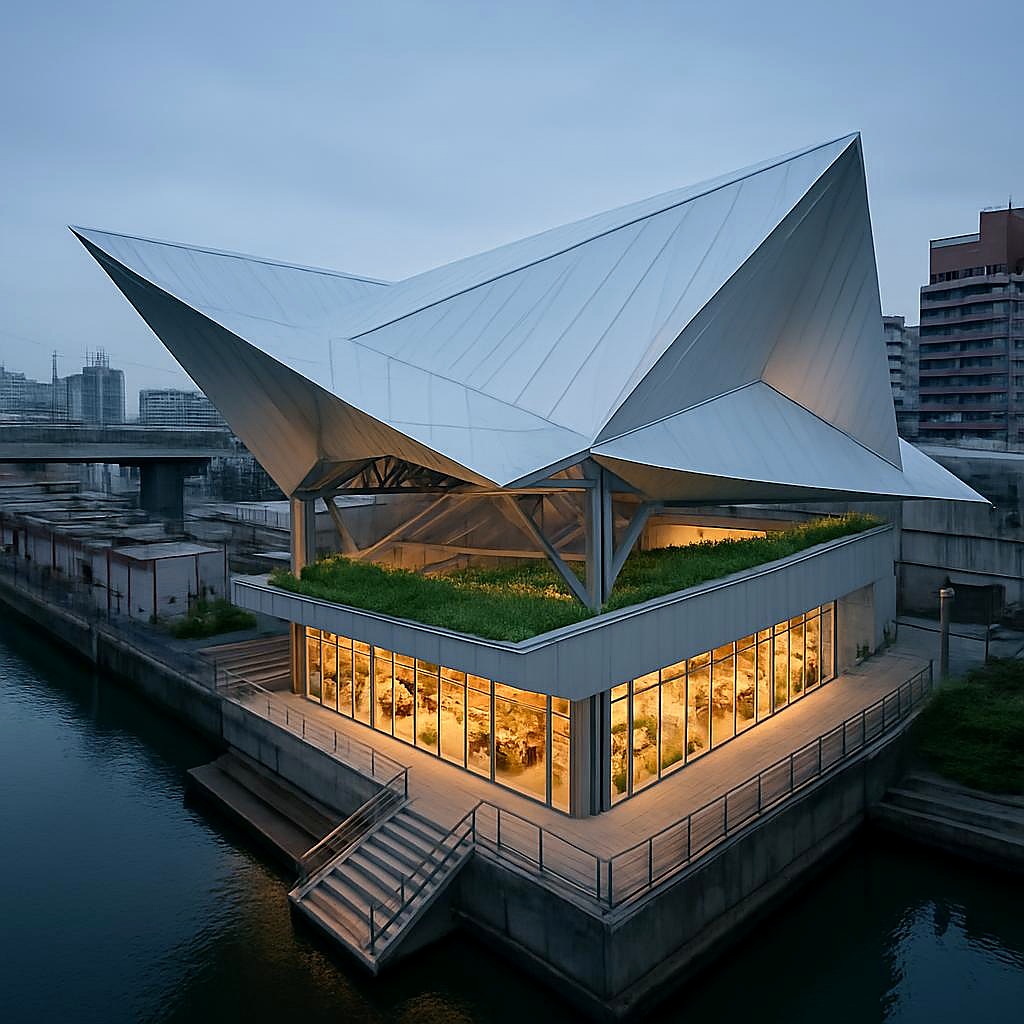
In the densely woven urban fabric of Tokyo, an architectural concept emerges that challenges conventional notions of civic space. The "Tokyo Rubber Chapel for Bad Decisions" presents an intriguing speculative vision where infrastructure and urban market dynamics intertwine with unexpected material behaviors and spatial forms. This AI-generated concept captivates through its paradoxical combination of elements: a public market housed under a strikingly angular roof structure that mimics the ferocity of a roof creature rather than the docility of a traditional civic canopy.
Site-Specific Integration
Positioned at the canal floodgate near Tokyo's iconic urban edge, the proposal leverages the city's existing industrial heritage. The site-specific constraints of maintaining water access for flood management and considering urban density fundamentally shape the design, fostering an environment where infrastructure serves both function and form. The integration of the canal edge, rail geometry, and bridge span offers a grounding reality to an otherwise speculative concept, bridging the gap between the tangible and the imagined.
Material and Form Exploration
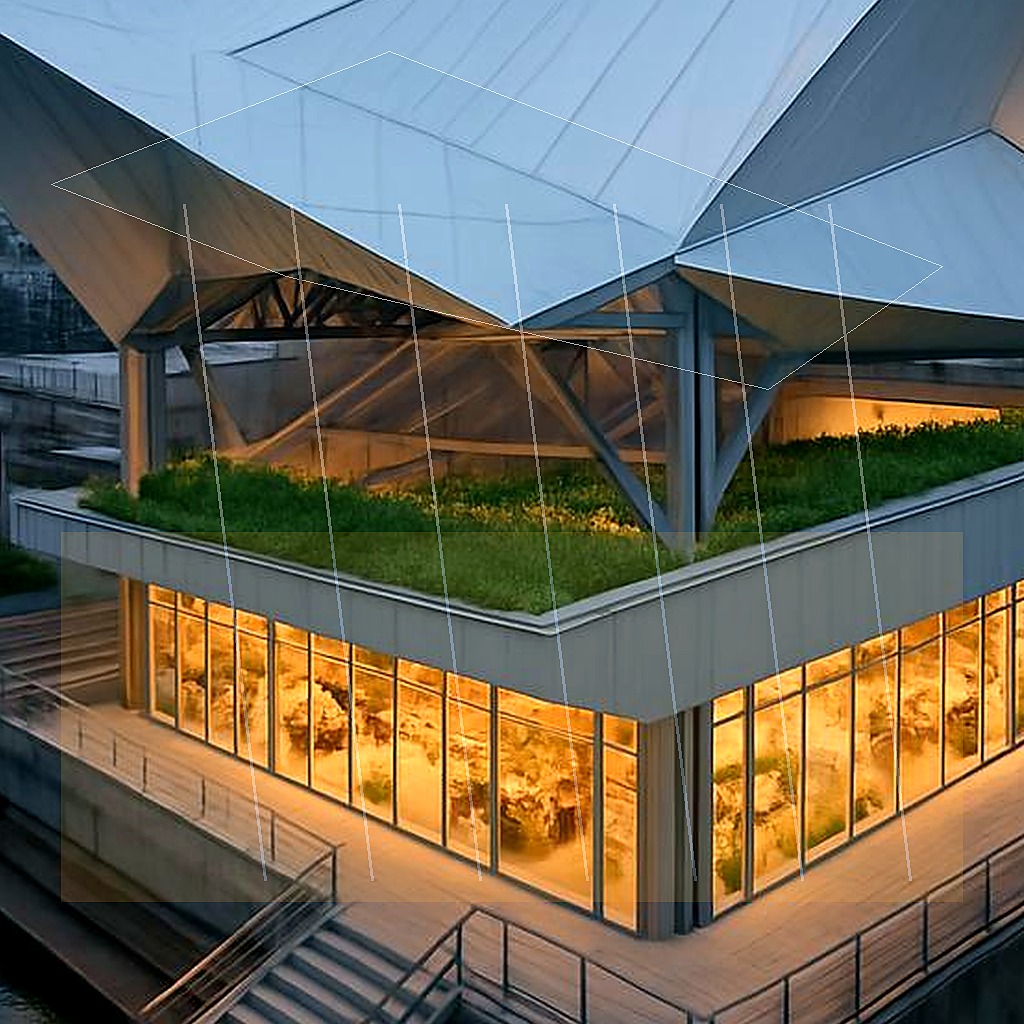
The choice of materials reflects a deliberate subversion of expectations. Inflated ETFE cushions create an intriguing tension between their typical delicate visual presence and the structural role they assume here. Reinforced by rubber gasket seams, the roof form folds and undulates like a massive angular origami piece captured in mid-breath. The structure's trusses and slender columns support a lifted mouth-like canopy that serves as the entrance to the market hall below, offering a literal and metaphorical gateway into a world where utility meets the sacred.
The milky fiberglass and red emergency hardware accents assert a utilitarian aesthetic further contrasted by the playful use of planted roof bites. These planted modules punctuate the roofscape, weaving elements of nature into the architectural narrative and providing passive shading and daylighting - a nod to sustainability that feels almost incidental against the backdrop of absurdity.
Circulation and Space Arrangement
The internal circulation defies typical market logic with its playful yet precise spatial choreography. Visitors navigate through compressed thresholds into unexpected volumes, discovering public rooms that glow with a warm market ambiance beneath the angular roof. This dance between compression and release, light and shadow, creates a sequence of spaces that feels both unsettling and inviting, amplifying the tension between public openness and the controlled access implied by the architectural form.
The Facade and Its Rhythms
The exterior facade uses folded white metal planes that intersect with clear glass cuts, truss lines, and blank pale panels, creating a rhythm that reiterates the concept's playful yet stark angularity. This rhythm is echoed in the sawtooth ridge and market bay patterns, where the facade's surface is punctuated by transparent slots that invite glimpses into the internal hustle and bustle.
Architectural Humor and Irony
At its core, the "Tokyo Rubber Chapel for Bad Decisions" is imbued with a profound sense of architectural humor and irony. The project's title itself suggests an interplay between sacred and profane, with the market hall operating as both a site of communal gathering and a space of controlled engagement. The juxtaposition of luxury and austerity becomes a deadpan civic joke, as the building's velvet-rope balcony hangs whimsically from the floodwall, questioning who the space truly serves.
Design Provocation
As we contemplate the Tokyo Rubber Chapel for Bad Decisions, one must ponder: how might such speculative architecture influence the way we perceive the intersection of infrastructure and public life? Does it invite earnest engagement or merely spectatorial amazement? This concept challenges us to reconsider our assumptions about civic space, posing the ultimate question - can architecture humor both inspire and critique simultaneously?
