
The little white flowers in your yard could be more than just pretty blooms; they often signal important information about the health of your lawn. Many homeowners find themselves puzzled over whether to eliminate these flowers or appreciate their beauty and ecological benefits. In this blog post, we will break down the most common little white flowers found in lawns, explaining how to identify each one and providing actionable steps for managing or embracing them based on your gardening goals. Did you know that white clover can improve soil nitrogen levels while also attracting pollinators? Understanding these plants is a key step to maintaining a healthy and vibrant yard.
Identifying the Little White Flowers in Your Lawn
- Common species include roadside aster, daisies, and white clover.
- Learn how to identify these flowers by their distinctive features.
- Find out whether these flowers are beneficial or need management.
As we dive deeper into this topic, you'll not only become familiar with the specific flowers that may be popping up in your yard but also gain insights on how to maintain the beauty of your lawn while encouraging its health and resilience. Let's explore the world of these little white blooms and their role in your landscape.
What Are The Little White Flowers In My Yard has homeowners scanning their lawns for clues and trying to decide whether to tweeze, mow, or welcome the blooms. In this guide, we’ll identify the most common little white flowers that show up in home lawns, explain how to tell them apart, and share practical steps for managing or embracing them based on your goals for the yard. For readers seeking visual references in forested or naturalized settings, see Forest Wildflowers: White – Mount Rainier National Park and White Flowers in Rocky Mountain National Park for typical white-flowering species and habitats.
| Plant Indicator | Key ID Cues | Control Thoughts |
|---|---|---|
| Roadside Aster | Wiry weed with many small white flowers; spreads across lawns | Regular lawn care plus targeted broadleaf herbicide before bloom; mowing and soil management |
| Daisy | Low-growing, basal rosette, spoon-shaped leaves; white ray petals around a yellow center | Moderate reseeding ability; manage by cutting back to prevent excessive flowering |
| White Clover | Three-leaf leaves with a white flower head; grows in patches | Good for pollinators; reduces with Nitrogen fertilization and overseeding |
What Are The Little White Flowers In My Yard? Common Suspects
When you notice little white flowers in your lawn, a handful of familiar plants are often the culprits. The most frequent offenders include roadside aster, daisies, white clover, dandelions, and other low-growing weeds that produce white blooms. Understanding what you’re seeing helps you decide whether to remove, manage, or even welcome them for ecological benefits. For a broader field-guide reference, see White-flowering weeds gallery (UF/IFAS).
Roadside Aster: A Wiry White-Flowered Invader
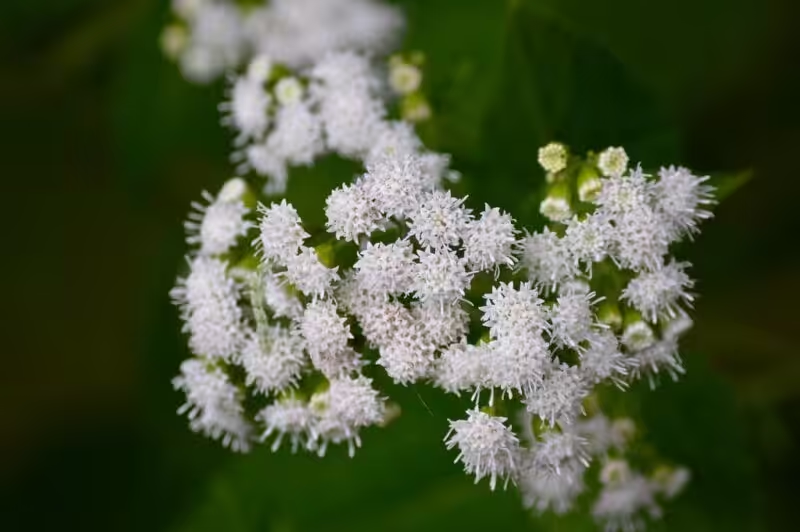
The wiry weed that can spread across a yard and is covered with tiny white flowers is often roadside aster. It forms dense patches and can be stubborn to eradicate once established. Practical lawn care—adequate watering, balanced feeding, and regular mowing—helps reduce its vigor. If blooms are forming, consider a selective broadleaf weedkiller such as 2,4-D before full bloom to curb spread. For heavy infestations, mechanical removal with a sharp hoe to sever the taproot may be more effective. In landscapes that verge on woodland or shade, you may encounter related white-flowered species described in forest-type resources such as Forest Wildflowers: White – Mount Rainier National Park.

What To Do This Season If You See Roadside Aster
Pulling the entire weed by hand is often impractical. Instead, focus on suppressing new growth and attacking the roots. Early-season treatment with a selective broadleaf herbicide can protect nearby grasses. Regular mowing helps prevent seed set. If you’re unsure about chemical use, consult a local extension service or a lawn-care professional to tailor a plan for your climate. For readers cataloguing native or naturalized white-flower plants in a regional context, compare with White Flowers in Rocky Mountain National Park.
White Clover And Other Common White-Flowered Lawn Visitors
White clover (Trifolium repens) is a perennial that often appears in nutrient-deficient lawns. Its white, spherical flower heads and three-leaf leaves are distinctive. Clover provides ecological benefits—bees feed on its flowers and it can improve soil nitrogen—but it can look untidy to some homeowners and spread quickly when conditions favor it. Dandelions also contribute bright yellow flowers that later form white seed heads, and daisies add a cottage-garden charm to short grasslands. For cautionary reading on look-alike blooms, see Know Your Lacy White Flowers – Natural History Museum of Utah.

How To Distinguish White Clover From Dandelion And Daisy
- White Clover: low-growing, prostrate stems; trifoliate leaves with a small white spot near the tip of each leaflet; white flower heads on short stalks.
- Dandelion: rosette of jagged leaves, bright yellow flowers on hollow stems, seed heads that puff into white parachutes.
- Daisy: basal rosette with spoon-shaped leaves, single white ray flowers around a yellow center.
Common Weeds With White Flowers: Dandelion, Clover, And Daisy Variants
Beyond clover, you’ll often encounter dandelions and daisies in lawns. Dandelions are particularly resilient and bloom early in spring, offering nectar for pollinators but potentially crowding out desirable turf. Daisies bring a cottage-garden charm but can spread as the season progresses. Managing these plants typically involves adjusting mowing height, proper fertilization, and targeted herbicide use when appropriate. For a broader field guide to identifying white blooms in varied settings, see White-flowering weeds gallery (UF/IFAS).

Practical Lawn Care To Prevent Or Minimize White-Flower Weeds
Maintaining a healthy lawn is one of the best defenses against white-flowered weeds. Consider these practices:
- Keep your lawn dense by mowing at the right height for your grass type.
- Water deeply but infrequently to encourage deep roots and discourage shallow weed growth.
- Fertilize according to soil test results to avoid nutrient imbalances that invite clover and other weeds.
- Regular mowing and edging to reduce seed production in flowering weeds.
What Are The Little White Weeds In My Yard? Quick Removal And Control Tactics
For many homeowners, the practical answer to “what are those little white flowers in my yard” is to identify, then decide on removal or acceptance. Depending on the weed, you might:
- Use a sharp hoe to sever root systems for annuals and perennials with deep roots.
- Apply appropriate herbicides before plants bloom, following label directions and safety precautions.
- Adopt lawn-care routines that reduce weed pressure, such as timely mowing and precise fertilization.
Frequently Asked Questions About White-Flower Lawn Weeds
What are those little white flowers in my yard? They could be roadside aster, daisies, or white clover. What are the little white weeds in my yard? Look for characteristic leaves and growth forms to distinguish clover, dandelions, or daisies and decide on control measures. What are those little white flowers in my yard telling me about my soil? Nitrogen deficiency or compacted soil can invite clover and other broadleaf weeds; improving soil health can help reduce invasions.
When To Seek Professional Help For White-Flower Weeds
If your lawn has persistent white-flowered invasions despite routine care, or if you’re unsure about herbicide use, consider consulting a lawn-care professional or local extension office. They can tailor a plan based on your climate, grass species, and specific weed profile. For broader reference on identifying white blooms in yards, you might also consult the White-flowering weeds gallery (UF/IFAS) and, when needed, a field-guide such as the Yard weed identification guide on Amazon.
In sum, identifying what are the little white flowers in my yard involves distinguishing roadside aster, daisies, white clover, and dandelions from each other. With thoughtful lawn-care practices and targeted removal, you can manage or even enjoy these common lawn bloomers while keeping your turf healthy and attractive. If you’d like, share your region and any distinctive leaf or stem details in the comments, and I’ll help narrow down the most likely match for your yard.
Note: The information above blends commonly cited garden and lawn-care insights with practical, experience-based advice for identifying and managing white-flowered weeds in home lawns. When considering herbicides or more intensive lawn-care steps, consult product labels and local experts to ensure safety and suitability for your area.
Have you noticed these white blooms in your yard? Which ones turn up most often where you live, and what have you found works best for you? Share your experiences below—your tips could help a neighbor down the street.

Best for Identifying White-Flowering Lawn Plants
CHUXAY GARDEN Jasmine Jasminum Sambac Plant - 25 Seeds

Identify a common white-flowering lawn or garden plant by its fragrance and clustered blossoms. This jasmine seed option is suitable for sunny patios and landscaping, providing a fragrant, decorative addition that can help with quick visual identification when you’re trying to determine what’s blooming in your yard.
Price at time of publication: $Not Available
Best for: Homeowners trying to identify and cultivate white flowering plants in yards or landscapes
- Flower color: White
- Usage: Landscaping, patio plant, fragrant blooms
Why pick this: Provides a tangible, fragrant, white-flowering option that can be used to compare with other white lawn flowers you may encounter.
Skip if: You need a purely ornamental groundcover or a non-fragrant white-flowering plant, since Jasmine has a distinct fragrance and growth habit.
Best for Lawn-Weed Identification Guides
Weed Identification Guide for Lawns (Field Guide)

This guide helps homeowners recognize common lawn weeds, including white-flowered species like chickweed, with clear photos and practical tips for identification and management. Aids readers in determining whether a found plant in the yard is a weed worth treating or a benign groundcover.
Best for: Beginners who want a simple plant-ID reference for lawn weeds
- Format: Paperback or Kindle (depending on edition)
- Coverage: Common turf weeds and beginner-friendly keys
Why pick this: A practical reference for quickly distinguishing white-flowered lawn weeds from desirable grass species.
Skip if: You require an in-depth botanical manual or a region-specific weed guide not included in a general lawn-ID book.
Best Budget Groundcover Option for White Flowers
Stunning White-Flower Groundcover Seeds

Compact groundcover seed mix designed to produce low-growing, white-flowering mats that can fill bare lawn gaps. This option is budget-friendly and suitable for small yards or test plots where homeowners want quick visual impact without high maintenance.
Best for: Budget-oriented homeowners adding a white-flower groundcover to a small lawn
- Type: Groundcover seed mix
- Growth: Low-growing, spreads via runners
Why pick this: Economical way to introduce white blossoms across a lawn area.
Skip if: You need a high-traffic, durable lawn solution or a perennial cover with long-term stability.
How to get rid of white flower vines in lawn:
As you stroll through your yard, those little white flowers may seem like a mystery, but they often bring a touch of beauty and intrigue to our outdoor spaces. Whether they're dainty daisies, charming chickweed, or sweet white clover, each of these blooms adds a unique character to your lawn. Instead of seeing them as mere weeds, consider how they enhance biodiversity and attract pollinators, enriching the environment around you. Next time you admire your yard, remember that these small flowers are not just fillers but contributors to the thriving ecosystem right outside your door.
Stay Connected and Share Your Discoveries
If you're as curious about the natural world as I am, I encourage you to stay connected and follow along for more insights like these! Join us on Instagram at @architectureadrenaline for beautiful nature inspiration and tips that can help you appreciate all the little wonders in your yard. Let’s explore the beauty of nature together, one flower at a time!
