
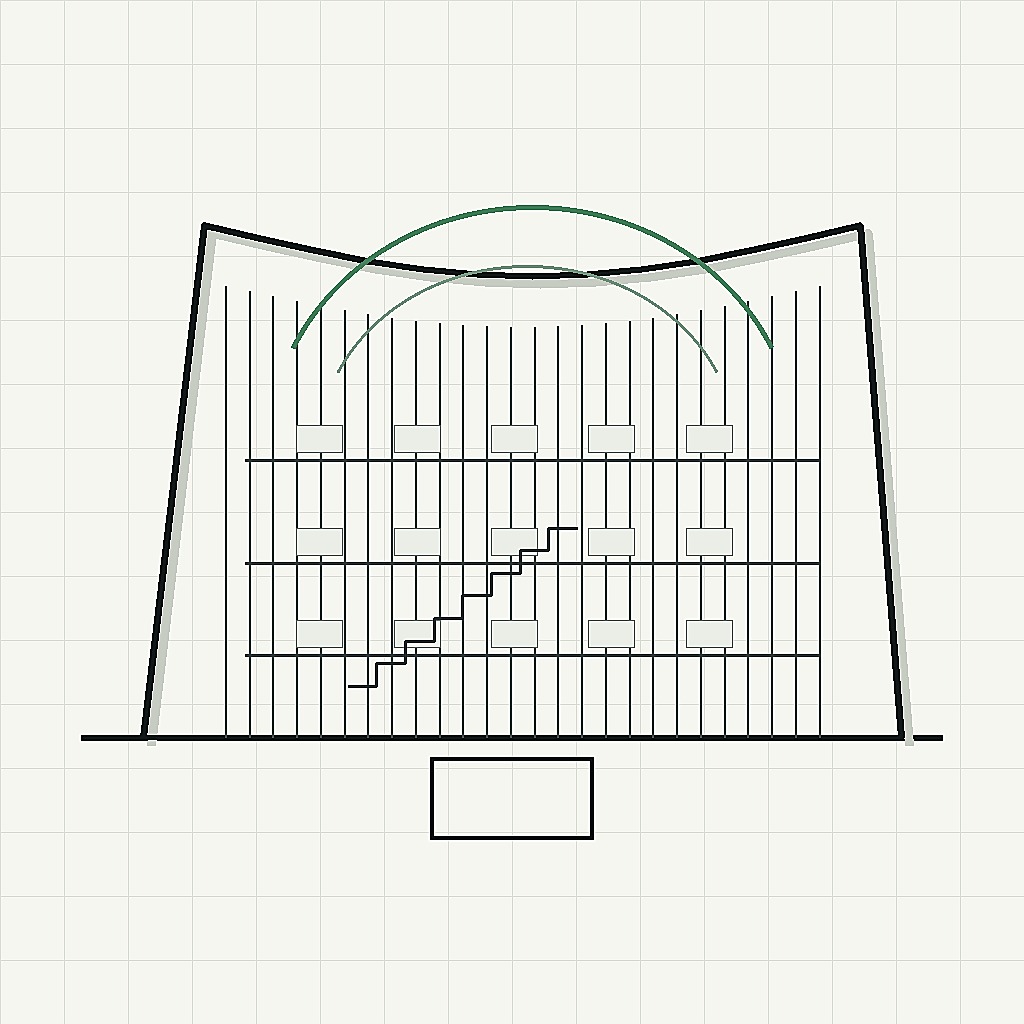
Chicago Mirror-Film Complaint Organ: A Dark Symphony of Urban Commentary
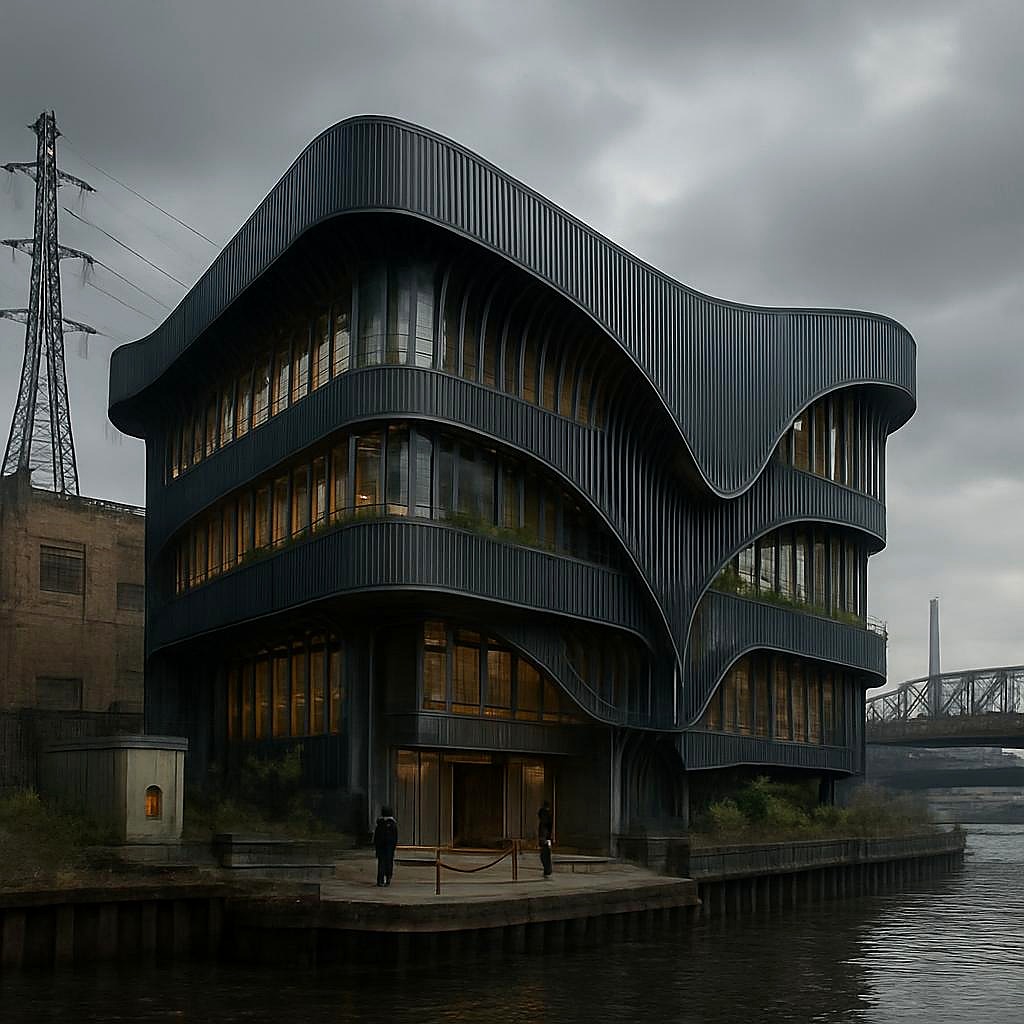
Nestled along the polluted industrial river edge of Chicago, the Chicago Mirror-Film Complaint Organ presents a challenging architectural proposition. This mixed-use civic cultural center eschews the placelessness often associated with contemporary iconic structures, engaging instead with the local industrial vernacular and ecological dilemmas. The building's form is conceived from what has been termed the Scaffolding Exosuit School, a paradigmatic approach that emphasizes visible structure and a raw honesty of construction materials.
Anchored in the Urban Fabric
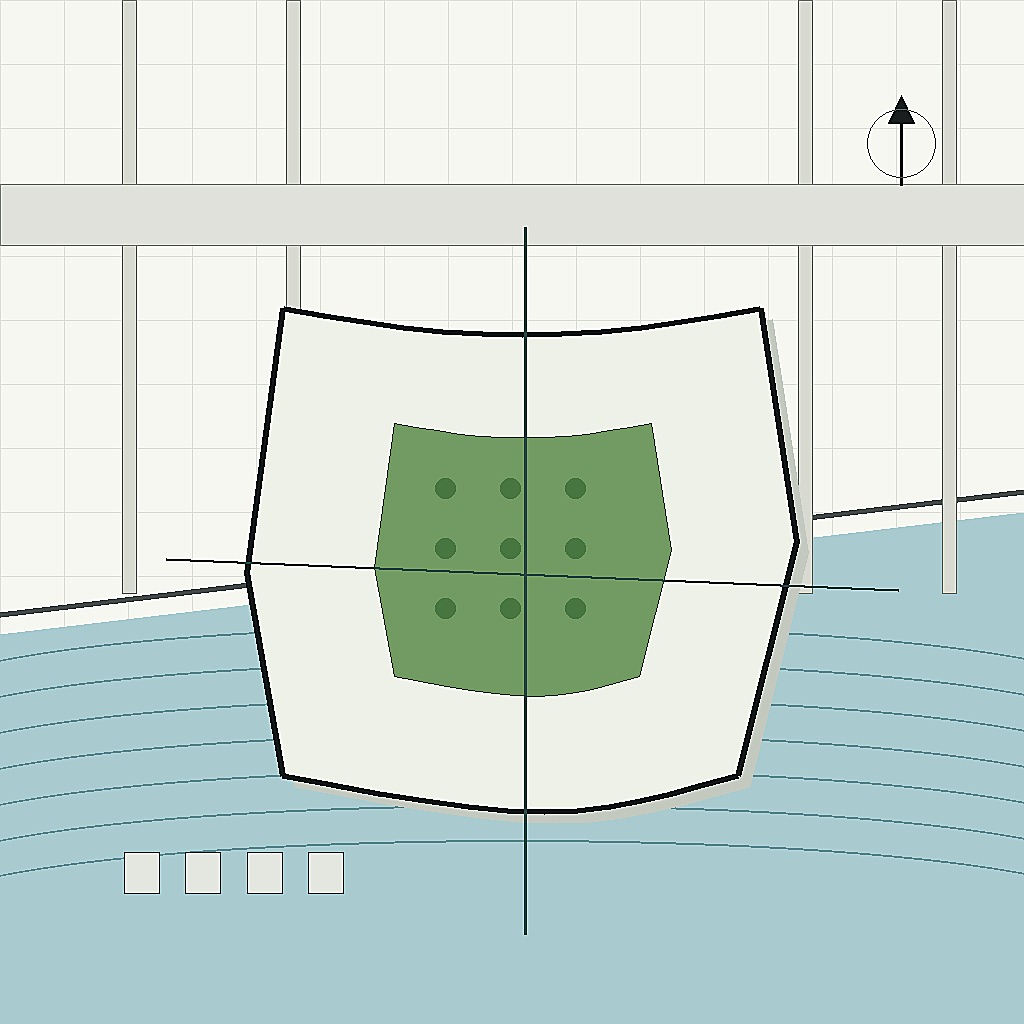
Visiting the site at 41.8359,-87.6575 reveals a composition not merely set within but rather intertwined with the urban fabric of Chicago's industrial zones. The design intelligently incorporates five concrete local anchors: the prevailing pollution of the river, visible flood risk, luxury privatization threats along the waterfront, industrial reuse conflicts, and public versus private tensions evident through the juxtaposition of different access points. These anchors provide a narrative framework that is consistent with the building's stark aesthetic and its role as a cultural organ within the city.
The Massing and Material Palette
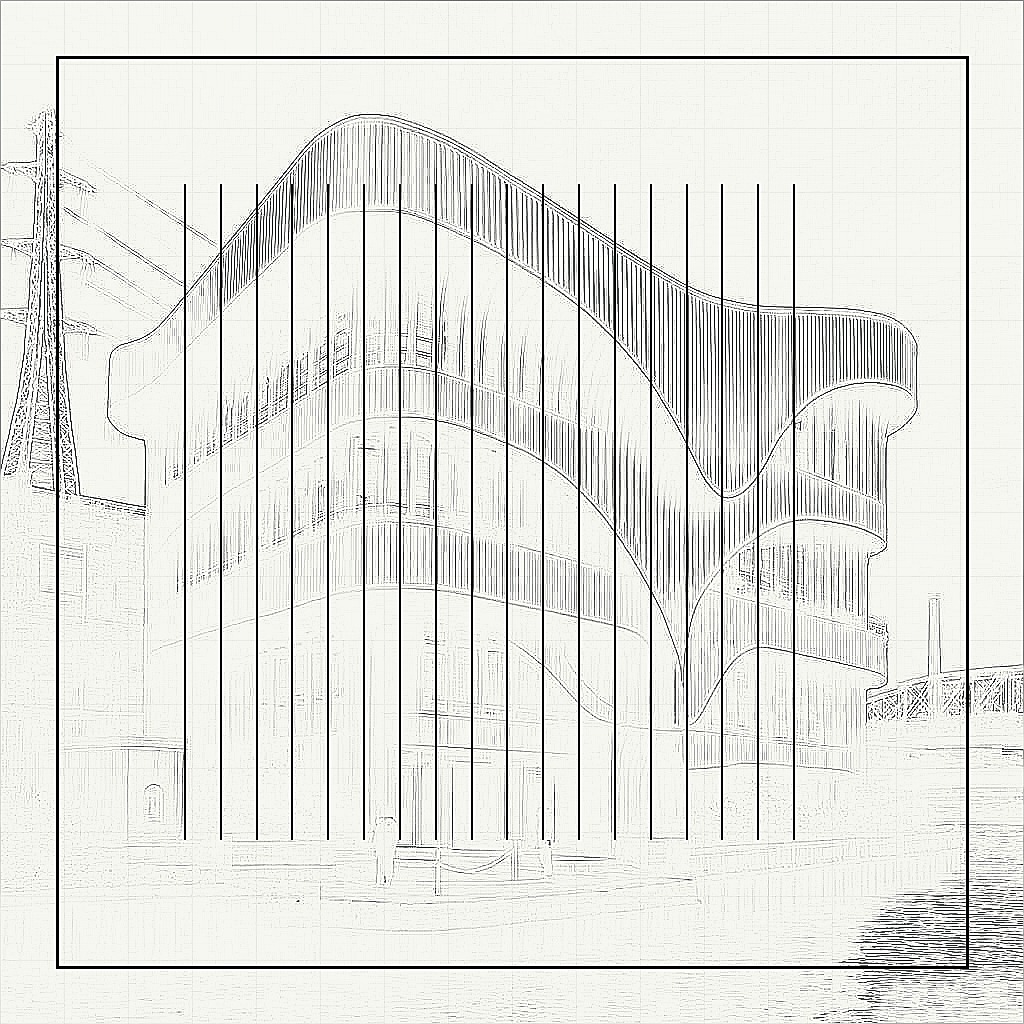
The silhouette of the Chicago Mirror-Film Complaint Organ is unmistakably defined by an asymmetric flowing roofline and continuous ribbed facade bands. This expressive massing resonates with the sensibilities of the Scaffolding Exosuit School, emphasizing legibility and human scale while ensuring that the building remains approachable despite its industrial context.
Materially, the building is an exercise in contrasts. The facade is sheathed in a matte black net, punctuated by the reflective foil lining that speaks to the inner workings of the structure-the resin blocks and the exposed, hazard-yellow maintenance frames. This materiality not only reflects the building's dual role as a cultural and critique vessel but also anchors it within the architectural language of industrial Chicago.
Circulation and Access
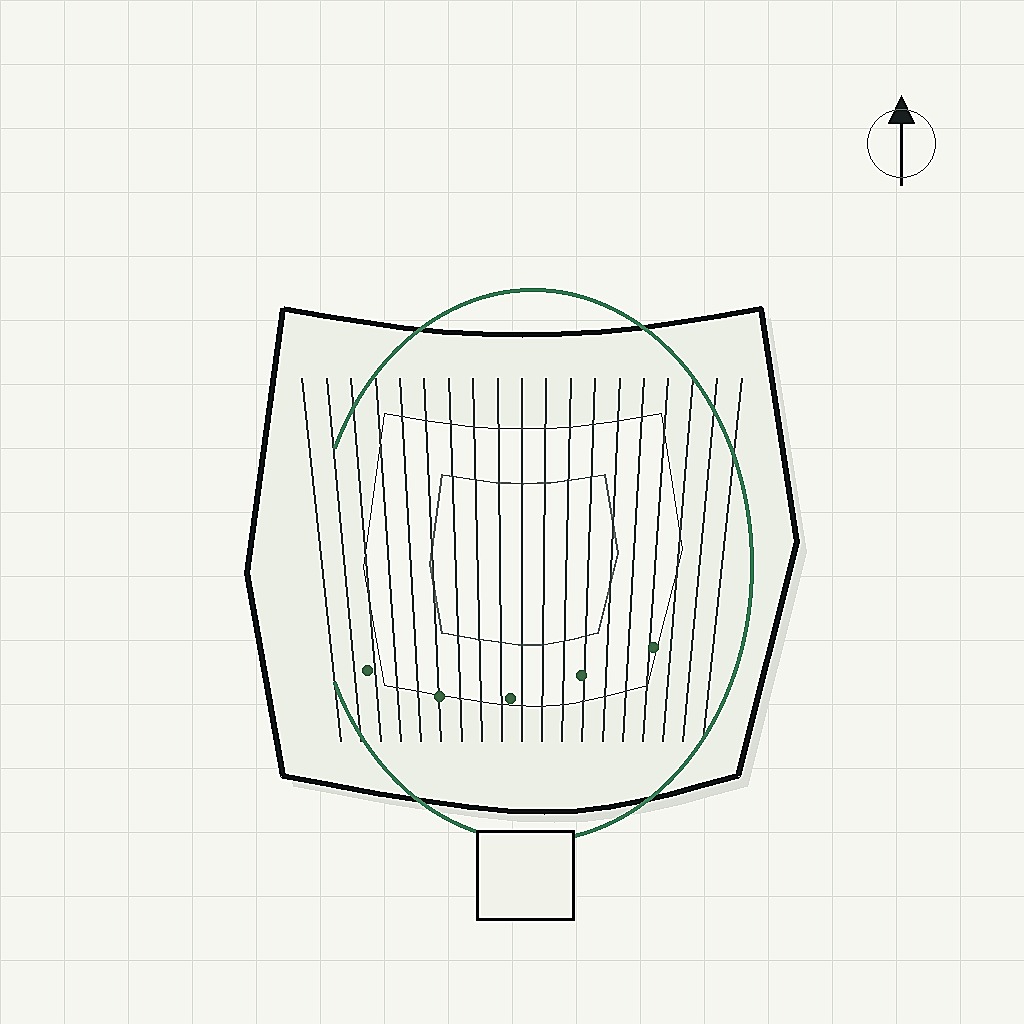
Human interaction with the building is suffused with a sense of irony. The structure facilitates access through clearly defined entries, yet it subtly echoes the controlled access points of industrial sites. The visible, modular grid system allows for a repetitive yet varied facade pattern, with continuous vertical ribs and curved glazing bays providing rhythm and texture to the exterior.
Inside, the circulation challenges visitors to navigate thresholds that oscillate between compression and release, offering moments of sanctuary alongside whispers of surveillance. The playful paradox invites engagement from its urban audience, compelling them to critique their own experiences of public and private spaces.
An Ironic Façade
The facade acts as both a physical and metaphorical barrier. Its matte black net and high-performance glazing reflect the multiplicity of Chicago's industrial past and present, while the ribbed bands and titanium fins offer a tactile reminder of the city's relentless reimagining. Here, sustainability is addressed through passive shading elements, lush planted terraces, and a focus on daylighting-an ironic nod given the adjacent industrial pollution.
The juxtaposition of luxury details alongside harsh municipal infrastructure creates visual and conceptual tension. For instance, a spa-like public amenity is humorously juxtaposed with visible toxic-water warning equipment-a poignant reminder of the city's ongoing ecological struggles.
Conclusion: A Mirror for the City?
The Chicago Mirror-Film Complaint Organ challenges the conventional narrative of civic structures by embedding irony and sociopolitical commentary into its very fabric. As it stands at the polluted river edge, it raises an intriguing question: Can architecture effectively serve as both a public amenity and a critique of its own urban environment?
