
How to Become a Furniture Designer: A Modern Guide merges hands-on making, formal or informal education, and a rigorous portfolio to show concept-to-prototype work, plus practical knowledge of CAD, production drawings, materials, and manufacturing realities that turn sketches into repeatable products.
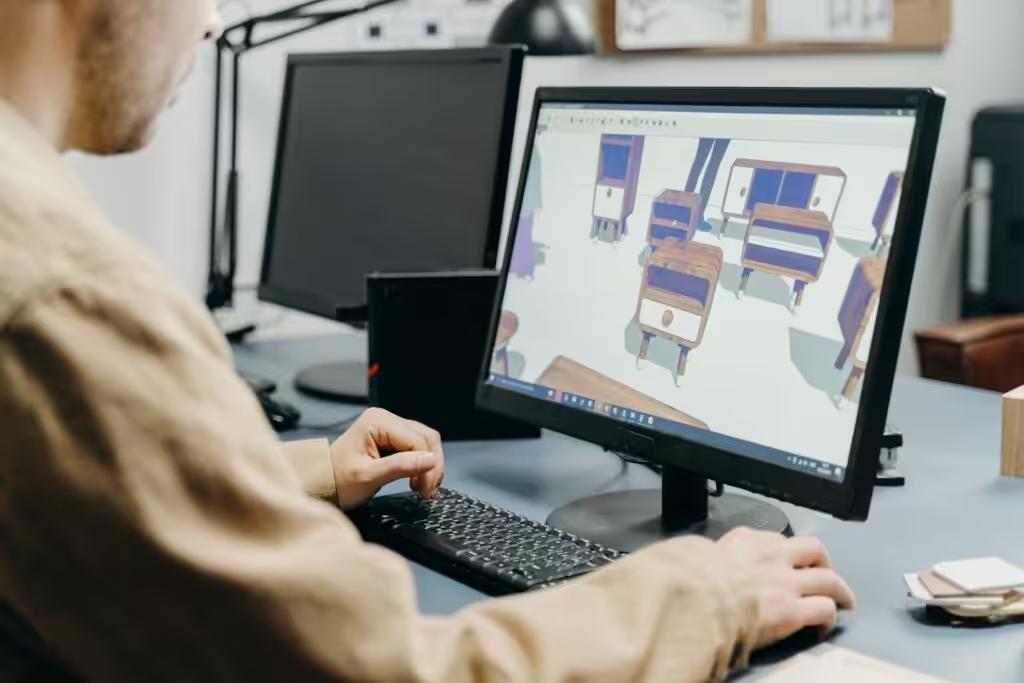
| Essential Path | Typical Timeline | What To Show |
|---|---|---|
| Study (degree or certificate) + shop practice | 2–6 years (degree plus internships) | 3–6 projects with sketches, models, photos, and drawings |
| Apprenticeship / studio job | 6–24 months (ongoing learning) | Completed prototypes, shop experience, fabrication notes |
| Freelance/production or graduate degree | ongoing | Trade work, production-ready specs, client projects |
Why Learn Furniture Design Now
Demand for well-made, thoughtful furniture remains steady as buyers seek pieces that are both functional and durable. The field is being reshaped by sustainability, digital fabrication, and hybrid roles that blend product design, interior design, and small-batch manufacturing. A modern furniture designer must balance proportion, ergonomics, material knowledge, and production economics—not just form.

Core Skills Every Furniture Designer Needs
- Drawing and ideation: quick sketches to communicate concepts and spatial relationships.
- Model making and prototyping: from foam and plywood maquettes to full-scale mockups.
- Materials literacy: hardwoods, engineered woods, metals, upholstery, finishes, and outdoor-rated materials.
- Digital tools: CAD (Rhino, Fusion 360, SolidWorks), SketchUp, and rendering for compelling presentations.
- Technical documentation: fabrication drawings, tolerances, BOMs, and assembly sequencing.
- Shop and making know-how: joinery, welding, CNC, upholstery basics—enough to communicate with makers.
- Business and client skills: cost estimating, sourcing, pitching, and basic IP awareness.
Education Options And Where They Matter
Formal study helps, but it isn’t mandatory. Leading programs balance conceptual work with craft and provide shop access and networks. Examples of pathways include:
- Bachelor degrees in furniture design or product design with structured studio time and fabrication facilities.
- Certificates and short courses—great for mid-career switches to learn CAD or joinery quickly.
- Apprenticeships and maker residencies—valuable for understanding production realities beyond classroom theory.
How to Build A Portfolio That Works
Make the process visible. Recruiters and clients want to see how you move from brief to finished object.
- Project narrative: problem → constraints → exploration → prototype → final piece.
- Include sketches, material studies, 3D models, and high-quality photos of prototypes or finished pieces.
- Show technical drawings and at least one example of cost/production thinking (BOM, unit cost estimates, material yield).
- Document failures and revisions to demonstrate iterative thinking and resilience.
Practical Making: Workshops, Tools, And What To Learn In The Shop
Hands-on time is essential to ensure designs can be realized in the real world. Focus on:
- Wood joinery (mortise & tenon, dovetail, dados) and veneer work.
- Metalworking basics: cutting, MIG/TIG welding, bending, finishing.
- Upholstery fundamentals and foam/fabric selection.
- CNC workflow: toolpaths, material hold-down, finishing after machining.
- Surface finishes: lacquers, oils, powder coating, and outdoor finishes when relevant.
From Apprenticeships to Early Roles: How to Accelerate Learning
Seek roles that place you near makers and production challenges. Consider:
- Studio assistant at a custom furniture maker to learn joinery and finishing.
- CAD/modeler for a furniture manufacturer to understand mass production constraints.
- Mixed roles at design-build shops to gain experience across design and shop operations.
Networking is crucial—furniture fairs, maker spaces, and alumni networks often lead to hands-on opportunities. For historical context and the evolution of craft-centered design, explore the George Nakashima Woodworker Complex and its influence on American craft as a holistic practice:
George Nakashima Woodworker Complex (National Park Service) offers insight into a pivotal figure whose work bridged design, craft, and architecture.
Design To Production: Turning Prototypes Into Market-Ready Pieces
Prototyping for one-off pieces vs. producing repeatable products requires different considerations. Key questions include:
- Scale and repeatability: can the geometry be manufactured efficiently at target volumes?
- Joints and tolerances: select joints compatible with production capabilities and assembly sequence.
- Materials and sustainability: specify standard timber grades or standardized metal sections unless you have a supply chain for exotic materials.
- Costs and pricing: estimate labor hours, material waste, and finishing time to set realistic margins.
- Regulatory and safety: adhere to applicable flammability and structural safety standards.
Business Models For New Furniture Designers
Decide early whether you’ll be a maker-designer (one-offs/commissions), a small-batch producer, or partner with larger manufacturers.
- Commission-based: higher margins per piece but more variable cash flow; strong client relationships are essential.
- Limited edition/small batch: collaborate with a local shop or contract manufacturer; stronger marketing and distribution plans are needed.
- Licensing or brand partnerships: lower production risk but less control over final product and positioning.
Tools, Software, And Digital Craft For The Modern Designer
Competence in at least one NURBS modeler (Rhino) and one mechanical/CAD tool (Fusion 360 or SolidWorks) is a solid baseline. Consider:
- SketchUp for quick massing studies and interior context.
- Grasshopper (Rhino) for generative forms or complex joinery layouts.
- CNC/CAM workflows and nesting software to minimize waste.
- Renderers like V-Ray or KeyShot for professional presentations.
Common Mistakes Early-Career Designers Make (And How To Avoid Them)
- Showing only finished photos without process context; include sketches and prototypes to reveal thinking.
- Ignoring manufacturing or cost in the early concept stage; design with production realities in mind.
- Underestimating finishing and long-term durability, especially for upholstery and outdoor pieces.
- Choosing obscure materials without a clear sourcing plan; always test for availability and supply-chain variability.
Where To Get Client Work And Sell Pieces
Start locally and document every step. Viable channels include:
- Direct commissions from interior designers and architects—offer bespoke or custom solutions aligned with project budgets and timelines.
- Local galleries and design stores—small-batch runs or consignments.
- Online marketplaces for makers and a personal website with e-commerce for limited runs.
- Trade shows and design fairs—expensive but effective for wholesale relationships if production capacity exists.
Salary, Market Reality, And Career Progression
Pay scales vary by region and role. Early-career roles tend to be modest, while experienced designers who scale production or secure licensing can command higher earnings. Look for clusters where manufacturing and design industries intersect to gauge opportunity in your area.
Design References, Schools, And Courses Worth Checking
Balance making with theory. Reputable programs mix studio practice with technical training and industry connections. Consider RISD, RIT, SCAD, ENSAD, Pratt, and Central Saint Martins, as well as shorter online courses for targeted skills like upholstery or Rhino modeling. For a formal path in furniture design, explore the university programs context via the Furniture Design Bachelor’s Program | RISD.
What To Include In A One-Year Learning Plan
- Months 1–3: Learn fundamentals—drawing, basic joinery, and a CAD tool. Build 2–3 small practice pieces (stool, side table).
- Months 4–6: Develop two detailed projects with full documentation (sketches, models, prototype photos, technical drawings).
- Months 7–9: Pursue apprenticeship or part-time studio work; seek constructive feedback to refine your portfolio.
- Months 10–12: Launch a small project for sale (limited run or commission), set up a simple portfolio site, and start outreach to galleries or interior designers.
Frequently Asked Practical Questions
Do you need a degree to be a furniture designer?
No—the right making skills and a strong portfolio can substitute. A degree accelerates learning, provides shop access, and helps with networking.
How many portfolio pieces are enough?
Quality over quantity: 4–6 well-documented projects showing range, technical clarity, and process beats a large pile of under explained work.
What’s more important: craft or CAD skills?
Both are essential. Early on, balance hands-on shop skills with CAD for clear communication with makers and manufacturers.
Which furniture styles should I study?
Study classics for proportion and construction (Eames, Wegner, Jacobsen, mid-century) while analyzing why those designs work—ergonomics, circulation, and material choices matter as much as looks.
Next Practical Steps You Can Take This Week
- Sketch a chair or table idea, then build a 1:4 scale model in cardboard or plywood.
- Visit a local maker space or joinery shop to explore short apprenticeships or tool access.
- Create an online portfolio page with process images and a clear project narrative.

For materials and finish considerations that inform more durable, design-forward furniture, see Natural materials in kitchen design, which illustrates how material choices influence aesthetic and performance in integrated interiors.
When evaluating premium outdoor options and the branding considerations that come with high-end furniture, consult Restoration Hardware Outdoor Furniture Review for real-world context on durability, maintenance, and material performance over time.
To understand formal education pathways and opportunities for industry engagement, reference Furniture Design Bachelor’s Program | RISD, which outlines curriculum structure, internships, and career outcomes.
For a broader perspective on the craft-centric approach and the evolution of American furniture making, review the George Nakashima Woodworker Complex page from the National Park Service:
George Nakashima Woodworker Complex (National Park Service)
Readers starting a furniture-design practice can benefit from a curated set of essential tools. A practical starter collection is described in an accessible product-focused resource; consider exploring a furniture design tools set to assemble basic measuring, drafting, and prototyping tools alongside CAD software workflow.
As you pursue this path, remember that the best furniture designers blend curiosity, craft, and business sense. Engage in real-world projects, seek mentors, document your journey, and steadily build a portfolio that demonstrates your ability to move from concept to production. Share your experiences, questions, or recent projects in the comments below to keep the conversation going.
How to Start as a Furniture Designer | How to become Furniture Designer:
As you embark on your journey to becoming a furniture designer, remember that every great designer was once a novice with a passion for creativity and a unique perspective. Keep honing your skills, whether through formal education, hands-on experience, or simply experimenting in your own workshop. Surround yourself with inspiration, whether it’s through great design books, local galleries, or the innovative creations of other designers. Trust me, the journey is just as rewarding as the destination!
Stay Connected and Inspired
Don't forget to connect with the design community. Sharing your progress and ideas on platforms like Instagram can open doors for you while keeping you engaged with the latest trends. If you’d like some daily inspiration, check out our work on Instagram! The more you immerse yourself in the world of design, the more you'll realize that there's always something new to learn and explore. Happy designing, and I can’t wait to see what you create!
