
Give a dragon fruit plant bright light, free-draining soil, steady moisture during growth, and a stout support and it will reward you with vigorous vines and, in a few seasons, fruit. This guide explains how to care for dragon fruit by covering sunlight and acclimation, soil and containers, watering rhythm, feeding schedules, pruning and trellising, pollination and harvest, pest and disease controls, and winter or indoor strategies so you can keep pitaya healthy and productive.
Sunlight and Gradual Acclimation
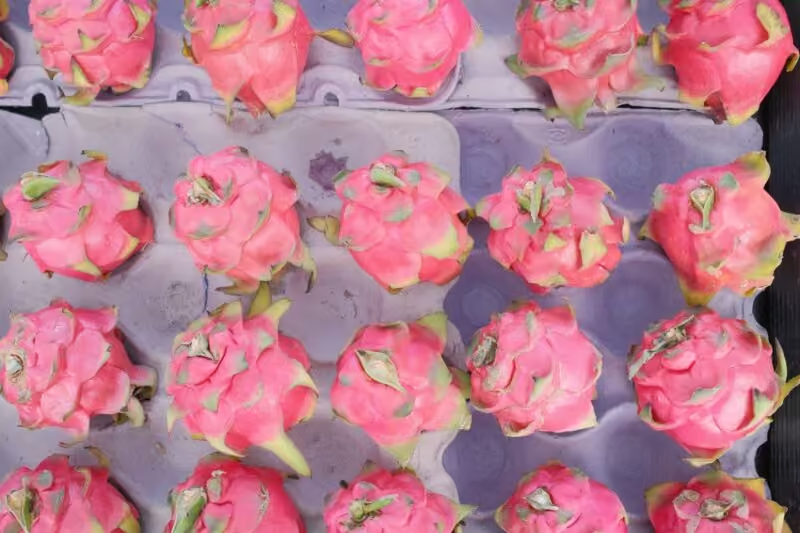
Dragon fruit needs strong light to bloom and set fruit; full flowering typically requires at least 6 hours of direct or very bright filtered light daily. Acclimate new plants over 1-3 weeks by increasing direct sun exposure by one to two hours every few days to avoid sunburn. In hot inland sites provide light midday shade; coastal and moderate climates usually tolerate continuous full sun.
For indoor plants, place them near a south- or west-facing window and add a full-spectrum LED grow light when natural light falls below about 2,000 lux; aim for bright light levels comparable to a sheltered outdoor spot so the cactus forms flower buds.
Soil, Drainage and Pot Choices
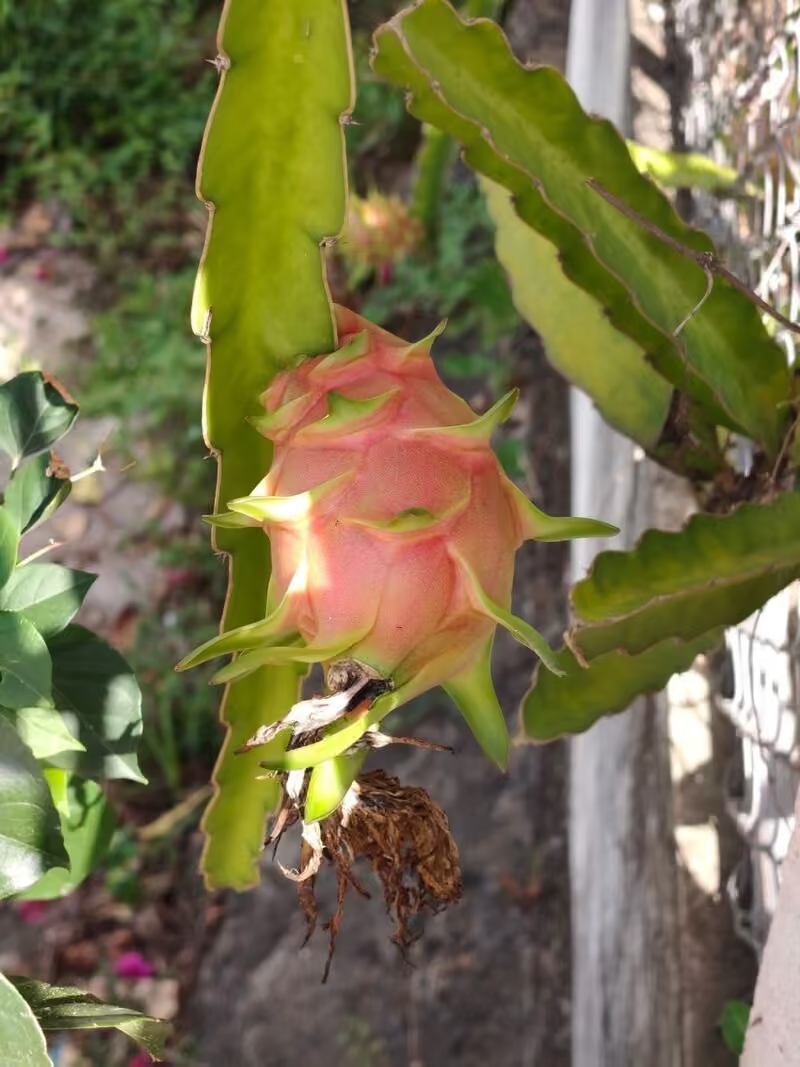
Plant dragon fruit in a sandy, well-draining medium. Use a cactus or succulent mix amended with coarse sand, perlite, or pumice and target a pH near 6.0-7.0. Avoid heavy garden loam that holds water.
- In-ground: improve poor clay by mixing 30-50 percent coarse sand and 10-20 percent compost into the planting hole, then mound the root crown slightly to shed water away from the stem.
- Containers: choose a wide, shallow pot with a clear drainage hole; a 15-20 inch diameter container suits a young plant and reduces tipping while allowing lateral root spread. Repot one size at a time to keep the root zone from remaining overly wet.
- Mulch: apply 2-6 inches of organic mulch but keep it 8-12 inches away from the main stem to reduce rot risk.
For region-specific care recommendations consult the NC State Extension on dragon fruit care (Selenicereus undatus), which summarizes light, soil, watering and pruning guidance suitable for many U.S. climates.
Watering Rhythm for Flowering and Fruit
Although a cactus relative, dragon fruit requires consistent moisture while actively growing and during bloom and fruit set. Water when the top 1-2 inches of soil are dry. In pots this can mean multiple shallow waterings per week in hot months; in the ground allow deeper, less frequent irrigation that reaches the root zone.
Give the plant a drier period in late fall or winter to help induce blooms, but avoid prolonged saturation at any time. Standing wet soil is the most common cause of stem and root rot in pitaya.
Feeding Schedule and Practical Rates
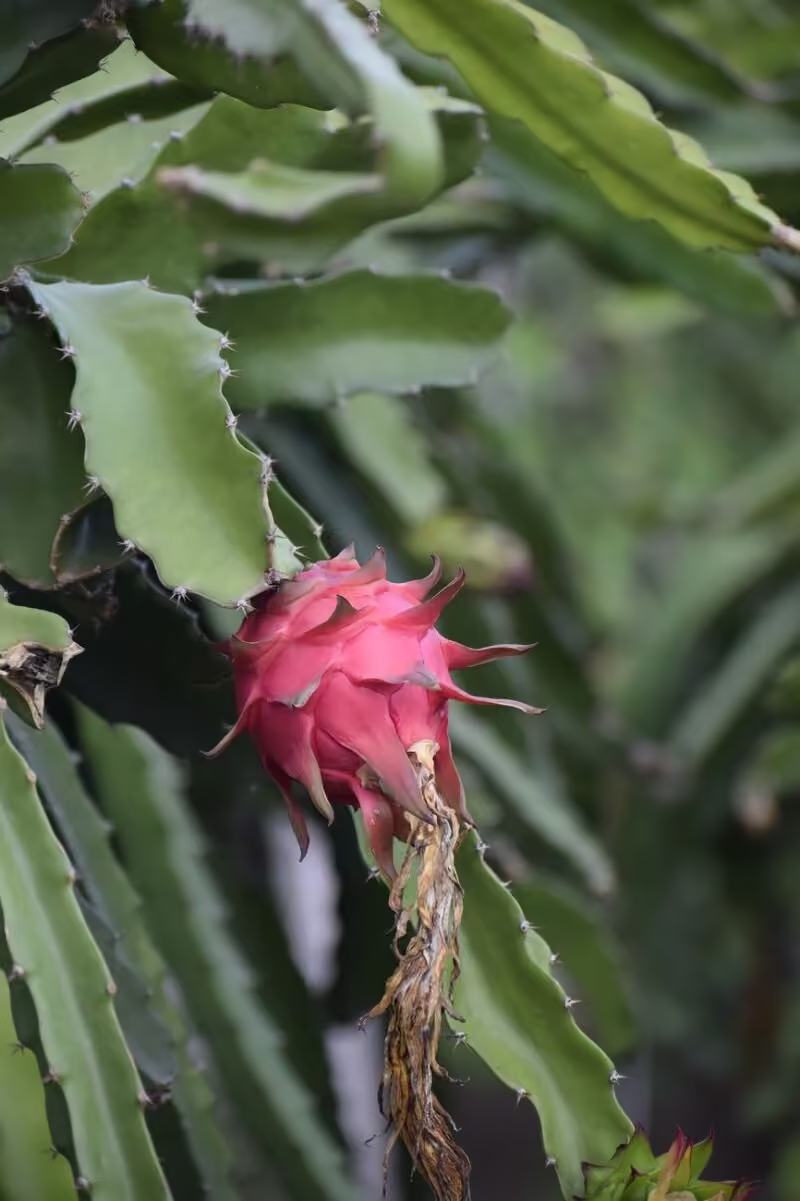
Fertilize to support balanced vine growth and fruiting rather than to encourage soft vegetative growth. For young plants apply a light balanced fertilizer every 6-8 weeks during the first year; established plants benefit from three to four moderate applications during the warm season.
Begin with modest rates in year one, then move to roughly 0.3-0.4 lb of a balanced granular fertilizer applied every two months in years two to four, split across applications. Mature specimens often perform well on a total annual amount near 0.5-0.75 lb per plant, divided into multiple feeds. Keep fertilizer outboard of the stem and follow the product label for exact application rates.
Pruning, Training and Support Options
A strong support system prevents stem breakage and simplifies harvesting. Common systems include a single sturdy post with a cross arm, concrete posts with horizontal rails, or a pergola-style arbor that lets stems drape and receive light. Anchor supports into the soil or a heavy container base to avoid toppling as vines thicken.
Pruning goals are to open the canopy for light and air, remove damaged tissue, and tip stems to encourage lateral fruiting branches. Make clean angled cuts with sterilized tools and prune more heavily after harvest. Retain multiple branches because a bushy framework produces more fruiting sites than a single unbranched trunk.
For ready-made hardware to anchor vines in containers or small gardens consider dragon fruit trellis products such as T-post panels, tall A-frames, or modular metal trellises made for climbing succulents and vines.
Pollination, Flowering Timing and Harvest
Dragon fruit flowers open at night and are typically pollinated by nocturnal insects or bats in natural ranges; many home gardens lack these pollinators. Hand pollination with a soft brush or cotton swab between compatible varieties during the early hours after bloom improves fruit set. Cross-pollination increases yields even for partially self-fertile cultivars.
Harvest when the skin has full color and the scales begin to curl slightly; cut the fruit from the stem with clippers to avoid tearing vines. For handling and preparation guidance see the site’s piece on fruit preparation: How to Cut Dragon Fruit Like a Pro.
Pests, Diseases and Practical Controls
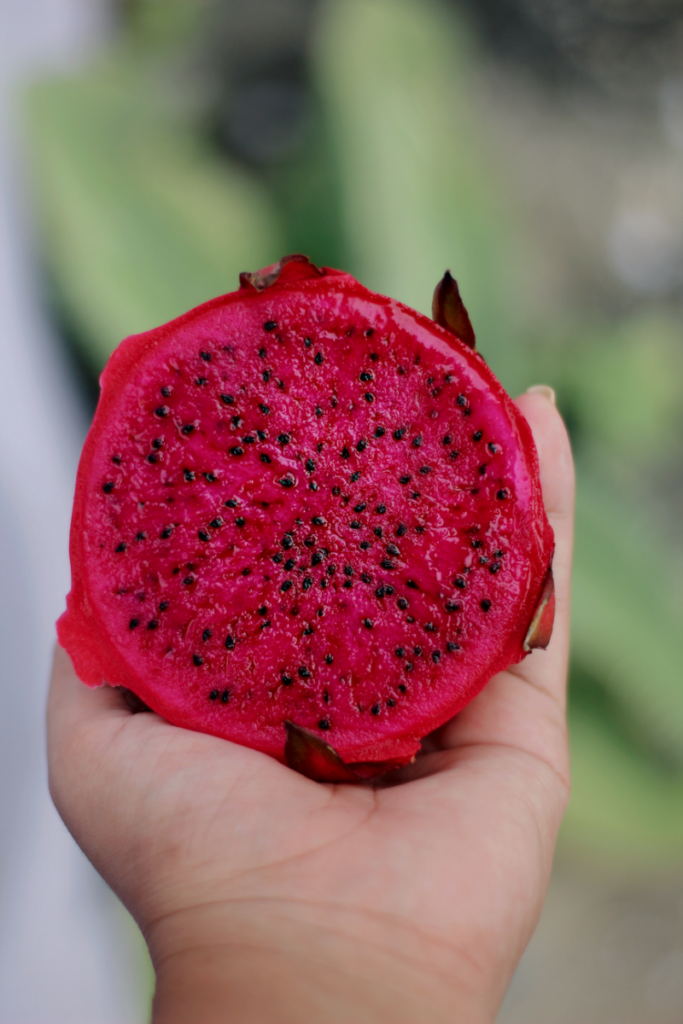
Monitor for scale, mealybugs, mites, thrips and occasional leaf-footed bugs. For soft-bodied pests use horticultural oil or insecticidal soap applied to contact the pests and repeat treatments according to label timing. Remove and discard heavily infested stems rather than composting them close to the bed.
Fungal and bacterial stem rots follow prolonged wet conditions. Prevent disease by improving soil drainage, maintaining air circulation through pruning, and avoiding overhead irrigation on the stems. If rot appears, cut back to healthy tissue and allow cuts to callus before resuming watering.
Field research demonstrates biologically based options can reduce common stem diseases. See experimental results on combined Bacillus subtilis and sodium bicarbonate treatments in disease-prone cladodes in the study Dragon fruit disease management: Bacillus subtilis and sodium bicarbonate study. Producer-focused discussions of practical pest and disease management come from the UC ANR report on dragon fruit grower practices and research, which summarizes grower trials, common pest problems and applied controls.
Container Growing and Winter Protection
Containers let you move plants out of frost risk. Use a wide pot, well-draining mix, and anchor a trellis to the pot. In cold weather move pots into an unheated garage, enclosed porch, or greenhouse when nights approach freezing; brief light freezes may be survived but repeated subfreezing temperatures cause heavy damage.
Choose cold-tolerant varieties for marginal climates and reduce watering and fertilizing during cooler months to match the plant’s slower growth. For guidance on month-to-month tasks consult the UF/IFAS cultivation sheet previously cited in the article.
Propagation and Buying Tips
Propagate reliably from stem cuttings. Allow the cut end to callus for 3-7 days, then root in a free-draining medium. Cuttings fruit far sooner than seed-grown plants; expect fruit within 2-3 years from a healthy cutting under good conditions. Seeds germinate readily but take many years to produce fruit.
When buying a plant or cutting inspect stems for firm tissue free of sunburn, black spots or soft patches, and ask the seller about the cultivar if fruit color, size or pollination requirements matter. For growers focused on post-harvest handling and consumer preparation, the site’s culinary piece on cutting pitaya provides practical harvest-to-table steps and visuals for safely preparing fruit.
Maintenance Calendar and Seasonal Tasks
| Season | Core Tasks |
|---|---|
| Spring | Acclimate new plants, repair trellis, begin regular feeding and watering |
| Summer | Maintain consistent moisture, tie new growth, monitor and treat pests |
| Fall/Winter | Prune after harvest, reduce water, move containers before first freeze |
For additional site content that touches the dragon motif and domestic craft or decor contexts, see related pieces on design and craft Dragon Lamp and creative projects Dragon Puppet Ideas.
Healthy dragon fruit depends on three controllable factors: bright stable light to induce blooms, sharply draining soil to prevent rot, and a reliable support system that protects stems and exposes fruiting branches to light. Address those first; then use pruning, pollination and targeted pest controls to convert vine growth into dependable harvests.
Related Video
Caring for a dragon fruit plant requires consistent attention to watering, sunlight, and nutrients. With the right conditions, these unique plants can thrive and produce fruit. Regular pruning and monitoring for pests will also contribute to a healthy growth cycle. Following these tips ensures you get the most out of your dragon fruit gardening efforts.
More from Architecture Adrenaline
For more posts like this, check out our social channels for tips and updates. You can find us on Instagram at Architecture Adrenaline for more information and inspiration on various topics.