
Can you establish a durable lawn on hard, compacted soil? Yes. A well-planned approach can transform crusty ground into a thriving seedbed by carefully loosening the soil, choosing the right grass seed for your climate, ensuring good seed-to-soil contact, and maintaining moisture during establishment. In practice, success hinges on soil preparation, seed selection, and timely care that accommodates your site conditions. The following guidance synthesizes practical steps, seed options, and timing to help you begin even when soil is less than ideal.
| Problem | Best First Step | Quick Fix |
|---|---|---|
| Compacted, hard-packed soil | Core aeration or use a powered slit seeder | Top-dress with screened compost 1/4"–1/2" |
| Clay that crusts or repels water | Break surface with a tiller or rake, then amend | Light frequent watering until germination |
| Bare, exposed dirt with poor organic matter | Add 1–2" of compost or blended topsoil | Mulch with straw or a seed blanket to retain moisture |
Assess The Ground Before You Plant
Walk the site and perform two quick checks: push a screwdriver into the soil to gauge compaction—if you can’t penetrate 2–3 inches when dry, the soil is compacted—and observe water behavior. Puddling in low spots or rapid runoff from high spots signals drainage or grading issues you should fix before seeding. Collect a soil sample or use a home test kit to learn pH and nutrient status; this helps you decide whether lime or fertilizer is needed.
Why Soil Compaction Stops Germination
Compaction reduces pore spaces that hold air and water, so seeds may sit on a crusty surface or dry out. Roots also struggle to grow downward. The cure combines physical opening (aeration, ripping, or light tilling) with organic matter to rebuild soil structure and biology.
Loosening Dirt: Tools And Methods
- Core aerator (walk-behind or rented) removes plugs and is ideal for established areas.
- Slit seeder or verticut machine cuts narrow grooves and deposits seed for direct soil contact.
- Tiller or garden fork works well for small bare patches (roughly 2–4 inches deep).
- Power rake or dethatcher helps remove thatch or surface crust before overseeding.
For large yards, rent a core aerator on a dry day. For small patches, a garden fork and hand rake suffice.
Step-By-Step: Planting Grass Seed On Hard Dirt
- Clear debris — remove rocks, sticks, and weeds. Tackle persistent weeds according to label directions.
- Assess and grade — fix dips and slopes so water doesn’t pond; shallow grading improves establishment.
- Bust the surface — core aerate, slit-seed, or lightly till to a depth of 2–4 inches, depending on soil hardness.
- Amend with organic matter — spread 1/4"–1/2" of screened compost or topsoil; for very poor soil, up to 1" in problem spots.
- Choose the right seed — select a climate- and sun-appropriate seed (cool-season mixes for temperate zones; warm-season if summers are long and hot).
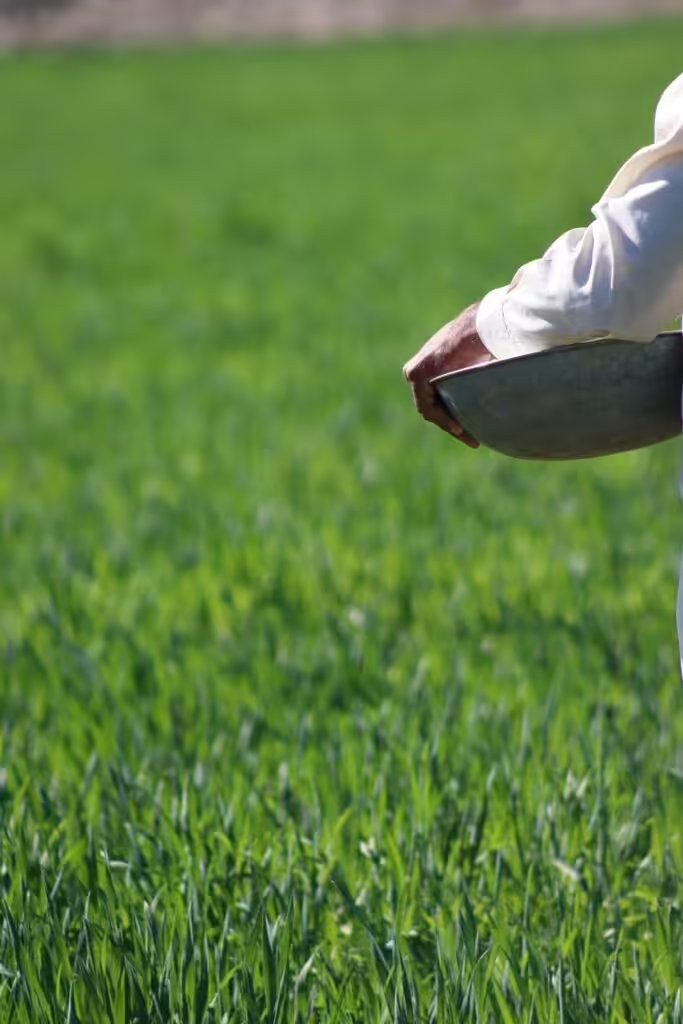
- Seed at recommended rates — follow product rates and distribute evenly; use a drop or broadcast spreader for larger areas.
- Rake and roll — lightly rake to blend seed into loosened soil; roll with a lawn roller or tamp with the back of a rake for good seed-soil contact.
- Mulch and protect — apply straw mulch or a biodegradable seed blanket to retain moisture and reduce erosion.
- Water correctly — keep the top 1/2"–1" of soil consistently moist until germination; start with light, frequent watering and taper gradually as roots develop.
Best Grass Seed Options For Hard, Compacted Soil
Seed choice depends on climate and sun, but these general recommendations help when soil is compacted:
- Turf-type Tall Fescue — deep-rooting, drought- and compaction-tolerant; ideal for clay and high-traffic areas (cool-season).
- Kentucky Bluegrass blends — density and self-repair; blends with tall fescue work well in many cool climates.
- Perennial Ryegrass — fast germination for quick cover; use in mixes for rapid establishment but not as the sole long-term solution on compacted clay.
- Bermudagrass / Zoysia — warm-season options that tolerate traffic and poor soils once established (requires warm temperatures).
For most temperate yards, a tall-fescue–dominant mix provides the broadest reliability. Consult regional extension guidelines or a local seed supplier for the best blend for your area. If you’re exploring drought-tolerant options broadly, see drought-tolerant seed programs and guidance, including the SLC TurfTrade program and Low-Water options mentioned below.
Top-Dressing, Compost, And Amendments That Help
Top-dressing speeds recovery and improves the seedbed after aeration. Use:
- Screened compost or well-aged compost in a thin layer (1/4"–1/2") after seeding.
- Fine screened topsoil mixed with compost to raise low spots and improve fertility.
- Starter fertilizer formulated for new seed, applied per label directions.
Avoid burying seed under thick soil or mulch; thin coverings maintain moisture without blocking light.
Watering And Care Timeline After Planting
Newly seeded areas need careful moisture management. Use this baseline and adjust for heat, wind, or sun:
- Days 0–14: Keep the surface consistently moist with light watering 2–4 times daily (top 1/2"–1" damp).
- Days 14–28: Decrease frequency to once daily but extend duration to encourage deeper roots (top 2" moist).
- 4–6 weeks onward: Transition to normal lawn watering (about 1" per week, split into 1–2 waterings, depending on rainfall) to promote a deeper root system.
Mow when seedlings reach 3–4 inches, then trim to about 2.5–3 inches on the first pass, removing no more than one-third of blade height.
Troubleshooting: Germination Troubles On Hard Dirt
Common causes include poor seed-to-soil contact, crusting, inconsistent moisture, or the wrong seed for your climate. Fixes include:
- Seeds sitting on top of crust — lightly rake and add a thin layer of compost; water gently to re-establish contact.
- Crusting after rain — scarify the surface gently and re-water; consider a mulch or seed blanket next time.
- Birds eating seed — use light netting or apply seed with a thin straw mulch.
- Poor drainage — regrade low spots and improve infiltration with amendments or drainage solutions.
Professional Help And Hydroseeding
For very large areas, severe compaction, or a fast, uniform finish, consider hiring a lawn seeding service or a hydroseeding crew. Hydroseed mixes (seed, mulch, fertilizer, tackifier) help hold seed on slopes and bare patches, but surface prep (aeration or light grading) remains essential. Ask about soil testing and establishment warranties.
Overseeding Old, Compacted Lawns
Overseeding can fortify an aging lawn. Best practice:
- Aerate first, then overseed at the recommended rate while the holes remain open.
- Top-dress with compost to help seed settle into the aeration holes.
- Choose a mix that complements or gradually shifts to a more tolerant variety (e.g., tall fescue) over several seasons.
Avoid Common Pitfalls
- Avoid seeding on hard ground without prep; seed on bare soil needs a loose, moist bed.
- Don’t over-apply topsoil or compost; thick layers can smother seedlings.
- Avoid high-salt fertilizers at seeding; use starter formulas designed for new lawns.
- Delay heavy foot traffic until the new lawn is established and rooted.
Quick Pre-Start Checklist
- Soil test collected; interpret pH and basic nutrient levels.
- Plan aeration or loosening methods for your area (hand tools for small patches, machines for larger ones).
- Select a regionally appropriate seed mix (tall fescue for cool climates with clay/compaction; warm-season varieties in the south).
- Have screened compost/topsoil on hand and a light starter fertilizer.
- Set up a watering schedule; consider mulch or blankets for slopes or erosion-prone areas.
Seed-Starter Fertilizer And Where Practical Starters Help
When seeding in harsh, compacted soils, a light starter fertilizer can accelerate germination and establishment. For readers seeking a quick procurement path, an Amazon search for lawn seed starter fertilizer can help identify compatible products to complement your seeding plan:
Internal Architecture Adrenaline Context And Further Reading
For design-minded readers, practical landscape ideas and drought-tolerant plant concepts are explored in related Architecture Adrenaline content. See the Yucca varieties discussion for insight into architectural plant forms that complement xeriscape or low-water landscapes.
Another Architecture Adrenaline reference that informs exterior landscape thinking and durable planting strategies is the Rock designs for front yard ideas article. It provides context on durable, visually strong front-yard choices that pair well with low-water turf options.
Finally, for readers curious about resilient landscaping beyond lawns, see the Landscape-focused posts on Architecture Adrenaline, including a piece on front-yard rock designs and related exterior strategies: Explore Harriman State Park's Hidden Gems.
Have you tackled a hard-dirt lawn restoration? Share your experiences, questions, or the seeding mix that worked best for you in the comments below. If you’ve tried similar prep methods, tell us what made the biggest difference in your soil’s response and seed germination.
How to Plant a yard and grass seed like a pro - Grow a new lawn, overseeding, yard & sod care tips:
Planting grass seed on hard dirt might seem like a daunting task, but with the right approach, you can transform that stubborn ground into a lush, green oasis. Remember to properly prepare the soil by loosening it up and addressing any drainage issues before sowing your seeds. Watering consistently and giving your new grass time to establish itself are key components to your success. With a little patience and dedication, you'll be rewarded with a beautiful lawn that enhances your outdoor space and invites you to enjoy the fresh air.
Stay Connected for More Tips
Now that you’re equipped with the tools to tackle hard dirt, why not share your progress or seek more inspiration? Join our community on Instagram at Architecture Adrenaline, where you can find more gardening tips, landscape ideas, and connect with fellow gardening enthusiasts. We love to see how your projects come to life, so don’t hesitate to share your own gardening journey. Happy planting!
