
Yes. Ripe strawberries are frequently lost to birds, slugs, sap-suckers, and a handful of chewing insects unless you combine exclusion, sanitation, and targeted soft treatments into a simple routine that fits a small bed or pot.
Identify Pests Quickly and What to Look For
Scout for 5 to 10 minutes once per week and check daily for ripening fruit. Look under the newest leaves for clusters of aphids or the fine webbing of spider mites, lift crowns to inspect for small weevils or vine weevil larvae, and examine fruit for small punctures, ragged edges, or slime trails. Note bird visits visually or with motion-sensor cameras so you can time netting before berries redden.
Exclusion for Birds and Larger Animals
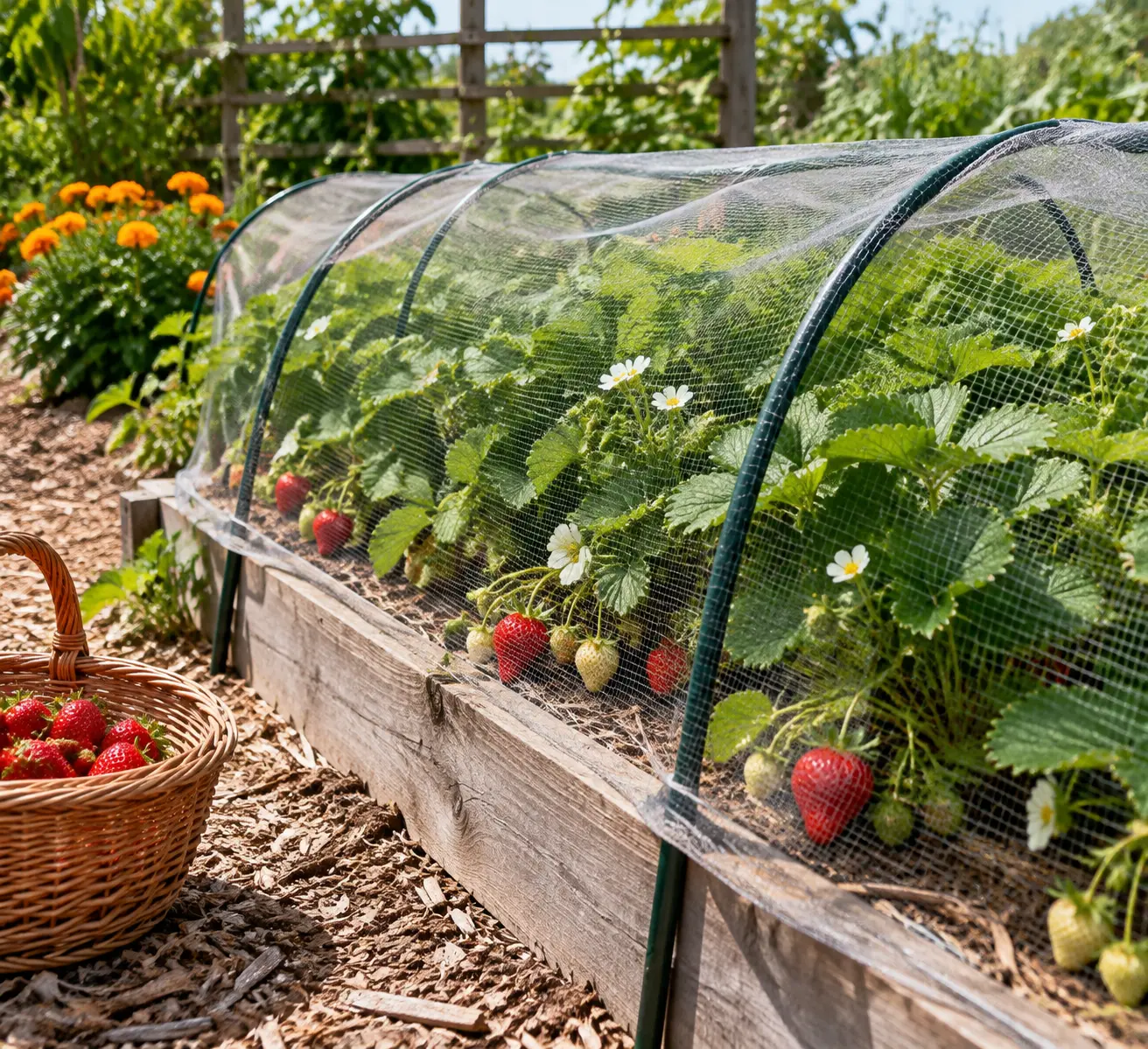
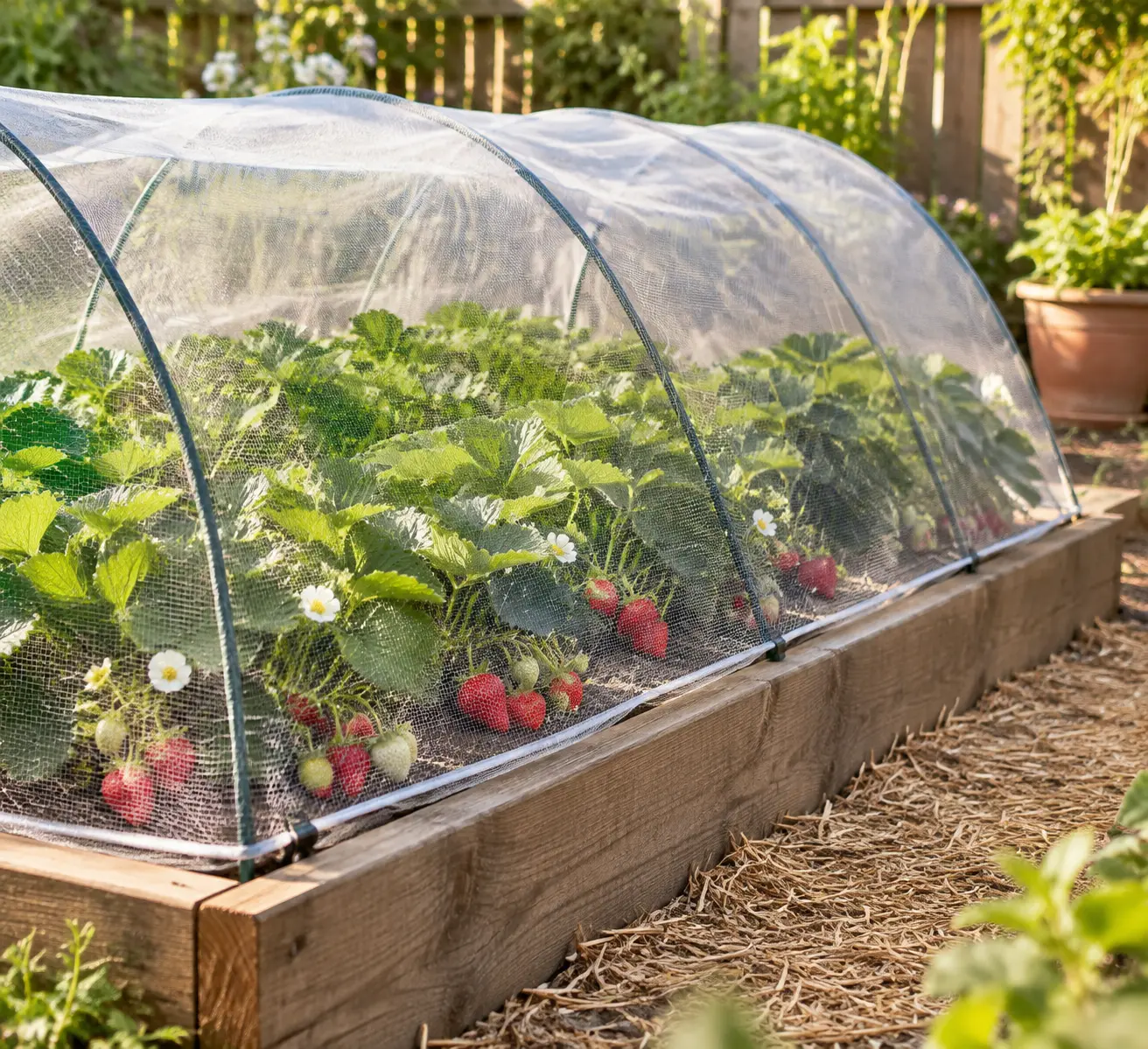
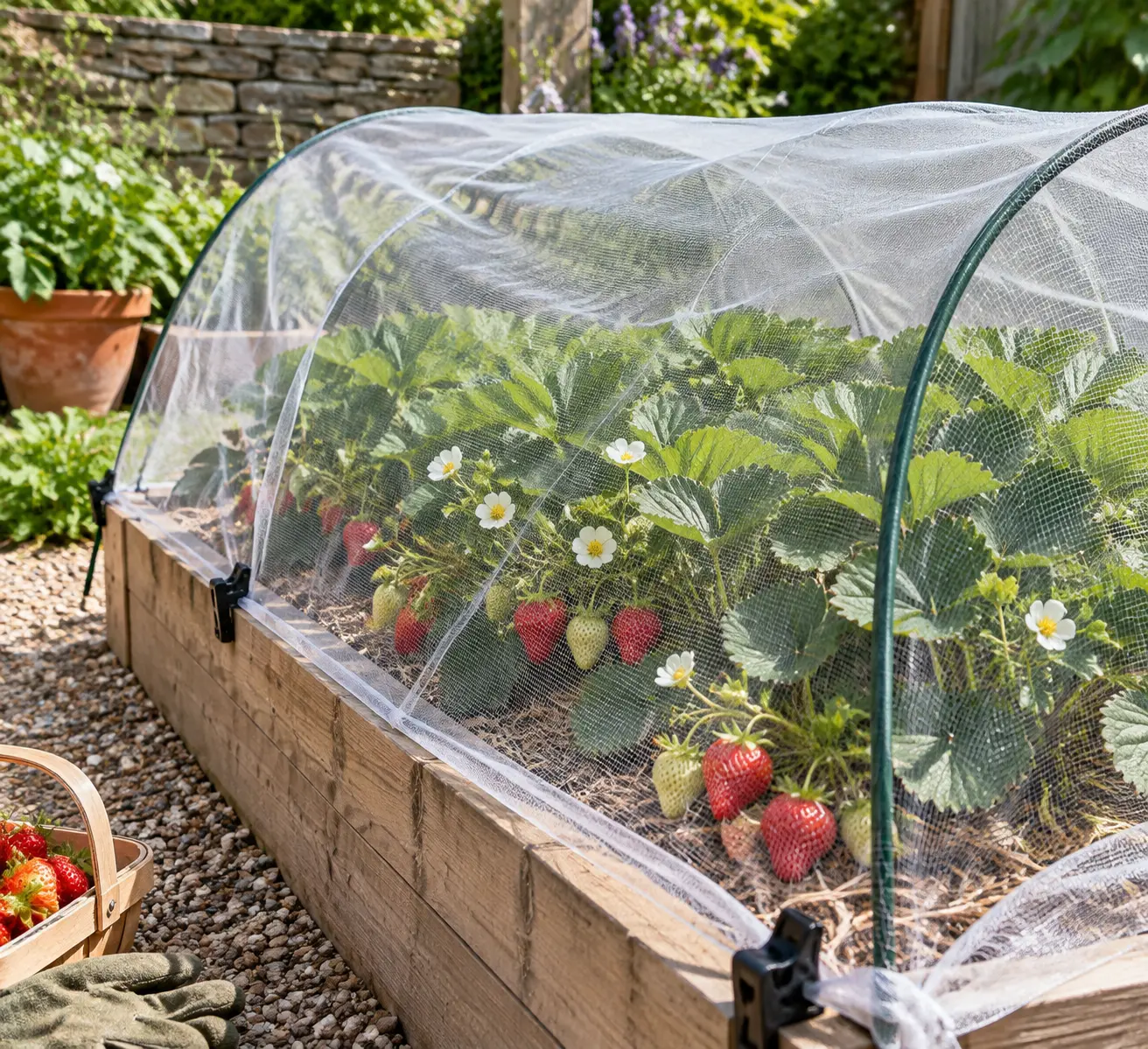
Build a hoop frame of PVC or bamboo and drape UV-stable bird netting so the mesh never rests on the fruit; anchor the net at the soil line and keep the canopy at least 6 inches above the tallest berries. Install netting before color breaks so birds do not learn a new food source. For small raised beds, light-weight organza fruit bags over trusses give single-plant protection without blocking pollinators during the day.
Reduce Slug and Snail Habitat
Remove mulch that touches crowns, clear plant debris weekly, and shift watering to mornings to dry the surface by evening. Raise containers off the ground and use well-draining potting mixes. If cultural exclusion fails, use ferric phosphate baits after rainy spells and follow label directions; for more on identification and long-term control options see the site’s slug infestation guidance.
Manage Aphids, Ants, and Small Soft-Bodied Insects
Dislodge aphids with a strong spray of water on cool mornings and repeat for several days to break colonies before applying other products. If sprays are insufficient, apply insecticidal soap or horticultural oil early so foliage dries in sunlight. Place ant baits around bed edges rather than on plants; reducing aphid honeydew is the most effective way to reduce ant foraging.
Mulch, Spacing, and Disease Reduction
Use 2 to 3 inches of straw applied lightly around crowns to keep fruit off the soil and to speed drying after rain. Space plants and remove excess runners to improve air movement and lower Botrytis risk. A raised mulch layer also reduces contact with sap-feeding beetles and slugs, which in turn reduces obvious fruit loss at harvest.
Physical Traps and Small-Scale Barriers
- Shallow beer traps positioned at dusk capture slugs; replace daily and dispose of contents away from beds.
- Copper tape on pot rims creates a short-distance deterrent for slugs climbing into containers.
- Fruit bags or organza sleeves protect individual trusses from birds and some flying pests without broad-spectrum sprays.
Sanitation, Scouting and Timing Interventions
Remove rotten fruit immediately, clip senescent leaves to the crown before new growth, and rake debris weekly to reduce overwintering pests and disease. Time treatments to pest life cycles; for example, target tarnished plant bug adults during bloom and treat slugs when overnight temperatures and moisture make them active. Use observed thresholds rather than a calendar spray program.
Choose Soft Organic Controls and Responsible Products
Prefer OMRI-listed products labeled for strawberries. Insecticidal soaps, horticultural oils, neem formulations, and ferric phosphate slug bait work when applied correctly. For gardeners seeking off-the-shelf options, consider commercially formulated strawberry pest control spray products as a starting point, then cross-check the product label for strawberry use and pollinator-safe application windows.
How IPM, Organic Practices, and Plant Chemistry Interact
Pest-management systems affect more than yield; integrated pest management and organic approaches can change plant chemistry, including phenolic content and antioxidant properties in strawberries. Research comparing these systems shows measurable differences in phenolic composition and antioxidant levels, which illustrates a tradeoff between pest-control tactics and fruit chemistry under different management regimes (Strawberries from integrated pest management and organic farming: phenolic composition and antioxidant properties).
Region-Specific Pests and Monitoring
Pest species and timing vary by region. For Minnesota growers, for example, extension recommendations list common insect pests and stage-appropriate monitoring and controls for tarnished plant bug, two-spotted spider mite, and spotted-wing drosophila; use local thresholds and traps described in the regional guidance (Strawberry insect pests in Minnesota).
Stage-by-Stage IPM Resources
Follow a stage-by-stage IPM plan that covers preplant sanitation, bloom scouting, fruit protection, and postharvest sanitation. The University of California’s pest-management guidelines list specific nonpesticide options, pesticide choices acceptable at each growth stage, and notes on protecting beneficial insects during bloom (Strawberry - Agriculture: Pest Management Guidelines (UC IPM)).
Combine Tactics Into a Weekly Routine
Weekly routine: scout, remove debris, correct irrigation, install or check exclusion, and apply soft controls only when thresholds are exceeded. Record pest observations and control dates so you can refine timing the next season. For companion planting ideas that support beneficial insects and pollinators, see the site’s companion planting guide.
Quick Reference Table for Common Problems
| Problem | Most Useful Action |
|---|---|
| Birds | Hoop frame and bird netting installed before fruiting |
| Slugs and Snails | Habitat reduction and ferric phosphate bait after rain |
| Aphids and Ants | Insecticidal soap or horticultural oil, perimeter ant bait |
Container and Urban Garden Tricks
Move containers under temporary covers during peak bird or spotted-wing drosophila pressure. Refresh potting mix annually, keep the pot surface clear of debris to limit vine weevil hiding sites, and use copper tape on rims for slug exclusion. Containers also let you reposition plants for better afternoon shade, which reduces fungal pressure in hot, humid climates.
When To Consult Local Extension and Further Reading
Local extension offices provide product registrations, regional thresholds, and legally approved pesticides for your state; consult them before buying chemical controls. For practical seasonal care and a compact collection of troubleshooting guides, see the site’s planting and crown care pages such as planting bare root strawberries and the slug infestation overview for identification and follow-up actions.
Prioritize exclusion, sanitation, and scouting. These measures cut losses with low cost and few off-target effects; add soft organic products only when monitoring indicates a clear outbreak and follow label instructions to protect pollinators and beneficial insects.
Top 3 strawberry pests and what to DO about them:
To effectively protect strawberries from pests, it is crucial to implement a combination of strategies. Using row covers, utilizing beneficial insects, and practicing crop rotation can significantly reduce pest damage. Regular monitoring and early detection also play vital roles in keeping your strawberry plants healthy.
More from Architecture Adrenaline
For additional tips and resources on gardening and pest management, check out our social media channels. You can find more posts like this on Instagram. Keeping your plants healthy requires consistent effort and awareness, but the rewards of a fruitful harvest are worthwhile.
