
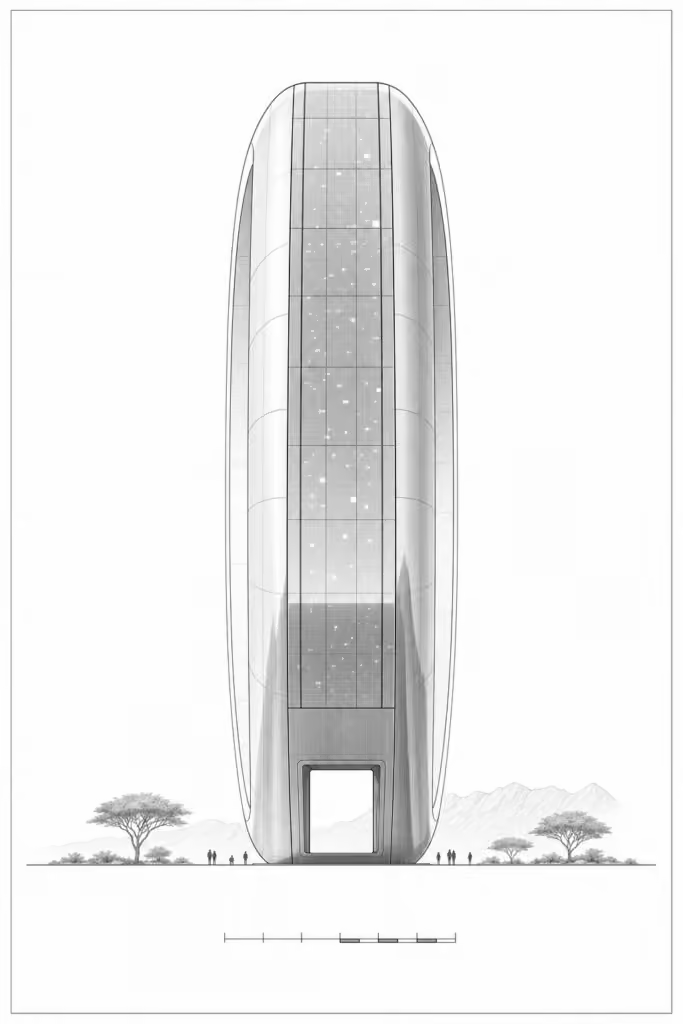
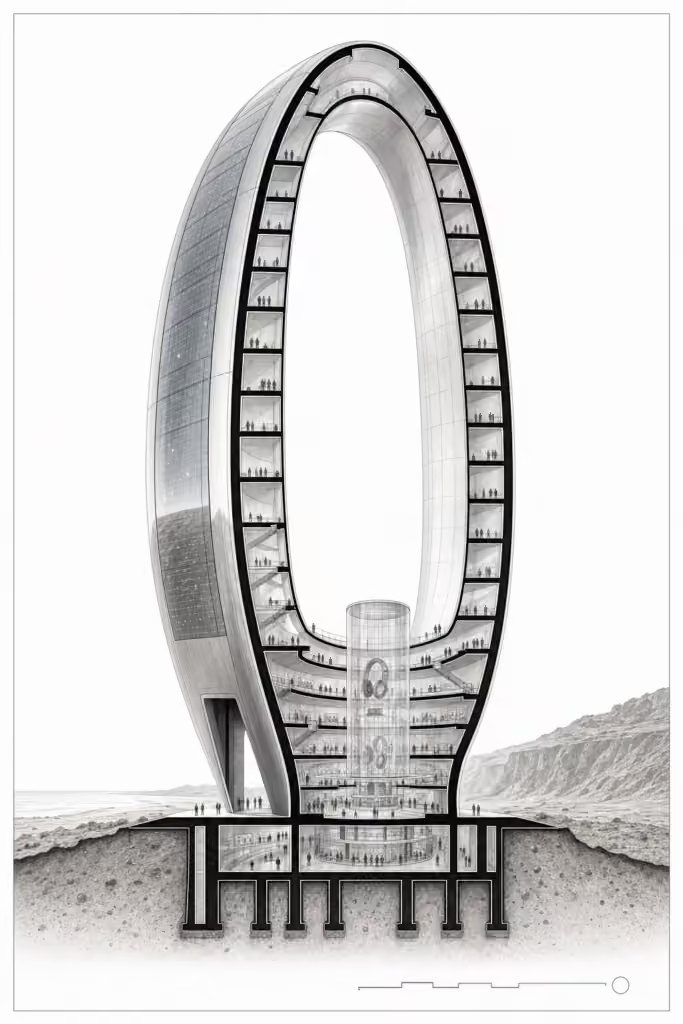
A colossal ring-shaped MacBook with glowing touchscreen walls
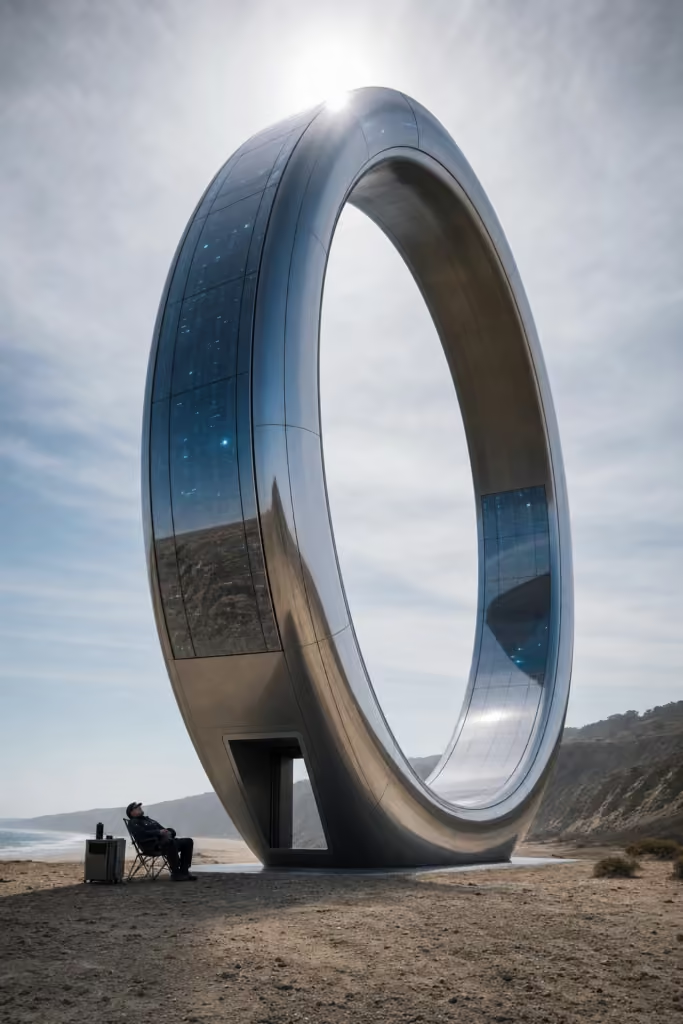
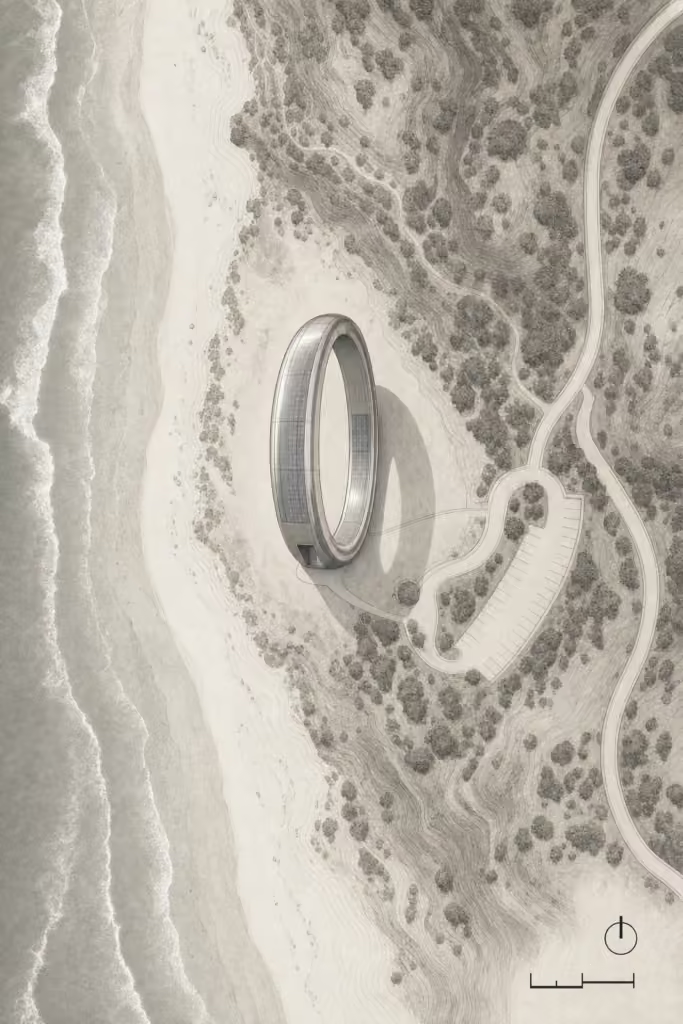
Site: Torrey-Terra Byte Zone (formerly Torrey Pines State Natural Reserve, San Diego, United States)
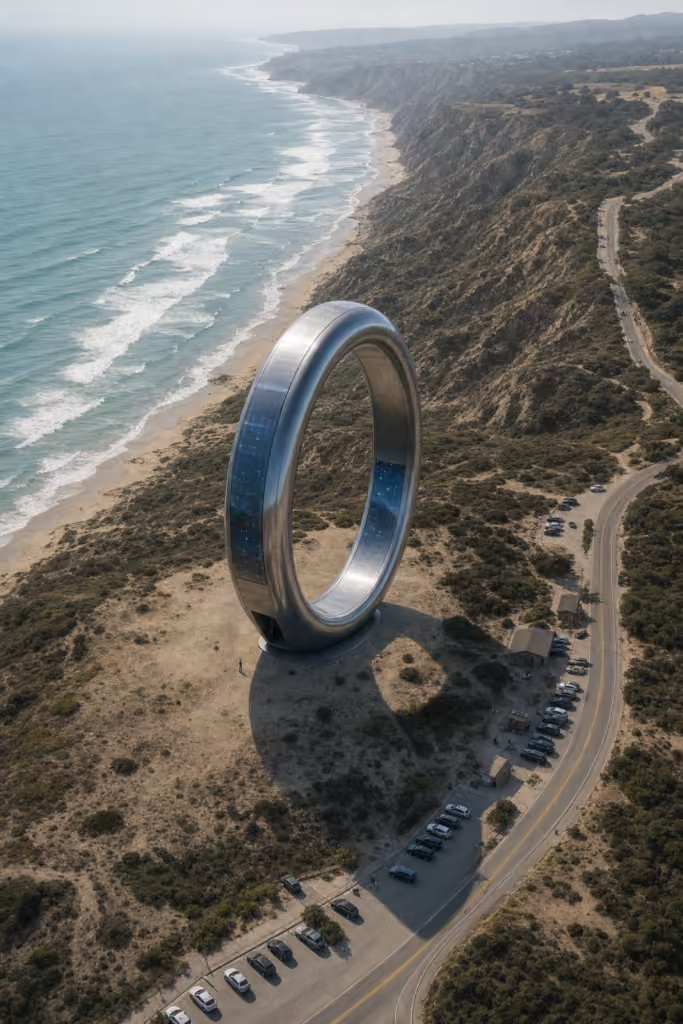
The Site
Torrey Pines State Natural Reserve is already a place where geology, coastal scrub, and expensive athletic wear negotiate space under a pale San Diego sky. The cliffs, the rare pines, and the Guy Fleming Trail usually provide enough drama without adding a 150-meter laptop ring. This proposal disagrees quietly and at enormous scale.
The future site is called the Torrey-Terra Byte Zone, which sounds like a municipal planning district created after three meetings and one very confident consultant. It sits where the marine layer arrives early, the parking fills faster than patience, and everyone pretends the uphill walk back to the car was restorative.
The Move
The MacBook Max Residency translates premium laptop pricing into housing policy. Instead of offering studio apartments, the developer provides a colossal metallic MacBook ring with zoning-approved pillow attachments. It is less a building than a lease agreement with a hinge.
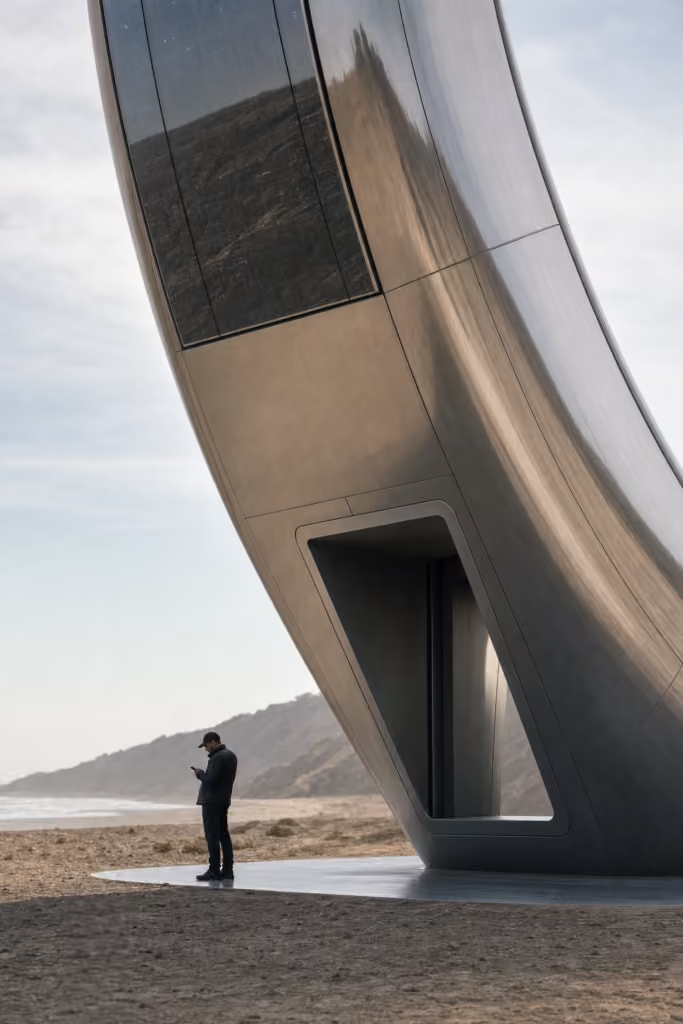
The ring dominates the sand with the expressionless calm of consumer electronics. Its 18-meter USB port entrance gapes at the base, large enough for a shuttle, a moving truck, or one tenant carrying an adapter that still does not fit. There is no signage. The building assumes you already know you cannot afford it.
Material and Structure
The exterior is smooth reflective metal, polished to the level where birds, hikers, and fiscal responsibility all lose depth perception. Glowing touchscreen panels are embedded across the facade, casting a digital glint across the landscape and reminding the reserve that nature has not agreed to the latest terms.
Structurally, the project behaves like a laptop left open by a civilization with too much venture funding. The ground terminates at the polished edge with alarming confidence. A small kiosk sits near the entrance, where a security guard naps beside a thermos, providing the only believable human scale.
Inside
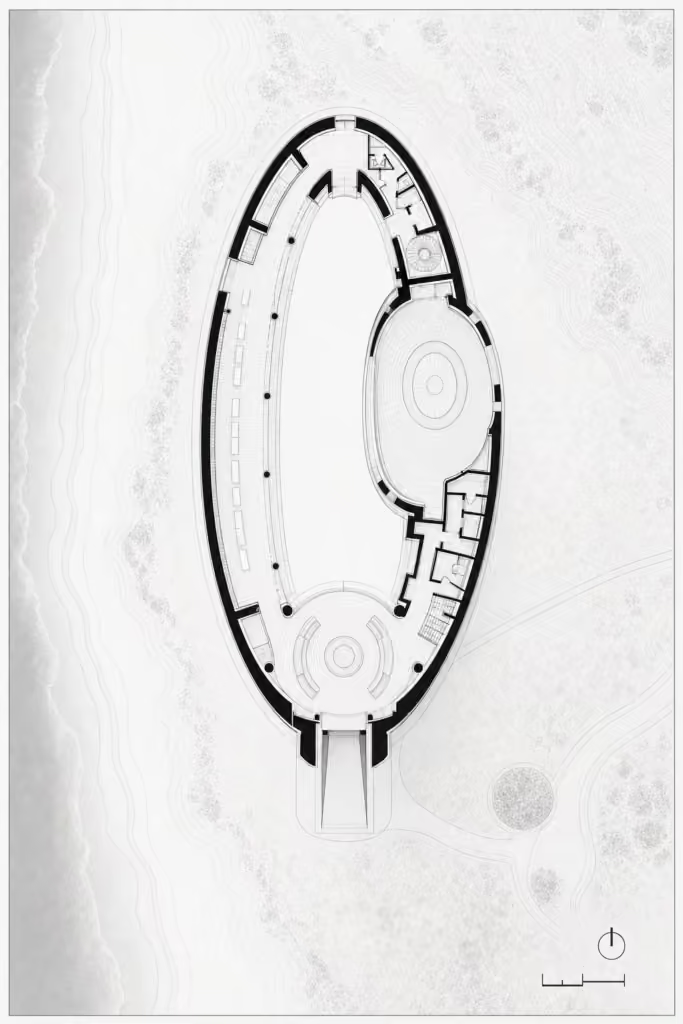
Inside, residents pass through a lobby that looks like a warranty claim. The walls respond to touch, mostly by displaying rent increases. Bedrooms are arranged along the inside of the ring, each with a touchscreen wall, a charging shelf, and a pillow attachment approved after a tense hearing involving the word “habitable.”
The kitchen is compact, meaning it has been replaced by a magnetic rectangle labeled food surface. The co-working lounge faces the Pacific, unless the interface updates, in which case it faces a loading screen. The meditation room is silent because the Bluetooth lease has expired.
The Tradeoff
The tradeoff is direct. Tenants receive prestige, views, and the sensation of living inside a premium object that depreciates emotionally before financially. They do not receive storage, shade that is not reflective, or a bathroom door that opens without a subscription tier.
The first complaint comes from Del Mar: glare on the morning marine layer. The second comes from a hiker who says the USB entrance ruined the quiet, though he posted twelve photos of it before reaching the trailhead. The project offers no solution. It simply sleeps, charges, and invoices.
Inside
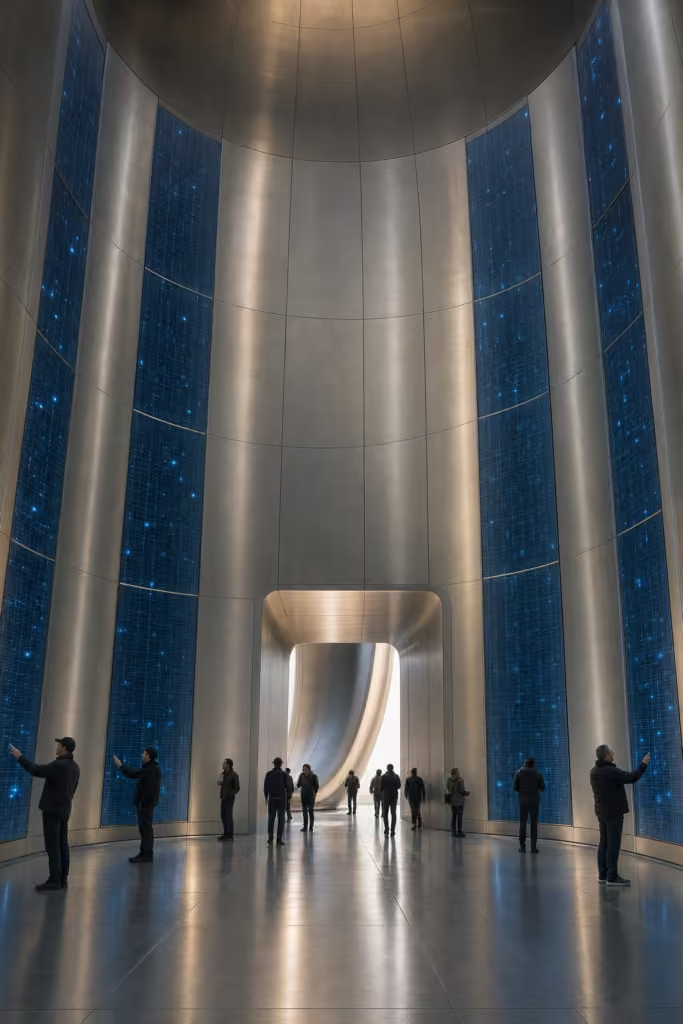
A soaring, cylindrical gallery of giant interactive touchscreens glowing blue
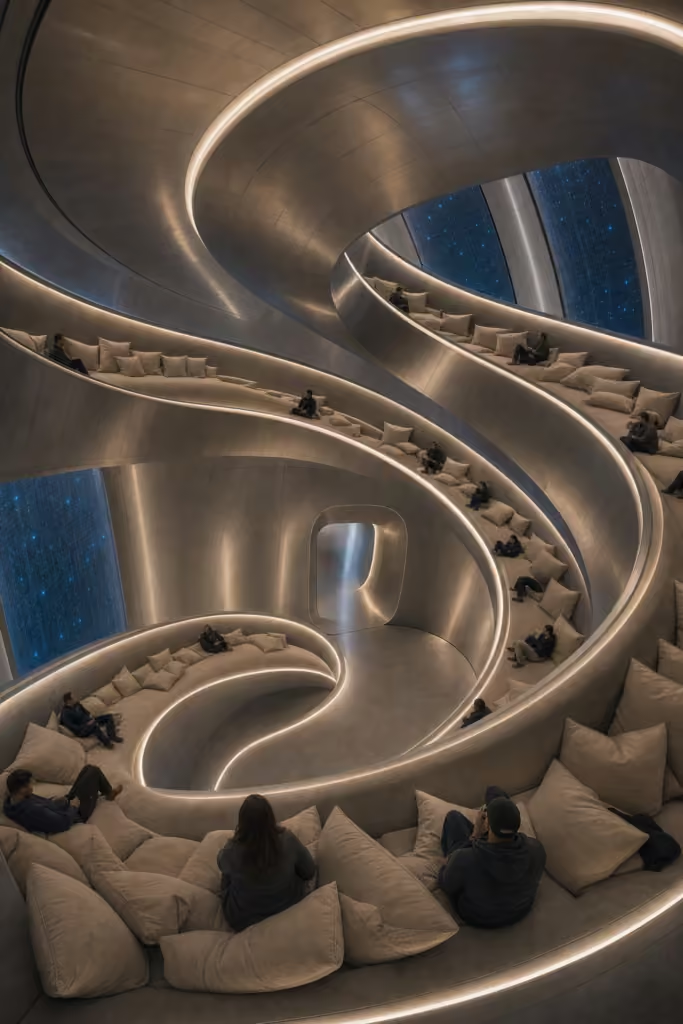
A spiraling ramp of plush, pillow-lined lounge areas bathed in soft white
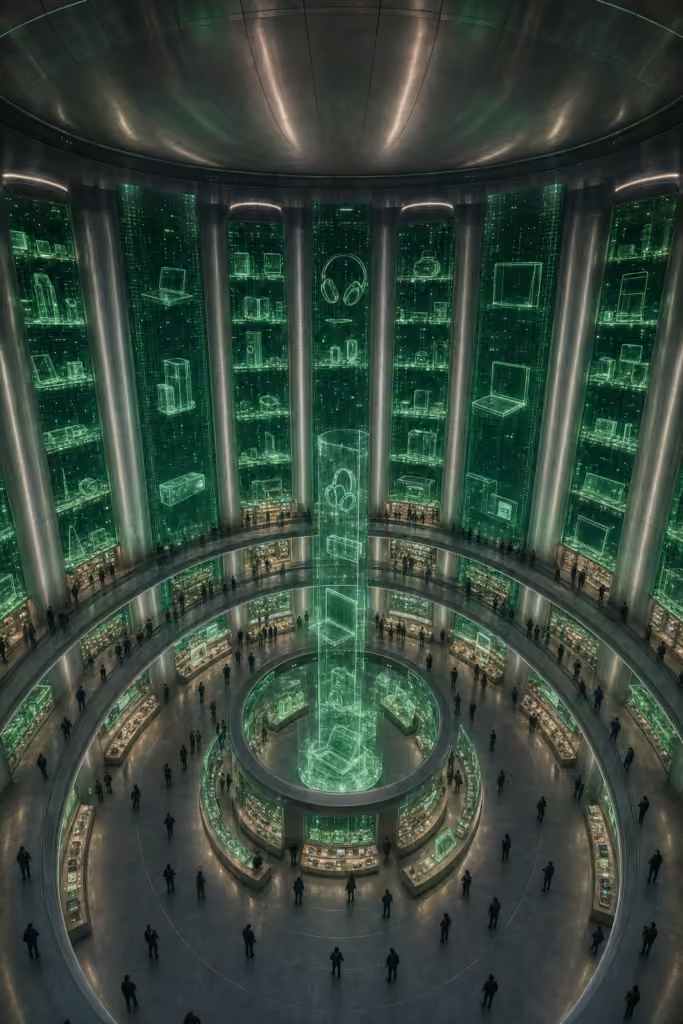
A vast, domed amphitheater of automated, holographic tech stores flashing with neon green graphics
Drawing set
A speculative concept by Architecture Adrenaline. Not a real building.