
Rock Designs For Front Yard offer a durable, water‑wise path to curb appeal by substituting or accenting turf with stones, boulders, and carefully chosen low‑water plants. This definitive guide blends practical layouts, material choices, plant pairings, and cost considerations to help you craft a cohesive, low‑maintenance front yard that complements your home’s style and climate. For real‑world context, community programs like the Front Yard Tree Planting Program (Brookline, MA) and the Front Yard Tree Program | Chelmsford, MA illustrate how municipal initiatives pair with landscaping to enhance urban frontages, including tree selection, planting, and maintenance practices that readers can adapt to their own yards.
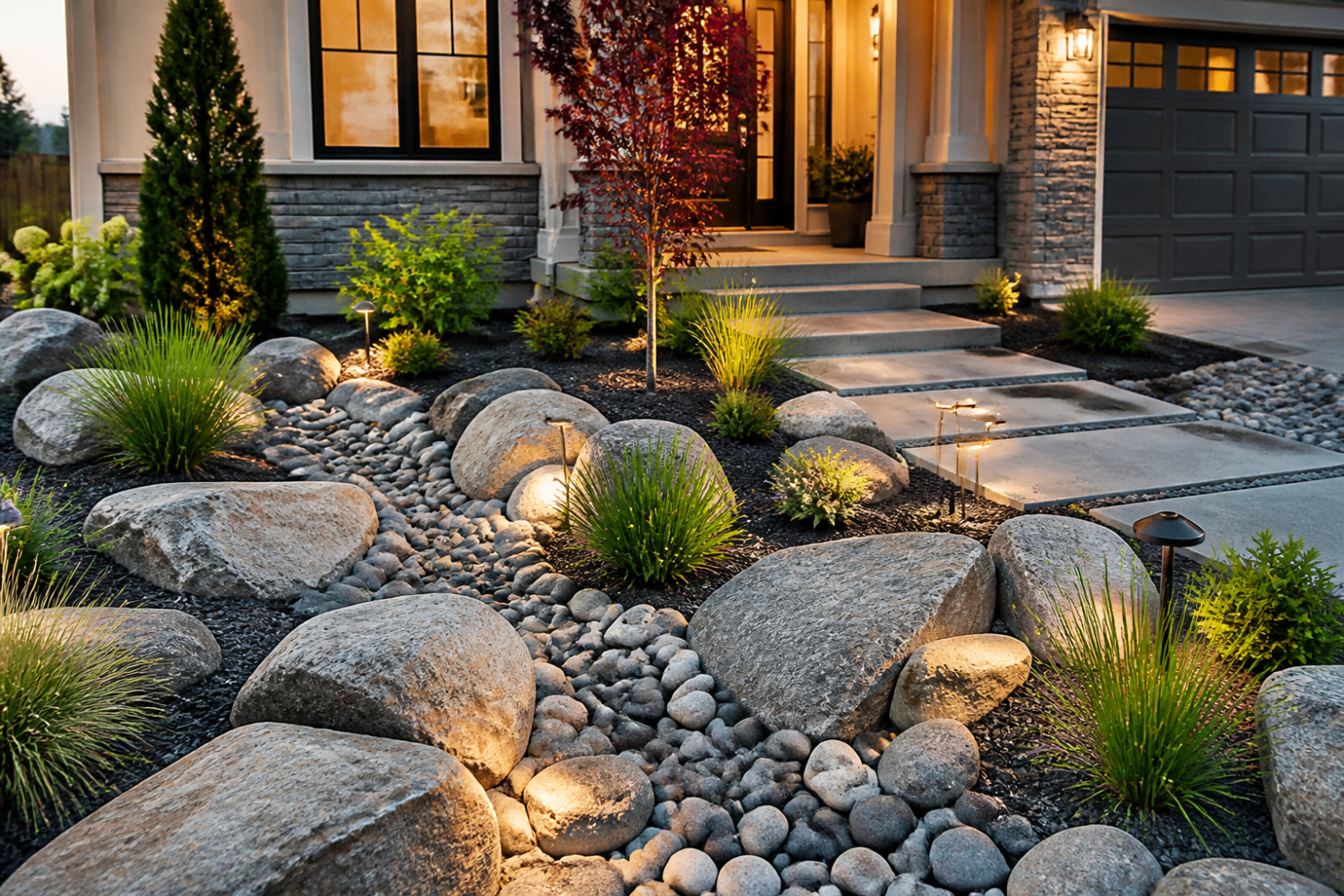
| Style | Typical Rock Materials | Best Plant Picks |
|---|---|---|
| Xeriscape Rock Bed | Decomposed granite, pea gravel, river rock (1/2"–2") | Sedum, lavender, yarrow, low juniper |
| Boulder Focal Point | Large natural boulders (1–3′), cobbles | Ornamental grasses, rock cress, creeping thyme |
| Dry Creek / Drainage Feature | River rock 2"–4", riprap at outlets | Native grasses, penstemon, blanket flower |
Why Rock Designs For Front Yard
Replacing or trimming turf with rock features dramatically reduces irrigation needs and mowing, while providing year‑round texture and structure. A well‑designed rock front yard creates a durable, low‑maintenance canvas that works in small or sloped spaces and pairs naturally with drought‑tolerant and native plants to boost curb appeal without high upkeep. The approach can be cross‑referenced with practical, real‑world plantings such as a pollinator‑friendly front yard layout, like the My Front Yard Pollinator Garden example, which demonstrates intentional grouping and planning to support local ecosystems.
Common Rock Materials And When To Use Them
- Boulders — anchor entry corners or street views; partially bury to read as a natural formation.
- River rock / Cobbles — ideal for dry creek beds, drainage swales, or around plantings for textural contrast.
- Pea gravel or decomposed granite — great for walking surfaces, paths, and low‑maintenance groundcover that compacts well.
- Crushed stone — suitable for edging or compact pathways; harder underfoot than rounded gravel.
Planning A Front Yard Rock Layout
Begin with street sightlines and the entry route. Place a primary rock anchor where it can be noticed without blocking views. Use an odd number of focal rocks (three is a classic), and layer smaller stones and gravel outward to create a natural, cascading field. Leave pockets of soil for plantings so the design reads as an organic outcrop rather than a staged display. For broader context on integrating hardscape with landscape design, see the broader design discourse at Landscaping ideas for outdoor living spaces.
Plant Combinations That Work With Rock Designs
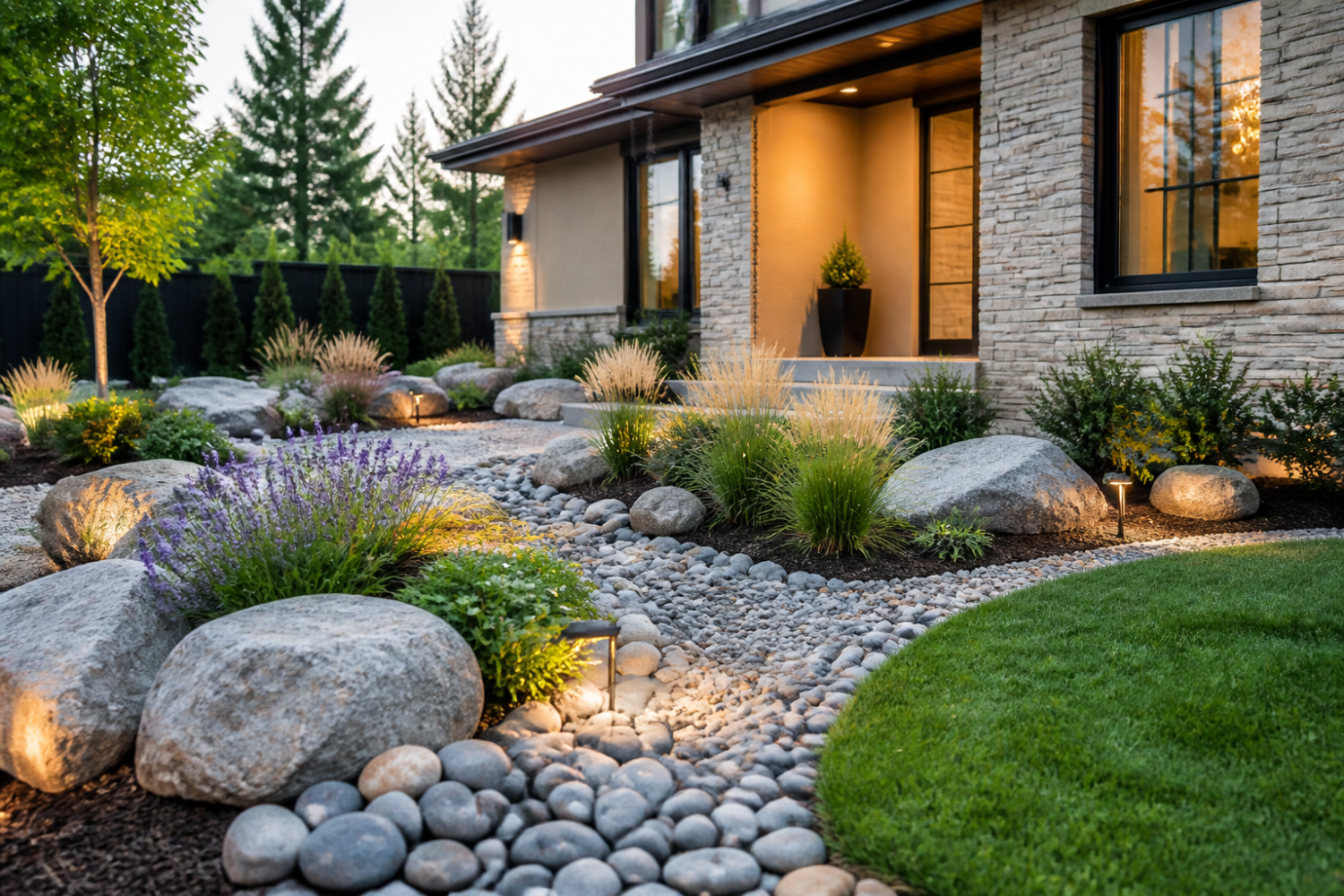
Choose drought‑tolerant, sun‑loving plants that complement rock textures. Use a cohesive palette across the bed by repeating 4–6 species. Examples include:
- Xeriscape mix: Sedum, Lavandula, Festuca glauca, Agastache.
- Natural prairie: Echinacea, Rudbeckia, Muhlenbergia, Juniperus.
- Crevice/rock‑scree: alpine sedums, sempervivums, creeping thyme.
Readers may also draw inspiration from practical outdoor design resources such as Architecture Adrenaline for broader design context, or from plant‑focused front‑yard exemplars like the Front Yard Tree Program case study, which demonstrates how selecting hardy, climate‑appropriate species supports long‑term maintenance goals.
Step‑By‑Step: Building A Simple Rock Garden In Front Yard
- Map utilities and sightlines; designate 1–2 focal boulders first.
- Sketch layout and determine rock sizes; plan for permeable edging to contain gravel.
- Place rocks on compacted ground, burying about one‑third to read as natural.
- Spread medium and small stones around the rocks; consider adding a dry creek or path.
- Amend plant pockets with well‑draining, gravelly soil; plant drought‑tolerant species and lightly mulch with rock.
- Install a drip or soaker irrigation system if needed; avoid overwatering gravel expanses.
Low‑Maintenance Front Yard Landscaping Ideas With Rocks
Maximize ease of care by grouping evergreen or drought‑tolerant shrubs and limiting plant varieties to a cohesive set. Replace lawn strips with gravel paths and simple groundcovers. Use a unified rock palette to reduce visual clutter, and schedule annual debris removal and weed control in gravel beds. For broader design thinking and additional ideas, consult Landscaping ideas for outdoor living spaces.
Planning Costs And Budgeting For Rock Front Yard
Costs vary by region, yard size, and whether heavy equipment is needed. Ballpark ranges:
- Pea gravel or decomposed granite: $1–$4 per sq ft installed
- River rock: $50–$200 per ton plus delivery
- Boulder placement: $200–$1,000+ per boulder installed
- Complete front‑yard conversions: $2,000–$10,000+ depending on scope
Tip: consider a staged approach—install major rock features first, then add plants as the design matures to help refine plant choices and budget. If you’re seeking concrete product options, a rock‑landscaping stones search can guide you to suitable material choices: rock landscaping stones.
Design Mistakes To Avoid
- Using a single rock size; mix sizes for a more natural look.
- Placing boulders entirely on soil; bury the base to avoid a “sitting” appearance.
- Choosing plants that need deep, moist soil among gravel‑based beds.
- Overlooking drainage; rocks can redirect water and increase runoff if not planned properly.
- Overusing landscape fabric; it can trap moisture and wear out; reserve fabric for selective weed suppression only.
Front Yard Rockscape Ideas For Small Spaces
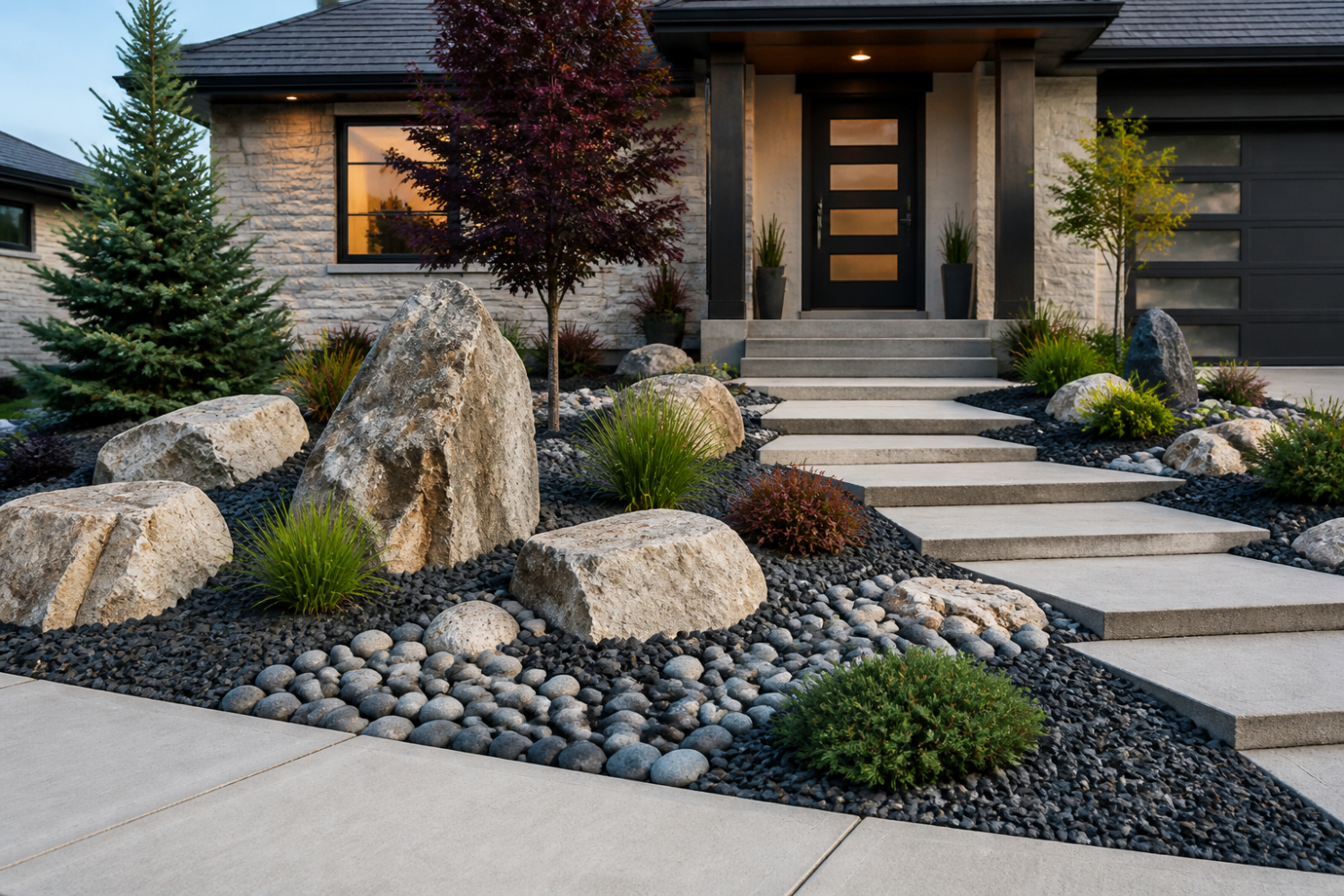
In compact lots, start with a single focal rock, a narrow dry creek, or a pebble courtyard with stepping stones. Add vertical interest with a small tree or tall ornamental grass to enhance height without crowding the footprint. For readers seeking broader context on integrating exterior spaces with architectural form, reference the general design discussions on Architecture Adrenaline.
Seasonal Care And Long‑Term Maintenance
Rocks require minimal upkeep. Focus on plant health with pruning and weed control in gravel pockets, occasional gravel replenishment in high‑traffic zones, and monitoring irrigation lines to prevent overwatering. Replace struggling plants with equivalent drought‑tolerant species to preserve the design intent. When evaluating municipal landscape models, consider how public programs like the Front Yard Tree Programs in Brookline and Chelmsford inform maintenance expectations and community support for long‑term care.
Frequently Asked Questions
- Will a rock front yard increase home value? A well‑designed rock landscape can improve curb appeal and reduce maintenance costs, though ROI varies by neighborhood and installation quality. Engaging with local design resources can clarify what adds value in your area, including municipal programs and community projects.
- Do rocks make surfaces hotter in summer? Rocks can reflect and store heat; offset with shade trees or lighter‑colored gravel to minimize heat buildup.
- Can rocks aid drainage? Yes—dry creek beds and properly sized river rock help manage runoff when designed with appropriate slopes and outlets.
Next Steps: Getting Started With Your Rock Front Yard Design
Measure the area, document sun exposure, and identify your preferred focal approach—bold boulder, xeriscape bed, or dry creek feature. If you’re DIY‑minded, source local rock suppliers and begin with one focal rock and a simple gravel bed. For larger hardscape adjustments, obtain multiple quotes and review before/after photos of similar projects. For broader design context and additional ideas, browse the Landscaping ideas for outdoor living spaces archive at Architecture Adrenaline.
We’d love to hear about your rock front yard ideas or share photos of your progress. Have you converted part or all of your front yard to rock, and what plants did you pair with it? Share your experiences in the comments below.
31 Rock Garden Ideas That Transform Any Outdoor Space:
Adding rock designs to your front yard can truly transform it into a picturesque retreat. It’s all about finding that balance between nature and structure, so don’t hesitate to experiment with different rock types and arrangements. Whether you're creating a cozy sitting area, a winding pathway, or a stunning rock garden, the possibilities are endless! Remember, getting creative can turn even a simple space into a welcoming haven for you and your guests.
Stay Inspired!
If you’re feeling inspired and want to dive deeper into the world of front yard transformations, keep exploring! There are so many unique designs out there just waiting for you to discover them. Plus, if you want to see more ideas and share your own, feel free to follow us on Instagram at Architecture Adrenaline. Let's keep the conversation going and inspire each other to create the front yard of our dreams!
