
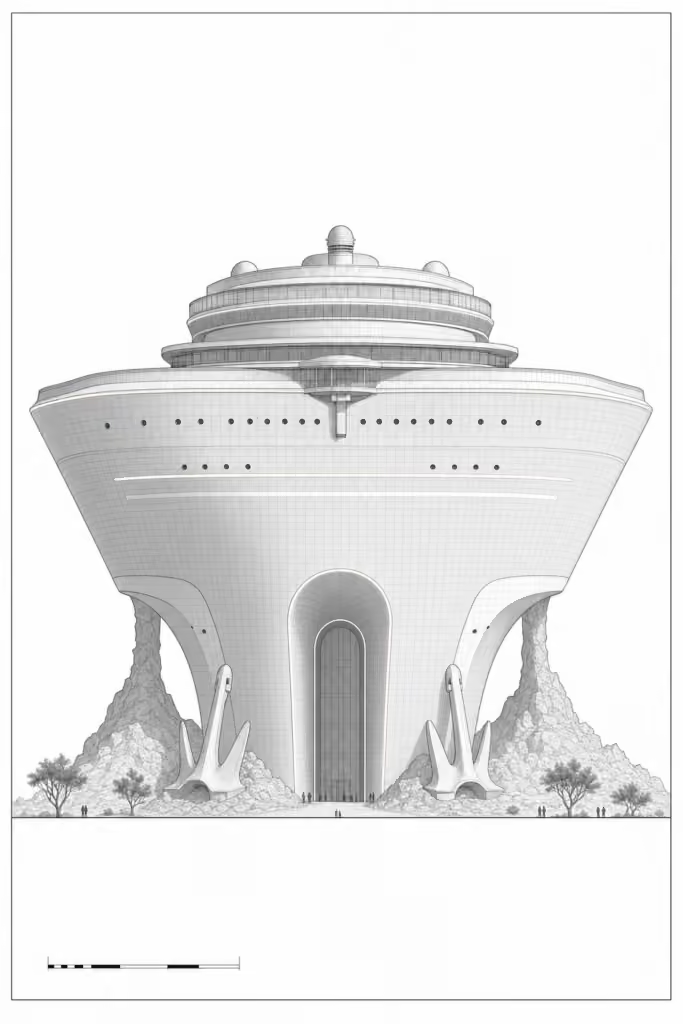
Marooned cruise liner promising tropical living amidst desert sands, clad in shimmering silver.
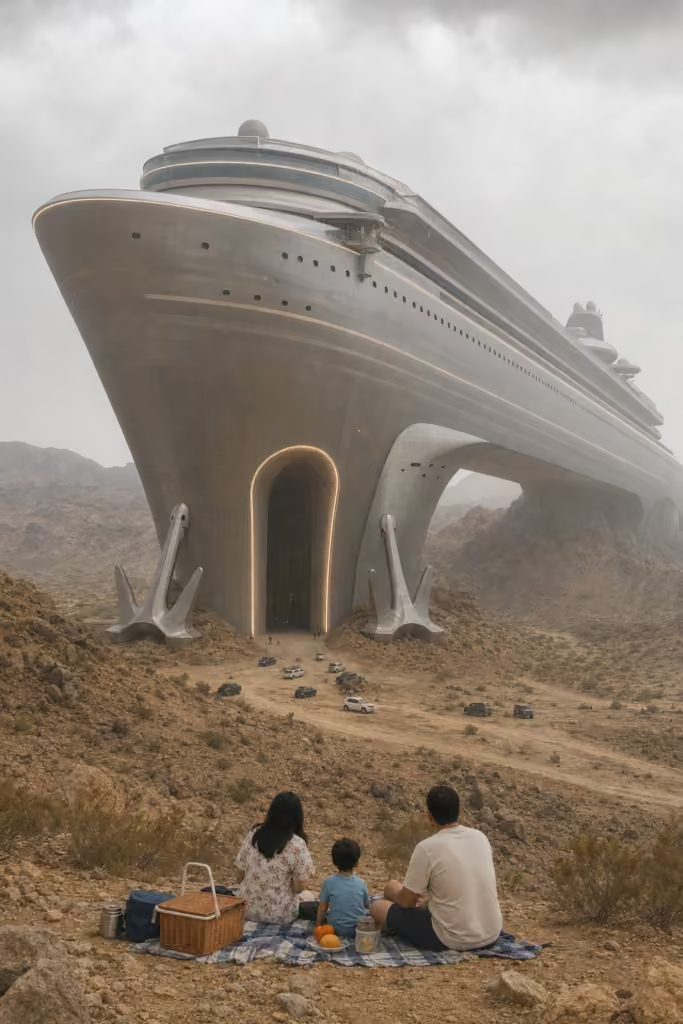
Site: Coachella Mirage Bay (formerly Coachella Valley, California, United States)
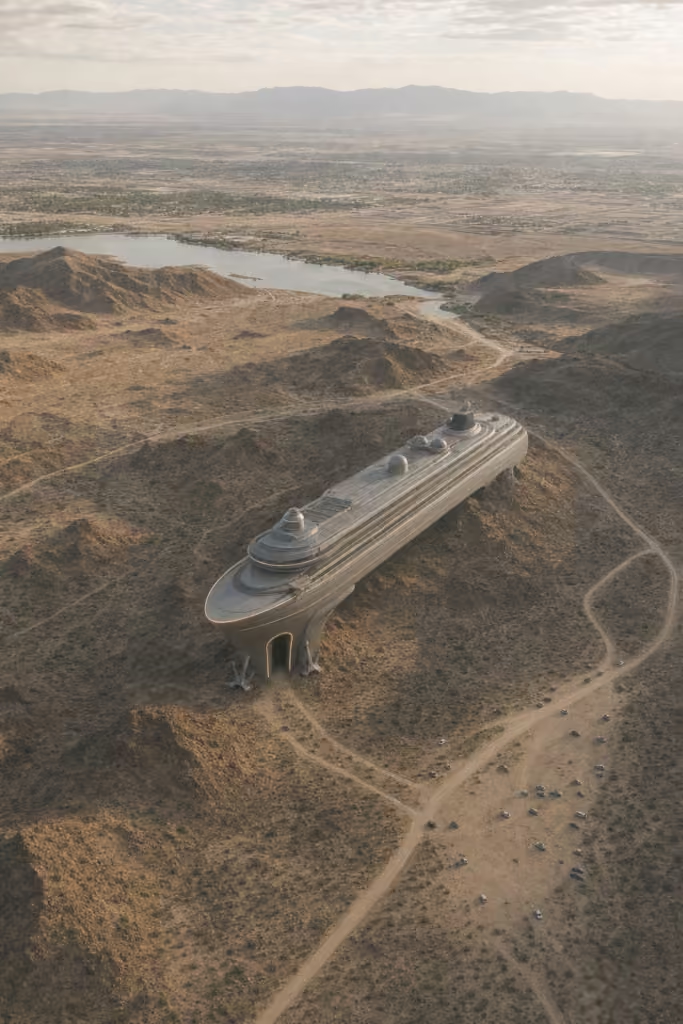
The Site
Coachella Valley, California, is already very good at making people believe heat is a lifestyle. Between the San Jacinto Mountains, the I-10, and the seasonal migration of festival traffic, the valley has perfected the art of turning inconvenience into branding. It was only a matter of time before someone parked a cruise ship here and called it waterfront.
The future name is Coachella Mirage Bay, which is accurate in the legal sense that the bay is mostly emotional. The project sits among sunlit sands and rugged terrain, where the horizon does all the heavy lifting and every surface appears to be negotiating with glare.
The Move
The building is a colossal cruise liner marooned in the desert, 150 meters tall, with an elongated hull spanning the landscape like a bridge that lost a dare. It promises tropical living in a place where palm trees already look like they are waiting for a tow truck.
The current cultural reference is efficient. A cruise itinerary can apparently begin with the Bahamas and end in cold Canada, so luxury housing has taken notes. In this future, location is no longer a place. It is a subscription term with a cancellation fee.
Material and Structure
The hull is clad in silvery panels, tuned to catch the overcast desert light and reflect just enough heat to bother everyone equally. Along the edges, a pale glow outlines the ship like a product rendering that refused to grow up. There is no visible text or signage, because the building assumes confusion is part of arrival.
A 12-meter portal marks the main entrance, sized for residents, delivery robots, and the occasional existential panic. The structure bridges rough ground below, treating geology as valet parking. It is a ship, a condo, a bridge, and a zoning headache with balconies.
Inside
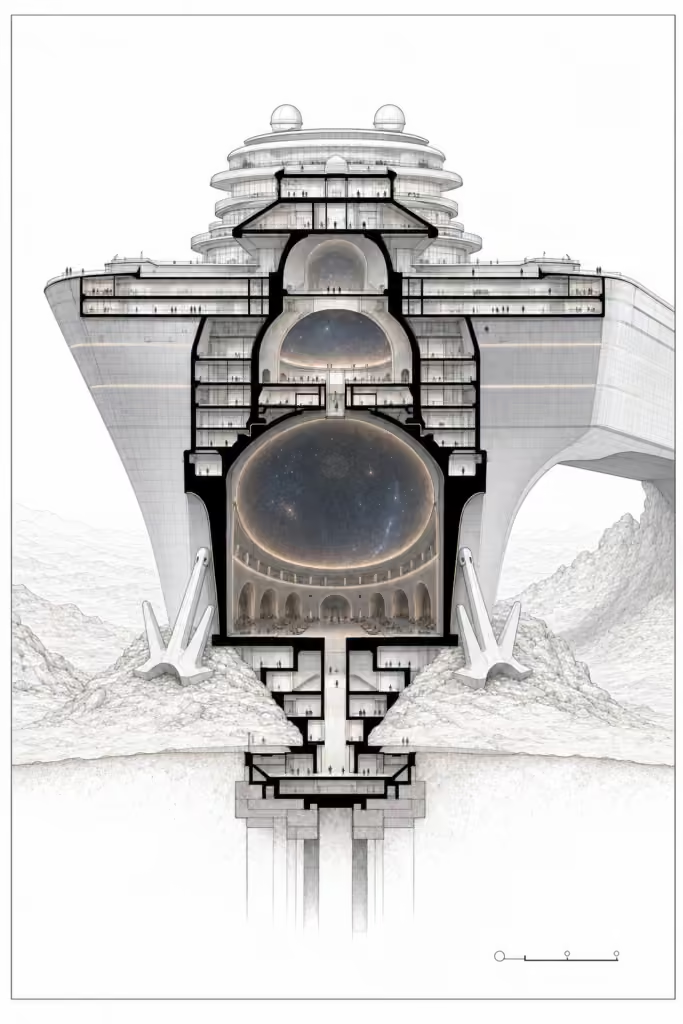
Inside, residents pass through a chilled lobby with deck chairs arranged as if the pool is running late. Corridors are named like cruise levels, although nobody admits this in writing. The buffet atrium serves identical fruit under heroic lighting. Windowless cabanas are marketed as storm-proof, which is brave in a desert.
Suites face the San Jacintos, the sand, and the quiet suspicion that everyone has been rerouted. The wellness deck includes mist machines, salt air diffusers, and a complaint desk for people who expected an ocean because they saw the word bay.
The Tradeoff
The tradeoff is clear. Residents receive the psychology of a cruise without the inconvenience of water, ports, or maritime law. They also receive Stagecoach traffic, windblown dust, and a neighbor from Palm Springs who has filed a formal complaint about the imaginary foghorn.
The Desert Cruise Illusion works because it understands the future of luxury: sell the destination separately from the destination. The ocean view is available as an upgrade. The ocean itself remains out of network.
Inside
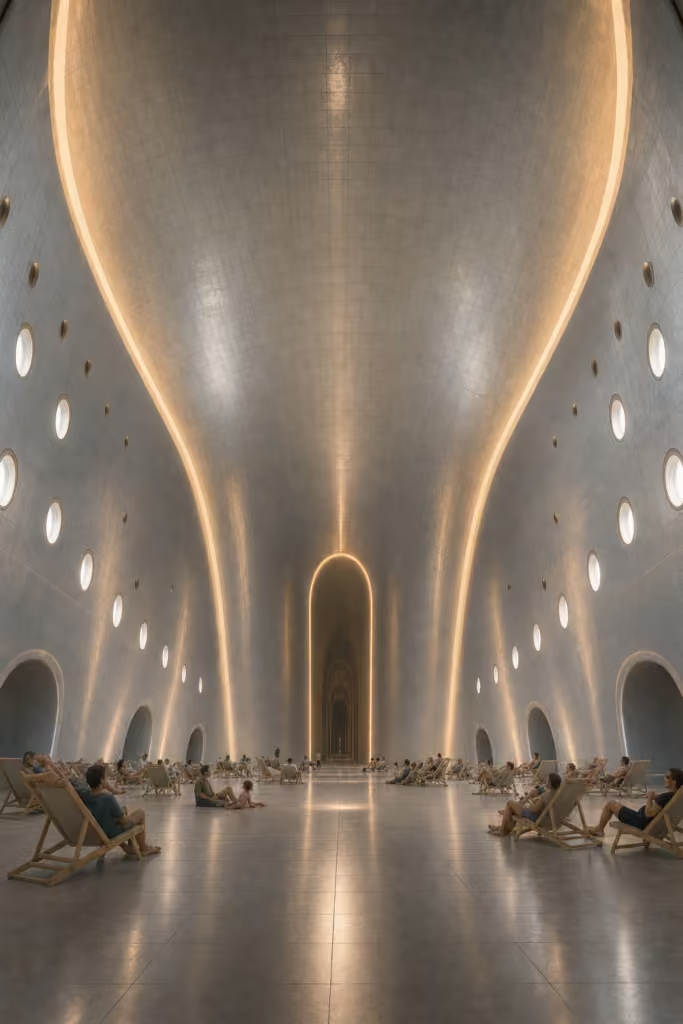
A soaring silver atrium with porthole windows and desert-light glow, families sunbathing on deck chairs
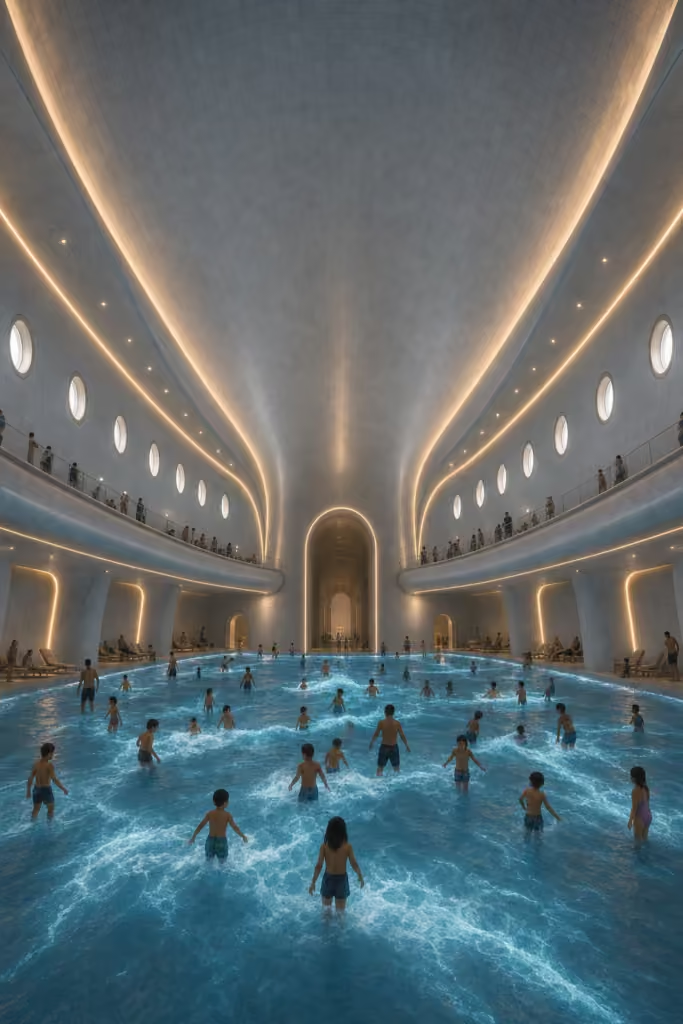
A wide gallery shaped like an ocean liner's indoor pool, filled with holographic waves, children splash in interactive surf
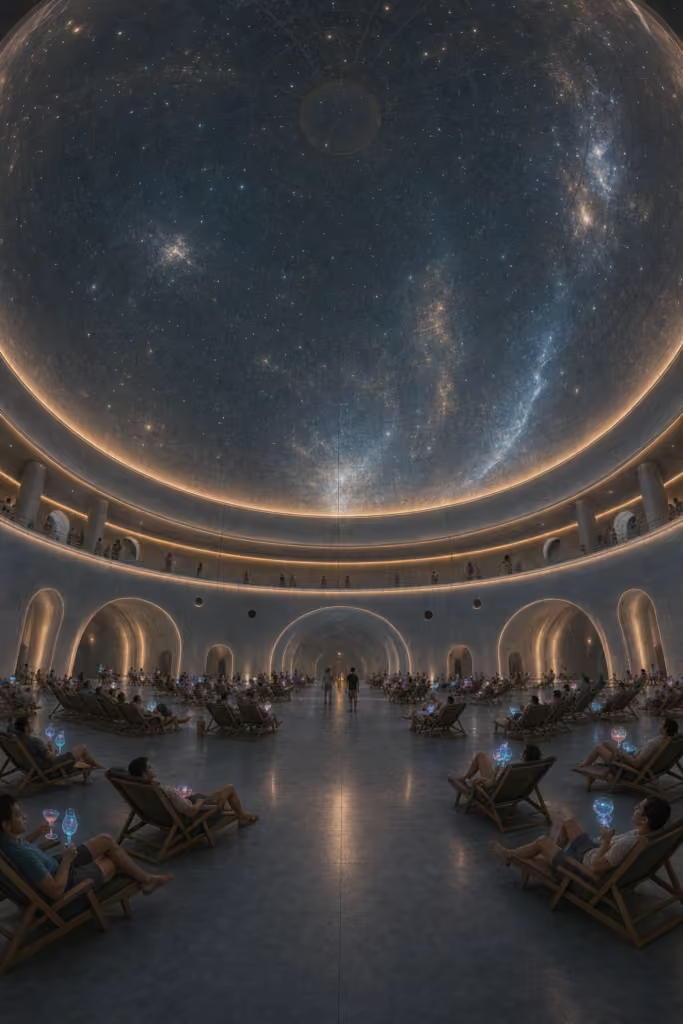
A domed observatory with shifting star projections, tourists lounge on beach chairs sipping holographic cocktails.
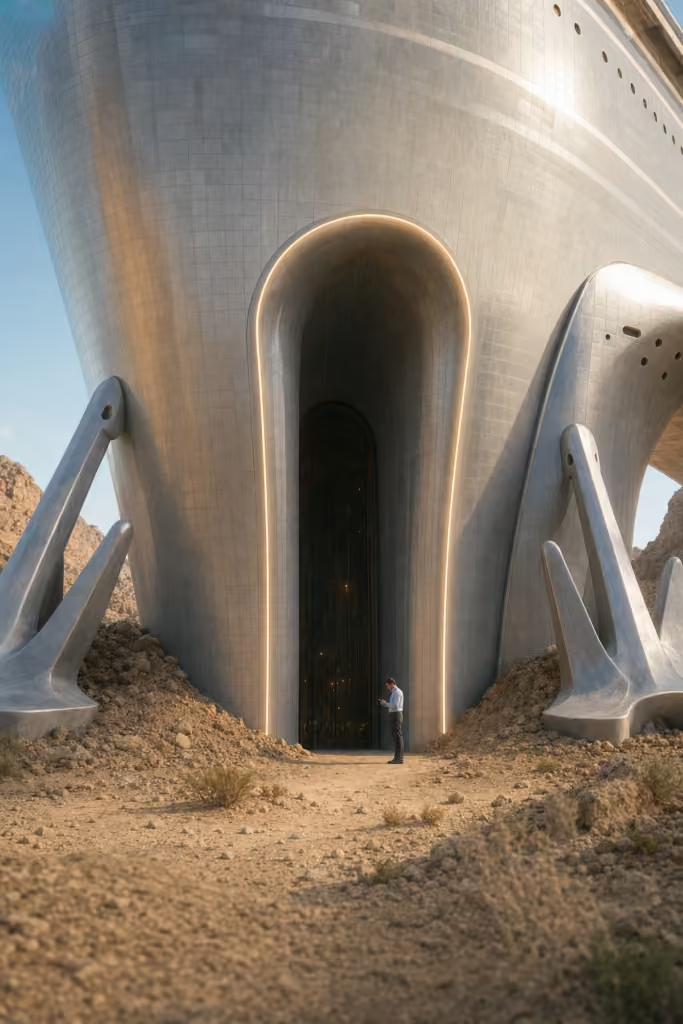
Drawing set
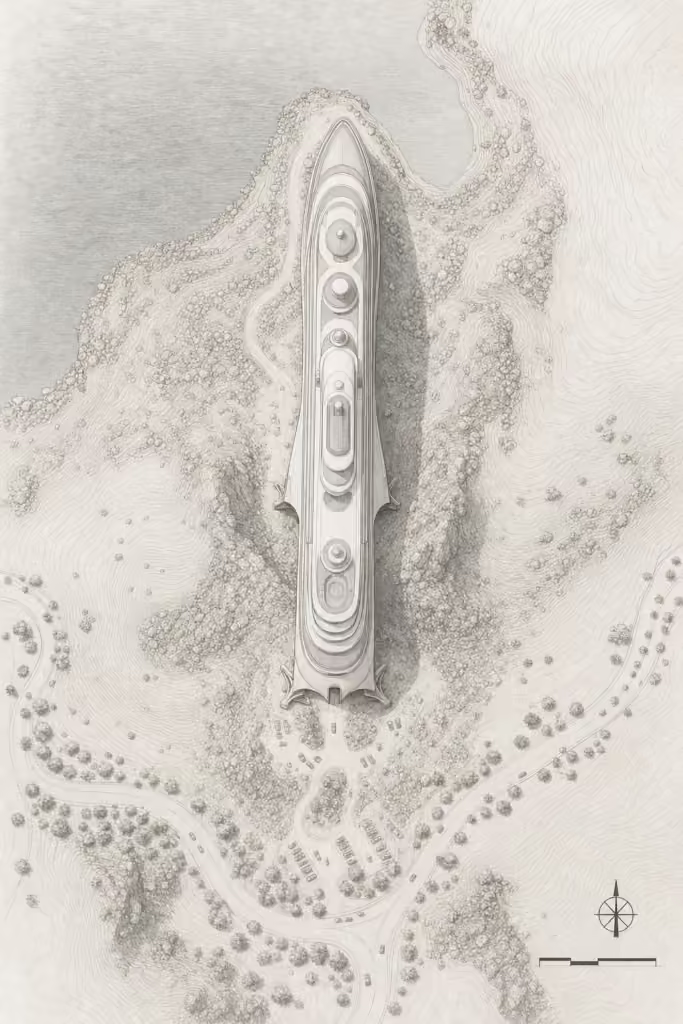
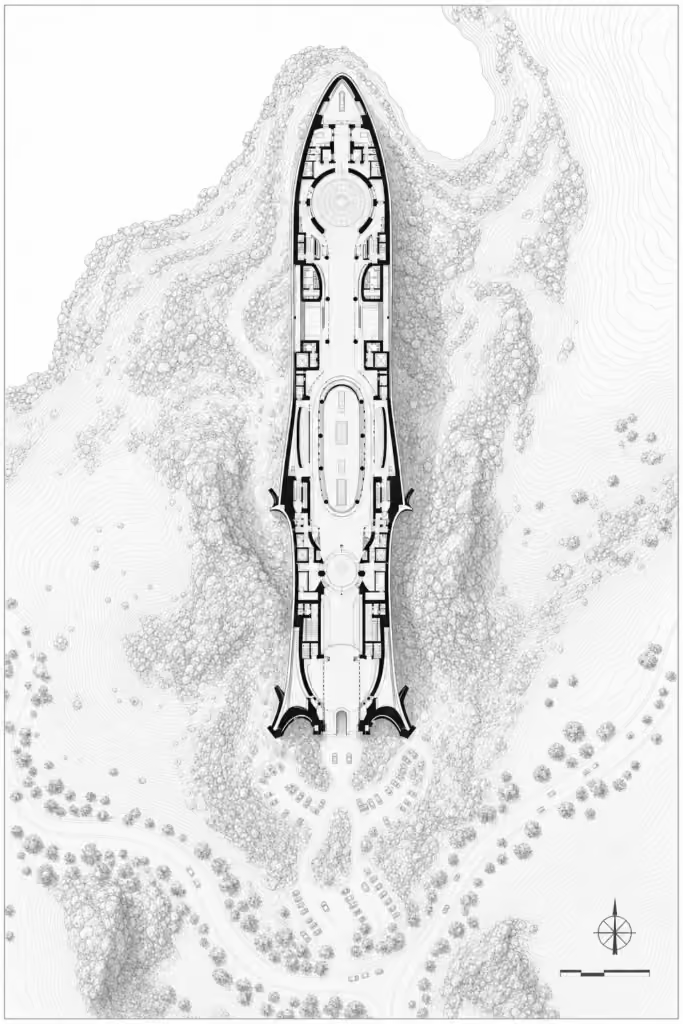
A speculative concept by Architecture Adrenaline. Not a real building.