
A spilled can of wood stain can become permanent within minutes; remove it while the stain is wet and test cleaners on a hidden patch first. This article gives step-by-step methods for fresh water-based stains, oil-based and gel stains, dried pigment, and the repair steps when stain soaks into the pad or subfloor.
Quick Steps to Start Immediately
Act fast. Blot; do not rub. Work from the outside edge toward the center to avoid spreading. Use clean white cloths or paper towels and press to absorb rather than smear. Remove excess without adding excessive liquid, and test any cleaner on an out-of-sight corner before treating the main stain.
Identify Stain Type and Test First
Check the stain source or the can label if available; many wood stains are solvent- or oil-based while some are water-based or gel. If the origin is unknown, rub a damp white cloth with mild soap on the stain edge: color transfer indicates water-soluble dye; no transfer suggests oil- or solvent-based pigment and calls for a solvent test on a hidden patch.
Record the carpet fiber type before treatment. Synthetic fibers tolerate more agitation and solvent exposure than wool or natural blends, which can felt or lose dye when overworked.

| Situation | Best First Action | Likely Outcome |
|---|---|---|
| Fresh water-based wood stain | Blot, mild dish soap in warm water | High chance of full removal |
| Fresh oil-based or gel stain | Blot, absorb, then mineral spirits test | Good lift if treated quickly; risk of residue |
| Dried or set pigment | Scrape, vacuum, solvent or commercial remover | Variable; may need pro cleaning or fiber replacement |
| Stain reached pad or subfloor | Lift carpet and pad; sand or strip wood, seal | Often requires repair of pad or subfloor |
Treating Fresh Water-Based Stains
- Blot immediate excess with paper towels; press, do not rub.
- Mix 1 teaspoon clear dish soap with 2 cups cold or warm water. Dampen a white cloth and blot from the outside in, repeating until transfer stops.
- Rinse by blotting with a cloth dampened with plain water to remove detergent residue. Detergent left in fibers attracts soil and can make the area look darker later.
- Blot dry and air-dry fully; vacuum after dry to lift the nap.
Repeat one soap rinse if the stain lightens but remains. Avoid hot water; heat can set pigments or oils. For persistent water-based dye, consult the site guide on how to remove old stains from carpet for stronger, staged options and safe product choices: remove old stains.
Treating Oil-Based and Gel Wood Stains
Oil and gel stains resist water. Use solvents sparingly and only after testing on an inconspicuous patch.
- Remove excess gel with a spoon or dull knife, then vacuum loose particles.
- Test odorless mineral spirits or a carpet-safe solvent on a hidden patch. Dab solvent to a white cloth and blot the stain; do not pour solvent directly onto the fiber.
- When pigment transfers to the cloth, follow with the dish-soap rinse above to clear solvent residue, then rinse with plain water and blot dry.
- If pigment remains, use a commercial stain remover labeled for oil-based stains and follow manufacturer instructions and safety guidance. For solvent techniques and wet extraction coordination, consult the guide on using a wet vac to remove solvent and rinse residue safely: wet vac tips.
Approach for Dried or Set Stains
Set stains normally have a surface crust plus deeper pigment; avoid aggressive scrubbing that abrades pile or removes dye.
- Gently scrape the surface film with a spoon or plastic card; vacuum debris using a brush attachment to avoid working particles deeper into fibers.
- Apply the appropriate solvent or soap method based on the original stain type, letting cleaners dwell 5 to 10 minutes so they penetrate before blotting.
- Use an oxygen-based cleaner or an enzymatic carpet stain remover for persistent pigment, testing for colorfastness first. If color persists and fibers are undamaged, a professional hot-water extraction can pull out residual dye and restore more of the original shade; see the longer removal strategy in the site primer on removing old stains: remove old stains.
Pad and Subfloor Steps When Stain Soaks Through
If pigment or odor reached the pad or subfloor, surface cleaning alone often fails. Lift a carpet corner to inspect the backing, pad, and subfloor condition before continued cleaning.
- If only the pad is stained, cut out and replace the affected pad section and allow the area to dry before relaying the carpet.
- If the wood subfloor has finish stain, sand the affected area with fine-grit sandpaper and reseal or refinish the spot to prevent bleed-through.
- When stain penetrated the subfloor deeply, sanding to bare wood and applying an appropriate sealer or touch stain is the most reliable repair; do not relayer carpet over an odorous or stained pad.
Special Case: Pet Urine Combined With Wood Stain
Urine introduces ammonia and odor molecules that change the cleaning sequence. Blot fresh urine, then neutralize ammonia with a 1:4 white vinegar to water solution, blot, and dry. Follow with an enzyme-based cleaner to eliminate odor-causing proteins.
If odor remains after cleaning and drying, lift the carpet to inspect and replace the pad and treat or sand the subfloor before reinstalling; surface treatments alone rarely stop persistent odors.
When to Choose DIY Versus Professional Service
Attempt DIY for small, fresh stains on synthetic carpets that pass a colorfastness test. Hire a professional when the stain is large, deeply set, covers multiple areas, involves wool or delicate fibers, or when odor persists after enzyme treatment.
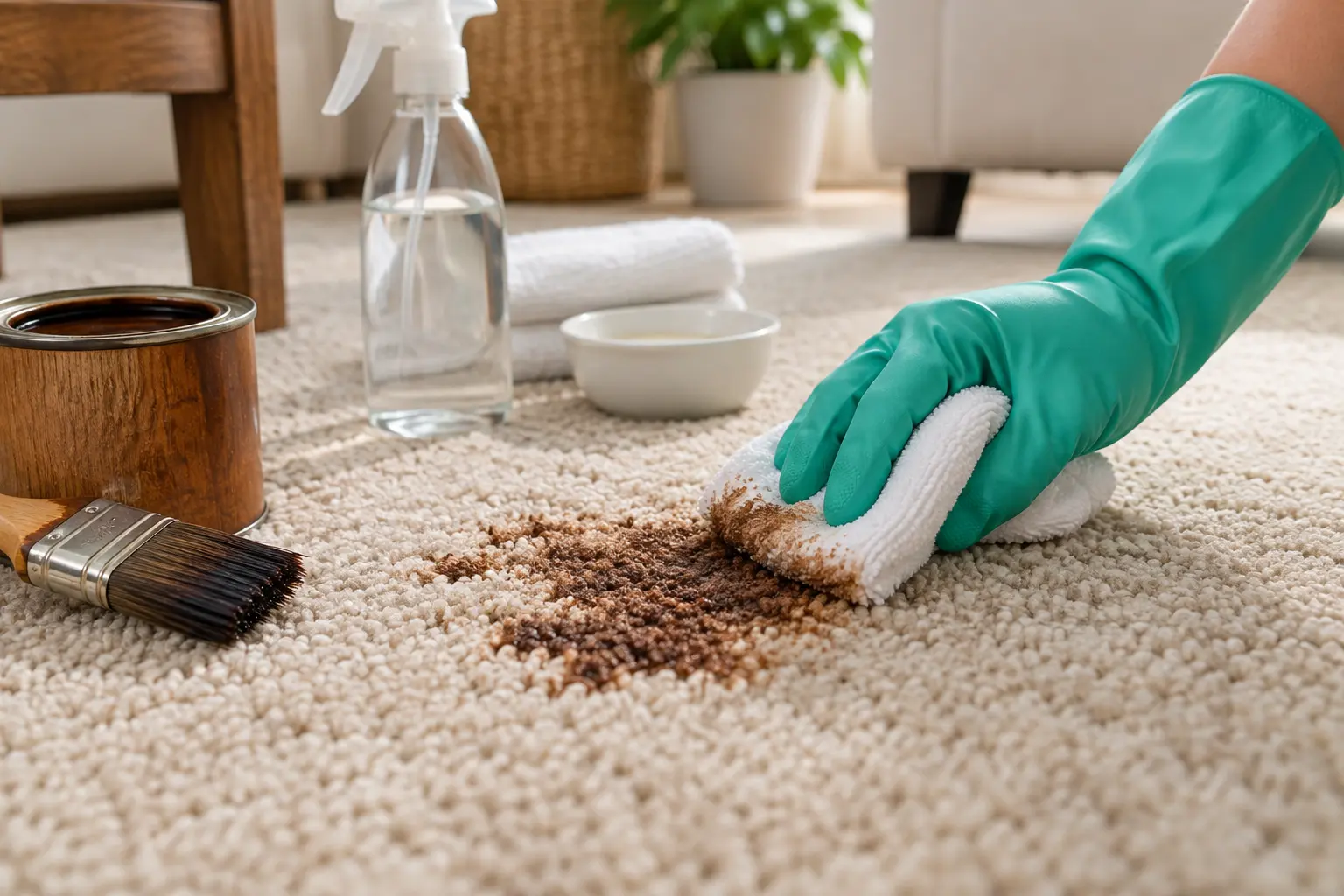
Professionals can perform controlled hot-water extraction, safe solvent application, and color correction without risking dye loss. For broader floor-care context and when to escalate, see the site overview on cleaning floors for deeper-cleaning sequencing and equipment recommendations: clean your floors.
Preventive Steps and Post-Clean Inspection
After cleaning, inspect pile direction and texture and use a vacuum or carpet groomer to restore nap. Confirm backing and pad dried fully; trapped moisture causes adhesive failure and odors.
If the cleaned area remains visibly different in shade, avoid repeated solvent attempts; consider a small patch repair, targeted dye touch, or professional color correction rather than further aggressive chemistry.
Helpful Products and Further Reading
Commonly recommended items include clear dish detergent, white vinegar, 3% hydrogen peroxide (only on tested light carpets), odorless mineral spirits for tested solvent use, and enzyme cleaners for organic odors. Institutional spot-cleaning steps and water-extraction methods used by custodial staff provide useful procedural detail; see the St. Olaf custodial methods and carpet care guidance for their spot cleaning and extraction workflow: St. Olaf custodial methods and carpet care guidance.
For manufacturer maintenance guidance and product-specific instructions, the Wolfe Flooring maintenance pages outline compatible cleaners and application steps: carpet stain removal guide. If you need to buy products after testing, consider available consumer options such as Carpet stain remover products (Amazon) to compare formulas labeled for water or oil-based stains.
Our Product Pick
Hoover AllOut Lux Carpet Cleaner is one option to look at if you want a ready-made tool for this job. As an Amazon Associate we earn from qualifying purchases.
Related Video
Removing wood stain from carpet can be a challenging task, but with the right techniques and materials, it is achievable. Acting quickly is crucial to prevent the stain from setting. Using a mixture of dish soap and white vinegar often yields positive results. Remember to blot instead of rubbing, as this helps lift the stain without spreading it further.
More from Architecture Adrenaline
For additional tips and home improvement advice, check out more posts on our social media channels. Follow us on Instagram for updates and ideas that can help with your next project.