
A 150-meter tall parking ticket as beachside architecture
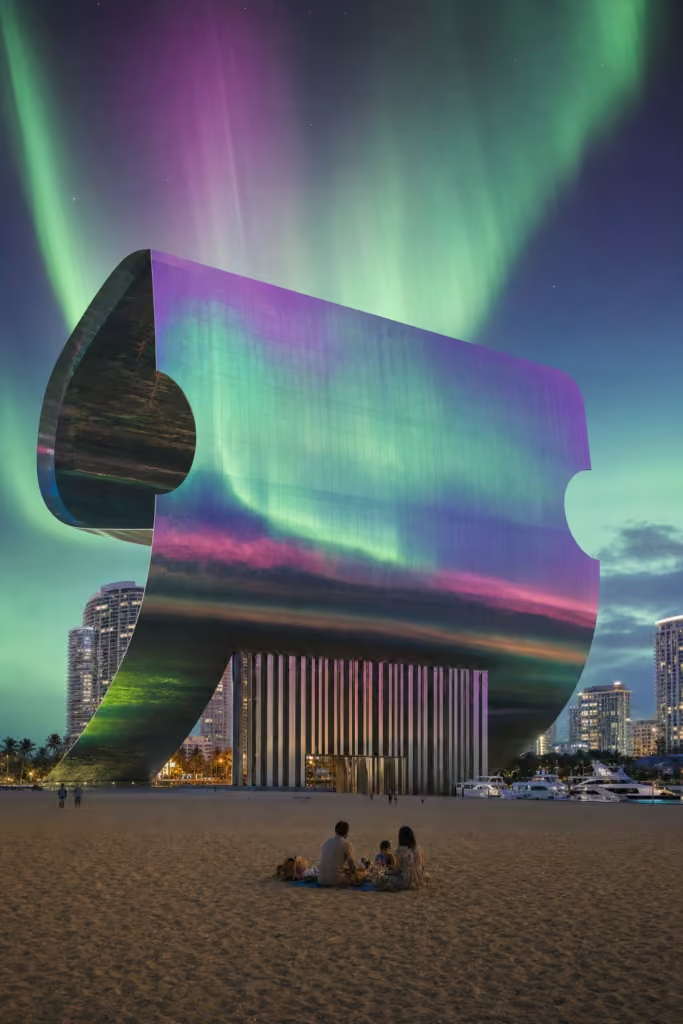
Site: Greater Lauderdale Mirage District (formerly Fort Lauderdale Beach, Fort Lauderdale, United States)
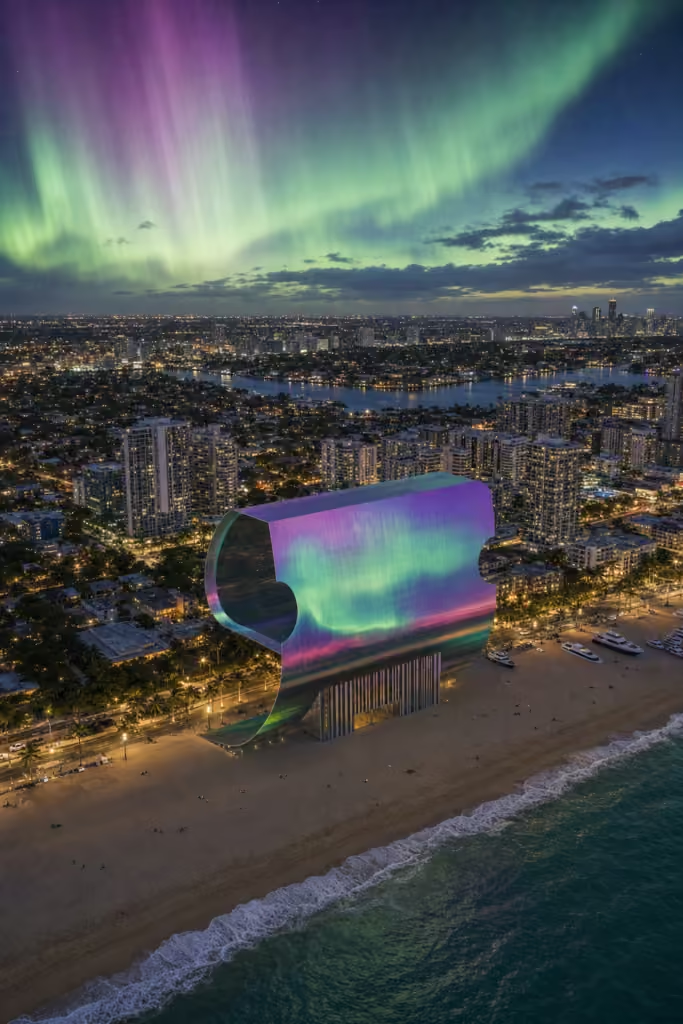
The Site
Fort Lauderdale Beach has always understood the delicate relationship between sun, money, and where exactly someone thought they could leave a vehicle for twelve minutes. It is a place of glass balconies, yacht adjacency, sudden rain, and Las Olas traffic moving with the moral confidence of a confused shopping cart. Into this environment arrives Ticket To Paradise, a 150-meter-tall parking ticket laid across the sand like the city finally printed its feelings.
The future name, Greater Lauderdale Mirage District, feels less like branding and more like a weather report. The skyline sparkles behind it. The ocean behaves professionally. A family picnics in front, apparently unaware that municipal enforcement has entered its cathedral period.
The Move
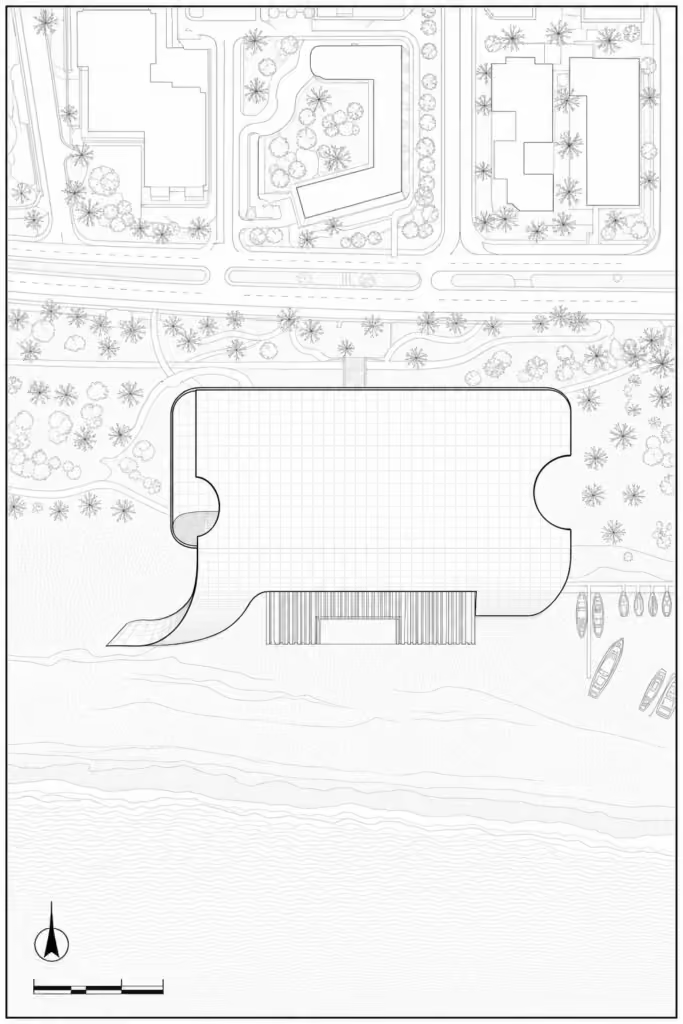
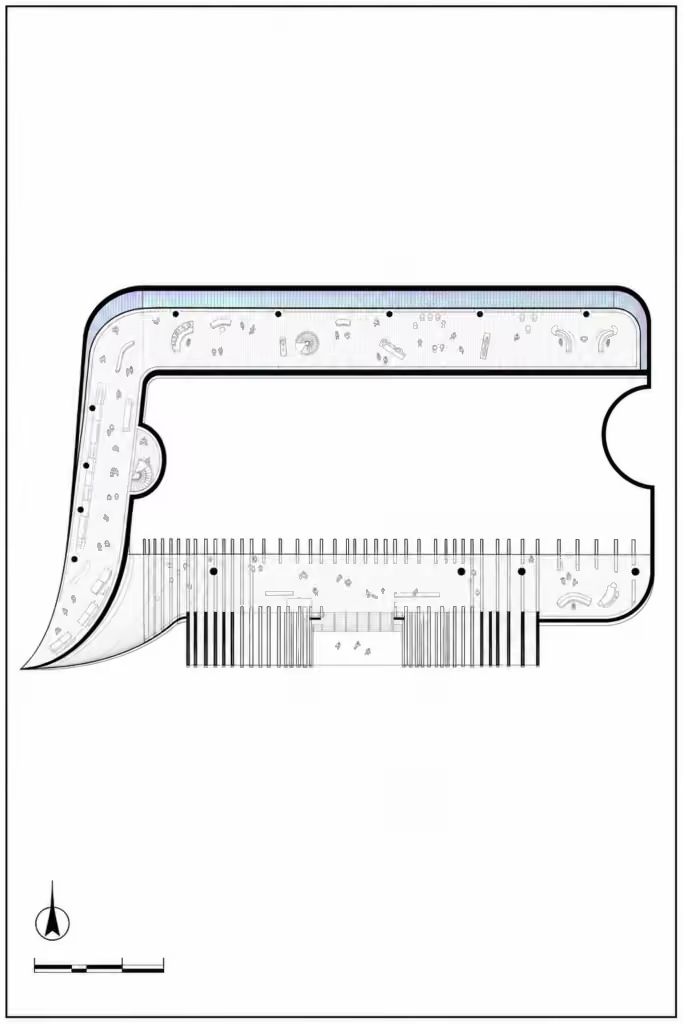
The building is a colossal arch, 300 meters long, shaped like a giant parking citation that became convinced it was infrastructure. Its horizontal ribbon loops over the beachfront with the soft menace of a fee you forgot to dispute. This is not a tower trying to touch the sky. This is paperwork trying to touch both ends of a resort economy.
The timing is helpful. With reports that Cybertruck production may be ending after a short run, the city needs a new symbol for the disposable future. The Cybertruck was less a vehicle than a rentable brutalist studio apartment for billionaires. Ticket To Paradise simply removes the wheels and admits the zoning use.
Material and Structure
The exterior is a reflective aurora-tinted skin, engineered to flash green and violet across the sand while pretending this is not a threat. From certain angles, the arch seems to barely touch the beach. From others, it looks like a receipt from a restaurant where the waiter added architecture as a service charge.
At the base sits a 15-meter barcode entrance. Visitors pass through vertical black bands scaled for cruise ships, debt collectors, and people who say they are just here for brunch. The structural system is described as lightweight, which is reassuring until the wind starts reading the fine print.
Inside
The interior begins with the Citation Hall, a grand lobby lined with counters for appeals no one wins. Beyond it are permit lounges, towel courts, sunscreen vaults, and a climate-controlled promenade where residents can walk 300 meters indoors and still complain about parking.
Upper levels contain short-term apartments shaped like glove compartments, conference rooms named after expired meters, and a wellness spa offering therapeutic validation. The building also includes a small museum dedicated to the golden age of luxury mobility, when every product promised freedom and delivered a monthly payment.
The Tradeoff
The public receives shade, spectacle, and a new landmark visible from the Elbo Room after one strong drink. In exchange, the beachfront must accept that the future city’s most flexible housing type may be the gadget someone used to park.
Local objections are already precise. One condo board reports that the arch blocks nine minutes of sunrise, reflects violet onto their breakfast nook, and encourages visitors to say “barcode district” out loud. These are serious concerns. Paradise has always had rules. This one just comes with a ticket number.
Inside
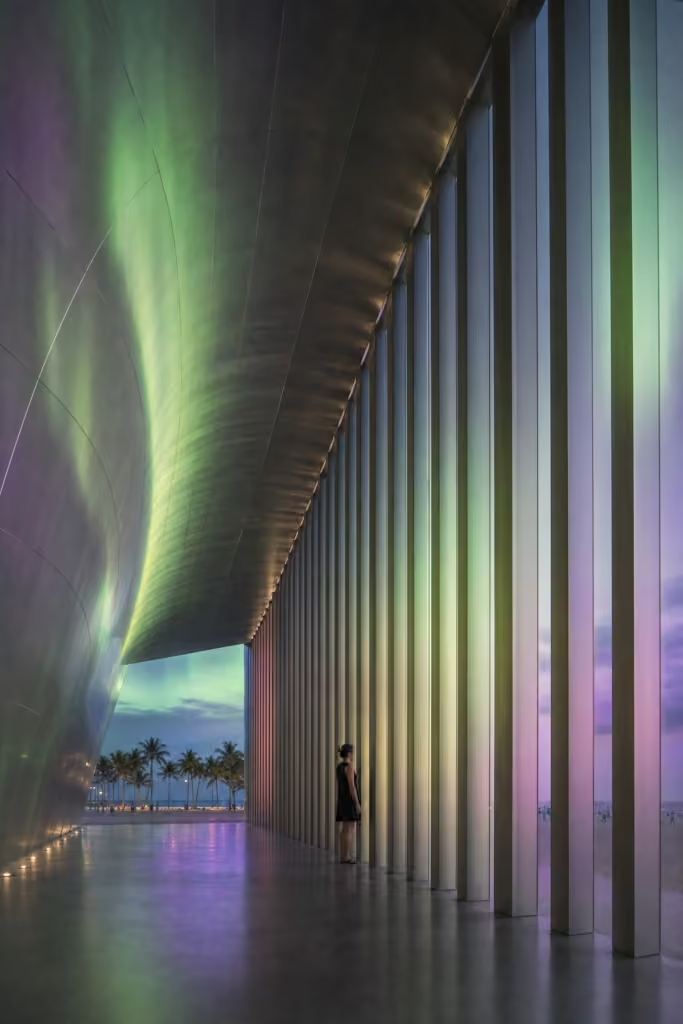
A long lobby inside the base of the arch, with aurora light filtering through barcode slots, overlooking the beach
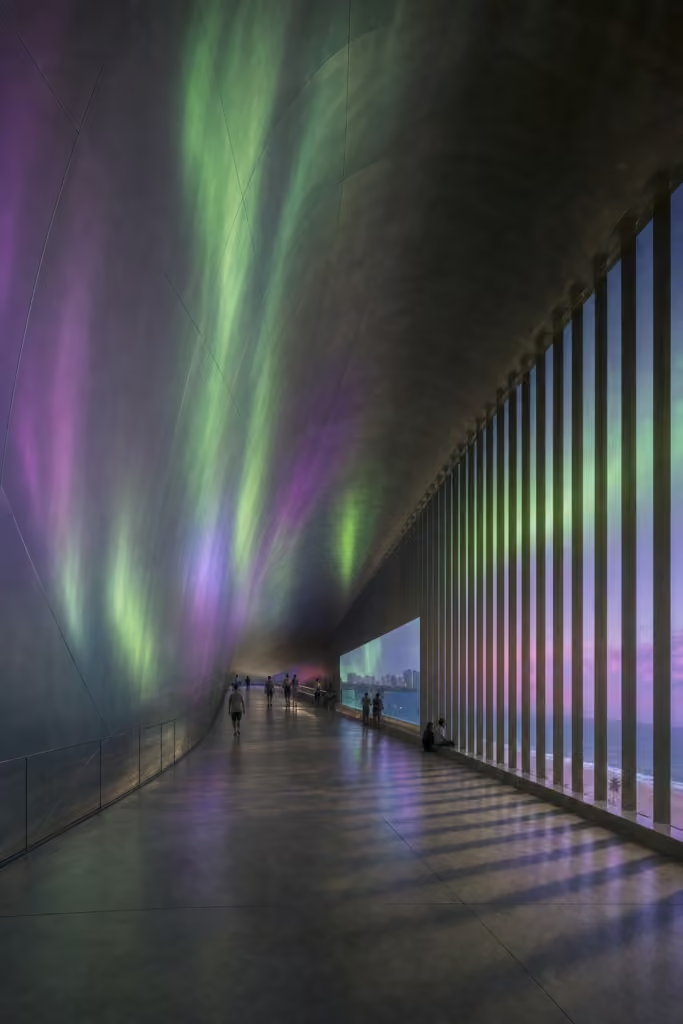
An inclined gallery inside the rising leg of the arch, with daylight casting barcode shadows, opening to sea views
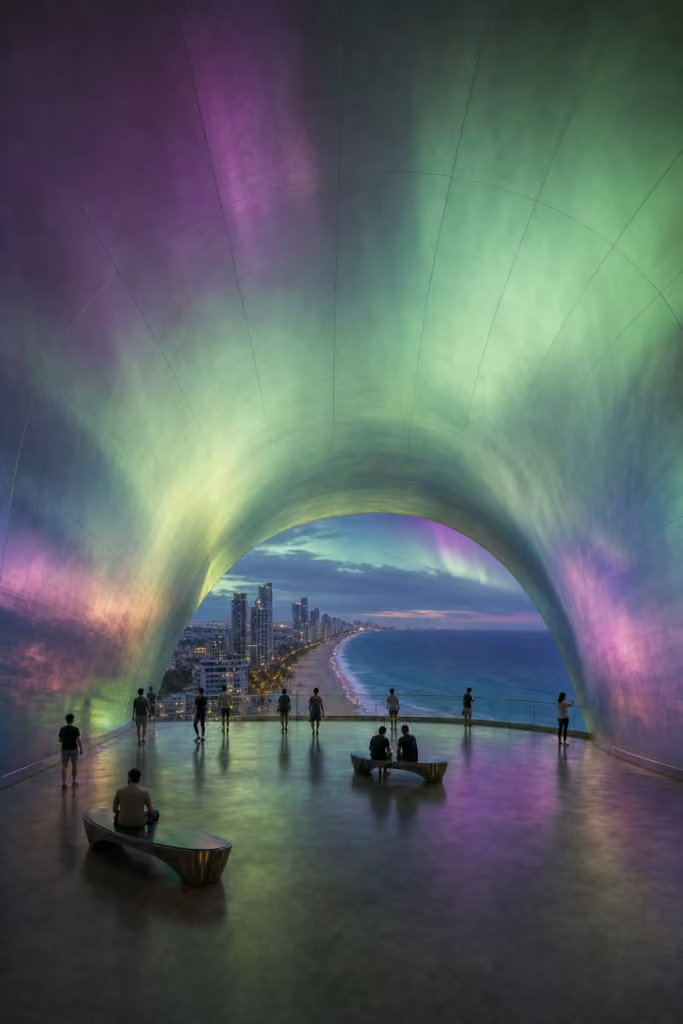
A panoramic observation deck at the arch's crown, surrounded by aurora-hued panels, offering absurdly detailed parking instructions
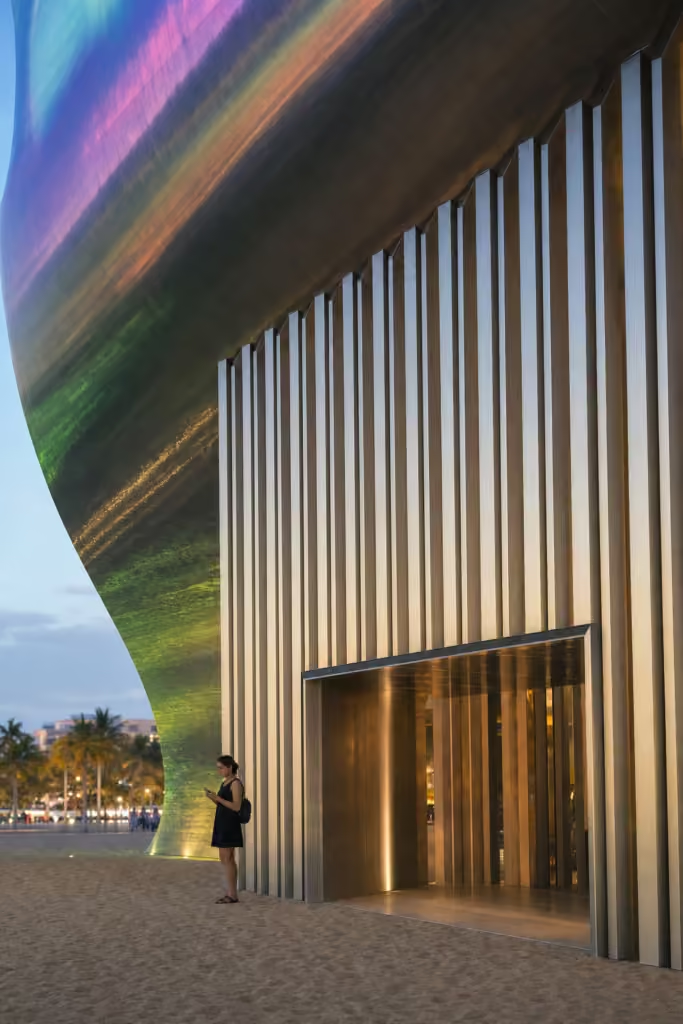
Drawing set
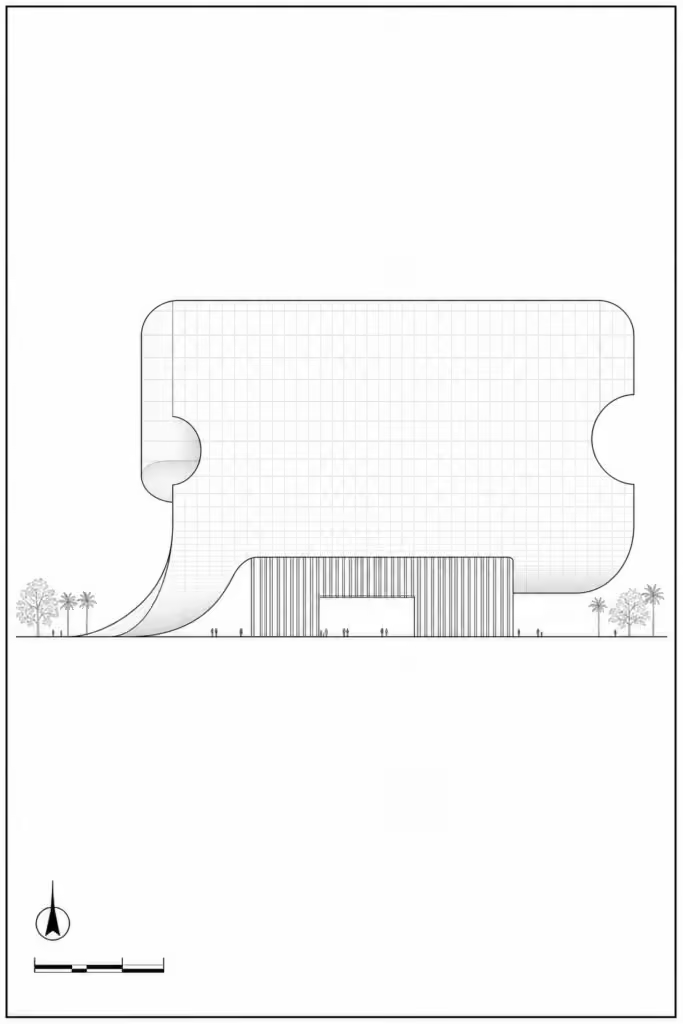
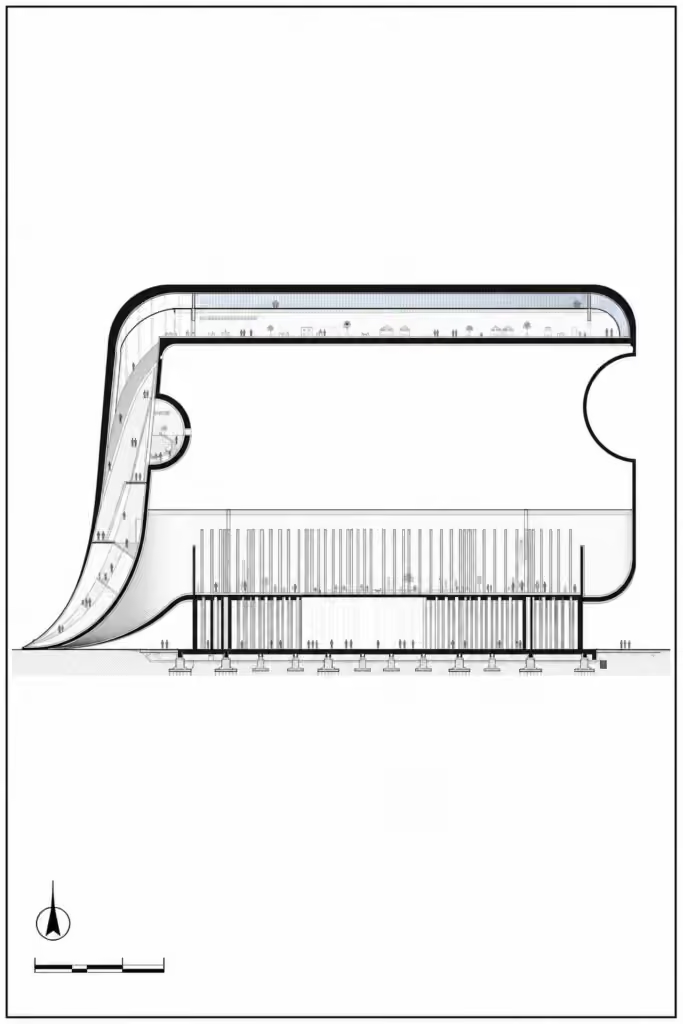
A speculative concept by Architecture Adrenaline. Not a real building.