
Great library architecture does more than store books. These ten libraries became civic landmarks through bold structure, memorable reading rooms, public gathering space, and urban presence. The ranking focuses on buildings where architecture shapes how people learn, meet, move through the city, and remember the institution.
This ranking identifies the top 10 libraries with inspiring architectural design based on their innovation in structural form, integration with environment, cultural impact, and the use of design to enhance user experience. Each entry was analyzed for architectural significance, unique design elements, and contribution to community identity. Our methodology focuses on a combination of renowned architectural awards, critical acclaim, spatial innovation, and public influence.
How We Ranked These Libraries
We ranked these libraries by architectural innovation, public access, urban impact, interior spatial experience, cultural significance, and how clearly each building changed the identity of its city or campus. Projects ranked highest when the architecture made reading, gathering, circulation, daylight, and civic symbolism feel inseparable.
Quick Comparison
| Rank | Entry | Why it ranks |
|---|---|---|
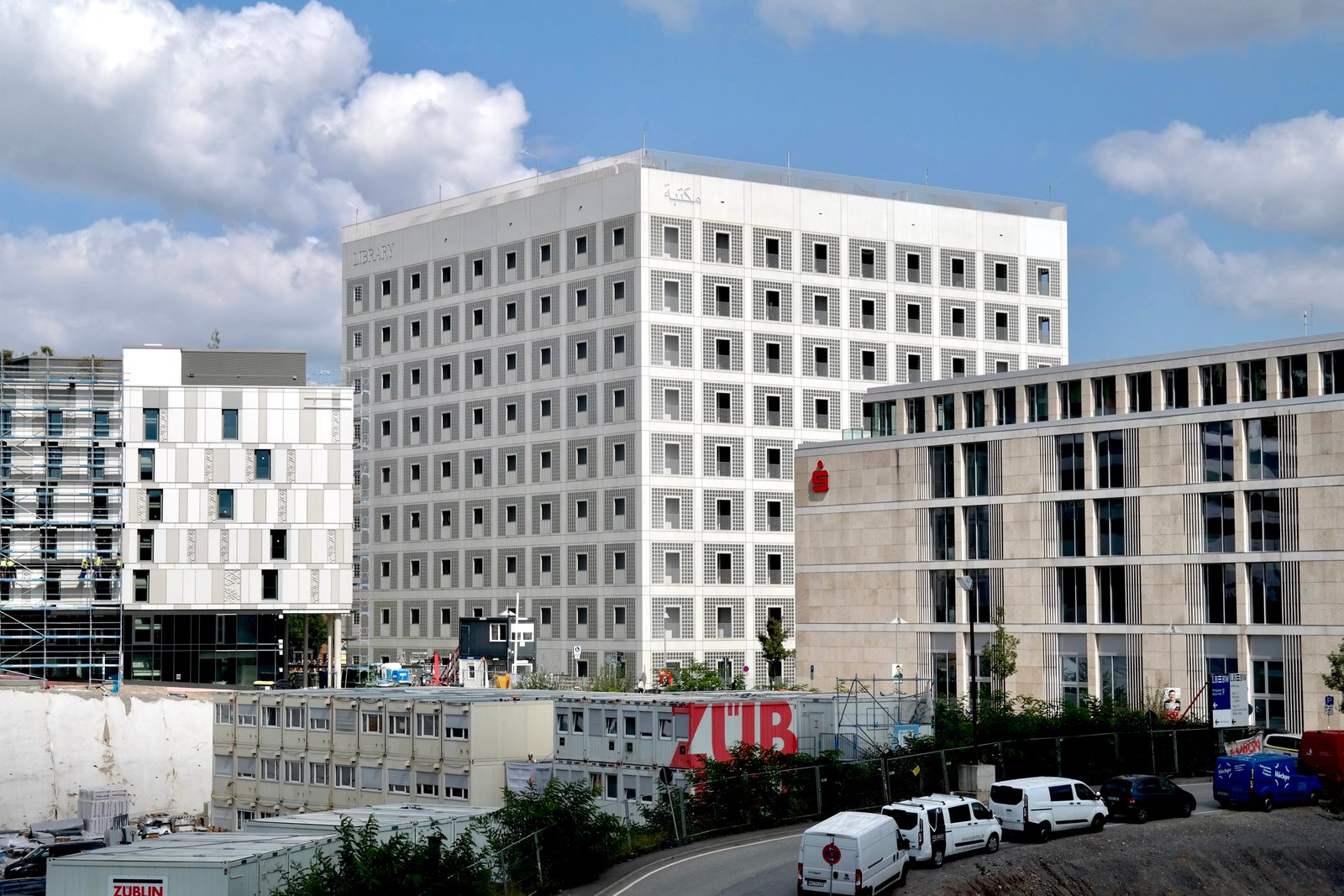
| 1 | Stuttgart City Library, Stuttgart, Germany | Designed by Yi architects and opened in 2011, Stuttgart City Library stands out as a minimalist cube with glowing white interiors that create a serene, contemplative space for reading. |
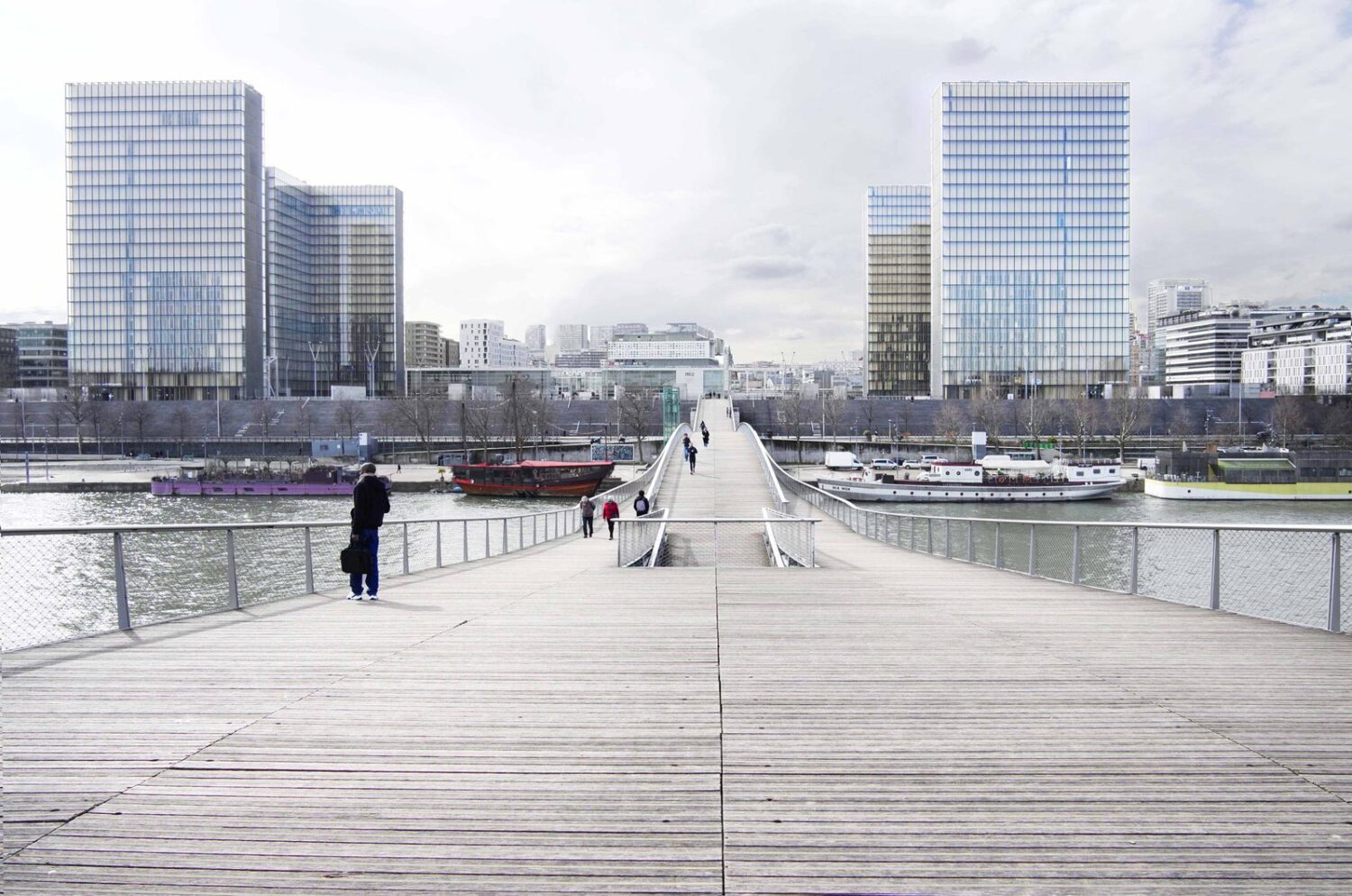
| 2 | Bibliotheque Nationale de France, Paris, France | The Bibliothèque Nationale de France, designed by Dominique Perrault and completed in 1996, is a futuristic landmark with four L-shaped towers symbolizing open books. |
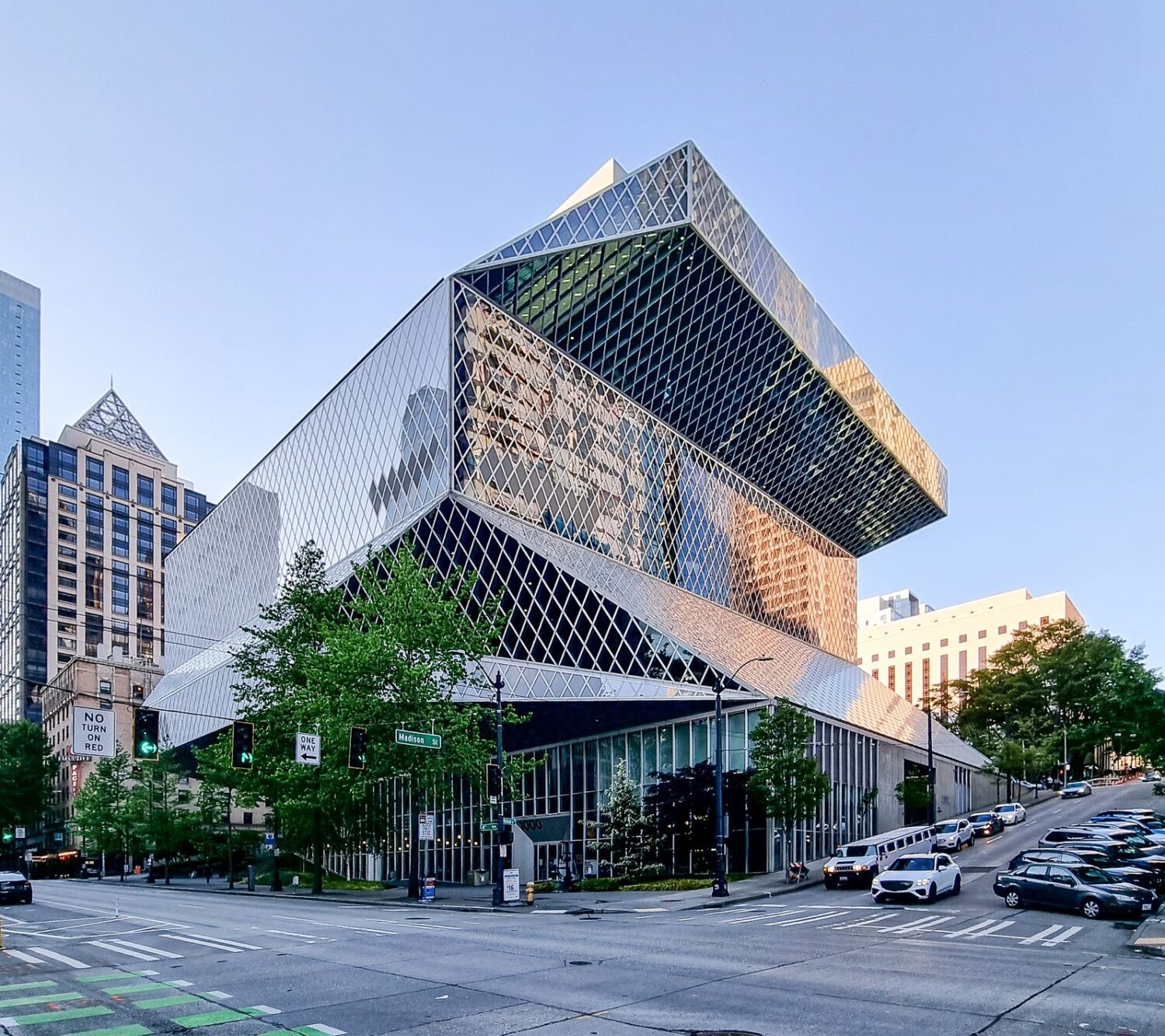
| 3 | Seattle Central Library, Seattle, USA | Designed by Rem Koolhaas and OMA, the 2004 Seattle Central Library challenges traditional library architecture with its innovative exoskeleton structure and dynamic multi-layered interiors. |
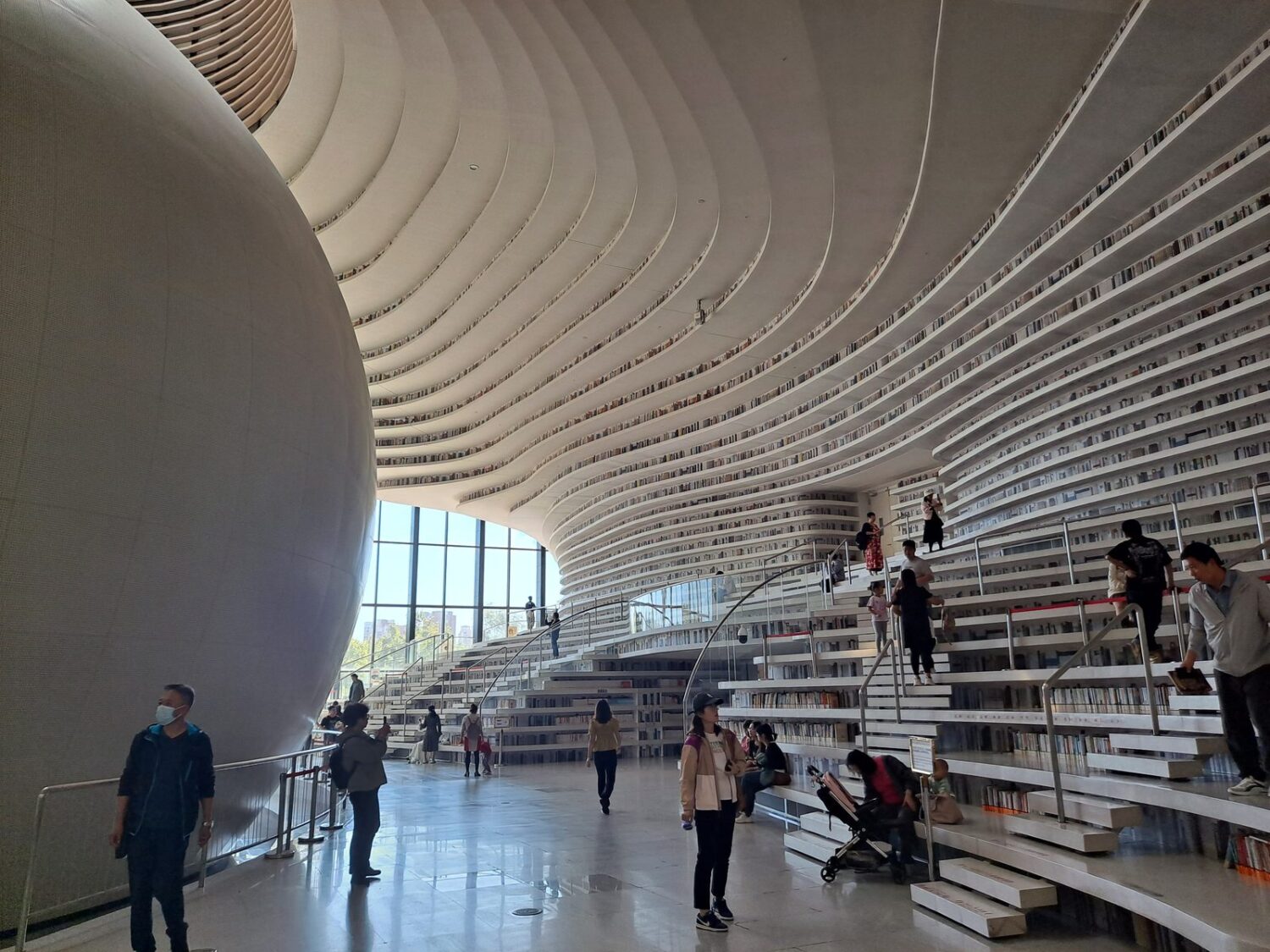
| 4 | Tianjin Binhai Library, Tianjin, China | Opened in 2017 and designed by MVRDV, the Tianjin Binhai Library is an expressive sculptural landmark with a futuristic spherical auditorium at its heart. |
| 5 | Vancouver Public Library, Vancouver, Canada | Designed by Moshe Safdie and inaugurated in 1995, Vancouver Public Library’s coliseum-inspired architecture integrates urban context with cultural identity. |
| 6 | The Royal Library, Copenhagen, Denmark | The Royal Library in Copenhagen, known as the Black Diamond, completed in 1999 by Schmidt Hammer Lassen, revitalizes the historic Danish library with a striking modern glass extension along the waterfront. |
| 7 | Helsinki Central Library Oodi, Helsinki, Finland | Helsinki Central Library Oodi, launched in 2018 and designed by ALA Architects, showcases innovative sustainable design with multifunctional flexibility catering to diverse users. |
| 8 | Congress Library, Washington D.C., USA | Washington D.C.’s Library of Congress, constructed from 1897 to 1898 with origins going back to 1800, is a masterpiece of neoclassical and Beaux-Arts architecture. |
| 9 | Biblioteca Vasconcelos, Mexico City, Mexico | Mexico City’s Biblioteca Vasconcelos, completed in 2006 by Alberto Kalach, stands out for its lush indoor gardens combined with an industrial aesthetic. |
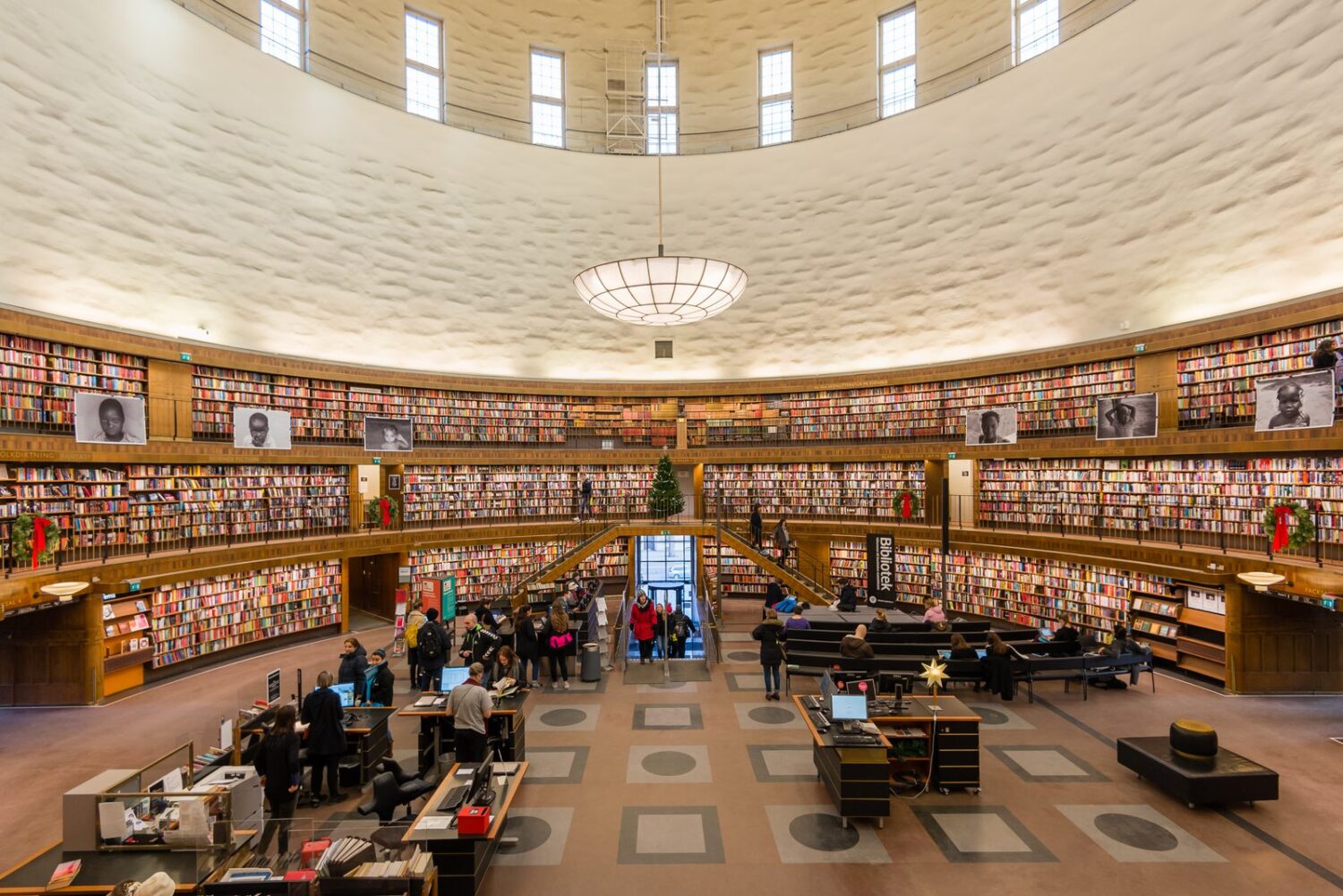
| 10 | Stockholm Public Library, Stockholm, Sweden | Designed by Gunnar Asplund and completed in 1928, Stockholm Public Library is a hallmark of Nordic Classicism blended with modernist minimalism. |
1. Stuttgart City Library, Stuttgart, Germany
Designed by Yi architects and opened in 2011, Stuttgart City Library stands out as a minimalist cube with glowing white interiors that create a serene, contemplative space for reading. Its geometric precision and monolithic exterior embody a modern interpretation of library architecture, emphasizing purity of form and light. The centralized atrium cascades natural light through the stacked floors, enhancing spatial depth. This design reinvigorated urban public space downtown Stuttgart, acting as a cultural landmark. Why it matters architecturally: Stuttgart City Library exemplifies how stark minimalism combined with spatial fluidity can redefine the role of libraries as iconic urban beacons.
2. Bibliothèque Nationale de France, Paris, France
The Bibliothèque Nationale de France, designed by Dominique Perrault and completed in 1996, is a futuristic landmark with four L-shaped towers symbolizing open books. Its vast glass facades and integrated public spaces showcase transparency and intellectual openness. The library expertly balances monumental scale and inviting interiors using precious materials and meticulous landscaping. It sets a precedent for multifunctional libraries serving national archival, research, and public needs. Why it matters architecturally: This project illustrates visionary modernist language adapted to cultural preservation and public accessibility on a grand scale.
3. Seattle Central Library, Seattle, USA
Designed by Rem Koolhaas and OMA, the 2004 Seattle Central Library challenges traditional library architecture with its innovative exoskeleton structure and dynamic multi-layered interiors. The faceted glass and steel exterior create a prism-like effect, while the interior prioritizes transparency and flexibility to adapt to digital-age information demands. It redefines circulation through escalator-led layering and reading platforms. Why it matters architecturally: The Seattle Central Library is a pioneering example of architecture shaping information flow in the 21st century.
4. Tianjin Binhai Library, Tianjin, China
Opened in 2017 and designed by MVRDV, the Tianjin Binhai Library is an expressive sculptural landmark with a futuristic spherical auditorium at its heart. The flowing bookshelves seamlessly rise and fall, appearing more as an art installation than conventional shelving. The open-plan layout blurs boundaries between functional book storage and immersive spatial experience. However, some shelving is nonfunctional, highlighting a balance between aesthetic spectacle and practicality. Why it matters architecturally: It pushes library design as experiential art, expanding perceptions of spatial storytelling.
5. Vancouver Public Library, Vancouver, Canada
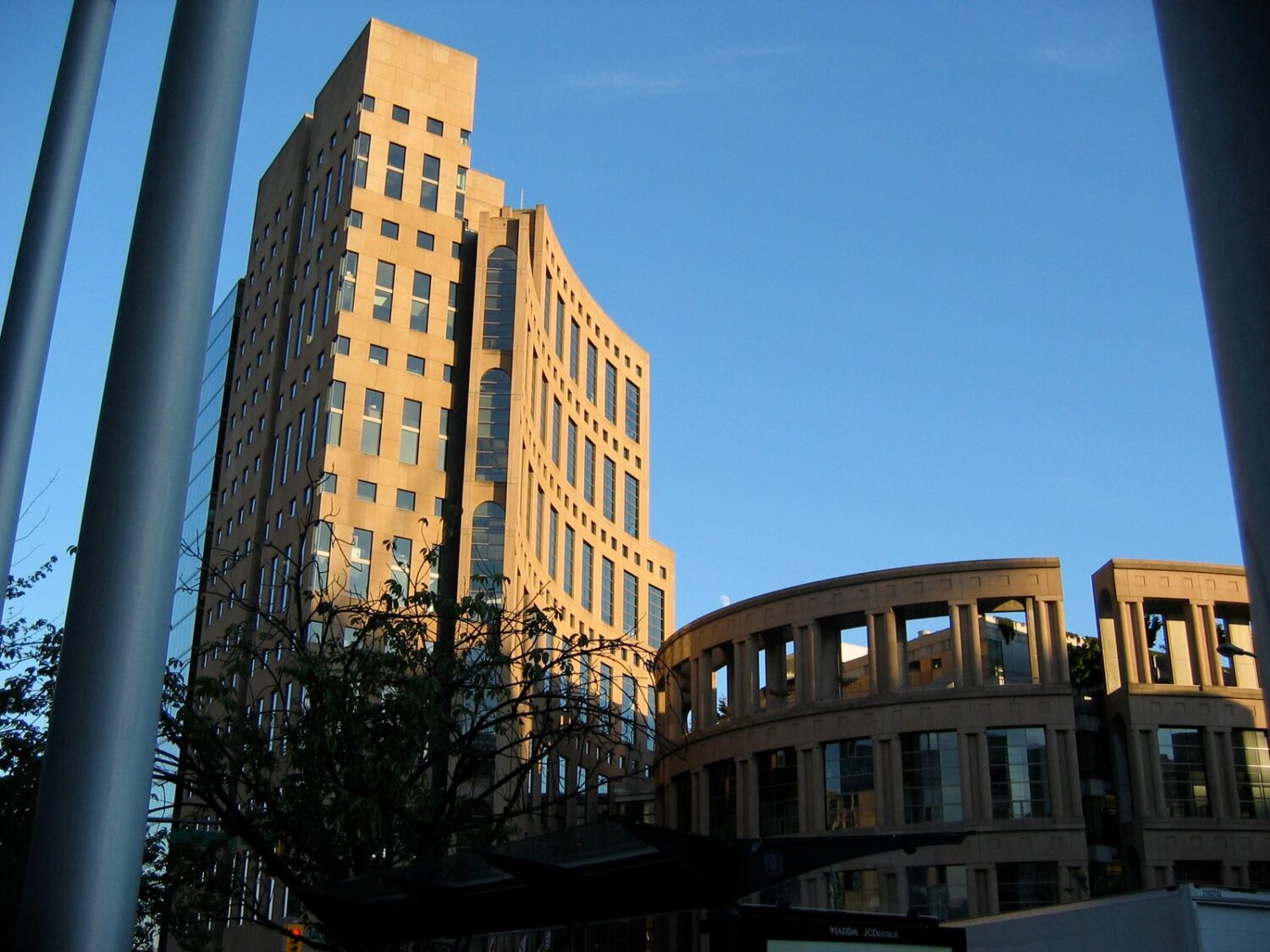
Designed by Moshe Safdie and inaugurated in 1995, Vancouver Public Library’s coliseum-inspired architecture integrates urban context with cultural identity. Its expansive glass and concrete facade embeds a classical reference into modern design. The interior offers clear sightlines, generous reading terraces, and flexible public spaces geared to community engagement. It anchors the downtown arts and civic district. Why it matters architecturally: This design melds symbolism and functionality to celebrate the library as a vibrant urban forum.
6. The Royal Library, Copenhagen, Denmark
The Royal Library in Copenhagen, known as the Black Diamond, completed in 1999 by Schmidt Hammer Lassen, revitalizes the historic Danish library with a striking modern glass extension along the waterfront. The black granite-and-glass facade reflects the water and light, creating a dynamic dialogue between old and new. Internally, wide open spaces and use of light steer visitors through reading rooms and exhibition spaces. Why it matters architecturally: It masterfully balances historical context with avant-garde contemporary expression.
7. Helsinki Central Library Oodi, Helsinki, Finland
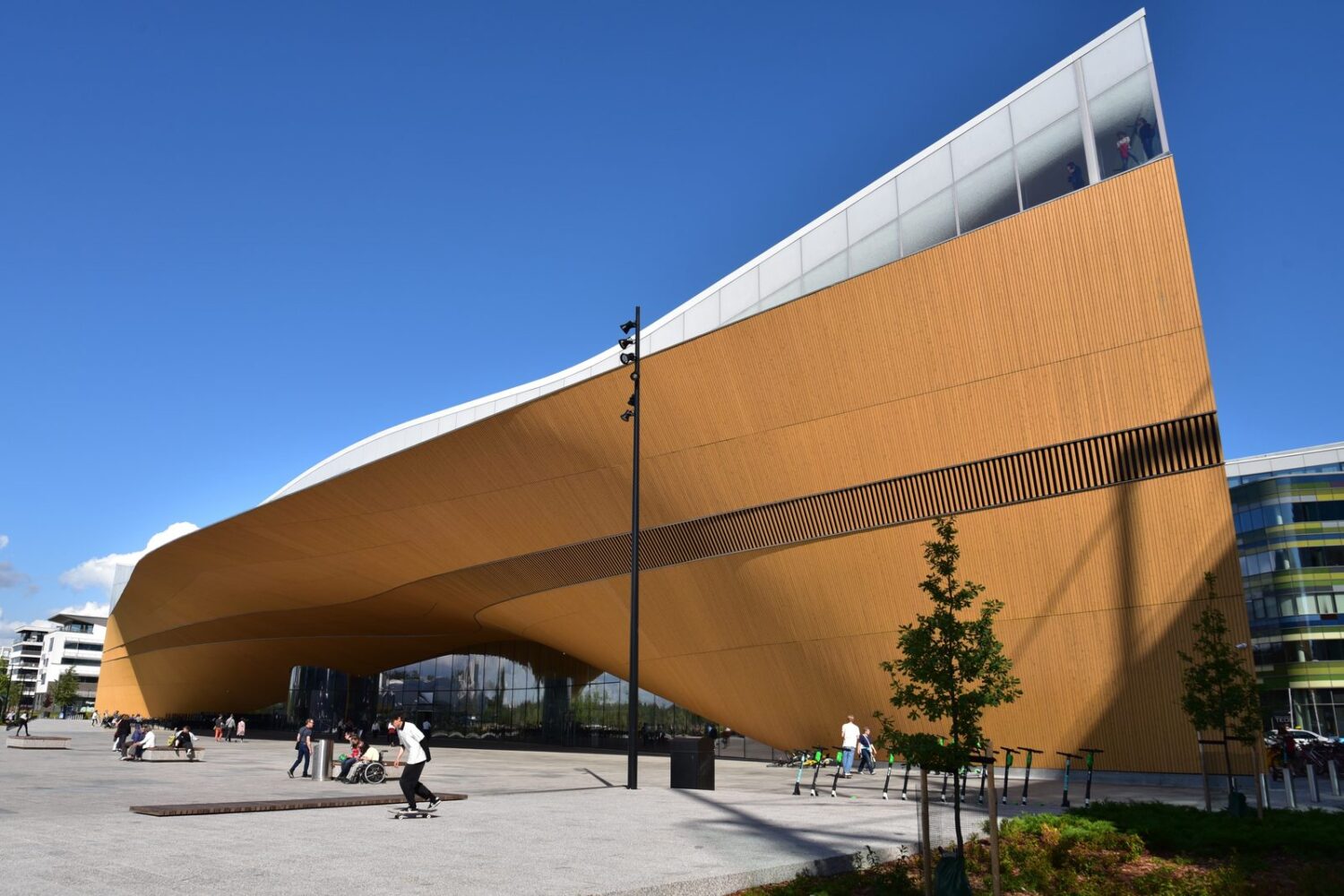
Helsinki Central Library Oodi, launched in 2018 and designed by ALA Architects, showcases innovative sustainable design with multifunctional flexibility catering to diverse users. Its sculpted wooden facade and flowing interior volumes foster openness and community interaction. The library acts as a democratic social hub with spaces for collaboration, media production, and quiet study. Why it matters architecturally: Oodi embodies 21st century values of sustainability and participatory design in cultural infrastructure.
8. Congress Library, Washington D.C., USA
Washington D.C.’s Library of Congress, constructed from 1897 to 1898 with origins going back to 1800, is a masterpiece of neoclassical and Beaux-Arts architecture. Designed by architects including John L. Smithmeyer and Paul J. Pelz, its rich ornamentation, grand reading rooms, and intricate murals symbolize knowledge and democracy. It remains a monumental national institution. Why it matters architecturally: The Library of Congress establishes the grand civic scale and symbolic gravitas possible in library architecture.

9. Biblioteca Vasconcelos, Mexico City, Mexico
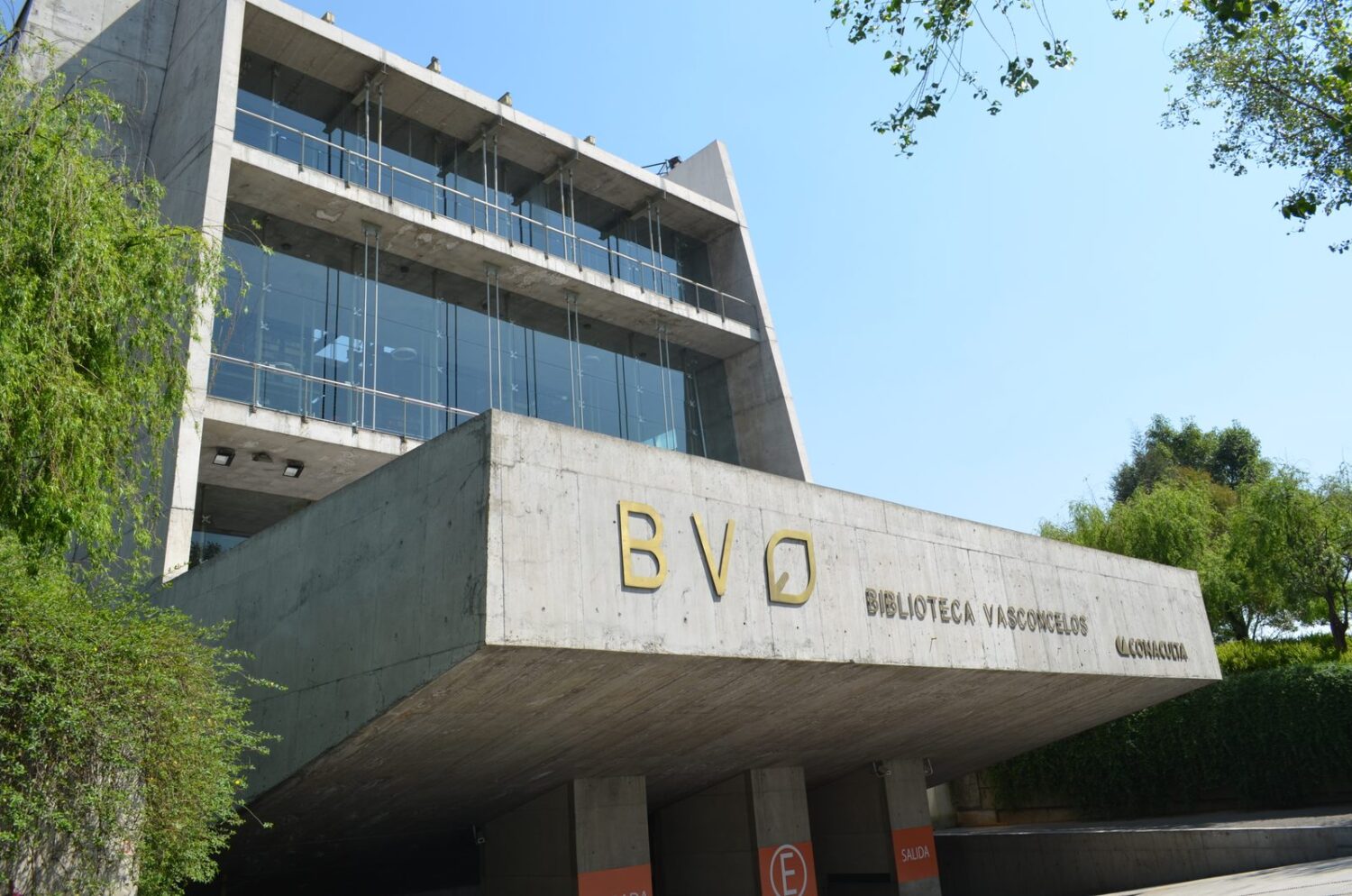
Mexico City’s Biblioteca Vasconcelos, completed in 2006 by Alberto Kalach, stands out for its lush indoor gardens combined with an industrial aesthetic. Its multiple suspended platforms and layered shelving are surrounded by a forest-like interior, creating an immersive environment that contrasts urban density outside. This synergy between nature and structure enhances user experience and reflects contemporary ecological considerations. Why it matters architecturally: It redefines library spaces by merging natural biophilic design principles with urban modernism.
10. Stockholm Public Library, Stockholm, Sweden
Designed by Gunnar Asplund and completed in 1928, Stockholm Public Library is a hallmark of Nordic Classicism blended with modernist minimalism. Its cylindrical rotunda crowned with a lantern skylight creates a serene reading atmosphere. The building’s clean geometry and use of natural light influenced Scandinavian design language. It integrates cultural heritage with functional clarity. Why it matters architecturally: Stockholm Public Library is a timeless example of form, light, and context harmoniously shaping library experience.
What makes a library’s architecture inspiring?
Inspiring library architecture uniquely combines functional design, cultural symbolism, innovative spatial organization, and integration with its environment to enhance user experience and community identity.
How do modern libraries adapt to digital age needs?
Contemporary libraries incorporate flexible layouts, technology-friendly spaces, and multi-purpose areas to support digital media access, collaborative work, and evolving library functions beyond traditional book storage.
Why is natural light important in library design?
Natural light improves visual comfort, creates inviting atmospheres, and highlights architectural elements, transforming libraries into welcoming, energy-efficient spaces conducive to reading and study.
These ten libraries represent the forefront of architectural innovation within cultural and urban contexts, blending aesthetics with functionality. Each offers valuable lessons on how architectural design can elevate libraries into landmarks that inspire, educate, and serve communities while adapting to changing technological and social landscapes. For architects and planners, studying these exemplars underscores the importance of integrating spatial creativity, environmental sensitivity, and civic symbolism in library design.
For more architecture, cities, public spaces, materials, and design ideas, browse Architecture Adrenaline’s latest guides.
Related Architecture Adrenaline Reads
Further Reading & Source References
