
What is UX design? A tightly orchestrated practice that guides a user’s entire relationship with a product or service—from first awareness to ongoing use—so that goals are reached with minimal friction and maximum clarity. The opening insight is that usefulness, usability, and desirability must align with real tasks and contexts, not just visuals. This approach informs all subsequent decisions, from research methods to interface details, ensuring that both user needs and business goals are advanced in tandem. This article translates core principles into actionable guidance readers can apply to digital products, physical services, and integrated experiences.
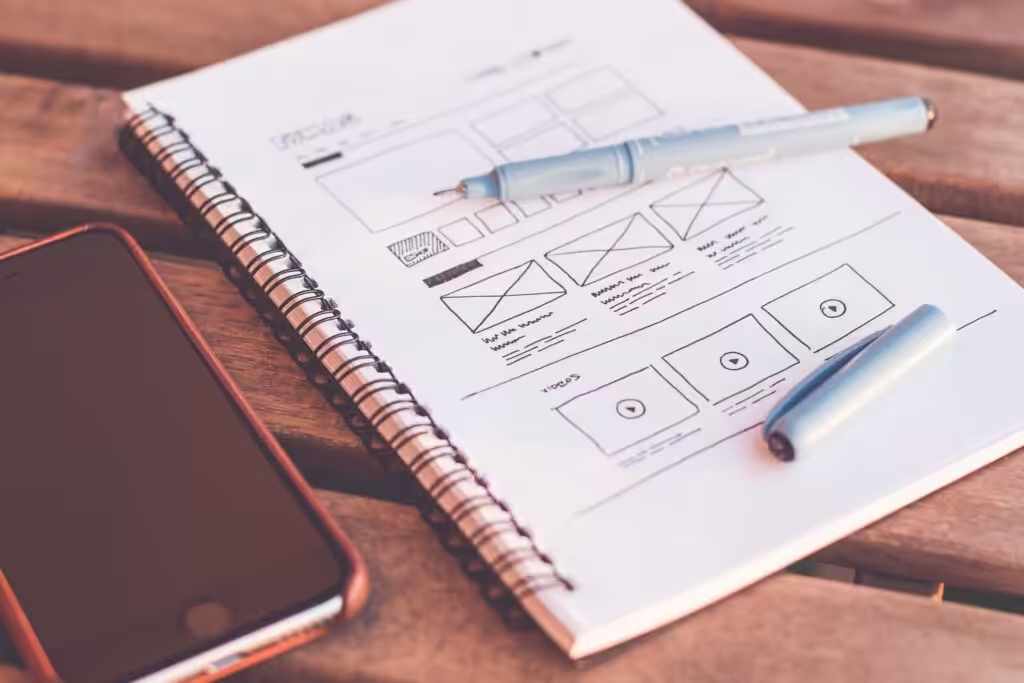
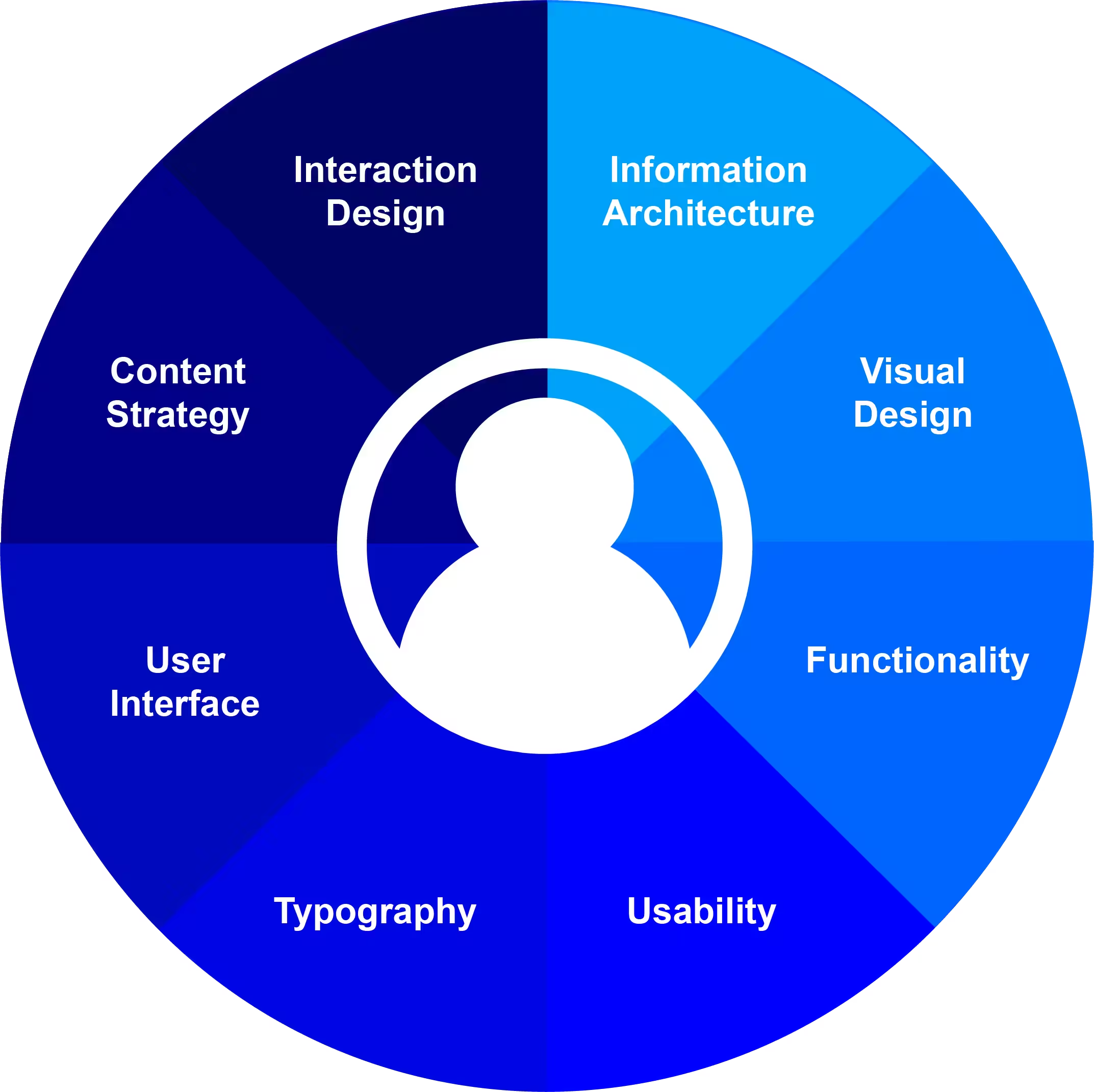
UX design is a practice that considers a person’s entire relationship with a product or service—from initial awareness to ongoing use and satisfaction. It emphasizes usefulness, usability, and desirability, not just visual flair. ISO 9241-210 frames UX as human-centered design—start with people and context, then design for real tasks and outcomes. In practice, UX encompasses research, information architecture, interaction design, prototyping, and testing, with UI as one important but narrower layer focused on visuals and interactions.
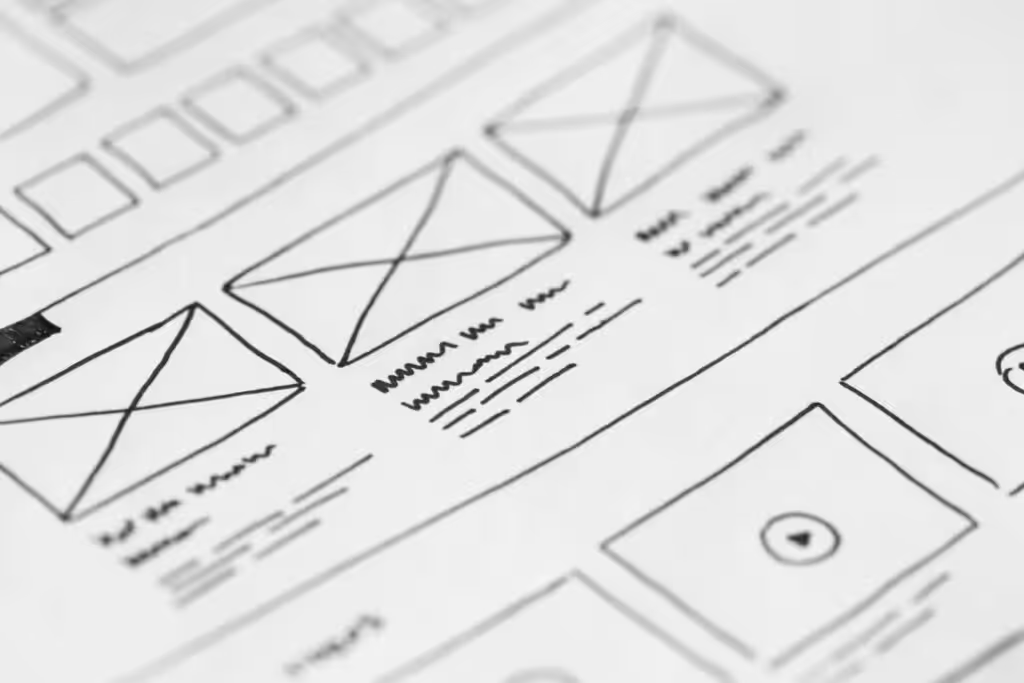
UI design focuses on typography, color, spacing, and micro-interactions, while UX addresses structure, flow, and outcomes across the entire journey. Treat UX as the architectural plan guiding product development, with UI as the visible finishes. Effective UX requires collaboration across product strategy, content, research, and engineering to ensure a cohesive user journey rather than a collection of isolated UI decisions.
Essential UX Principles and How to Apply Them
Universal laws guide decisions without stifling creativity. Practical applications include:
- Fitts’s Law — Make primary actions large and reachable; place critical controls where thumbs can reach on mobile).
- Hick’s Law — Limit choices at each step and use progressive disclosure to reduce cognitive load.
- Jakob’s Law — Reuse familiar patterns to lower learning costs; don’t reinvent common interactions unnecessarily.
- Gestalt Principles — Use proximity, similarity, and continuity to signal grouping and hierarchy.
- Aesthetic-Usability — A visually clear interface feels easier to use, but don’t rely on aesthetics alone to conceal poor functionality.
- Response Time — Aim for ~400ms or faster for critical interactions to preserve user flow and perceived control.
The Typical UX Process: A Practical playbook
- Define — Align business goals with user tasks and success metrics; identify top tasks to optimize.
- Research — Conduct user interviews, surveys, analytics reviews, and competitive analyses to uncover needs and constraints.
- Structure — Develop information architecture and content strategy that makes finding and trusting content easy.
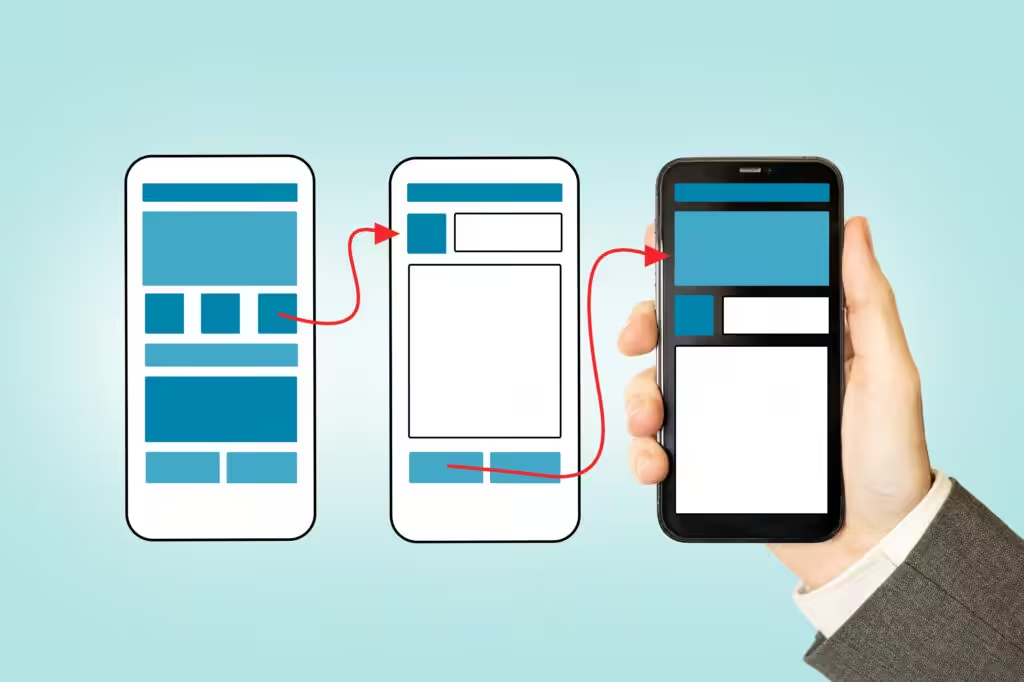
- Design — Create wireframes and interaction flows focused on tasks, not only visuals.
- Test — Run moderated or remote usability tests, plus analytics, to measure effectiveness and satisfaction.
- Ship and Learn — Collaborate with engineering, instrument key metrics, and iterate based on real usage data.
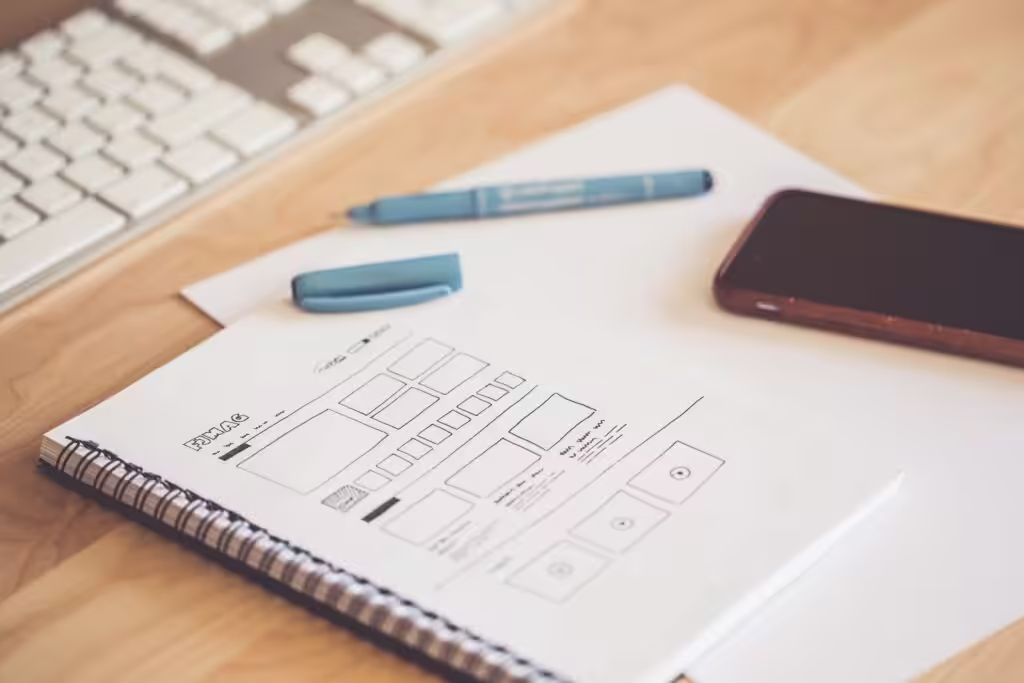
Tools, Roles, and Collaboration in UX
Modern UX blends craft and coordination. Common tools include Figma, Adobe XD, Sketch for design and prototyping; Lookback, UserTesting, Maze for user research; and FigJam, Miro, Zeplin, Storybook for collaboration and design systems. Roles vary, including UX researcher, interaction designer, UX writer, UI designer, UX engineer, and product designer. Hybrid labels like “ui ux designer” or “ux developer” are common in practice.
Accessibility, Ethics, and Inclusive UX
Accessibility is a baseline requirement, not an afterthought. Design decisions should address keyboard navigation, color contrast, readable copy, and clear focus states from the outset. Inclusive design expands to consider network constraints, device capabilities, and varying literacy levels. These constraints often drive better solutions for all users and help ensure compliance with accessibility standards.
Measuring UX: Metrics That Matter
To validate decisions, use concrete metrics such as:
- Task success rates and time to completion
- Error rates and recovery ease
- System Usability Scale (SUS) or Net Promoter Score (NPS)
- Behavioral analytics (funnel drops, click paths, heatmaps)
Practical Guidance for Non-Designers
- Define the top three user tasks to optimize and measure outcomes for each.
- Incorporate at least one round of moderated usability testing before launch.
- Use clickable prototypes with metrics collection; avoid validating with static mockups alone.
- Integrate accessibility checks into the “definition of done.”
Career Paths, Learning, and Certification
Entry points typically include building research and prototyping skills, assembling a portfolio that shows problem framing, process, and outcomes, and pursuing credentials from Google UX Design (Coursera), General Assembly, CareerFoundry, or the Interaction Design Foundation. A high-fidelity prototype resulting from a structured program (such as a User Experience Design Certificate) can boost portfolio credibility. Emphasize transferable skills: research, IA, prototyping, testing, and cross-functional collaboration. For a university-backed, structured approach to UX education, see the Cornell eCornell User Experience Design Certificate.
Related reading and actionable guidance are available from Architecture Adrenaline’s UX-focused pieces, including discussions on how UX informs layout design and the broader role of UX in architecture and product development. For deeper context on formal curricula and recognized programs, you can explore a university-backed curriculum such as the Cornell eCornell User Experience Design Certificate and consider foundational UX theory and case studies via UX design books on Amazon.
For quick editorial context on how formal UX design definitions are established, see related Architecture Adrenaline discussions such as What is the Famous Definition of Design? Unveiling Creativity and The Ultimate Guide: What is a Layout Designer Called?.
Beyond Screens: Expanding UX to Real-World Contexts
UX thinking adds value in service design, real estate digitization, and physical spaces. The core priorities remain consistent: understand user goals, map journeys, identify friction points, prototype interventions, and test with real people. The mindset translates well to architecture and other disciplines that must reconcile human scale, flow, materials, and context to deliver usable experiences.
Choosing a UX Design Agency or Partner
When evaluating external help, look for evidence of method and impact beyond pretty visuals. Request:
- Case studies detailing research, decisions, and measured outcomes
- Cross-disciplinary collaboration capabilities with engineering, product, and stakeholders
- Domain-relevant experience (SaaS, e‑commerce, enterprise tools, or physical products)
Practical Takeaways for Non-Designers and Managers
- Define three core user tasks and track progress with concrete metrics.
- Mandate a usability test round before shipping, and iterate after launch.
- Insist on testable prototypes to validate decisions—avoid static visuals as final proof.
- Embed accessibility as a standard part of development, not as a checkbox at the end.
Further Reading and Useful Resources
Trustworthy sources include Nielsen Norman Group for research-driven guidance; ISO 9241-210 for human-centered standards; and practical tool tutorials from Figma and Adobe XD. For structured learning, look to Google’s UX Design Certificate on Coursera, General Assembly programs, and CareerFoundry. Building a portfolio that demonstrates problem framing, process, and outcomes remains essential for advancing in UX design. See also the Cornell certificate example above for a university-backed curriculum and UX design books on Amazon for foundational theory and case studies.
Audience question: Is UX only for digital products? No. UX principles apply to services and physical spaces—any interaction between people and designed systems.
Need to code to be a UX designer? No. Coding helps communication with engineers, but core UX skills are research, IA, interaction design, and testing.
How long does a UX project take? It varies by scope—small usability studies can take days, while full redesigns span months with ongoing iterations.
If you’d like, I can adapt this into a printable guide or a concise checklist you can use to evaluate a product, team, or project—tell me the format you prefer.
UI/UX Explained In 8 Minutes | UI/UX Design For Beginners | UI/UX Design Basics | Simplilearn:
As we wrap up this exploration of UX design and its core principles, it’s clear that this field is about much more than just creating visually appealing interfaces. It’s about understanding the user, their needs, and crafting experiences that resonate on a personal level. Thinking deeply about usability, accessibility, and emotional connection will not only elevate your products but will also foster a loyal user base that feels valued. Embracing these core principles of UX design can lead to more successful outcomes in your projects, setting you on the right path to becoming a true user advocate.
Stay Connected and Keep Learning
To continue expanding your knowledge of UX design and to stay inspired, consider following us on our social media channels. We love sharing tips, trends, and insights that can help you grow in this ever-evolving field. Check out our latest posts on Instagram for a peek into the world of design inspiration, and let’s keep the conversation going! Your journey in UX design is just beginning, and we can’t wait to see where it takes you.
