
A giant, glowing zipper invites exploration into retail mergers.
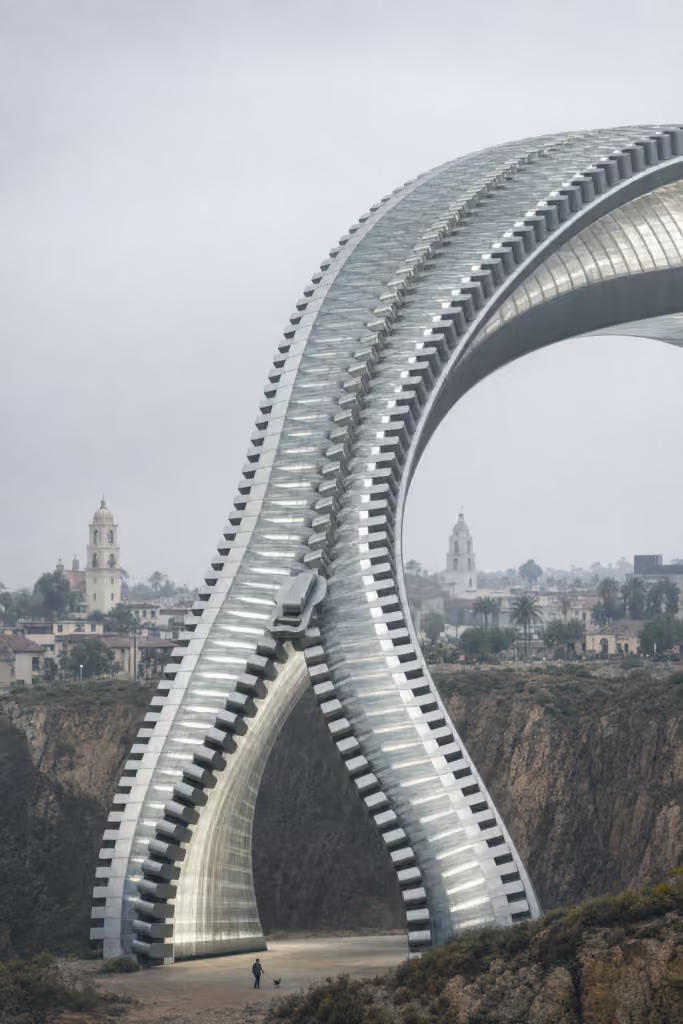
Site: San Ziplando Junction (formerly Old Town San Diego State Historic Park, San Diego, United States)
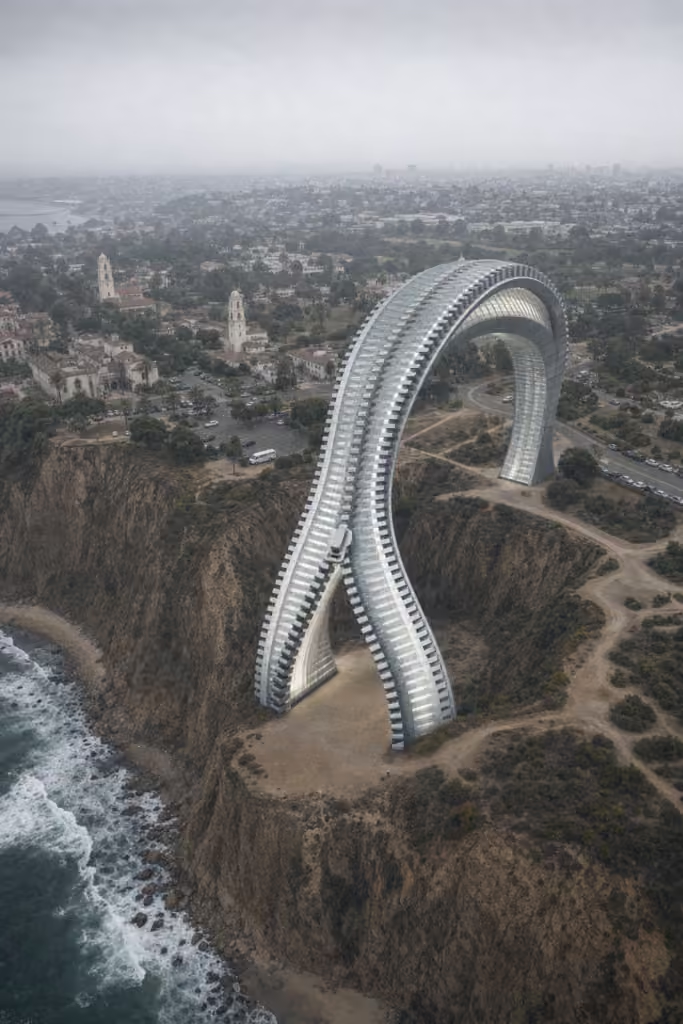
The Site
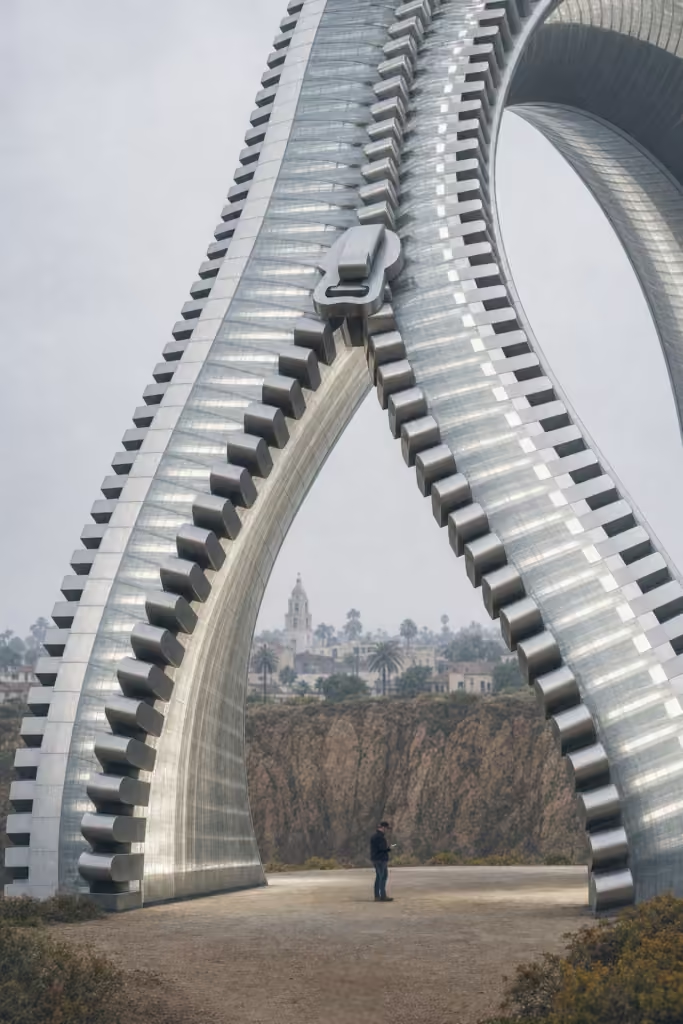
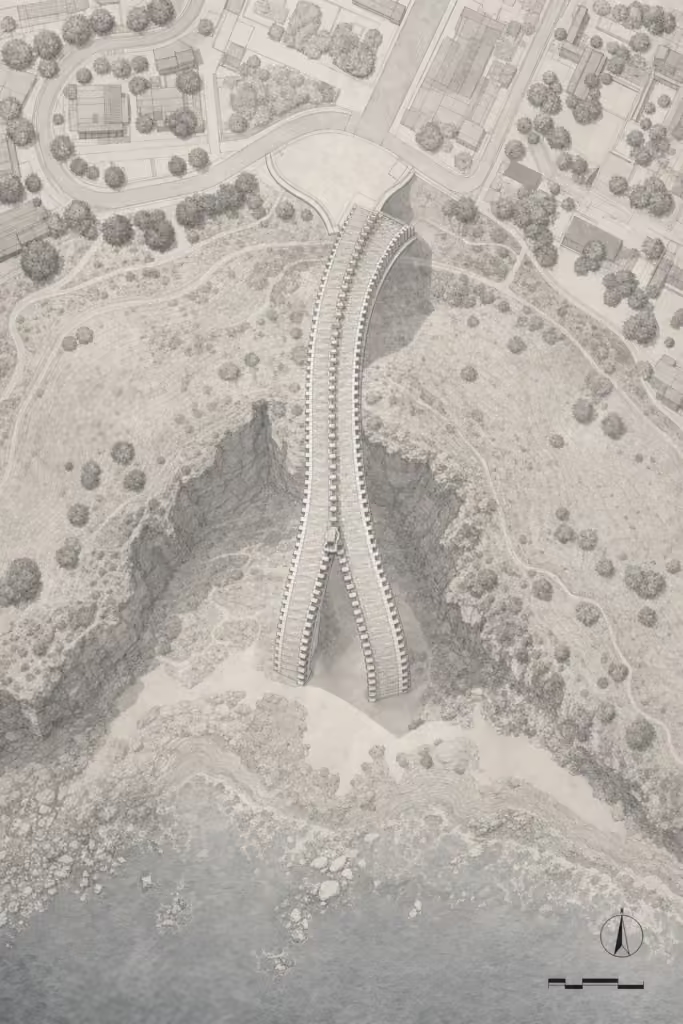
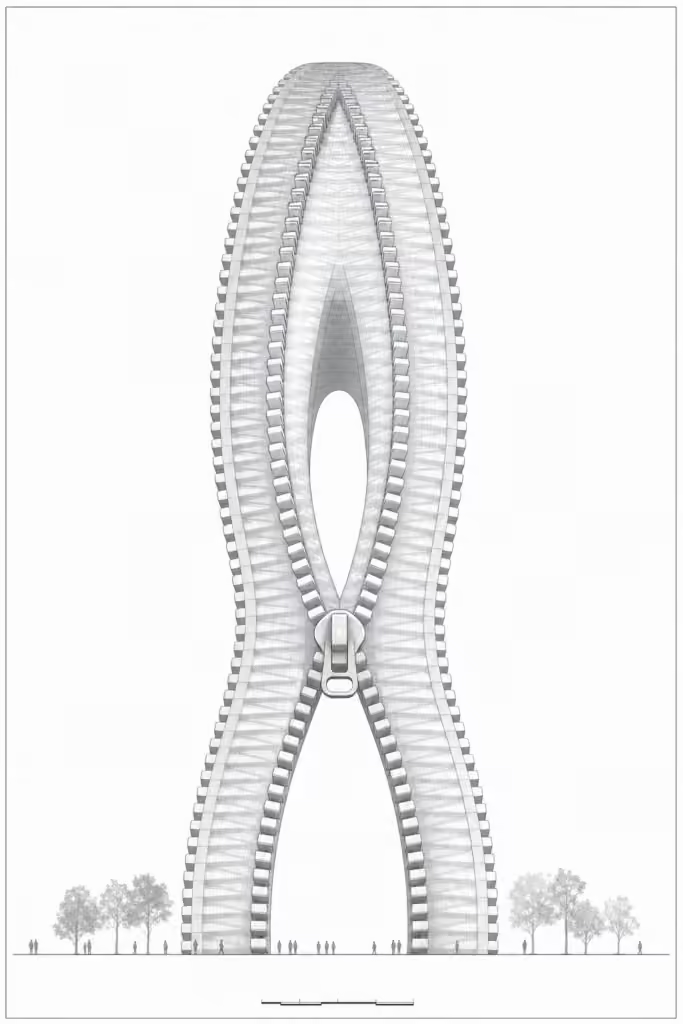
Old Town San Diego State Historic Park is already a place where time behaves politely for tourists. Adobe walls, preserved storefronts, the Casa de Estudillo, and the steady smell of tortillas all suggest history can be managed if given enough signage. Into this comes San Ziplando Junction, a 220-meter-tall zipper bridge placed across the landscape like a retail executive misunderstood zoning and received approval anyway.
The fog helps. San Diego’s usual confidence is muted into gray, leaving the structure to glow above the park with the calm menace of a pharmacy aisle at 9:47 p.m. after the deodorant has been locked away.
The Move
The architectural idea is brutally simple: a giant zipper, half open, crossing a gap and pretending to heal it. The official reading is that it symbolizes urban merger. The unofficial reading is that every consumer retail breakup will now produce housing, public space, and at least four new ways to misplace a receipt.
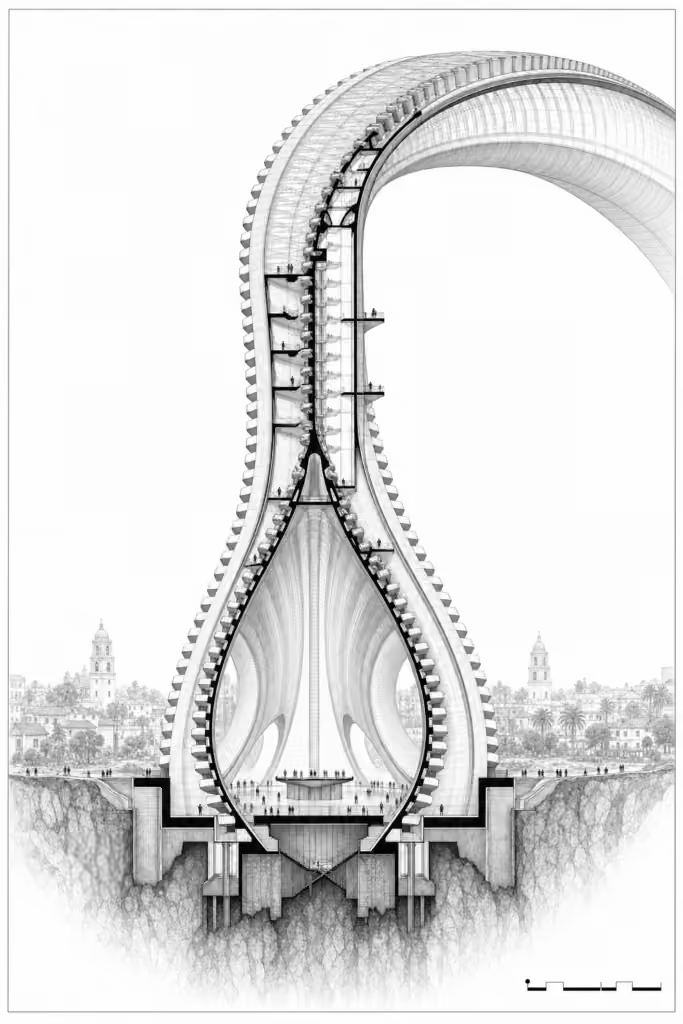
The bridge arches upward in a twisting silver loop, its monumental teeth forming 10-meter entrance portals. Visitors do not enter through doors. They pass between metal incisors, an experience local planners describe as “activated frontage” because nobody has the strength to correct them.
Material and Structure
The primary materials are reflective silver metal and glowing frosted glass. This allows the building to look expensive, sterile, and slightly guilty from every angle. The glass mesh underbelly creates a luminous canopy at ground level, inviting exploration beneath the zipper while also giving every stroller, dog, and docent the sensation of walking under a luxury handbag zipper the size of a courthouse.
Structurally, the teeth act as repeated arches, marching across the gap with the confidence of a spreadsheet. At night, the frosted panels emit a soft retail glow, calibrated somewhere between urgent care lobby and seasonal clearance.
Inside
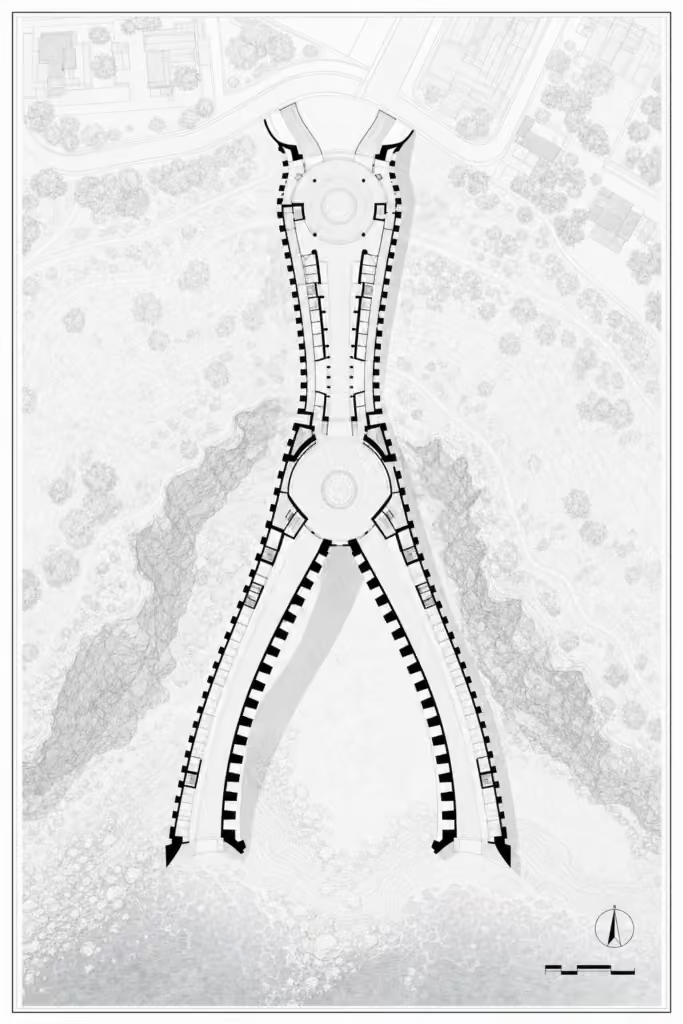
The interior is organized as a sequence of merged retail rooms that have been legally reclassified as lifestyle environments. Former shampoo aisles become micro-lofts. The vitamin section becomes coworking. The greeting card bay is now a meditation chamber for people who still say “circling back.”
Each unit includes one locked shampoo cabinet, not as satire but as amenity. Residents receive a digital key, a physical key, and a third key that is only available after submitting proof of conditioner intent. The elevator skips the floor you want, in honor of legacy pharmacy operations.
The Tradeoff
The public benefit is obvious: San Ziplando Junction provides shade, spectacle, circulation, and a new reason for someone on the Old Town trolley platform to say, “That cannot be code.” It also offers the city a tidy myth: that miles of fluorescent retail can become housing if we simply add glass, height, and a lease addendum.
The cost is equally clear. The rent is high, the cabinet is locked, and the bathroom is technically in a different corporate entity. This is the Zipline Of Destiny: a civic monument to merger culture, where the future is walkable, glowing, and waiting for a manager.
Inside
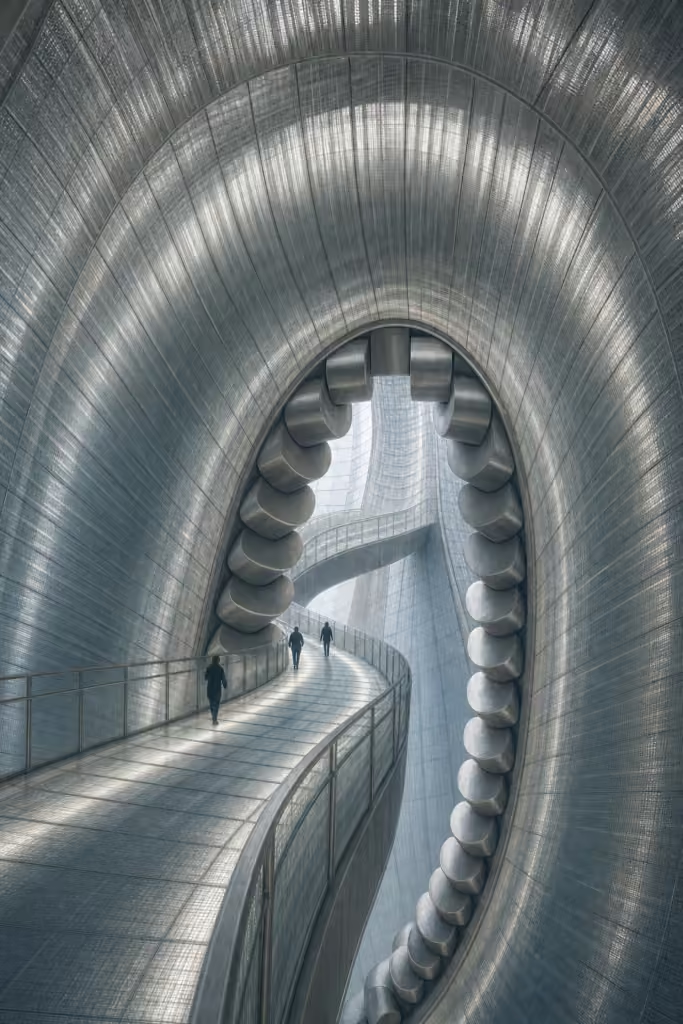
A spiraling skywalk inside a zipper tooth, glowing teal
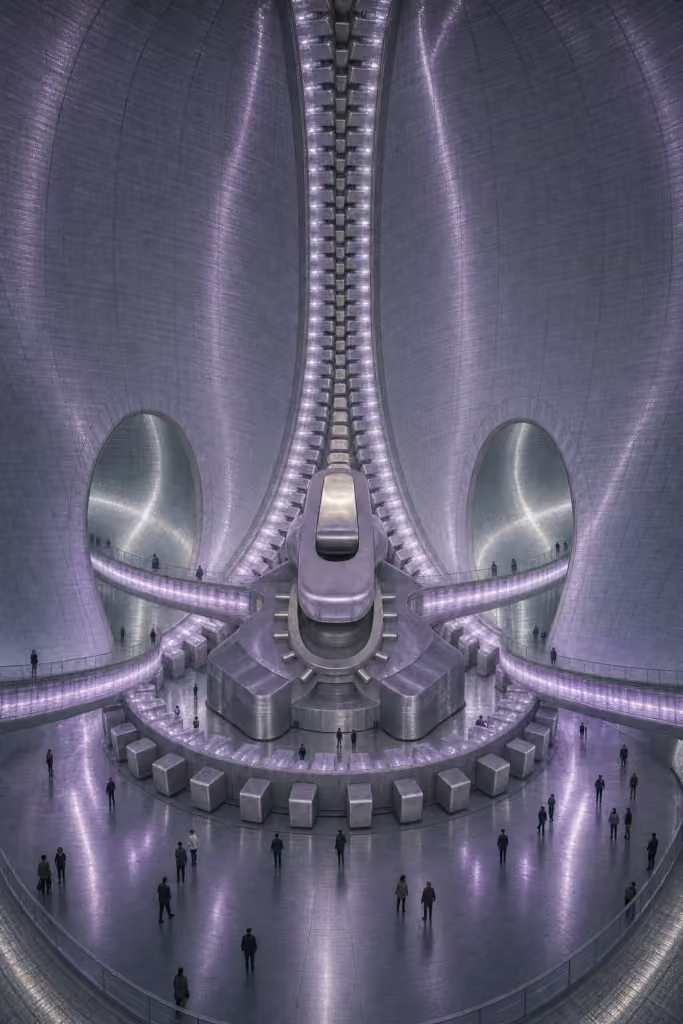
A central hub with interactive zipper gears, pulsating lavender light
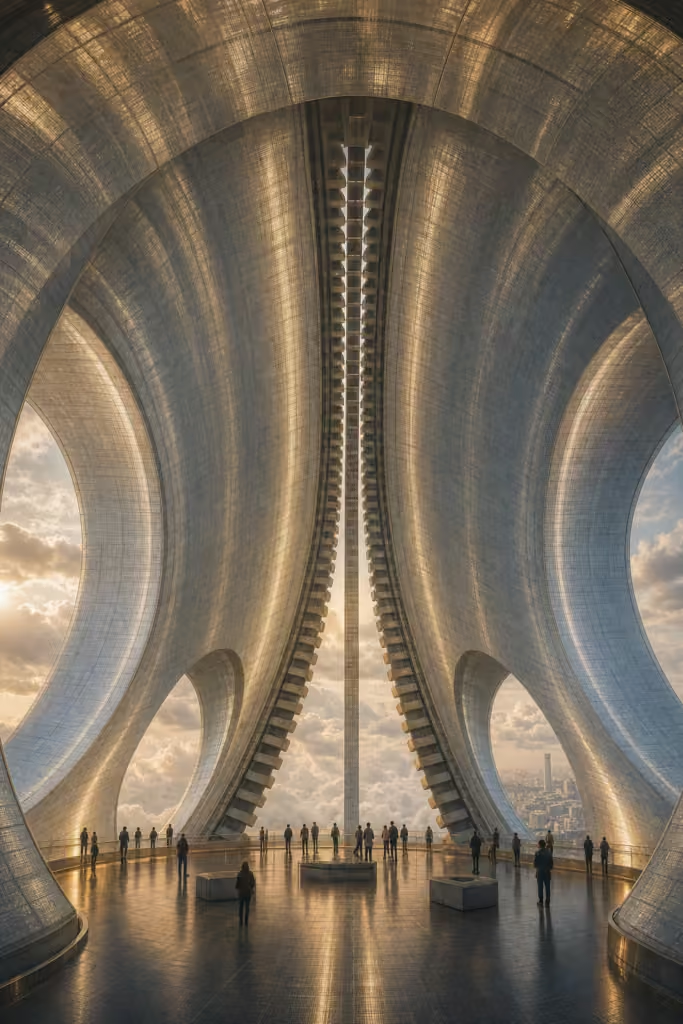
A vast observation deck at zipper's end, shimmering gold, where clouds roll through open panels
Drawing set
A speculative concept by Architecture Adrenaline. Not a real building.