
Hickory cabinets change the rules for farmhouse color choices because their streaky grain and warm amber tones require a palette that either calms the wood or frames it as the focal element; this guide gives eight practical combinations, specific material pairings, lighting and hardware guidance, and a step-by-step testing process so you can pick a palette that works with hickory rather than against it.
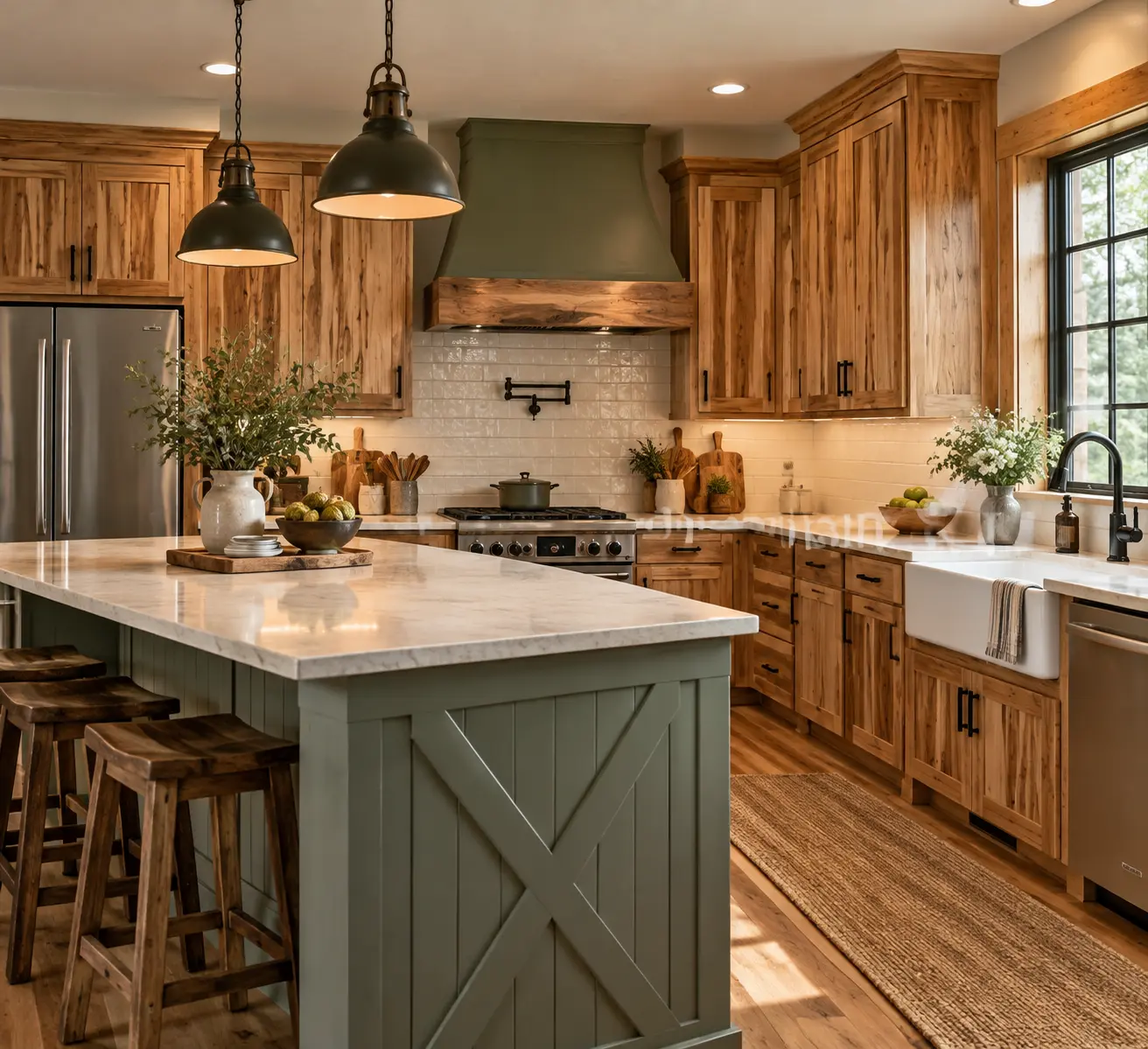
How Hickory’s Grain Shapes Color Choices
Hickory combines pale sapwood with darker heartwood, producing strong contrast across cabinet doors. That contrast exaggerates cool, blue-leaning whites and can shift perceived warmth under different light sources. Treat cabinet faces as a dominant texture: avoid colors that sit on the cool end of the spectrum unless you also plan warm artificial lighting or warm-toned counters to neutralize the effect.
Eight Farmhouse Combinations With Practical Notes
- Warm Neutral. Creamy off-white walls, beige quartz counters, and hickory cabinets; good when you need a quiet, resale-friendly palette.
- Navy Anchor. Navy painted island, warm white perimeter, and light-veined counters; balances amber grain with a strong, low-sheen focal plane.
- Muted Green. Pewter or sage island, off-white walls, gray-tinted counters; a controlled natural palette that harmonizes with wood tones.
- Greige Soft Contrast. Greige walls, hickory cabinets, and charcoal accents; choose greige sampled next to the cabinet to confirm undertone alignment.
- Classic Cream. Warm cream walls, ivory textiles, and antique brass hardware; best when you want the cabinet color to read as part of a warm layer system.
- Charcoal Modern Farmhouse. Charcoal island, warm white walls, and light countertops; provides strong contrast without pushing the perimeter colors into cool territory.
- Pale Blue-Green. Pale sage walls, natural hickory, and cream backsplash; works in north-facing kitchens where daylight is cooler.
- Earth Tone Layering. Taupe walls, warm stone counters, and matte bronze hardware; uses successive warm materials to unify the room.
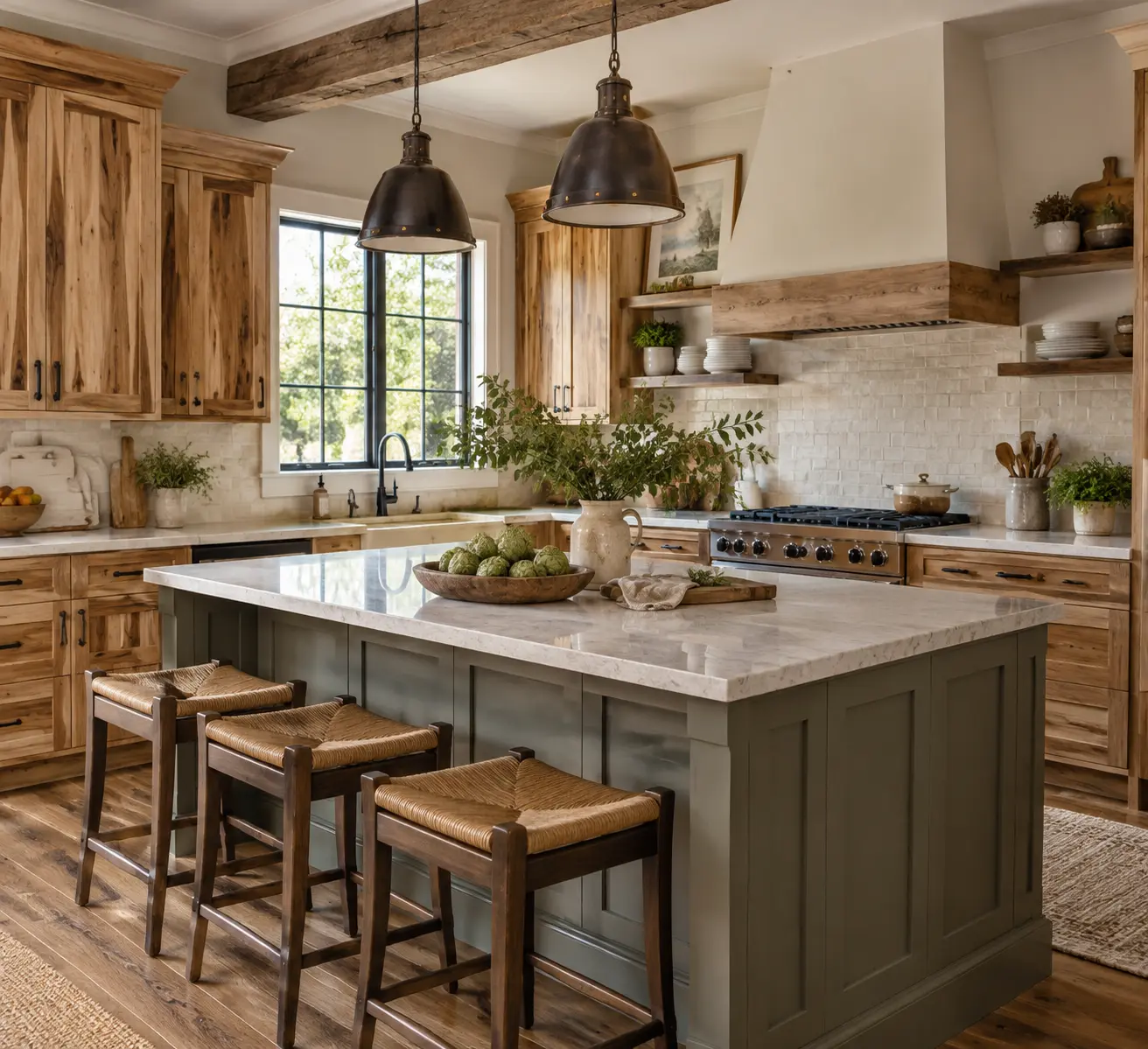
Choosing Whites and Greiges That Work
Select off-whites and greiges with warm yellow or brown undertones so they act as a backdrop rather than competing with the wood. Apply large painted swatches on multiple walls and observe them next to a cabinet door, a countertop sample, and under the room’s actual light fixtures in the morning and evening.
- Prefer warm whites over blue-leaning formulas; read manufacturer undertone notes and test large samples.
- Paint trim and ceilings one or two steps lighter than walls to keep the perimeter visually calm.
- When pairing a gray counter, bias the wall toward greige to avoid a cool-warm clash that makes hickory look orange.
Material Pairings That Stabilize Hickory’s Presence
Countertops, backsplashes and flooring determine whether hickory reads integrated or tacked on. Choose materials that either echo the wood warmth or cool the palette in a controlled way without introducing new undertones.
| Element | Recommended Options |
|---|---|
| Countertops | Warm quartz with subtle veining, honed limestone, or localized butcher-block accents for work zones |
| Backsplash | Warm white subway tile, cream hex tile, or stone-look tiles in beige; see curated backsplash ideas for pattern and grout choices kitchen backsplash ideas |
| Flooring | Wide-plank warm oak, neutral porcelain, or mid-tone wood to keep the floor from fighting cabinet contrast |
Island Strategies and Roomwide Continuity
Design the island as the room’s 10 percent bold element within a 60/30/10 balance: 60 percent backdrop, 30 percent accents, 10 percent focal. Dark islands in navy or charcoal anchor the plan without competing with hickory’s grain. A muted green island can provide a natural counterpoint while preserving a farmhouse feeling.
- Use durable surfaces for island tops: quartz, soapstone, or sealed butcher-block where you need prep zones.
- Coordinate pendant finishes and hardware to a single metal family for cohesion across open-plan living areas; consider how kitchen choices will read with adjacent rooms shown in modern farmhouse living room ideas.
- Choose a matte paint for painted islands to reduce glare and show less surface blemish in photographs and strong daylight.
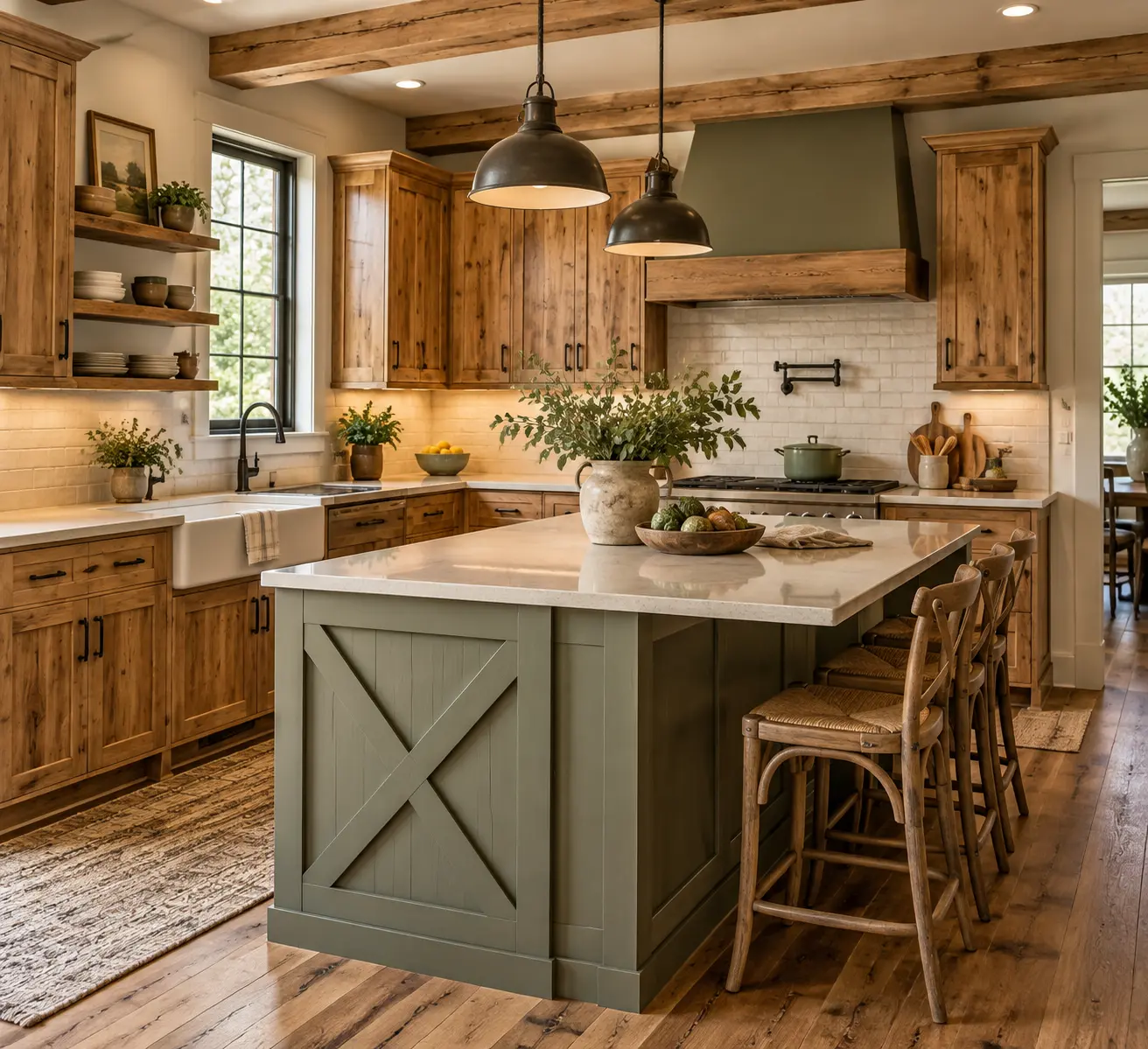
Lighting, Hardware, and Finish Decisions
Light temperature and metal finishes change how hickory reads. Specify warm LEDs between 2700K and 3000K to harmonize with amber tones. Satin or matte cabinet clearcoats limit glare on pronounced grain, while brush and patina choices in hardware shift the perception of warmth.
- Aged brass or oil-rubbed bronze increases perceived warmth; brushed nickel or stainless will temper amber highlights.
- Match pendant metal to cabinet hardware to create visual lines and reduce visual clutter.
- Specify durable clear topcoats and discuss touch-up protocols with the cabinetmaker to address surface wear without full refinishing.
For a concise look at evolving hardware styles and finishes that pair with wood cabinets, review current trends in cabinet hardware kitchen cabinet hardware trends.
Durability, Maintenance, and Real-World Wear
Hickory rates harder than oak and maple, so it resists dents and heavy use; however, its high-contrast grain can make scratches more visible. Specify a factory-grade clear topcoat with UV inhibitors for stained finishes and plan for local touch-up kits at hinge or edge areas.
- Choose quartz or sealed stone counters to minimize staining and reduce the need for resealing adjacent to wood cabinetry.
- Use matte or satin paints on high-traffic walls to hide scuffs and simplify cleaning routines.
Testing Process and Common Pitfalls
Reduce risk with a simple three-step testing process that pairs samples in the real room and under the actual lighting conditions.
- Step 1. Place a full cabinet door with its hardware on the kitchen wall and apply large paint swatches around it rather than isolated small chips.
- Step 2. Prop countertop and tile samples adjacent to the cabinet door and observe them after sunrise and before sunset under your fixtures.
- Step 3. Confirm fixture color temperature before final paint so the lighting will not shift the perceived undertone.
Order physical paint samples or kitchen paint color swatches to compare finishes and undertones in your kitchen before committing to a full paint purchase kitchen paint color swatches.
Sourcing Hickory Cabinets and Samples
Several manufacturers and local shops offer rustic hickory collections with lacquer or stain finishes and sample programs that include door slabs and construction details. Request construction details such as plywood core, dovetail drawer boxes, hinge type, and finish specification when ordering samples to ensure the sample represents the finished product. For product pages and sample ordering from one such supplier, see the manufacturer's cabinet offerings custom cabinets.
Quick Practical Judgement
Choose a dominant neutral family and use the island, metal finishes, and countertops to control the visual temperature. Testing large samples in place and confirming fixture color temperature will prevent the two most common failures: a cool white that clashes and an overcomplicated palette. When in doubt, bias the room slightly warm to harmonize with hickory’s natural character.
When selecting a color scheme for a kitchen with hickory cabinets, consider warm tones that harmonize with the wood's rich hues. White, cream, and light gray can create a bright and inviting atmosphere. Accents of deep blue or soft green can add character without overwhelming the natural beauty of the cabinets. The balance of colors can emphasize both the rustic and modern elements of farmhouse design.
More from Architecture Adrenaline
You can explore similar posts and ideas on our social channels for additional inspiration. For visual ideas, check out our Pinterest page, where we share a variety of kitchen designs and color schemes that complement hickory cabinets.