
Sparkling, swim-ready water in an above ground pool requires four repeatable actions: skim and brush frequently, vacuum routinely, maintain the filter and pump, and correct chemistry promptly when algae or cloudiness appears. Follow a weekly routine and consult step-by-step maintenance references for details on skimming, brushing, vacuuming, and chemical balancing to keep the pool clear and reduce long-term repair costs.
Essential Tools and Supplies to Gather First
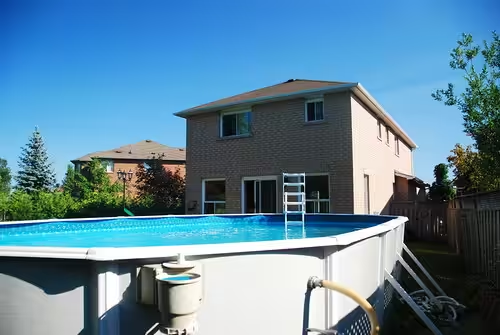
Assemble a leaf skimmer with a telescoping pole, a nylon-bristle brush rated for vinyl liners, a manual vacuum or robotic cleaner sized for your pool diameter, and a reliable liquid test kit. Stock sanitizer (chlorine), a shock product, pH up and down, alkalinity increaser, and a sequestrant for metal stains. Add a fitted winter or leaf cover and a leaf net to prevent debris from ever reaching the water.
Cleaning Routine: Skim, Brush, Vacuum and Where to Find Step-by-Step Instructions
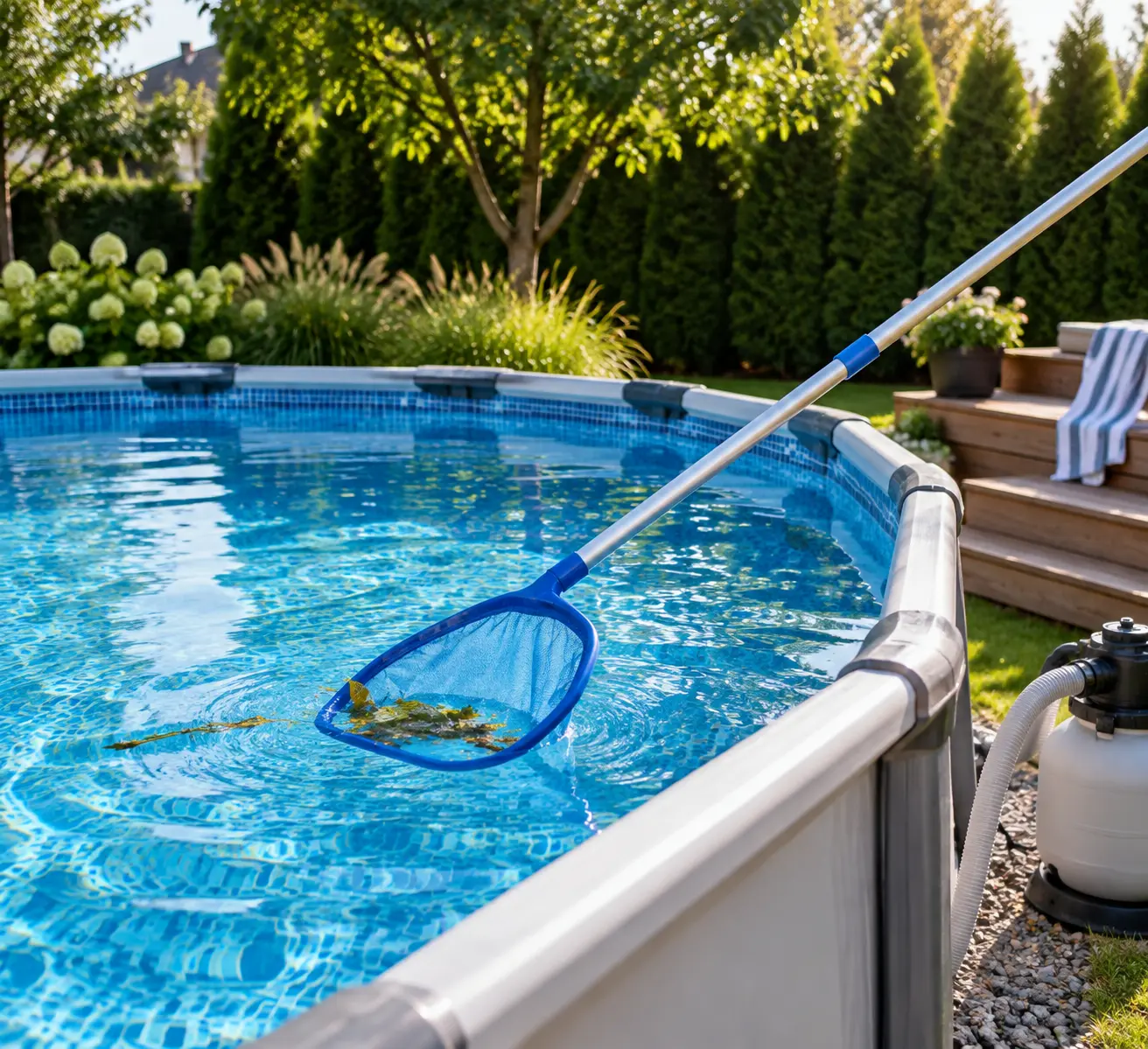
Skim and brush first, then vacuum and check chemistry. For a practical weekly checklist and routine sequencing that complements these cleaning steps see BobVila: Above-ground pool maintenance guide. For detailed, actionable cleaning steps including surface skimming, brushing, vacuuming, filtering, and balancing chemicals consult Angi: How to Clean an Above Ground Pool.
Step 1. Skim and Brush to Stop Problems Early
Skim the surface daily or every other day to remove leaves and insects before they sink. Brush the waterline and vertical walls 2-3 times weekly using long, overlapping strokes from top to bottom to break biofilm and algae into particles the filter can capture. Empty skimmer and pump baskets after heavy storms to prevent debris bypassing the filter media.
Step 2. Vacuum the Bottom for Settled Debris
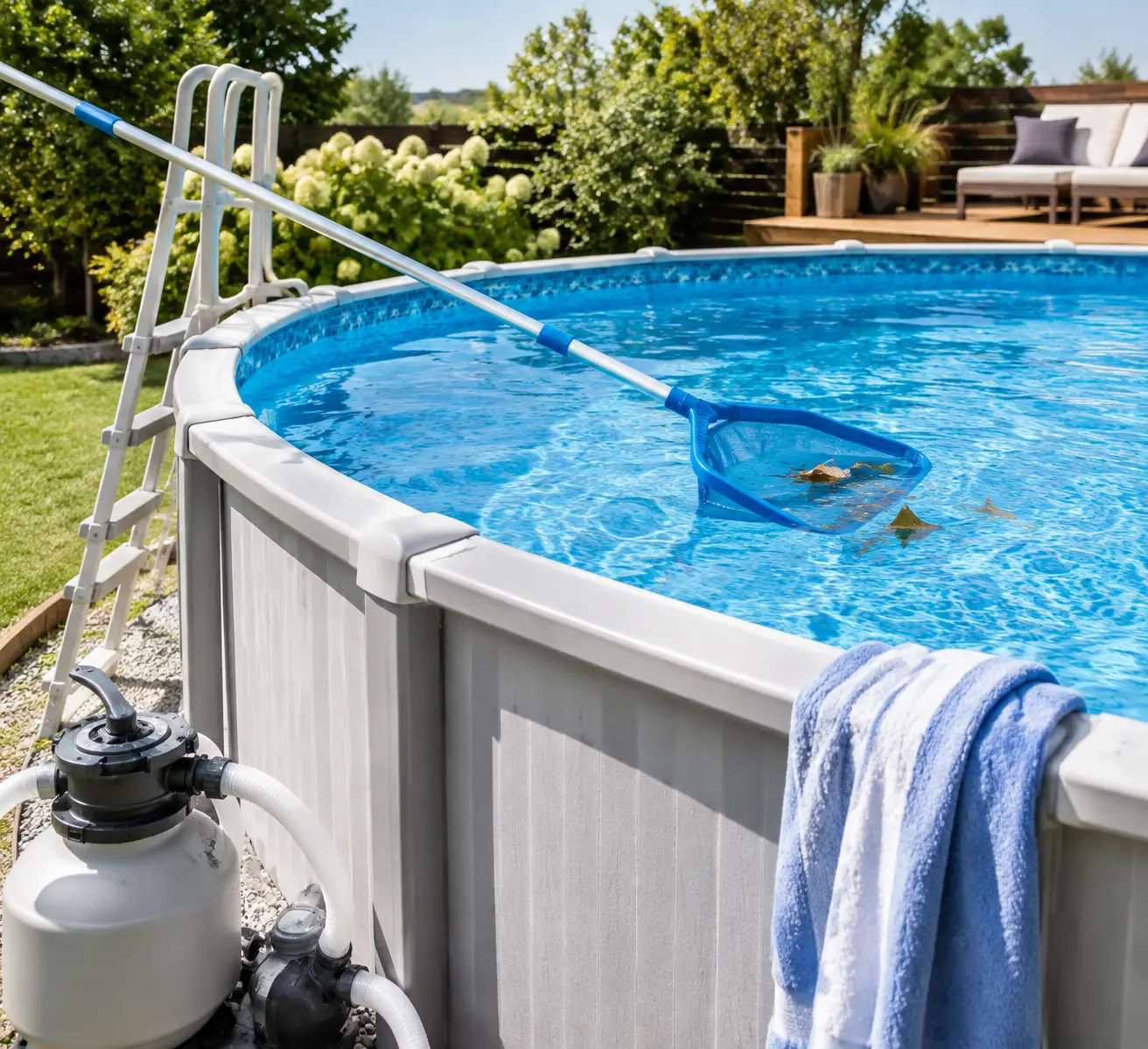
Vacuum weekly or after a heavy debris event. Attach a manual vacuum to the skimmer or use a dedicated hose and pass in slow, straight lines so the filter can capture fine material. Robotic cleaners reduce labor for round or soft-sided pools; choose one sized to your pool and clear its filter basket frequently.
Step 3. Maintain the Filter and Pump for Proper Circulation
Match service to filter type. Cartridge filters need a thorough rinse weekly during heavy use and a soak in cartridge cleaner monthly. Backwash sand and DE filters when pressure is about 8-10 psi above the clean baseline. Always switch off the pump and close valves before removing lids or servicing baskets to avoid air intrusion and loss of prime.
Step 4. Test and Balance Chemistry, Then Shock When Needed
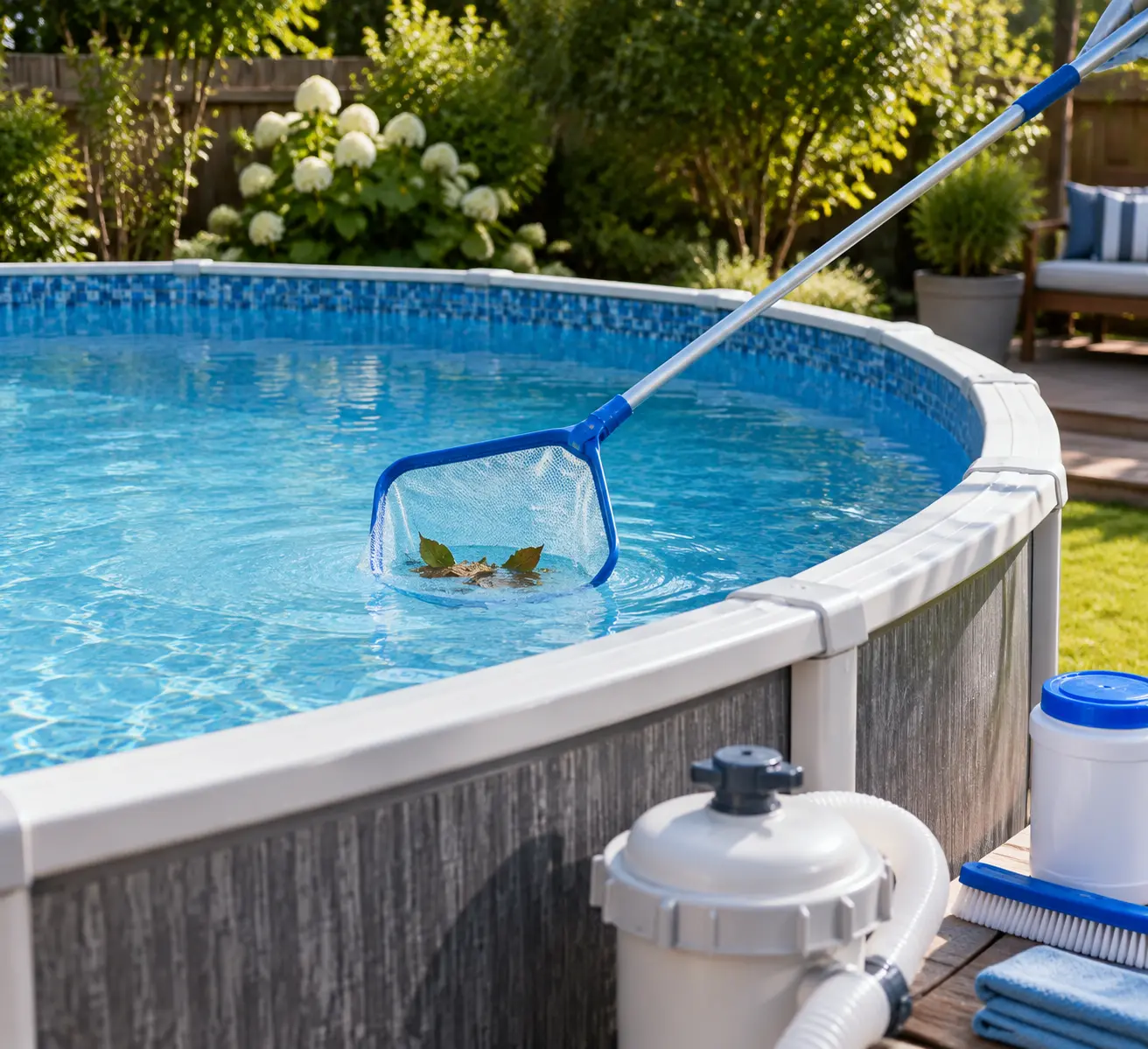
Test free chlorine, combined chlorine, pH, total alkalinity and stabilizer 2-3 times per week during the season. Aim for free chlorine 1-3 ppm and pH 7.2-7.6. If algae or green water appears, follow the shock product directions, brush surfaces vigorously, and run filtration continuously until readings and clarity return to range.
How to Clear a Green Above Ground Pool Fast
Treat green water on multiple fronts: brush to free algae from surfaces, apply a heavy shock per label directions, run the pump 24/7 while treating, and clean or backwash the filter frequently. Vacuum-to-waste or use the filter’s waste setting to remove settled organic matter, then repeat shock cycles until free chlorine stabilizes in the target range.
Vinyl Liners, Stains and Liner-Safe Cleaning
Use only soft cloths and liner-safe cleaners on vinyl liners. Avoid abrasive brushes and metal scrapers that can nick or tear the liner. Oxidizing shock will remove most organic stains; metal stains typically require a chelating sequestrant. Rinse treated areas thoroughly before returning the pool to service.
Weekly, Monthly and Seasonal Checklist with Time Budget
Follow the 10/60 rule: spend 10 minutes daily or 60 minutes weekly on care. Weekly tasks: skim, brush, vacuum, test chemistry and clear skimmer basket. Monthly tasks: deep-clean cartridges or inspect sand/DE media, test calcium hardness, and inspect ladder hardware. Opening: clean and store the cover, top up water, balance chemicals and shock. Closing: clean the pool, winterize plumbing, lower water to the manufacturer’s recommended level, and add winter chemicals before covering.
Common Problems, Diagnoses and Quick Fixes
- Cloudy water. Increase run time, inspect filter media, and verify chemistry; use a clarifier for fine suspended particles.
- Recurring algae. Improve circulation in corners and steps, increase brushing frequency, and hold sanitizer levels at the high end of the recommended range until control is regained.
- Loss of pump prime or low flow. Check unions, lid seals and skimmer lines for air leaks; clean baskets and confirm pump strainer lid is tight.
- Persistent filter pressure. Backwash or clean the media and use a chemical filter cleaner if pressure remains high after mechanical cleaning.
Quick Reference Maintenance Table
| Task | When to Do It |
|---|---|
| Skim surface | Daily or every other day |
| Brush walls and waterline | 2-3 times per week |
| Vacuum pool | Weekly or after debris event |
| Test chemistry | 2-3 times weekly in season |
| Filter service | Cartridge rinse weekly; backwash sand/DE when +8-10 psi |
Product Choices That Save Time and Money
Pick tools sized to your pool. A nylon brush protects liners; a liquid test kit gives more precise pH and alkalinity results than strips. Robotic vacuums reduce weekly labor but add upfront cost. A snug cover and leaf net reduce debris and chemical use. For a ready-made set that supports the cleaning steps outlined above consider an Above-ground pool cleaning kit on Amazon.
When To Hire Professional Service and What To Expect
Hire professional service for complex repairs, DE media replacements, major liner damage, or when you prefer scheduled seasonal openings and closings. For local service scope, contractor vetting and typical service items see this guide to above ground swimming pool service. If you are installing a new above ground pool or replacing equipment, consult an installation company experienced with site preparation and manufacturer warranty requirements at above ground pool install company.
Landscaping and Site Considerations That Reduce Maintenance
Locate decking and plantings so leaves and mulch do not shed directly into the pool. Use hard edging and a level, compacted base to prevent soil erosion from entering the pool after rain. For practical plant and grading strategies that cut maintenance and improve safety, see landscaping recommendations at Landscaping Around Above Ground Pool.
Safety, Storage and Handling Chemicals
Wear gloves and eye protection when handling chemicals and store them in a cool, dry, locked cabinet away from children. Never mix chemical types and always follow label instructions; reseal and label partial containers. When soaking cartridges or using chemical cleaners, follow manufacturer directions and rinse components before returning them to the system.
Sources and Further Reading
Practical steps and product guidance are aligned with above ground pool care resources and Funsicle maintenance guidance; see the Funsicle cheat sheet for an abbreviated routine at the Funsicle cheat sheet.
How to clean a GREEN ABOVE GROUND POOL:
Cleaning an above ground pool requires regular maintenance to keep the water clear and safe for use. By following the steps outlined in this guide, you can ensure that your pool remains in good condition. Regular skimming, vacuuming, and checking chemical levels are essential tasks that should not be overlooked.
More from Architecture Adrenaline
For additional tips and insights on various home maintenance topics, check out our social channels. You can explore more posts like this on our Instagram. Keeping your above ground pool clean will enhance both your enjoyment and its longevity.