
Act fast. The best chance of removing watermelon stains is to flush the mark with cold water, apply an enzyme pretreat, and avoid heat until the pigment is gone. This article explains why watermelon stains set, step-by-step first actions for clothing and soft surfaces, five graduated treatments to try, safe options for whites and plastics, and when professional cleaning is the prudent next step.
Why Watermelon Stains Set Quickly
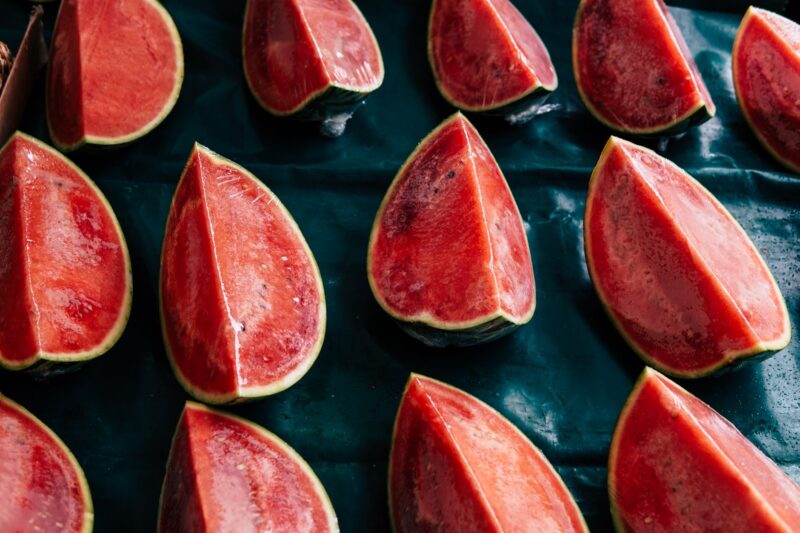
Watermelon transfers a red carotenoid pigment called lycopene plus simple sugars; the pigment dyes fibers while the sugars increase stickiness and speed adhesion. That combination behaves like other fruit-juice stains: it resists removal once heated and often needs enzymatic action to break down the organic residue before bleaching or laundering will finish the job.
First Actions for Clothing
Blot liquid with a clean cloth, then turn the garment inside out and rinse the stained zone from the back with cold running water. Place the garment in a cold-water soak if immediate pretreating is not possible. Avoid rubbing, hot water, and the dryer until you confirm the stain is gone.
For guidance on comparable dye problems, consult the site’s food dye guide for approaches that transfer directly to heavily pigmented fruit stains.
Effective Pretreat Steps
Begin with an enzyme-based stain remover or a liquid detergent that lists protease or amylase on the label. Work the product into the wet stain, let it dwell about 15 minutes or follow the manufacturer directions, then rinse and launder in the warmest water the care label allows. Enzymes degrade fruit solids and sugars, reducing the pigment’s mechanical bond to fibers.
When shopping for household options, consider Watermelon stain remover products such as enzyme sprays or oxygen-based laundry boosters recommended for fruit and berry marks.
Specific Treatments by Fabric Type
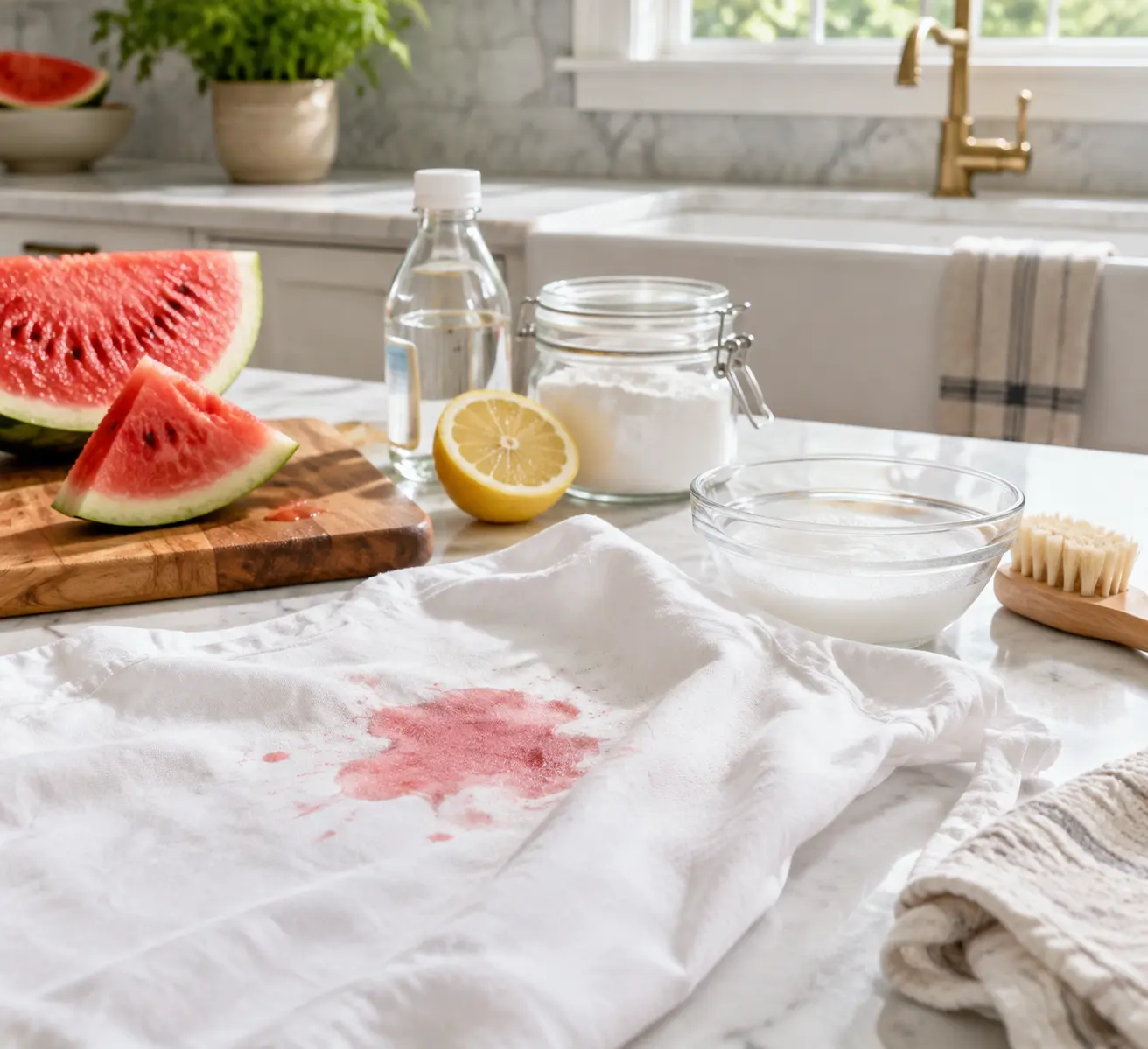
Read the care label first and adapt treatments to the fiber. Cotton and polyester blends tolerate enzyme pretreat and oxygen-bleach soaks. Silk, wool, and other protein fibers should avoid extended peroxide or alkali exposure and should be taken to a cleaner if home pretreating fails. For synthetics that melt or distort, never apply heat or scrub vigorously.
For laundering decisions and detergent choices that affect stain results, see the eco-friendly detergent guide for options with stain-lifting enzymes and minimal fabric damage.
Five Graduated Methods to Try
Work from least to most aggressive and always check a small, hidden area for colorfastness before applying any chemical.
- Cold rinse and enzyme pretreat. Rinse from the back, apply enzyme product, let sit 15 minutes, then launder in the warmest safe water.
- Repeat enzyme cycle. If residual pigment remains, repeat pretreat and wash again; many fruit stains require two cycles before drying.
- Oxygen-bleach soak. Dissolve powdered sodium percarbonate in cold or warm water and soak several hours or overnight for set stains, then launder.
- 3% hydrogen peroxide on colorfast whites. Apply briefly as a spot treatment, rinse, and air-dry away from direct heat unless label permits sunlight for fading assistance.
- Professional cleaning. For delicate, lined, structured or valuable garments that resist home methods, a dry cleaner that accepts wet pretreatments will often succeed where home attempts risk damage.
Carpet and Upholstery Procedures
Blot spills immediately to remove as much liquid as possible. Dilute the stain by applying a small amount of cold water and blotting; then use a carpet- or upholstery-safe enzyme cleaner per the label. Work gently into the pile with a soft-bristled brush, rinse with clean water, and blot repeatedly until the fabric is as dry as practical.
For guidance on similar soft-surface spills, follow the step sequence used for tea stains in carpet, which emphasizes dilution then enzyme action; see the site’s tea stain steps for the same order of operations applied to beverages and fruit juice.
Dealing With Old or Set-In Stains
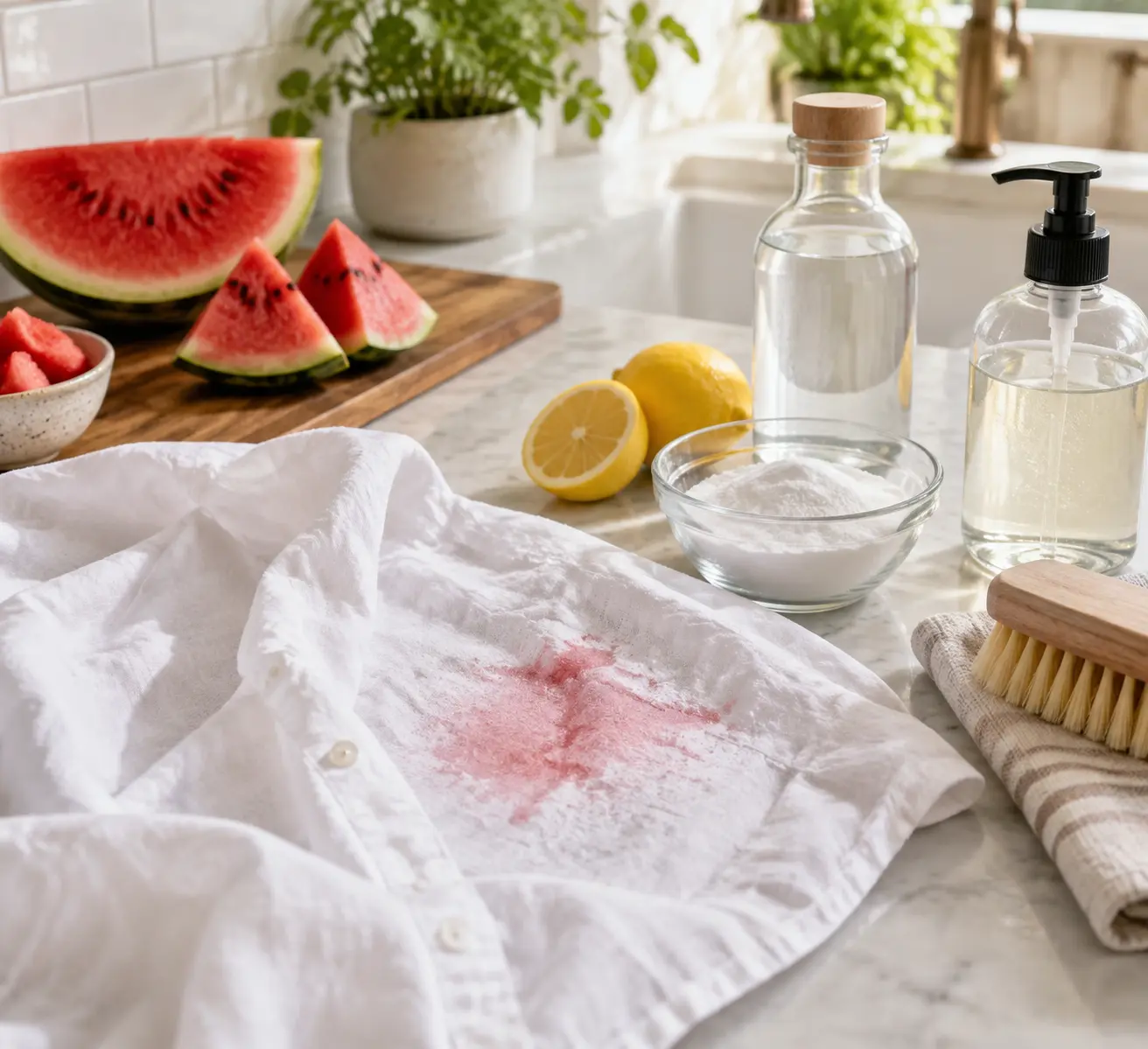
Soak the item in cold water for several hours to rehydrate dried sugars and pulp, then apply an enzyme pretreat with extended dwell time. Follow with an overnight oxygen-bleach soak for washable fibers. Expect to repeat cycles; inspect between cycles and never use heat until the stain is fully removed.
Safe Treatments for Whites and Food Containers
Use oxygen bleach instead of chlorine bleach on most white garments; oxygen bleach removes organic pigments without the yellowing risk that chlorine can cause on some blends. For plastic bowls stained by watermelon pigment, apply a baking-soda paste, let sit 15 to 30 minutes, then scrub with a nonabrasive pad. Avoid household chlorine bleach on food containers to prevent residual chemical odor; a diluted vinegar rinse or an oxygen cleaner is safer for finished plastic.
| Surface | Best Immediate Action | Next-Step Treatment |
|---|---|---|
| Washable Clothing | Rinse from back with cold water | Enzyme pretreat, launder, inspect before drying |
| White Fabrics | Rinse and enzyme pretreat | Oxygen-bleach soak, air-dry if safe |
| Carpet/Upholstery | Blot, dilute with cold water | Carpet-safe enzyme cleaner, rinse and blot dry |
Common Errors That Make Stains Permanent
- Applying hot water or putting the garment in the dryer before the stain is gone; heat permanently sets lycopene pigments.
- Vigorous rubbing that spreads the pigment, abrades fibers, and creates a larger, more embedded stain.
- Using chlorine bleach on colored fabrics or plastic containers, which can cause yellowing or unsafe residues.
Troubleshooting Persisting Stains
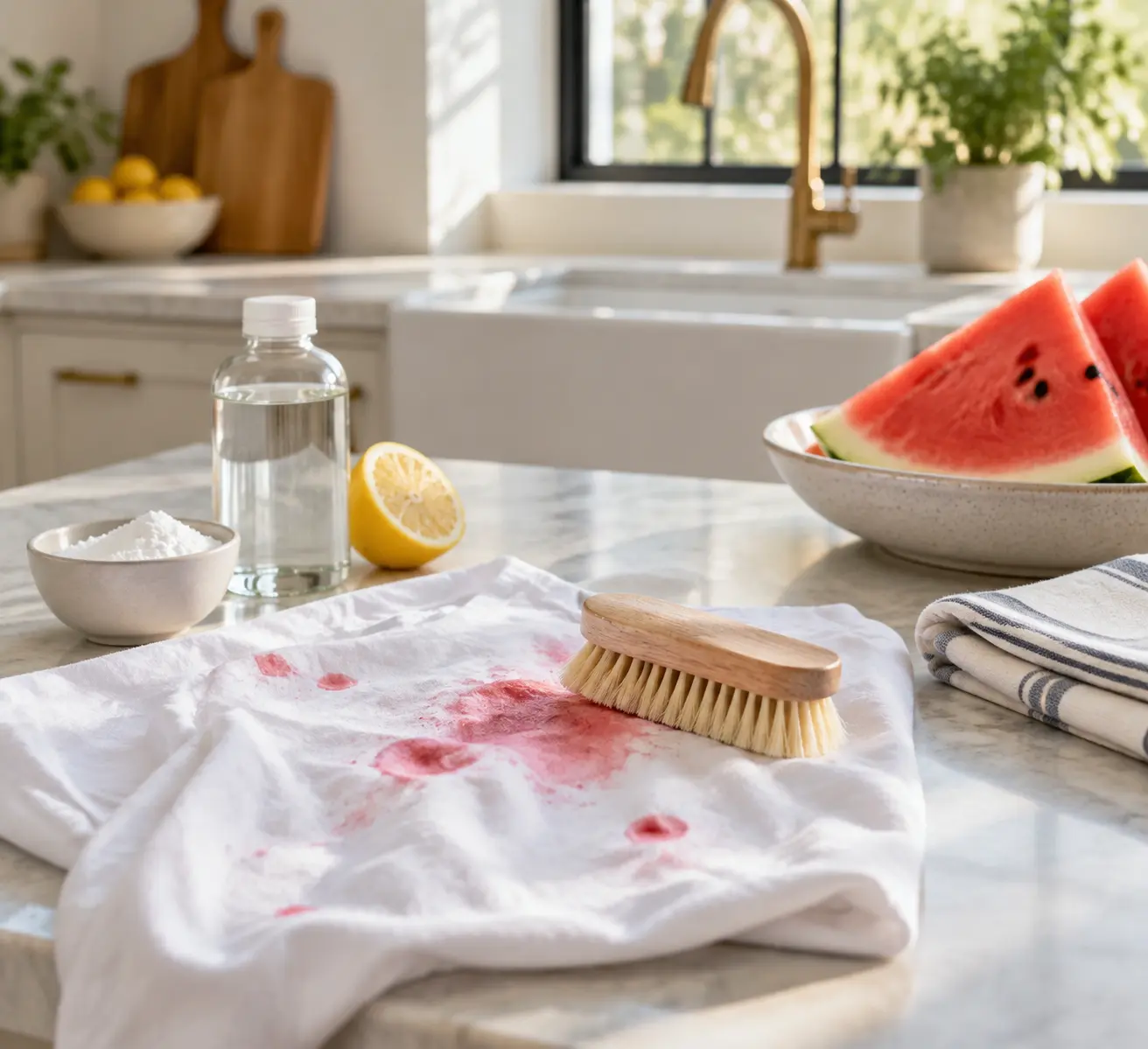
If an enzyme pretreat and a single wash do not remove the stain, repeat pretreating or soak the item overnight in an oxygen-bleach solution. Inspect between cycles and avoid heat-drying until the stain is fully gone. When fabric tolerance is uncertain, send the item to a professional cleaner rather than risk irreversible damage.
Sources and Further Reading
Practical steps above are compiled from stain-removal authorities and appliance guidance. See The Clean Club’s watermelon guide for a fruit-specific walkthrough at The Clean Club’s watermelon guide. The American Cleaning Institute’s enzyme-first laundry rules are at ACI stain removal guide. Washing-machine precautions and fruit-stain advice appear in Maytag’s fruit-stain recommendations at Maytag’s fruit stain advice. For complementary clothing-specific steps see Sandía Fashion’s treatment suggestions at Sandía Fashion. Consumer Reports’ stain primer underscores the importance of avoiding heat and repeating treatments when necessary at Consumer Reports’ stain guide.
Our Product Pick
Dreft Stain Remover for Baby Clothes and Hypoallergenic is one option to look at if you want a ready-made tool for this job. As an Amazon Associate we earn from qualifying purchases.
Related Video
Getting watermelon stains out can be a straightforward process with the right techniques. Start by acting quickly, blotting the stain with a clean cloth to absorb as much liquid as possible. Rinse the fabric with cold water and apply a mixture of dish soap and white vinegar. Allow it to sit for about 15 minutes before washing it in cold water. For stubborn stains, consider using a laundry stain remover before laundering as usual.
More from Architecture Adrenaline
For more posts like this, check our social channels. You can find more tips and guides on our Instagram page. Getting those tough stains out can be simple with the right knowledge.